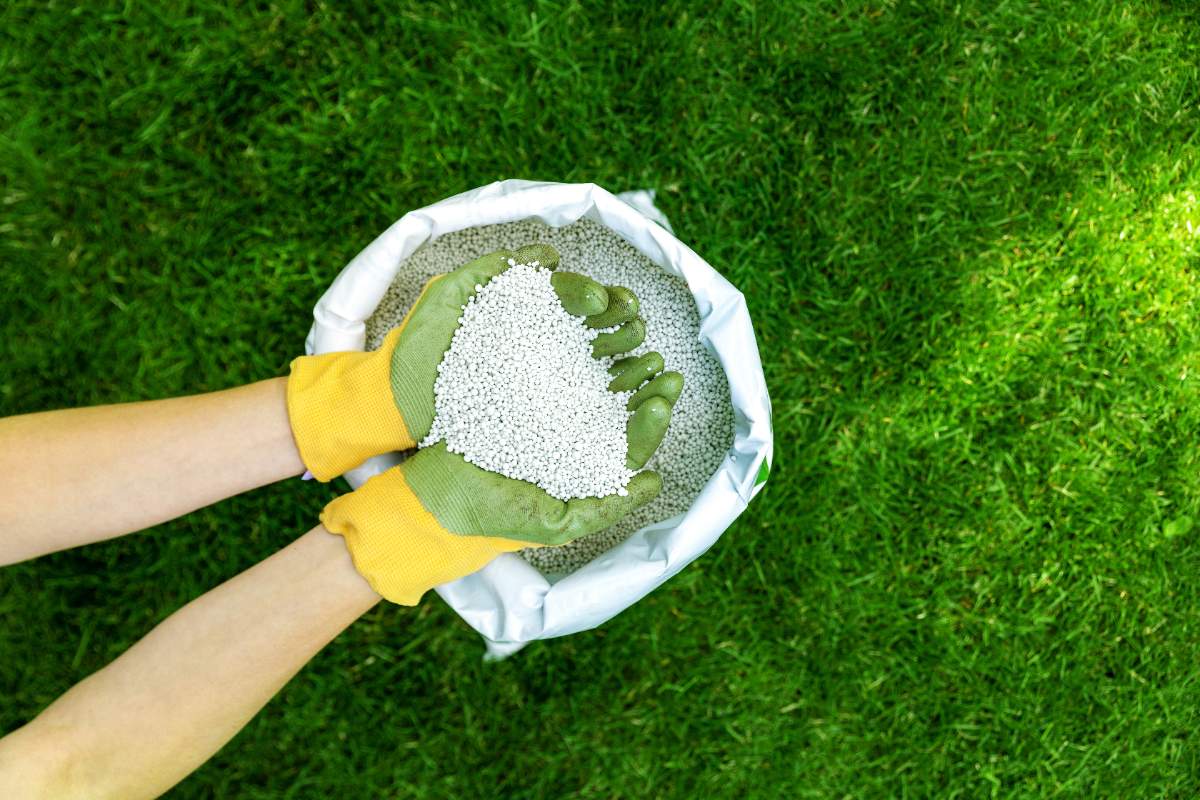
Fall fertilization is a crucial part of lawn care. It provides essential nutrients to repair damage from the summer heat, enhances overall health, and prepares your lawn for winter survival and spring recovery.
If you’re reading this in late September or October wondering whether you’ve missed your window, the short answer is: probably not. For most cool-season lawns, you have until the ground freezes.
Rather skip the guesswork? LawnStarter’s lawn treatment service covers fall fertilization and other items on your fall lawn care list.
| Key Takeaways |
|---|
| • Fall fertilizer repairs summer damage, builds stronger roots, and prepares your lawn for winter dormancy. • Apply fall fertilizer 6-8 weeks before the first hard frost for cool-season grasses, or mid-August through September for warm-season varieties. • Look for fall fertilizers with higher potassium content to boost winter hardiness and root development. |
7 Important Reasons to Use Fall Fertilizer for Lawns
Fall fertilizer prepares your lawn for winter dormancy, repairs summer damage, and builds stronger root systems. Done right, it sets up healthier grass next spring and stronger performance through next summer’s heat.
Here’s the proof this matters: Purdue University turf specialists recommend applying 50% to 60% of a cool-season lawn’s total annual nitrogen between late summer and mid-fall to promote root growth, carbohydrate storage, and recovery from damage.
7 key benefits of fall fertilizer for lawns:
Repairs summer stress damage
Enhances root development
Promotes thicker turf density
Increases drought resistance
Increases disease resistance
Improves winter hardiness
Improves spring greenup
1. Fall Fertilizer Repairs Summer Lawn Damage

Fall fertilizer gives your lawn the nutrients it needs to recover from summer heat, drought, and foot traffic. Each nutrient plays a specific recovery role:
Nitrogen: Repairs thin or bare spots by encouraging thicker, denser turf regrowth
Phosphorus: Supports root repair after summer stress
Potassium: Aids in overall plant recovery and resilience
Bryan Hopkins, a professor at Brigham Young University, calls fall “the single most important fertilizer application of the year” for nitrogen. That’s the window when “lawns recover from summer stress, grow roots, and store carbohydrates to survive winter.”
2. Fall Fertilizer Is Key to Building Stronger Grass Roots
As temperatures drop, grass shifts energy from leaf production to root development. Fall fertilizer, especially formulas higher in phosphorus and potassium, feeds that root growth when your grass needs it most, building the deep systems that help it survive winter and thrive next spring.
3. Fall Fertilizer Promotes Thicker Turf Density
Cool-season grasses naturally tiller (produce new shoots from the base) and spread laterally during fall, according to Kansas State University. Fall fertilizer fuels that growth, creating denser turf that fills thin areas and suppresses weeds by leaving fewer open spaces for seeds to germinate.
See Related: Guide to Growing Cool-Season Grasses
4. Fall Fertilizer Increases Drought Resistance
Roots that grow deeper into the soil can access moisture that remains when the weather is hot and dry. Fall fertilization with phosphorus encourages greater root length and deeper root systems throughout the soil profile.
5. Fall Fertilizer Increases Disease Resistance
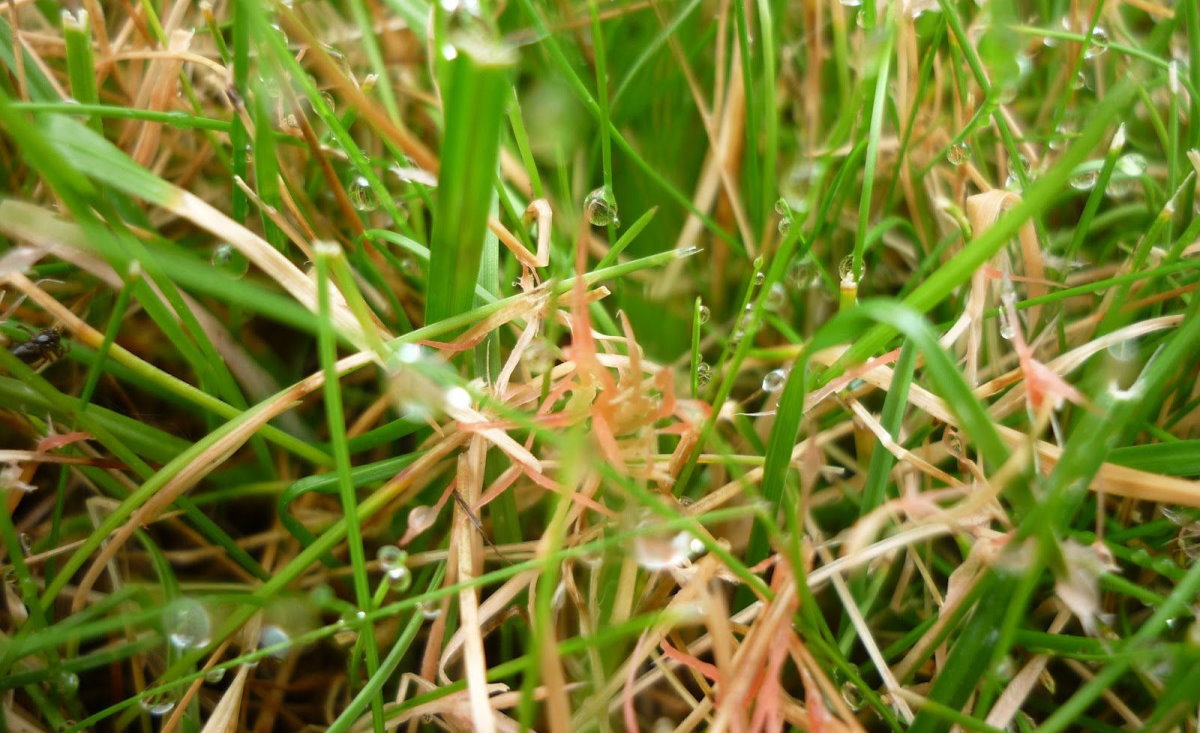
Fall fertilization supplies the essential nutrients required for natural defense mechanisms and cellular repair. Balanced nutrition keeps grass from producing overly succulent above-ground tissue that is highly susceptible to fungal diseases like red thread and snow mold.
6. Fall Fertilizer Improves Winter Hardiness
A plant’s ability to survive winter depends mainly on energy reserves stored in its roots before dormancy. Fall fertilizer helps grass accumulate the carbohydrates and proteins essential for surviving freezing temperatures.
Potassium plays a particularly vital role in winter hardiness. It regulates water movement within plant cells and increases cold tolerance to prevent ice crystals from rupturing delicate cell walls.
Warm-season grasses with access to plenty of potassium also experience less winterkill during unexpected harsh winter storms.
See Related:
7. Fall Fertilizer Improves Spring Greenup
Grass that receives fall nutrition greens up 2 to 6 weeks sooner than unfertilized turf, according to Ohio State University. Early greenup also helps suppress weeds that try to germinate early in the season, extending the time you can enjoy a beautiful lawn.
When to Apply Fall Fertilizer for Lawns
Timing is everything with fall fertilization. Apply too early and you’ll push top growth when you want root growth. Apply too late and the ground may be too cold for grass to absorb nutrients effectively.
| Grass Type | Application Window |
| Cool-Season | 1) 6 to 8 weeks before first frost (September to October) 2) Begining of dormancy (soil temps below 50 degrees) |
| Warm-Season | Mid-August to mid-September (as temperatures begin to cool) |
See Related: When is the Best Time to Apply Fall Fertilizer?
Timing Fall Fertilizer for Cool-Season Grasses
Cool-season grasses like Kentucky bluegrass and fine fescue should be fertilized about 6-8 weeks before the ground freezes. And again, as your grass is going dormant (when soil temperatures drop below 50).
Specific dates vary, but for most regions this is typically September for the first application and late October to mid-November for the second.
Timing Fall Fertilizer for Warm-Season Grasses
Warm-season grasses such as St. Augustine and Zoysia benefit from fall fertilizer, but they “follow a different schedule,” Hopkins says.
“They need a steadier supply of nitrogen throughout the growing season,” he says, and benefit from a final application between mid-August and mid-September as temperatures begin to cool.
Applying too late can encourage tender new growth that won’t survive the first frost.
How to Nail Your Fall Fertilizer Timing No Matter Where You Live
Calendar dates are guidelines but the local conditions are the most reliable signal. The September week that works in Minnesota may be too early in Georgia. Use these tools to confirm your timing:
Soil thermometer: Measures exact soil temperature at the 4-inch depth
Local extension office: Provides region-specific frost date information
Online tools: Check first and last frost date here and soil temperature with this tool.
Lawn appearance: Active growth signals the lawn is still absorbing nutrients
See Related: When Does Grass Stop Growing?
Best Fall Fertilizer Types and Ratios for Lawns
How to Read Fall Fertilizer Numbers (NPK Explained)
Those 3 numbers on every fertilizer bag (like 24-0-12) tell you exactly what’s inside and whether it’s right for fall. They represent the NPK ratio: the percentage of nitrogen, phosphorus, and potassium in the bag.
Each number is the percentage of that nutrient by weight. So a 24-0-12 fall fertilizer is 24% nitrogen, 0% phosphorus, and 12% potassium — the higher the number, the more of that nutrient it contains.
The best fall NPK ratio to look for is given by a soil test showing what nutrients your lawn’s missing. University of Minnesota recommends fall fertilizer with a grade close to 24-0-12. As a general rule for cool-season grasses, look for a nitrogen to potassium ratio close to 2:1 unless a soil test says otherwise.
Use a fertilizer with phosphorus if the soil test shows deficiency. A common NPK ratio with phosphorus for fall applications is 4-1-2 (e.g. a 16-4-8 fertilizer).
Shopping for fall fertilizer: Look for “winterizer” or “fall lawn food” on the label, and choose a product matched to your grass type — fall fertilizers for cool-season lawns usually contain more nitrogen than warm-season grasses need.
See Related:
Fall vs. Spring Fertilizer
Spring fertilizers typically prioritize nitrogen to push fast leaf and blade growth after dormancy. Fall fertilizers flip that priority focusing on root development and winter hardiness instead of top growth.
Avoid using a spring formula in fall. It can trigger a burst of tender top growth right before winter — the opposite of what you want.
Slow-Release or Quick-Release Fall Fertilizer
Both options work for a fall application, but at different times:
| Timing | Best Type | Application Rate |
| Early fall | Slow-release | Up to 1 lb nitrogen per 1,000 square feet |
| Mid to late fall | Quick-release | Up to 0.5 lb of nitrogen per 1,000 square feet |
See Related: Slow-Release vs Quick-Release Fertilizer
Organic or Synthetic Fall Fertilizer: Which Is Right for You?
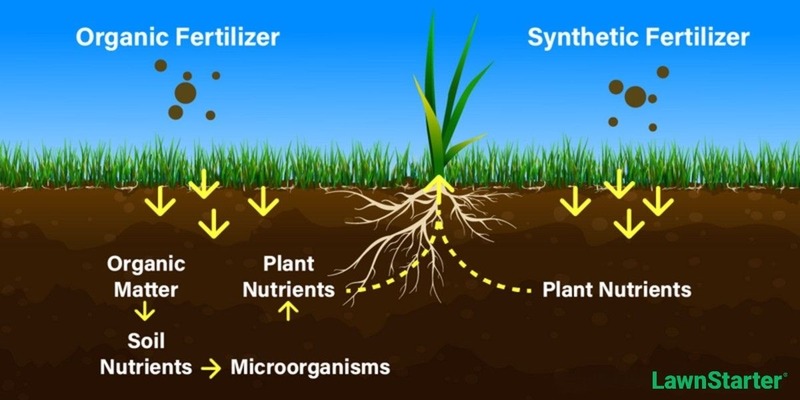
Both organic and synthetic fertilizers can prepare your lawn for winter. But, they behave differently in cool weather, and that shapes when you apply each.
| Type | How It Works | Best For |
| Synthetic | Delivers nutrients directly to roots, works regardless of soil temperature | Late-fall applications when soil drops below 55 degrees |
| Organic | Relies on soil microbes to release nutrients; stalls in cold soil | Early fall (September) while soil is still warm |
The key distinction is temperature. Organic fertilizers depend on microbial activity that slows significantly below 55°F, so they need warmer soil to do their job. Nitrogen sources that don’t rely on microbial activity (e.g. urea and ammonium sulfate) are more reliable for late-season feeding, according to Ohio State University.
How to Apply Fall Fertilizer to Your Lawn
Even the best fall fertilizer won’t help if it’s applied incorrectly. Proper application ensures even coverage and prevents lawn damage.
Fall Fertilizer Application Methods
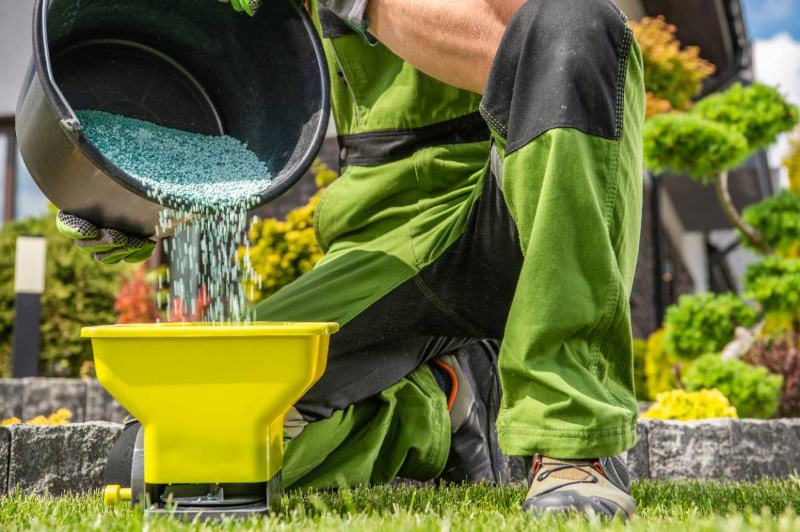
Use a broadcast or drop spreader for even coverage.
Before you start, check the fertilizer bag for the correct spreader setting.
Walk at a steady, consistent pace. Cover the perimeter first, then fill in the middle like you’re mowing.
Watering After Fall Fertilizer Application
After spreading fertilizer, water the lawn lightly — about a quarter inch is enough. Light watering moves nutrients off the blades into the soil and activates granular fertilizers.
3 Fall Fertilizer Mistakes (and How to Avoid Them)
Even a well-timed fall application can go sideways if you make one of these 3 common errors, all easy to avoid once you know what to watch for.
Applying too much: Over-fertilizing burns grass, creating brown patches. Always follow product label rates.
Uneven application: Streaky coverage results from inconsistent spreading. Use a spreader and overlap passes slightly.
Applying to wet grass: Granules stick to wet blades and cause burns. Apply to dry grass, then water afterward.
FAQs
Yes, but use a starter fertilizer blend with higher phosphorus, like a 10-20-10 ratio. Wait 4-6 weeks post-germination before applying standard fall fertilizer, and avoid high-nitrogen products that can burn tender seedlings.
If the soil hasn’t frozen yet, a late application still helps — your lawn will absorb what it can before going dormant. Once the ground freezes, skip fall treatment and apply early spring fertilizer instead.
A fall fertilizer ratio such as 24-0-12 can work well for fall if your soil already has adequate phosphorus. The high nitrogen content promotes root energy storage, while the potassium builds winter hardiness.
Let LawnStarter Handle Your Fall Lawn Care
Don’t let your lawn suffer through winter unprepared. LawnStarter connects you with trusted local lawn treatment pros who handle fall fertilization and other seasonal lawn care needs for a healthier, more beautiful lawn next spring.
Main Image: Hands holding granular fertilizer over a bag. Photo Credit: ronstik / Adobe Stock
Read More: Tips on How to Winterize Your Southern Lawn
