| Key Takeaways |
|---|
| • Carpetgrass thrives in tough lawn conditions where other grasses fail: poor, acidic, wet, or shady soils across the Gulf Coast and Southeast. • The trade-offs are real: frequent mowing in summer, tall seed heads, poor drought tolerance, and a short green season. • Choose carpetgrass if you want a low-input lawn for problem areas, not a manicured yard. |
Carpetgrass is either a low-maintenance warm-season turfgrass or a persistent grassy weed, depending on whether you planted it on purpose.
This guide covers everything you need to know about carpetgrass: how to identify it, its pros and cons, seeding tips, maintenance requirements (including lawn mowing), and how to get rid of it if it’s not welcome.
Whether you’re trying to maintain a carpetgrass lawn or get rid of it, the frequent mowing it demands can eat up your weekends. LawnStarter’s lawn mowing pros can handle that for you.
Carpetgrass Basics
Carpetgrass is a light green, warm-season turfgrass that’s common along the Gulf Coast. It spreads via above-ground stolons and tolerates poor, acidic, wet, and shady soils where most other grasses fail.
It’s used as a low-maintenance lawn grass across the Southeast but is also considered a weed when it appears uninvited.
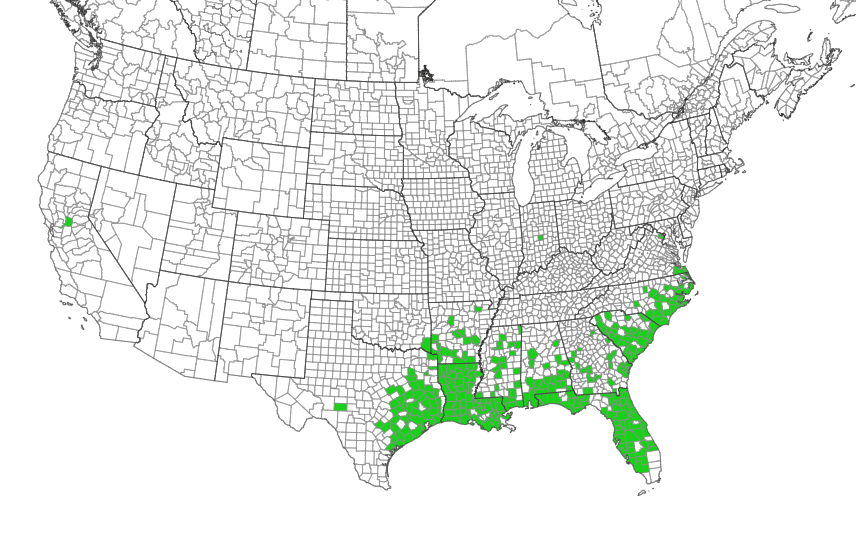
Carpetgrass thrives in USDA zones 8 to 10. It’s most common across the Gulf South (think Louisiana, Mississippi, Alabama, Florida, Georgia, and the Carolinas) and extends northward through Arkansas and Virginia.
Like all warm-season grasses, it grows actively in summer and goes dormant in winter.
Also known as Louisiana grass, flatgrass, and petit gazon, carpetgrass has a light green color and a medium texture, between coarse and fine.
Carpetgrass spreads through above-ground stems called stolons. Think of them as the grass equivalent of a strawberry plant’s runners, creeping across the soil surface and taking root wherever they touch down.
There are 2 main types of carpetgrass:
| Type | Scientific Name | Use |
| Narrowleaf carpetgrass | Axonopus fissifolius | Preferred for lawns; more attractive, less aggressive spread |
| Broadleaf carpetgrass | Axonopus compressus | Usually a weed; coarser texture, spreads rapidly |
How to Identify Carpetgrass
Not sure if that light green grass creeping across your lawn is actually carpetgrass? Here’s how to tell it apart from lookalikes like crabgrass and centipedegrass:
| Feature | What to Look For |
| Leaf blades | Light green, broad, rounded tips; coarse and flat texture |
| Seed heads | Distinctive “Y” or “peace sign” shape on slender stalks |
| Spreading pattern | Above-ground runners (stolons) that root down to form a dense mat |
Carpetgrass Leaf Blades
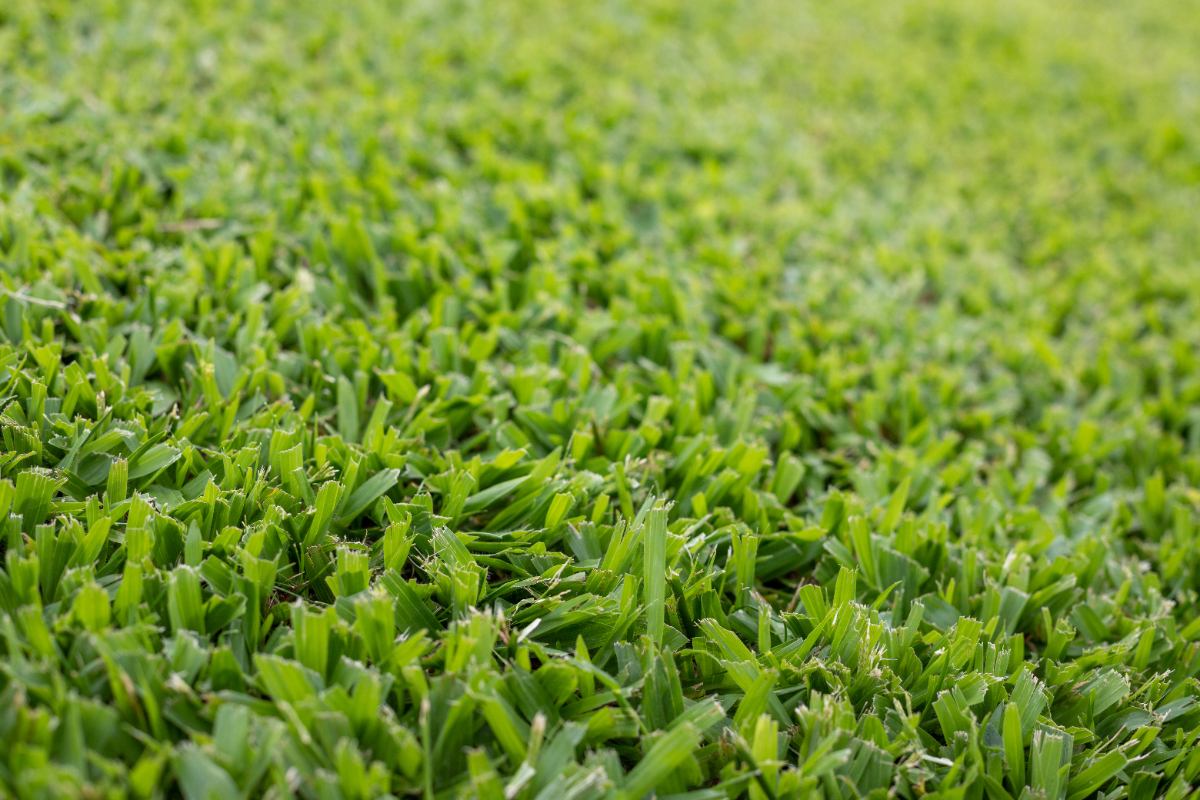
Carpetgrass has light green, broad, and rounded leaf tips, unlike the pointed tips of most other grasses. The leaves appear somewhat coarse and flat.
This is different from crabgrass, which has thicker, hairier leaves that grow from a central point.
It can also be confused with centipedegrass, which has a similar light green color. The key difference: Centipedegrass blades have notched or scalloped edges, while carpetgrass blades are smooth with fully rounded tips.
See Related: Centipedegrass Lawn Maintenance Guide
Carpetgrass Seed Heads
The most telling feature is the seed head. Carpetgrass sends up distinctive, slender stalks that split into 2 (or sometimes 3) branches at the top, looking like a “Y” or a peace sign. These pop up quickly in summer, often just a few days after mowing.
Carpetgrass Stolons
Like St. Augustinegrass, carpetgrass spreads via above-ground runners (stolons) that root down as they creep across the soil, forming that characteristic carpet-like mat.
Pros of a Carpetgrass Lawn
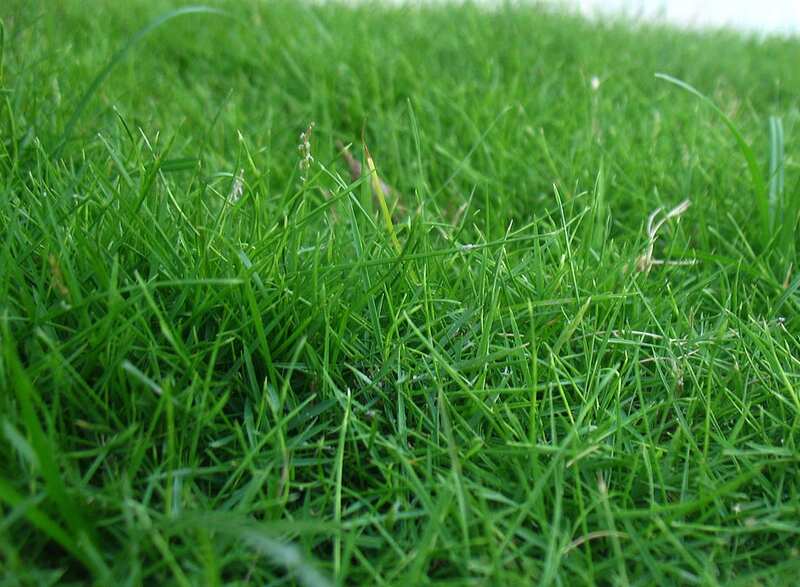
Here’s a quick overview of carpetgrass strengths and weaknesses:
| Pros | Cons |
| Tolerates poor, acidic, wet soil | Produces tall, unattractive seed heads |
| Shade-tolerant for a warm-season grass | Needs frequent mowing in summer to cut seed heads |
| Requires little to no fertilizer | Not drought-tolerant |
| Crowds out weeds naturally | Short green period (browns early) |
| Helps control erosion | Poor salt tolerance |
| Susceptible to pests and diseases |
✓ Carpetgrass Survives in Poor Soil Conditions
Carpetgrass is one of the few warm-season grasses that can thrive in low-fertility, acidic, or waterlogged soil, conditions that would kill Bermudagrass or centipedegrass outright.
Carpetgrass thrives in:
Low-fertility, sandy soils: These lack many essential plant nutrients.
Acidic soils: Carpetgrass thrives at a pH of 5.0 to 6.0, while Bermudagrass prefers 6.0 to 6.5. Not sure about your soil? A soil test can tell you in days.
Wet soils: These drain poorly and rarely dry out all the way.
✓ Carpetgrass Is Shade-Tolerant
Carpetgrass can handle moderate shade better than most warm-season grasses, including Bermudagrass, which needs at least 6 hours of direct sunlight per day. If your yard has heavy tree cover, carpetgrass is one of the more shade-tolerant warm-season options available.
✓ Carpetgrass Requires Little to No Fertilizer
With a carpetgrass lawn, you can get away with not fertilizing. That’s why cities often use this grass for parks, roadsides, and other low-maintenance areas.
If your carpetgrass grows thin and sparse, Louisiana State University (LSU) recommends up to 1 pound of nitrogen per 1,000 square feet per year.
✓ Carpetgrass Crowds Out Weeds
Carpetgrass forms a dense mat and spreads to fill gaps, so it doesn’t leave much room for weeds to sprout. That is a real perk for a low-maintenance lawn.
If weeds do encroach, controlling them is tricky. Carpetgrass is sensitive to many common herbicides, meaning a product that kills the weed might also kill the grass. Always check that a herbicide label specifically says it’s safe for carpetgrass before applying it.
✓ Carpetgrass Helps With Erosion Control
Dense grasses like carpetgrass help prevent soil erosion (the process of wind and rain weathering away topsoil). Erosion is especially a problem on slopes and sites with certain soil types, particularly silty soils.
See Related: How to Control Erosion in the Yard
Cons of a Carpetgrass Lawn
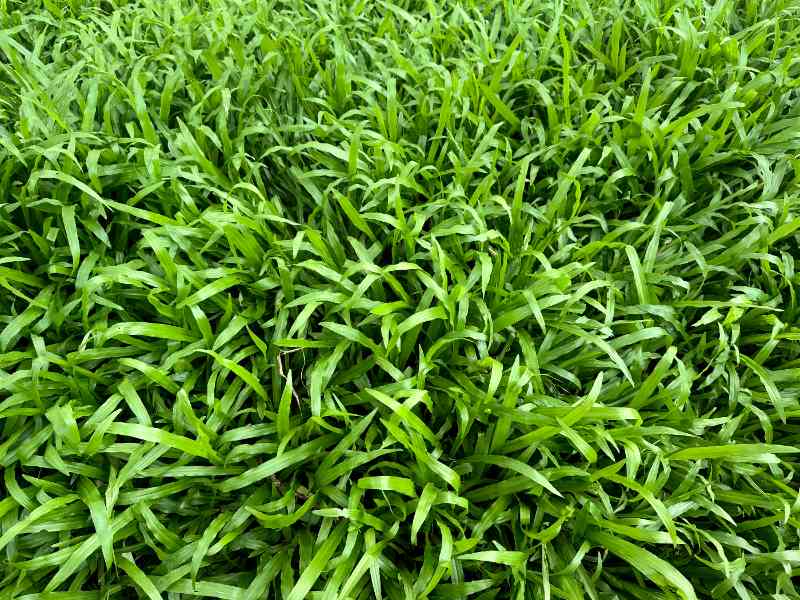
Even though carpetgrass has a leg up on other grass types in some ways, it has many shortcomings as a lawn grass.
✗ Carpetgrass Has Unattractive Seed Heads
Carpetgrass’s seed stalks can pop up about every five days and quickly reach up to 12 inches tall if you don’t mow them down. They’re tough and can be difficult to cut with some mowers.
✗ Carpetgrass Needs Frequent Mowing
To prevent those unsightly seed heads, you should cut your carpetgrass lawn more often during summer. An LSU AgCenter carpetgrass guide recommends weekly mowing from June through September.
✗ Carpetgrass Is Not Drought-Tolerant
Carpetgrass needs consistent moisture during dry periods. It will start showing stress quickly and requires irrigation to survive. If your area regularly sees summer drought, this is a dealbreaker.
✗ Carpetgrass Has a Short Green Period
Carpetgrass has poor cold hardiness. It goes dormant and turns brown at the first onset of cold weather in fall, earlier than most other turfgrasses.
It also takes longer to green up in spring. You’ll have to accept brown grass for a good chunk of the year.
✗ Carpetgrass Has Poor Salt Tolerance
Carpetgrass is found throughout the Gulf Coast states, but it does not tolerate high levels of salt well. Salt can leach moisture from the soil, making it challenging for the plant to grow.
If you plan to plant carpetgrass, test your soil for salt content first.
See Related: Best Salt-Tolerant Grasses for Your Lawn
✗ Carpetgrass Is Susceptible to Pests and Diseases
Carpetgrass is troubled by several insects and nematodes. Common diseases include leaf spot and large patch, but fungicide treatment is rarely needed.
Common pests causing damage in carpetgrass are mole crickets, white grubs, and plant-parasitic nematodes.
See Related: Common Lawn Diseases and How to Identify Them
How to Plant Carpetgrass
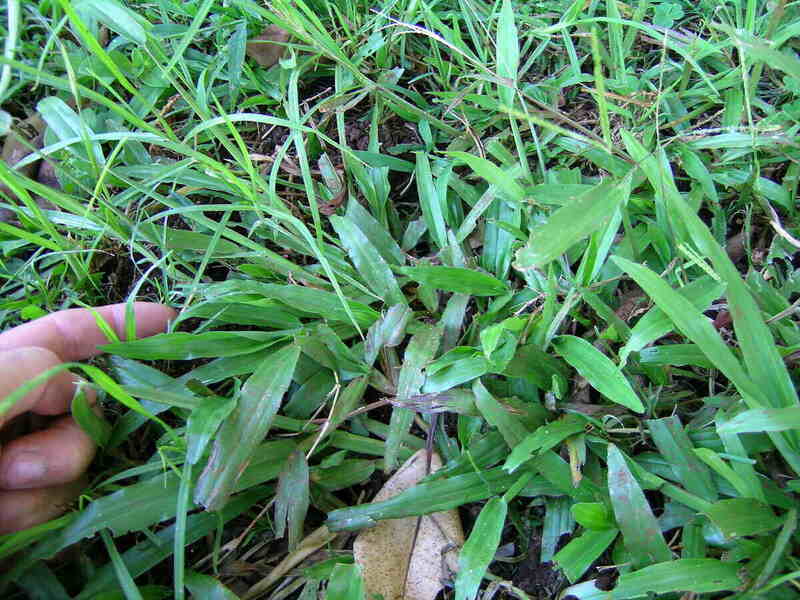
If you’ve decided carpetgrass is right for your yard, follow these tips to start your new lawn off on the right foot.
Plant carpetgrass in late spring or early summer after the last expected frost in your area.
Spread carpetgrass seed. LSU recommends a rate of 1 to 1.5 pounds of seed per 1,000 square feet.
Water daily for the first 2 weeks. Then, water weekly for 6 to 8 weeks. Your carpetgrass lawn will be established completely by 10 weeks.
Fertilize at 1 pound of nitrogen per 1,000 square feet. This helps carpetgrass establish faster.
Not a fan of DIY grass seeding? Find a local landscaping pro with LawnStarter to handle it. The average cost to seed a lawn is $0.09 to $0.15 per square foot.
See Related: When is the Best Time to Plant Grass Seed?
How to Maintain Carpetgrass
Keeping a carpetgrass lawn looking decent isn’t complicated, but it does require staying on top of mowing. Here are the key maintenance tasks, drawn from NC State University’s carpetgrass lawn care calendar:
Mow carpetgrass to a height of 1 to 2 inches: Don’t let it get taller than 2½ inches.
Water 1 inch per week once established.
Use a rotary mower: This works best for cutting down carpetgrass seed heads.
Select herbicides carefully: Many of them will damage carpetgrass if you have weeds.
Hold off on fertilizing: Wait until June at the earliest.
Dethatch when needed: Use a power rake or vertical mower if the thatch becomes thicker than ½ inch.
If you’d rather not DIY, Professional dethatching costs typically range from $65 to $165.
How to Get Rid of Carpetgrass
If carpetgrass is showing up uninvited in your lawn, it spreads by stolons and can be persistent.
Getting rid of it typically involves improving your soil conditions, applying selective herbicides (such as those containing quinclorac or MSMA), or pulling small patches by hand.
See Related: How to Get Rid of Carpetgrass
FAQs
Carpetgrass performs best in sandy, acidic, and poorly drained soils. While it can tolerate some clay, heavy clay soils with poor drainage and high pH may hinder its growth. Amending the soil with organic matter can improve conditions for carpetgrass establishment in clay-heavy areas.
No, they’re two entirely different grasses. Bermudagrass is fine-textured, dark green, and built for full sun and dry conditions. Carpetgrass is coarser, lighter green, and prefers moist, shady, and wet areas.
Yes, carpetgrass is often mixed with other warm-season grasses like Bermudagrass or bahiagrass. In shady or wet areas where other grasses thin out, carpetgrass naturally fills in. However, its lighter color and coarser texture can create an uneven appearance when mixed with finer, darker grasses.
Let LawnStarter Handle Your Carpetgrass Mowing
Carpetgrass isn’t for everyone, but it’s perfect for the right conditions. Plant carpetgrass if your yard has poor, acidic, or wet soil; heavy shade; and you’re fine with a less-manicured look.
Skip it if you want a dark green lawn, live somewhere prone to drought, or don’t want to mow weekly all summer.
If you do choose carpetgrass, remember it needs mowing more often than many lawns during summer, and that adds up quickly over a full season. LawnStarter’s local lawn care pros can take mowing service off your plate so you can enjoy your weekend instead.
Main Image: Dense green carpetgrass (Axonopus compressus) growing across lawn. Image Credit: sanchacampos / Adobe Stock
Related Posts: