Keep grass green in the winter by preparing it in the fall and maintaining it in the winter. With proper lawn care or grass paint, you can cultivate a green winter lawn.
With advice from turf experts, we’ll share fall and winter lawn care tips to keep your yard green even during the cold season.
If you don’t have time for the maintenance required to nurture a green winter lawn, a lawn care pro can help with your mowing, leaf cleanup, and weed control to ensure your yard is prepped for the chilliest months.
Essential Pre-Winter Lawn Preparation
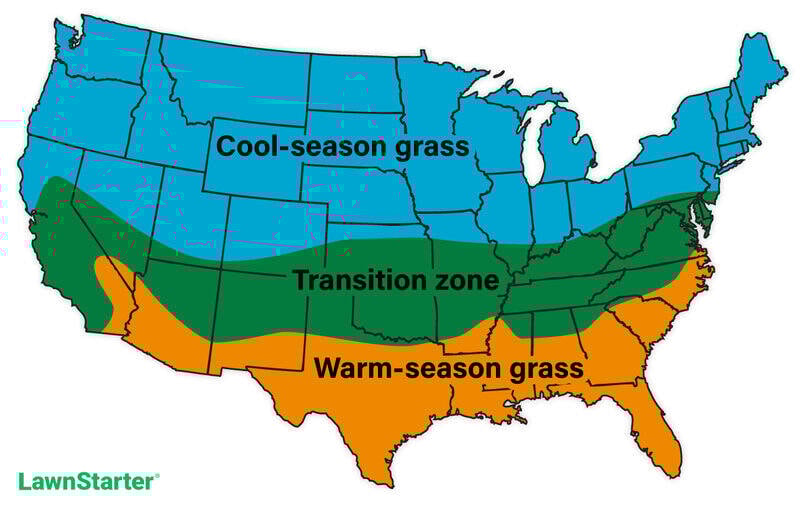
Warm-season grasses go dormant during winter, but in some areas of the U.S., it’s possible to keep cool-season grasses green during the winter season. Lawn winterization can help keep your cool-season grass green by fortifying its defenses.
Follow these key steps to strengthen your lawn before freezing temperatures come your way:
Fertilize in Late Fall
Soil test results are paramount because they provide a road map to proper fertilization. They reveal precisely what inputs are needed by identifying existing levels of:
- N-P-K (nitrogen-phosphorus-potassium)
- Micronutrients
- Organic matter
- pH
Conduct a soil test to choose the best fall lawn fertilizer for your lawn. Adding inputs your soil lacks is essential, but be careful not to over-fertilize. Becky Bowling, assistant professor at the University of Tennessee, says, “The biggest mistake I see folks make with their lawns is to over-love them.”
Here is how fall fertilization varies depending on the type of grass:
| Warm-Season Grass | Cool-Season Grass |
| Needs phosphorus and potassium fertilizer in the fall. May also need lime. | Needs nitrogen fertilizer in the fall |
| Early fall: Use quick-release nitrogen fertilizer only if necessary (or wait until spring, the ideal time for warm-season grass) | Early fall: Use slow-release nitrogen fertilizer Mid to late fall: Use quick-release nitrogen fertilizer |
| Apply 0.25 to 0.5 lbs of nitrogen per 1,000 sq. ft. | Apply 0.5 lbs of nitrogen per 1,000 sq. ft. |
See Related:
Mow Strategically
If your grass is growing, it needs mowing. Expect to stop mowing before winter when it’s consistently cooler than 50 F.
University of Georgia turfgrass Extension specialist Clint Waltz suggests mowing warm-season grass at its regular height before winter but says mowing cool-season grass a little low before winter can give it a “wow factor” come spring. Doing so inspires striping and prevents pests and diseases.
During the winter, mow high and only when needed, and avoid scalping your grass. “If your grass is actively growing during the winter because you’re in an area where it grows, then…you do (have to mow),” says Bernhard Leinauer, turfgrass Extension specialist at New Mexico State University.
Overseed Bermudagrass Lawns
Overseeding your Bermudagrass lawn with cool-season perennial ryegrass allows you to cultivate a green yard in the winter.
“(Overseeding) should only be done if the homeowner is growing Bermudagrass,” says Grady L. Miller, professor and Extension turfgrass specialist at North Carolina State University. “Ryegrass is too competitive in the spring/summer with most other grasses such that it can result in reduced growth and/or damage to the base grass.”
| Pro Tip: “If you have a grass that is green year-round, it may grow year-round, so it comes then with the additional maintenance,” Leinauer cautions. “So your entire growing season is now 12 months of the year, and that requires maintenance 12 months of the year.” |
Remove Leaves and Debris
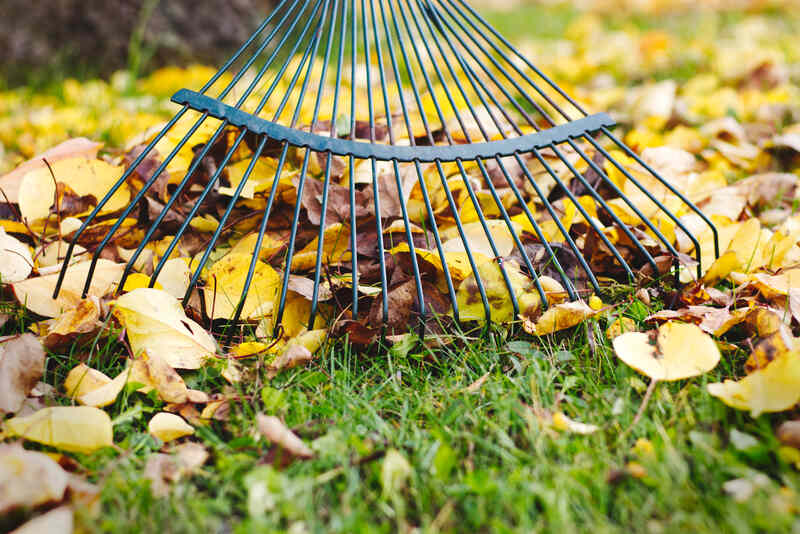
Fallen leaves, twigs, thatch, and other debris can hamper your lawn’s health and green winter color. Excess debris will:
- Block sunlight: Sunlight is key to greening grass, and debris blocks light from reaching the grass.
- Cause standing moisture: Winter debris often stays wet from snow or rain. Lawn diseases, such as snow mold, flourish in the humidity.
- Restrict airflow: Debris can smother grass.
- Encourage insects: Lawn waste shelters pests in the winter.
Rake the leaves to remove fall foliage and other debris in your yard. You can also mulch the leaves on your lawn by mowing over them. By doing this, you shred the leaves so they won’t block sunlight from reaching your grass, and the leaves provide nutrients to your grass.
See Related:
Control Weeds
Aggressive weeds that grow during the winter can outcompete grass and steal nutrients from your lawn, resulting in a brown yard.
Late summer through fall is the best time to prevent winter weeds. When the soil is 65 F to 70 F, apply pre-emergent herbicides to stop winter annuals from sprouting. In early winter, hand-pull any visible weeds.
Read More: Weed Spraying in Your Lawn: How to Do It Safely and Effectively
Winter Maintenance Techniques
There are a few things you can do to help encourage color in your lawn during the winter, including adding paint to your grass.
Water As Needed
“Sometimes in the late winter, with low humidity and wind, the turfgrass may actually benefit from irrigation,” says Miller, but be careful not to apply too much. “In my experience, the biggest mistake in winter lawn care is that the grass is being watered too heavily,” says Leinauer.
Follow these tips, by grass type, to keep your lawn hydrated in winter:
- Warm-season grass: During winter, warm-season grass lawns are dormant and need little water. Janet Hurley of Texas A&M AgriLife Extension warns that overwatering warm-season grass can cause large patch or root rot. When it’s below 70 F, she suggests watering only during drought.
- Cool-season grass: If the temperature is over 40 F and the ground is free of snow and ice, watering your lawn in the winter may help in dry conditions. In months with little rain, once or twice per month is enough.
For overseeded Bermuda lawns, expect to water in dry winter conditions: “Dormant grass doesn’t need a whole lot of water, but if it’s overseeded in green (ryegrass), then the grass is actually alive, and it needs some water,” Leinauer says.
Manage Snow and Ice
Agronomist John Daniels warns that runoff water containing sodium chloride (i.e., rock salt) can damage lawns and landscaping. He recommends calcium chloride ice melt because it works in weather as cold as -25 F and is “relatively safe” for lawns when applied correctly.
Read More: Ways to Protect Your Lawn From Salt Damage
Limit Foot Traffic
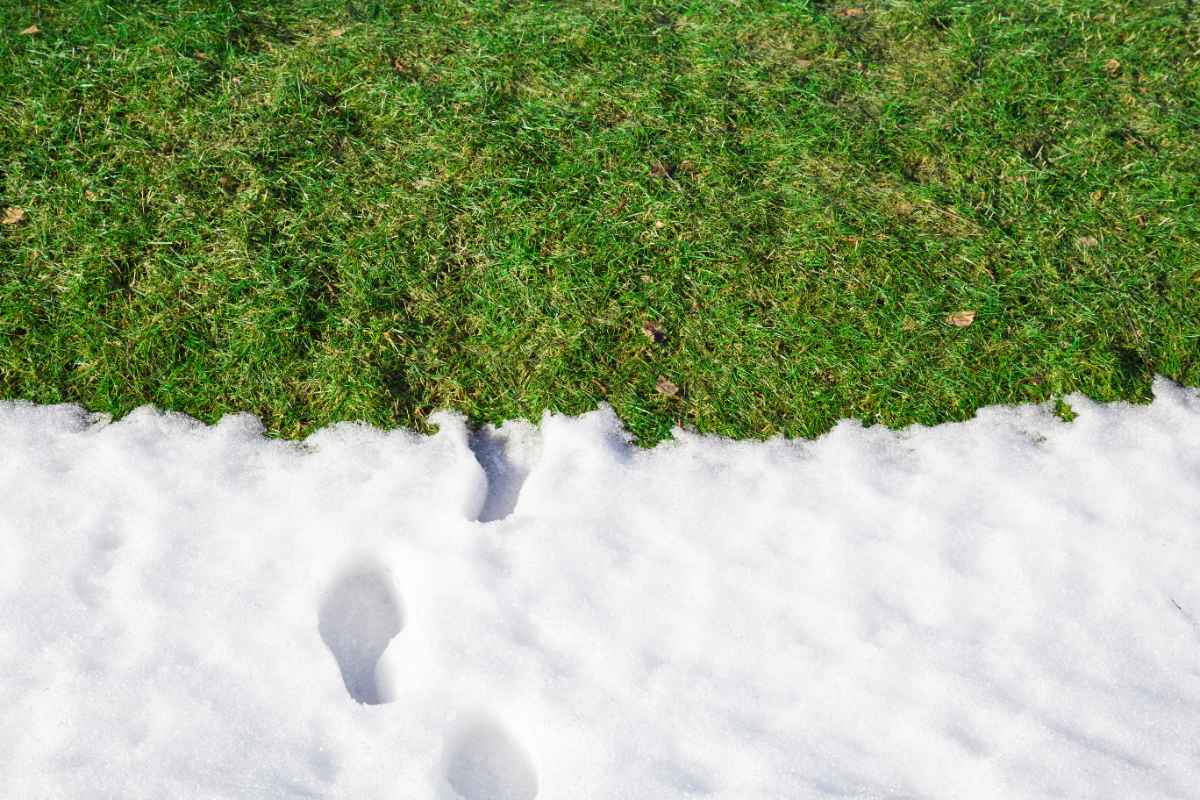
Warm-season grass is fragile when it’s frigid, making it more susceptible to foot traffic damage. Trampling on snow-covered cool-season grass might cause soil compaction.
Add Lawn Amendments
Soil amendments can keep your grass healthy during the winter while also preparing your lawn for spring.
Fall is the best time to apply lime, which helps reduce soil acidity, but it can also be applied in late winter. The freeze/thaw cycles of winter naturally work lime into the ground.
Add Turf Paint
Once soil temps fall below 50 F, warm-season grass goes dormant, causing color loss. You can’t stop dormancy, but you can temporarily mask it with grass paint.
“If you are in the Northeast, North Central (U.S.), or Northwest, where winters are relatively cold…there is not much you can do to keep grass green unless you paint it green,” says Leinauer. But “for part of the winter it’s under snow anyway, so…it wouldn’t make much sense to do anything,” he says.
But in areas that stay consistently above freezing, cool-season grass may stay awake and green throughout winter.
Hire a Lawn Care Pro This Fall
The best way to keep your lawn green this winter is to hire a lawn care pro this fall to mow, remove leaves, or fertilize. LawnStarter connects you to experienced outdoor service pros who are affordable and insured. With instant online quoting and a user-friendly app, it’s as easy as ordering a pizza.
Sources:
- Becky Bowling, assistant professor and Extension specialist at the University of Tennessee, Knoxville, TN. Personal interview by Michelle Selzer.
- “Bermudagrass Home Lawn Management Calendar.” By Casey Reynolds, turfgrass specialist, and Matt Elmore, turfgrass specialist. Texas A&M AgriLife Extension.
- Bernard Leinauer, turfgrass Extension specialist of New Mexico State University, Las Cruces, NM. Personal interview.
- “Carolina Lawns: A Guide to Maintaining Quality Turf in the Landscape.” By Grady Miller, professor, Charles Peacock, professor and Extension turfgrass specialist, Arthur Bruneau, professor emeritus, Fred Yelverton, Extension specialist, Jim Kerns, associate professor and Extension specialist, Rick Brandenburg, Extension specialist, Richard J. Cooper, professor, and Matt Martin, Extension associate. N.C. Cooperative Extension.
- Clint Waltz, Extension specialist at the University of Georgia Extension, Griffin, GA. Personal interview by Michelle Selzer.
“Fundamentals of Turfgrass Management.” Nick Christians, 2011. Wiley. Accessed via Google Books. - Grady L. Miller, professor and Extension turfgrass specialist of North Carolina State University, Raleigh, NC. Personal interview.
- “A Guide to Overseeding Warm-Season Perennial Grasses with Cool-Season Annuals.” By Gerald W. Evers, regents fellow and professor. Texas A&M University.
- “Kentucky 31 Fescue.” By Gerald Klingaman, horticulturist. University of Arkansas Division of Agriculture Research & Extension.
- “Lawn Management Through the Seasons.” By Peter Landschoot, former professor of turfgrass science. PennState Extension.
- “Seasonal Growth Pattern of Grasses.” University of California.
- “SPN: Warm-Season Turfgrass Fall/Winter Preparation“. By Janet Hurley, Extension program specialist. Texas A&M AgriLife Extension.
- “Turfgrass Specialist Discusses Rumored Benefits of Epsom Salt in Gardens.” University of Georgia.
- “Weed Control in Home Lawns“. University of Georgia.
- “Which Ice Melts are Safest for Turf?” By John Daniels, agronomist. United States Golf Association.
- “Winterkill Recovery Strategies.” By Cory Isom, agronomist. United States Golf Association.
Main Image: Grass covered partly with snow. Image: josefkubes / Adobe Stock
Related Posts: