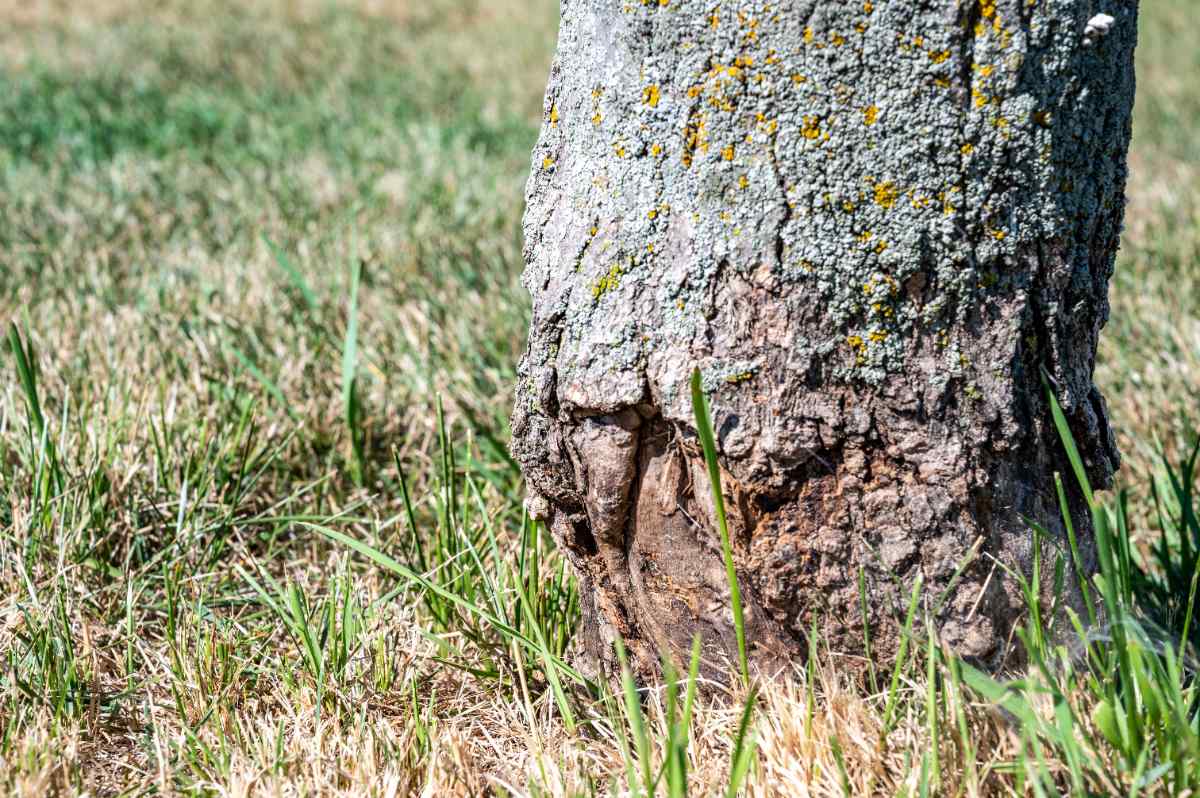
If you’ve noticed scrapes or missing bark at the base of a tree in your yard, lawn mower blight is likely the cause.
The fix is straightforward once you know what’s happening: Keep mowers and string trimmers away from the trunk. This guide walks you through what the damage looks like, why it’s dangerous, and how to prevent lawn mower blight with methods that actually work.
Protecting trees while mowing takes attention every single time and it’s easy for a rushed weekend mow to undo months of careful prevention. That’s why many homeowners hire one of LawnStarter’s lawn mowing pros instead.
| Key Takeaways |
|---|
| • Lawn mower blight is bark damage from repeated mower or trimmer contact, and it can kill a tree if left unchecked. • A mulch ring around tree bases and using hand shears instead of string trimmers near trunks are the most effective prevention methods. • If less than 25% of the trunk’s bark is damaged, the tree can likely recover with proper care. |
What Is Lawn Mower Blight?
Lawn mower blight is physical damage to tree bark caused by repeated contact with lawn mowers or string trimmers, and it’s more common than most homeowners realize.
This is not a disease you can spray for, but mechanical injury that builds up over time, quietly weakening the tree until the damage becomes impossible to ignore.
See Related: What is Lawn Mower Blight?
What Causes Lawn Mower Blight?
It happens when the deck of a lawn mower or the string of a string trimmer repeatedly bumps, scrapes, or cuts the bark at the base of a tree trunk. Like any repeated wound, the damage accumulates over time.
Young, thin-barked trees are especially vulnerable (on smooth-barked species like maples, bark can be under 1/16 inch thick), but repeated damage can harm even mature trees.
Around trees, even experienced mowing pros need to slow down. Commercial string trimmers cut quickly, and a single pass too close to a trunk can damage bark. If you outsource your mowing, ask your crew how they handle the area near trees.
What Does Lawn Mower Blight Look Like?
Check the base of the trunk, right at the height where a mower deck or trimmer would make contact. The severity of the signs indicates how much intervention your tree needs:
| Damage Level | What You’ll See | Tree Prognosis |
| Minor | Small scrapes, slight bark peeling | Tree will recover with care |
| Moderate | Exposed wood, discoloration, cuts | Needs immediate attention |
| Severe | Girdling, deep gashes, wilting leaves | May not survive |
Over time, you might also notice signs your tree is dying, like yellowing or wilting leaves, reduced growth, or branch dieback.
How Lawn Mower Blight Harms Your Trees
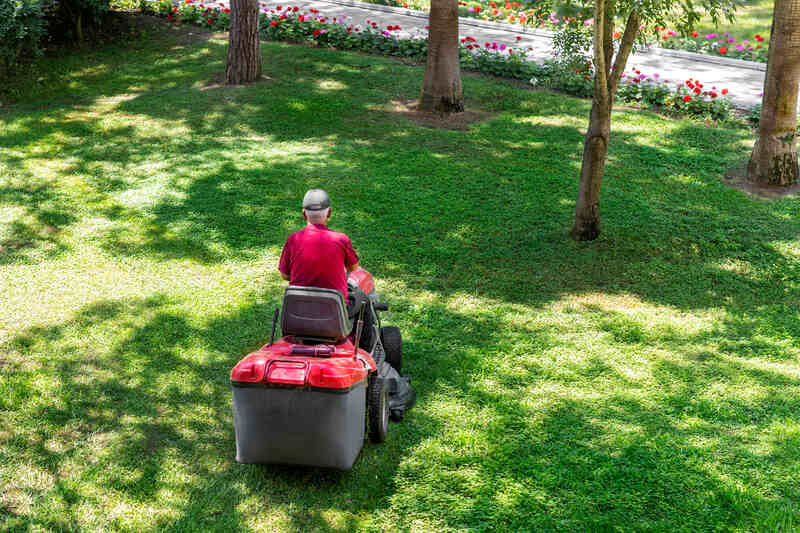
A few scrapes might not seem like a big deal, but they compromise the tree’s most important defense system. The outer bark protects a critical layer just beneath it called the cambium.
This thin ring of living cells acts like a highway, moving water and nutrients between the roots and the leaves.
When this layer is damaged, you’re essentially cutting off the tree’s lifeline. Mature trees can take years to show decline from cumulative bark damage. This means the damage you’re causing today may not become visible until it’s too late to save the tree.
If the damage extends all the way around the trunk (a process called girdling) the tree can no longer move nutrients and will eventually die.
Even smaller wounds create an open door for pests and diseases to invade, essentially creating zombie trees that rot from the inside out while still appearing alive.
Can Lawn Mower Blight Be Fixed?
If less than 25% of the bark around the tree trunk is damaged, your tree will likely bounce back. Make sure to give it the right amount of water, balanced fertilizer, and prune any damaged branches.
If the injury goes all the way around the trunk, the tree might not survive. In cases like this, consult a certified arborist to determine whether the tree can be saved.
See Related: How to Save a Dying Tree
How to Prevent Lawn Mower Blight
Preventing lawn mower blight comes down to one principle: put distance or a physical barrier between your mower and the tree trunk. Here are seven ways to do it:
| Prevention Method | Best For | Difficulty |
| Eliminate weeds from tree base | All tree types | Easy |
| Install edging | Permanent protection | Moderate |
| Add mulch layer | All tree types | Easy |
| Mow carefully | Quick fix | Easy |
| Use hand shears | Small areas near trunk | Easy |
| Install tree cage | High-traffic mowing areas | Moderate |
| Apply tree wrap | Young or thin-barked trees | Easy |
Eliminate Weeds from the Tree Base
The first step is to remove any grass and weeds growing too close to the trunk. This eliminates the need to bring mowing equipment near the tree in the first place.
Marianne C. Ophardt, a horticulture specialist at Washington State University, recommends creating at least a 12-inch “weed-free zone” around the base of your trees.
Install Edging
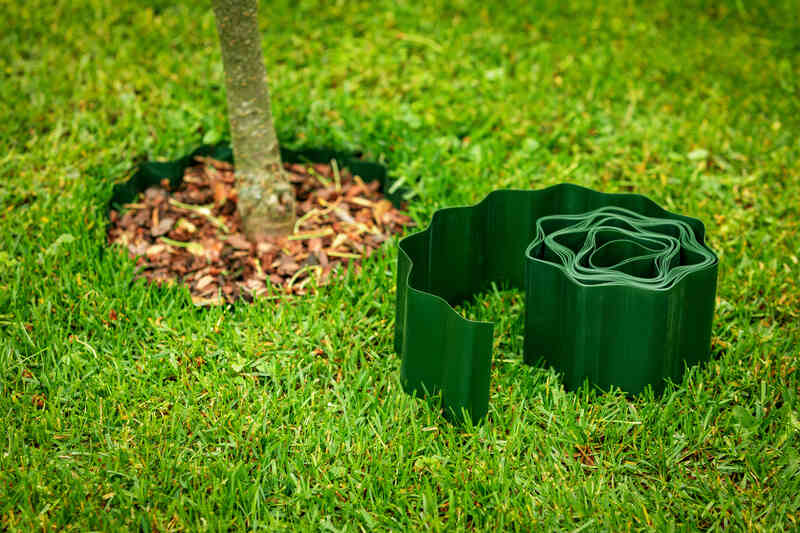
Once you’ve removed the weeds, edge the area to clearly define the boundary and make it harder for mower blades to accidentally hit the trunk. Bricks, concrete, vinyl, or cedar board are typically better choices than metal or plastic, which can bend or break over time.
If you’re handy, DIY edging is an option. Otherwise, it’s worth calling a pro who can dig around roots without damaging them. Professional edging costs between $3.50 and $8.80 per linear foot.
See Related: Garden Edging 101: Ideas and Tips for DIY Installation
Add a Layer of Mulch
The next step is to add some mulch to the weed-free area. You can use wood chips, compost, straw, or shredded bark. Many of which you can source as free mulch.
For hardwood trees, mulching can also increase tree growth by 26% to 29% compared to bare ground, and nearly double growth compared to trees competing with surrounding grass or weeds.
Richard Jauron, a horticulture expert from Iowa State University, recommends adding a layer of 2 to 4 inches of mulch.
Keep mulch 3 to 6 inches from the trunk. Stacking mulch against the trunk — a common mistake known as “volcano mulching” — traps moisture and harms the tree.
“That can result in crown rot or root rot, and then that encourages voles,” says Chuck Vogt, owner of Metro Lawns in Atlanta. “When voles have a place to hide, they’ll start feeding right there on the roots of the plant, and that causes more damage.”
See Related:
Mow Carefully
If creating a clear area around your trees sounds like too much hassle, you can prevent lawn mower blight by simply mowing carefully. Stay a safe mowing distance of several inches from the trunk.
String trimmers operating at full speed can flay bark in a single pass. Even brief, accidental contact removes the protective outer layer the tree needs to survive.
A push mower or smaller deck gives you better control around tight spots.
See Related: How to Mow Your Lawn: A No-Nonsense Guide
Trim Grass with Hand Shears
While you might want to grab a string trimmer for tall grass around your tree, it’s better to avoid it. String trimmers work well around signs and poles, but the nylon line easily nicks tree bark.
Instead, use hand shears to trim the grass that‘s near your tree‘s base.
See Related: Best Garden Shears
Cage Your Trees
Another option is to build a protective cage around your trees. It’s not the prettiest solution (think chicken wire around the base, not a decorative fence), but it creates a hard physical stop that keeps mower blades completely clear of the trunk.
Here’s how to do it:
Get your materials: Use a sturdy wire mesh or heavy-duty plastic fencing that’s at least 12 inches tall.
Clear the area around the trunk base: You’ll need at least a 3-inch space free of grass and weeds.
Secure the cage: Install the fencing in the ground and use stakes if needed. Make sure it doesn’t touch the tree trunk. That’ll trap moisture against the bark.
Use a Tree Wrap
Tree wraps can also protect your trees from lawn mower blight, especially if they’re young or thin-barked trees. Tree wrap is a commercial product, typically fabric, paper, or corrugated material, that you spiral around the lower trunk.
Tree wrap rolls are inexpensive. You can buy a 3-inch by 50-foot roll for about $19. However, proper tree wrap use requires seasonal removal during the growing season to prevent moisture buildup.
See Related: Tree Wrap: What It is, Why to Use It, and How
When to Hire a Pro
Protecting your trees while mowing takes attention every single time. One rushed weekend mow, one careless pass with a string trimmer, and months of careful prevention can be undone in seconds.
The damage compounds quietly. By the time wilting leaves or branch dieback show up, the cambium underneath the bark may already be beyond repair. And if girdling occurs, even a mature tree can be lost.
The most reliable way to keep lawn mower blight from ever happening is to let a trained pro handle the mowing. LawnStarter’s lawn mowing pros stay well clear of trunks and surface roots.
FAQs
Lawn mower blight is physical bark damage to tree trunks caused by mowing equipment. Lawn blights are turf diseases that affect grass. The most common is Pythium blight, which shows up as dark, greasy patches that turn reddish-brown.
The best time to install protective barriers like cages or wraps is in early spring, just before the growing season kicks off. Setting them up while trees are still dormant means they won’t be disturbed as growth begins.
No. Lawn mower blight is a mechanical injury, not a disease, so it doesn’t spread from tree to tree. However, the same mowing and trimming habits can cause similar bark damage to multiple trees in the same yard.
Main Image: Tree damaged by weed eater. Image Credit: Lost_in_the_Midwest / Adobe Stock
