| Key Takeaways: |
|---|
| • Aerate cool-season grasses in early fall; warm-season grasses in late spring • Choose an aerator based on your yard size • Cut grass to its lowest recommended height • Apply 1 inch of water 48 hours before aeration to soften soil |
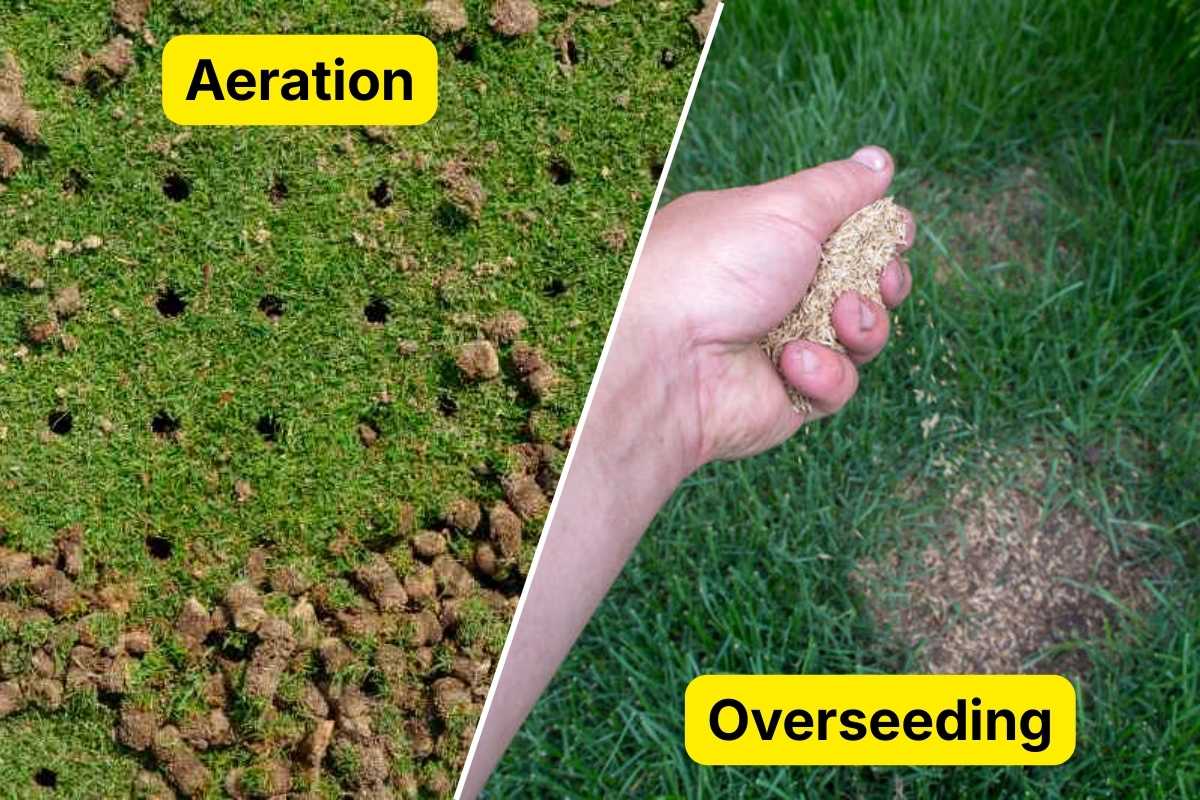
Preparing your lawn for aeration and overseeding doesn’t have to be complicated, but a little prep goes a long way. You’ll need to test your soil, mow, dethatch, mark obstacles, and water deeply.
This guide walks you through 7 straightforward steps to prepare your lawn for these important lawn care tasks, so you get better results without wasted time and effort.
If you’d rather skip the DIY work, hire local pros to aerate and overseed your lawn for you, handling everything from prep to post-care.
7 Steps to Prepare Your Lawn for Aeration
These 7 steps walk you through how to get your lawn ready and prevent common aeration mistakes:
Step 1: Get the Timing Right: When to Aerate and Overseed
Before starting, it’s important to determine the best time to aerate and overseed:
- Cool-season grasses (fescue, bluegrass, ryegrass): Early fall (mid-August to mid-September) is ideal. Spring (March to mid-June) is the second-best option.
- Warm-season grasses (Bermuda, Zoysia, St. Augustine): Late spring to early summer (April to July) when grass is actively growing.
Aerating during your grass’s peak growing season allows it to recover quickly and fill in the holes.
See Related: Best Time to Aerate and Overseed Your Lawn
Step 2: Test Your Soil (Optional but Recommended)
A soil test reveals your pH level and nutrient deficiencies, helping you decide whether to apply lime or fertilizer after aerating. Most testing services cost $15-$100 and provide results in 1-2 weeks.
If your soil pH is below 6.0, applying lime after aeration will be far more effective than applying lime alone. Order a test kit from your local Extension office or use a mail-in service.
See Related: How to Prepare a Soil Sample
Step 3: Choose Your Aeration Method
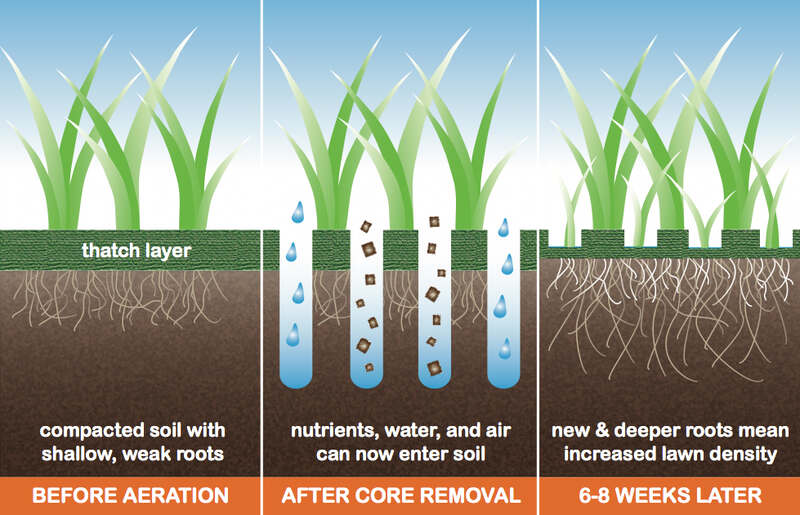
Core aeration pulls 2- to 3-inch plugs of soil from your lawn, creating channels for air and water. This is the most effective method for compacted lawns.
Spike aeration simply pokes holes without removing soil. While cheaper, it can actually increase compaction around each hole.
Best choice: Core aeration delivers superior results. The cost of professional aeration ranges from $107 to $202, depending on lawn size. You can also rent a core aerator for $100 per day.
Equipment options:
- Manual aerator: Good for small areas (under 1,000 square feet)
- Push-behind aerator: Gas or electric-powered, ideal for medium lawns (1,000-5,000 square feet)
- Tow-behind aerator: Attaches to a lawn tractor, best for large properties (5,000+ square feet)
Step 4: Mow Your Lawn Short
How short should you cut the grass before aerating? Mow to the lowest recommended height for your grass type: Typically 2-3 inches for cool-season grasses and 1-2 inches for warm-season varieties.
Shorter grass allows the aerator tines to penetrate the soil more effectively and makes it easier for seeds to reach the soil.
Important: Never remove more than one-third of the grass blade in a single mowing. If your lawn is currently 6 inches tall and needs to be 2 inches, mow it down gradually over 2-3 sessions.
See Related: What’s the Best Height to Cut Your Grass?
Step 5: Dethatch Your Lawn (If Needed)
Thatch is the layer of dead and living grass and debris between soil and green grass. A thin layer (under 1/2 inch) is beneficial, but excess thatch blocks water and nutrients from reaching roots.
Do you need to dethatch? Take a walk across your lawn. If it feels spongy or bouncy underfoot, you likely have excess thatch.
Professional dethatching costs $65 to $165, or you can purchase a dethatcher for around $140.
See Related:
– Signs Your Lawn Has Too Much Thatch
– How to Dethatch Your Lawn
Step 6: Mark Underground Obstacles
Before aerating, mark every underground obstacle with flags or spray paint:
- Sprinkler heads and irrigation lines
- Buried cables and wires
- In-ground lighting
- Invisible dog fences
Core aerators penetrate 2-4 inches deep and can damage anything buried less than 6 inches below the surface. Repairing a punctured irrigation line can be an unnecessary expense.
Call 811: If you’re unsure where utility lines are buried, call 811 at least 2-3 business days before aerating. This free service will mark gas, electric, water, and communication lines.
Step 7: Water Your Lawn Deeply
Should you water before aerating? Yes. Apply 1 inch of water to your lawn 48 hours (2 days) before aeration. This softens the soil enough for the aerator tines to penetrate deeply and extract full soil cores.
Alison O’Connor, professor of horticulture with Colorado State University Extension, also encourages people to conduct an irrigation audit beforehand. “An audit just means putting out some uniform cups in the irrigation area and collecting the irrigation output,” she says.
She explains that you need to “run the system for a set amount of time (i.e., 15 minutes) and then look at the distribution in the cups. You may identify gaps in coverage. If you apply 1/4-inch of water in 15 minutes, then it will take 60 minutes to apply 1 inch of water.”
Timing is critical: Water too early (3+ days before) and the soil may dry out. Water too close to the aeration day, and the soil becomes muddy.
Next, aerate your lawn. Follow our guide for tips and advice: How to Aerate Your Lawn.
Post-Aeration: What to Do Next
Your lawn is aerated now and ready for seeding. These are the steps to follow to make the most of this process:
1. Manage Soil Plugs
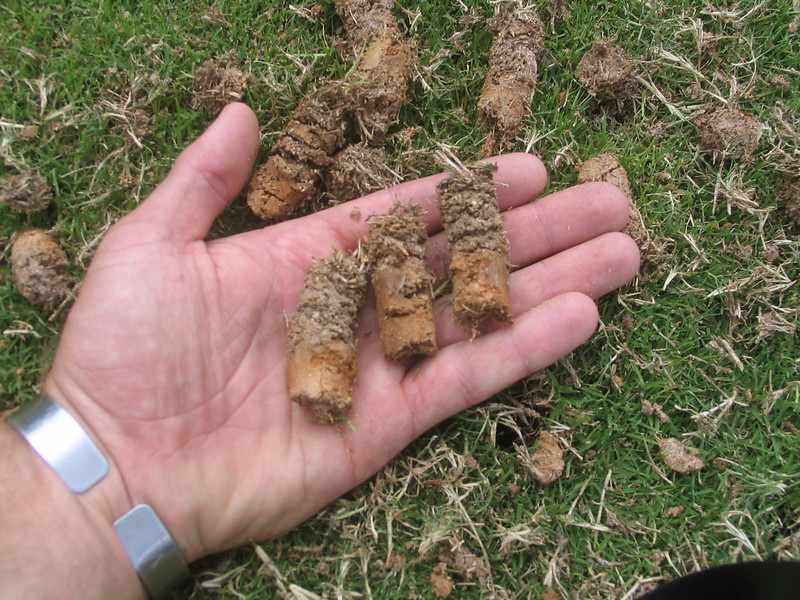
The soil cores pulled during aeration are nutrient-rich. You can leave them to break down naturally within 1-3 weeks, or break them up by raking or mowing over them to speed decomposition.
2. Overseed Immediately
Aeration creates the perfect seedbed. Apply seed within 24-48 hours of aerating for best results.
O’Connor recommends this method for overseeding: “Apply half of the seed needed in one direction; then apply the other half in the opposite direction. Gently rake to work the seed into the aeration holes.” She explains that “the seed needs to be in contact with the soil. If the seed is on top of the lawn/soil, it’s unlikely to germinate.”
See Related: How to Overseed a Lawn in 8 Simple Steps
3. Fertilize and Lime
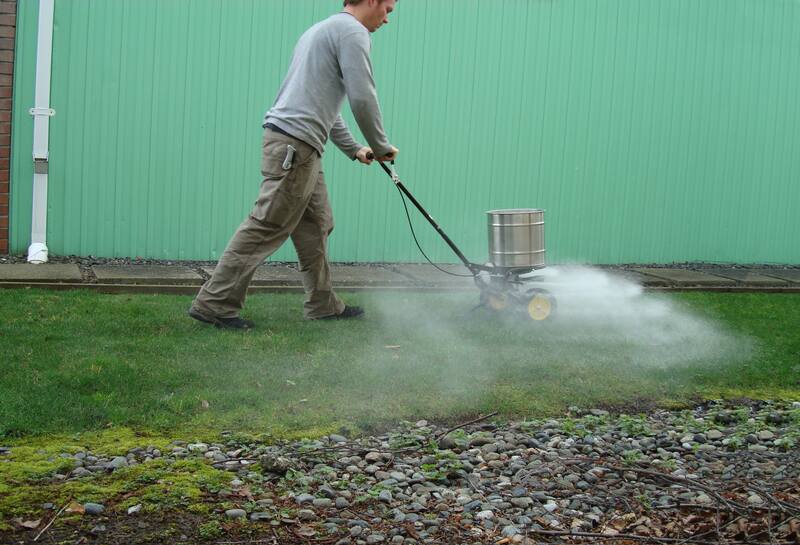
Apply starter fertilizer immediately after seeding. If your soil test revealed a low soil pH, apply lime 1-2 weeks after seeding and water thoroughly to wash it off grass blades (which prevents burning).
See Related: Lime for Lawns: Why, When, and How to Lime a Lawn
4. Water Frequently
Keep the top 2 inches of soil consistently moist for 2-3 weeks. O’Connor explains that “this might mean 2-4+ times per day for a few minutes, depending on the season, the temperature, your irrigation system, and natural precipitation.” Then, you’ll “adjust irrigation as needed as the seedlings mature,” she says.
See Related: How Often to Water Grass Seed
5. Limit Foot Traffic
Avoid heavy use of your lawn for 2-3 weeks after aeration and overseeding. The holes need time to heal, and germinating seeds are fragile.
How Much Does Lawn Aeration and Overseeding Cost?
Professional aeration with overseeding costs $0.07 to $0.23 per square foot, which puts the price at $350 to $2,300 for an average-sized lawn (5,000-10,000 square feet).
DIY costs for aeration and overseeding range from around $120 to $1,600 for a 5,000- to 10,000-square-foot lawn. Here’s the breakdown:
- Core aerator rental: $100 per day (not including truck rental costs)
- Grass seed: $2-$40 per pound (Overseeding rates vary by grass type. Bermudagrass needs about 2 pounds per 1,000 square feet, while turf-type tall fescue needs about 4 pounds per 1,000 square feet.)
Save yourself the time, trouble, and muscle strain. Hire a lawn aeration professional to get the job done right the first time.
FAQ
Always aerate before seeding. Aeration creates small holes that give seeds direct contact with soil, dramatically improving germination rates. Seeding before aerating would disturb the seed placement and reduce effectiveness.
Yes, but rental equipment can be heavy and challenging to maneuver. A push-behind aerator weighs 150-200 pounds, and you’ll need to make 2-3 passes over your lawn. If your lawn exceeds 5,000 square feet or has significant slopes, hiring a lawn aeration professional is often more cost-effective.
Wait 2-4 weeks after aerating and overseeding before mowing. This gives new grass seeds time to germinate and establish roots (most grass germinates within 7-14 days). When you do mow, set your blade to the highest recommended height.
See Related: When to Mow After Overseeding Your Lawn
Hire a Professional to Prep Your Lawn
Preparing your lawn for aeration and overseeding takes time and physical effort. If you’d rather spend your weekend relaxing, LawnStarter connects you with trusted local lawn aeration professionals who can handle everything you need.
If you’re eager to keep your newly overseeded lawn well-taken care of, we can also connect you to trusted lawn care pros.
Sources:
Alison O’Connor, professor of horticulture with Colorado State University Extension. Personal interview.
Main Image: Side by side image of Aeration and Overseeding in a lawn.
Image Credits:
Aeration: Shutterstock
Overseeding: CreativeSuburb / Adobe Stock
Related Posts: