| Key Takeaways |
|---|
| • Ladybugs, lacewings, and ground beetles are among the most effective beneficial insects for lawns. • Native plantings and reduced pesticide use are the best ways to attract beneficial insects naturally. • Beneficial insects are available online from $6 per egg case to $40+ for specialist species. |
Not all lawn bugs are bad guys. Ladybugs, ground beetles, lacewings, and other beneficial insects actively protect your grass and garden plants from destructive pests around the clock.
The challenge? Knowing which bugs to welcome and how to keep them around. Many homeowners accidentally kill their garden’s best defenders while trying to eliminate the bad ones.
With tips from 2 experts, this guide identifies the most helpful lawn and garden insects, explains what they do, and shows you how to attract them naturally, or where to buy them if needed.
| Need professional lawn care that works with nature? Get a quote from LawnStarter’s local lawn care pros who understand beneficial insect management. |
Common Lawn and Garden Pests Controlled by Beneficial Insects
Understanding which beneficial insects target which pests helps you make smart purchasing and habitat decisions:
| Pest Problem | Beneficial Insect Solution | How It Works |
|---|---|---|
| Aphids on grass and plants | Ladybugs, lacewings, aphid midges, hoverflies | Predators eat dozens of aphids daily |
| White grubs in lawn | Ground beetles, beneficial nematodes | Beetles eat larvae; nematodes infect and kill |
| Caterpillars on vegetables | Braconid wasps, praying mantises, soldier beetles | Parasitic wasps lay eggs inside host; beetles and mantises hunt |
| Spider mites and thrips | Minute pirate bugs, predatory mites, lacewings | Active hunters use piercing mouthparts to kill on contact |
| Scale insects | Ladybugs, lacewings, parasitic wasps | Predators pierce armor; wasps lay eggs beneath scales |
| Whiteflies | Lacewings, minute pirate bugs, parasitic wasps | Predators eat whitefly nymphs and adults; wasps parasitize nymphs |
How Beneficial Insects Protect Your Lawn and Garden
Unlike chemical treatments that kill everything and require repeated applications, beneficial insects target the pests that damage your plants and turf. Think of them as your lawn’s immune system.
Here’s what beneficial lawn insects and garden bugs do for you:
- Natural pest management: They hunt and consume harmful insects like aphids, grubs, caterpillars, and mites before populations explode
- Reduced chemical use: Fewer pesticide applications mean less exposure for your family, pets, and local wildlife.
- Cost savings: A single ladybug eats up to 5,000 aphids in its lifetime, per North Dakota State University — that’s real money in prevented plant damage.
- Pollination services: Many beneficial insects double as pollinators, helping flowering plants and vegetables produce fruit.
- Improved soil health: Decomposer insects break down organic matter, releasing nutrients and enriching your soil naturally.
The presence of these helpful bugs creates a balanced ecosystem where pest problems rarely escalate to crisis levels.
The Most Beneficial Lawn Insects
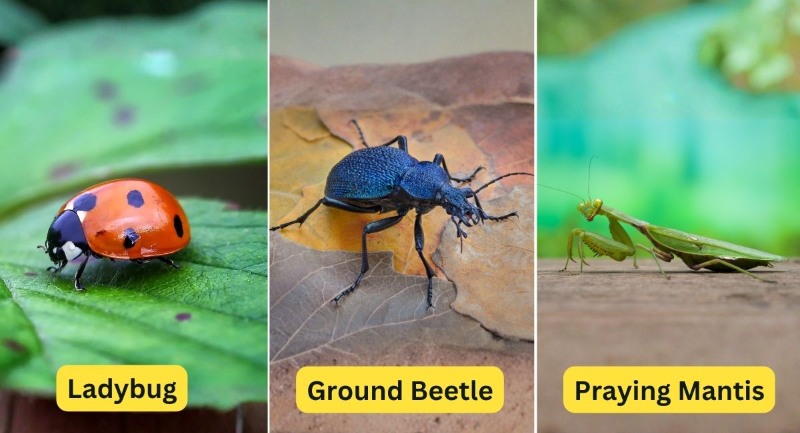
Photo Credits: Ladybug: Pavel / Adobe Stock. Ground Beetle: Armen / Adobe Stock. Praying Mantis: daphnusia / Adobe Stock
For aphids, grubs, and other lawn pests, beneficial insects such as ladybugs and ground beetles may offer relief.
Ladybugs (Lady Beetles)
Best for: Controlling aphids
Ladybugs rank as the single best insect for lawn pest control. These iconic red-and-black beetles hunt aphids — the tiny insects that create sticky black honeydew on grass blades and stunt lawn growth.
Both adult ladybugs and their larvae (which look like tiny alligators) actively hunt aphids, with larvae being more voracious eaters.
Ground Beetles
Best for: Eliminating white grubs
Ground beetles are jet-black or dark brown beetles that hunt at night along the soil surface. They feed on white grubs — the C-shaped larvae that chew through grass roots — as well as cutworms and armyworms that can devastate turf overnight.
They hide under mulch and leaf litter during the day, then emerge at night to patrol your lawn.
See Related:
– How to Tell If You Have Grubs in Your Lawn: 6 Warning Signs
– Lawn Grubs: How and When to Kill Them
– How to Get Rid of Cutworms
– How to Get Rid of Armyworms in the Garden
Praying Mantises
Best for: General pest control and reducing mosquito, fly, and grasshopper populations
These distinctive insects bring both pest control and visual interest to your landscape. Praying mantises eat almost any insect they can catch.
See Related: How to Get Rid of Mosquitoes in Your Yard
The Most Helpful Garden Insects
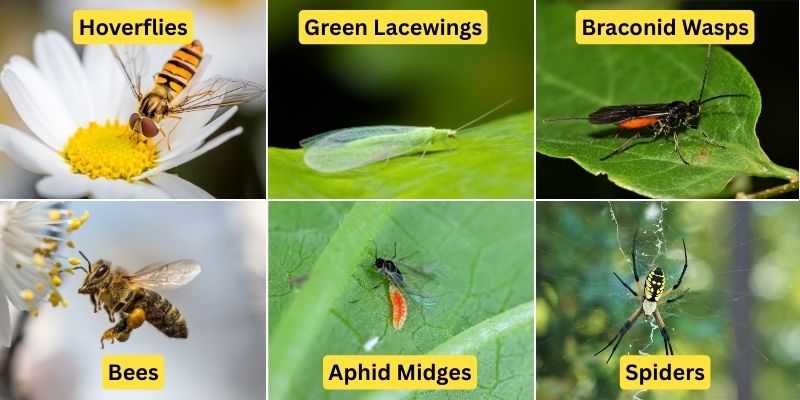
Photo Credits: Hoverfly: Marc Goldman / Adobe Stock. Green Lacewing: Damian / Adobe Stock. Braconid Wasp: Brett / Adobe Stock. Bee: schankz / Adobe Stock. Aphid Midge: Tomasz / Adobe Stock. Spider: Anchasa / Adobe Stock
Beyond lawn insects, several beneficial bugs specialize in protecting vegetables, flowers, and ornamental plants:
Hoverflies (Flower Flies)
Best for: Controlling aphids on vegetables
Despite looking like bees, hoverflies don’t sting. Their larvae are avid feeders — a single maggot consumes up to 400 aphids before reaching maturity. Adult hoverflies continue feeding while also pollinating flowers.
Green Lacewings
Best for: Controlling mealybugs, aphids, and scale insects
Both adult lacewings and their larvae feed heavily on soft-bodied pests. Lacewing larvae are called “aphid lions” — they use curved, hollow mandibles to inject paralyzing venom, then consume their prey.
Braconid Wasps
Best for: Controlling caterpillars, aphids, and beetle larvae
These tiny parasitic wasps pose no threat to humans. Females inject eggs directly into host insects. You’ll see their work when caterpillars have white, rice-like cocoons attached.
Bees
Best for: Pollination
While primarily known as pollinators, bees indirectly support pest control by promoting overall plant health. Healthy, vigorous plants better resist pest damage.
Learn how to plant a bee lawn to help pollinators.
Aphid Midges
Best for: Controlling aphids on roses and ornamentals
These specialized predators target over 60 species of aphids. The larvae paralyze aphids with toxic saliva, then feed on their prey, making them invaluable where aphid populations explode quickly.
Spiders
Best for: Controlling mosquitoes, flies, and moths
Though technically arachnids, spiders deserve mention for their pest control contributions. Garden spiders build webs that trap flying insects, while hunting spiders actively stalk prey without webs.
Generalists vs. Specialists
Beneficial insects also differ in how broadly they hunt. Knowing the difference can help homeowners choose the right insect for a specific pest problem.
Generalist predators eat a wide range of insects — both harmful and beneficial — while specialist predators target specific pests and rarely harm other insects.
“Specialists like ladybugs and lacewing larvae are effective during heavy aphid infestations because they consume hundreds of aphids and focus on them,” says Rita Hagevik, professor of biology at the University of North Carolina at Pembroke.
“Relying only on a generalist predator might not be enough, as they can’t keep up during an aphid outbreak. A balanced ecosystem with both types is ideal.”
How to Attract and Encourage Beneficial Insects Naturally
Vera Krischik, entomology Extension specialist with the University of Minnesota, says, “The best way to increase beneficial insect abundance is to plant a seasonal display of nectar and pollen plants, which is called pollinator conservation, but also conserves good bugs.”
To do this, “use heirloom varieties and native plants that produce seeds,” and “(avoid) double flowers or annuals that have been bred not to produce pollen and nectar.”
Plant Native Flowering Plants
Native flowers provide nectar and pollen beneficial insects need. Landscapes with diverse native pollinator plantings support significantly more beneficial insect species than non-native ornamentals.
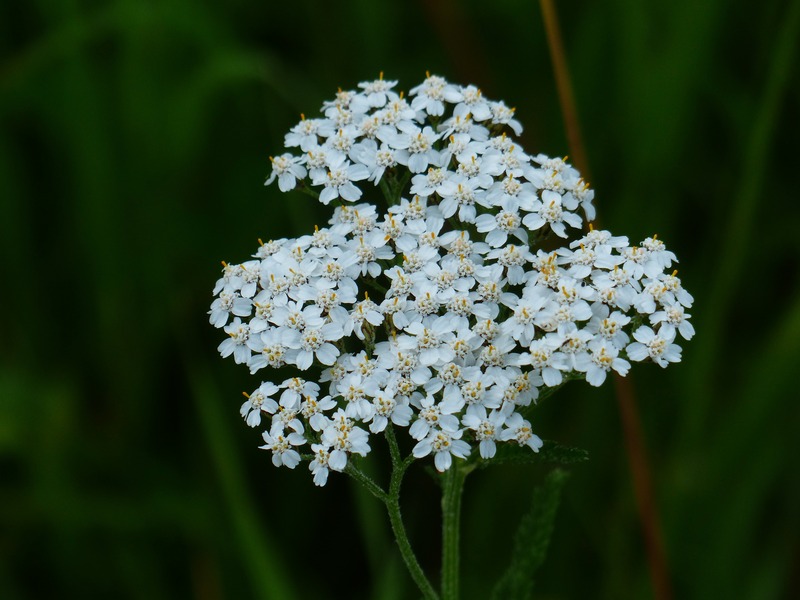
Top plants: Yarrow, dill, fennel, goldenrod, coneflowers, or alyssum
“Plant diverse, continuous groups of native wildflowers that offer nectar and pollen from early spring to late fall,” says Hagevik. “This provides a reliable food source and attracts a healthy population of predatory insects all year.”
Create Habitat and Shelter
Beneficial bugs need shelter, in addition to food sources, to survive and thrive:
- Leave some leaf litter and plant debris in garden beds.
- Maintain mulched areas where ground beetles can hide.
- Avoid fall cleanup until spring (many insects overwinter in plant stems).
- Allow clover, dandelions, and wild violets in low-traffic lawn areas for early-season nectar.
- Provide shallow water sources.
See Related: 8 Reasons to Plant a Clover Lawn
Minimize Pesticide Use
Even organic pesticides kill beneficial insects. When you must treat a pest problem:
- Spot-treat affected areas only.
- Apply in the evening when beneficial insects are less active.
- Wait 2-3 weeks after application before releasing purchased insects.
| Want a landscape designed to support beneficial insects? Find one of LawnStarter’s local landscaping pros who can create pollinator-friendly plantings. |
Where to Buy Beneficial Insects and What They Cost
Purchase beneficial insects when dealing with active infestations or new landscapes lacking resident populations.
Reputable Sources
- Amazon
- Planet Natural
- Arbico Organics
- Nature’s Good Guys
- Gurney’s Seed & Nursery
Always verify the supplier guarantees live delivery and provides release instructions.
Typical Costs
- Praying mantises: $6-$12 per egg case (200+ nymphs)
- Ladybugs: $9-$25+ per 1,500 insects
- Green lacewings: $10-$35+ per 1,000 eggs
- Beneficial nematodes: Prices range from $15 to $40 for 5 million
Frequently Asked Questions
Most beneficial insects adapt to local conditions across North America. In USDA hardiness zones 6-10, they typically maintain resident populations year-round with proper habitat. Zones 3-5 may require annual replenishment since extreme cold limits overwintering survival.
Predatory insects like ladybugs begin hunting immediately, with visible pest reduction within 3-7 days. Parasitic insects take longer since their larvae must develop inside host pests — expect 2-4 weeks for impact.
When identifying beneficial insects for lawn health and garden success, it helps to understand their roles. These helpful bugs fall into 4 functional categories:
• Predators hunt and eat smaller pests throughout their lives (ladybugs, ground beetles, praying mantises).
• Parasites lay eggs inside or on pest insects; hatching larvae feed on their host, eventually killing it (braconid and other parasitic wasps).
• Pollinators transfer pollen while feeding on nectar, producing fruits and seeds (bees, butterflies, hoverflies, green lacewings).
• Decomposers break down dead plant material, releasing nutrients and enriching soil (ground beetles).
Most beneficial soil insects perform multiple functions. A ground beetle might eat grubs, consume dead vegetation, and occasionally pollinate flowers all in one day.
Follow these tips for success:
• Mist the area first — light humidity encourages settling.
• Release the bugs at dusk or night.
• Release near known pest populations for immediate food sources. Krischik says, “If you do not feed them, they will fly away, and you will receive no benefit.”
• Provide shallow water sources.
For ladybugs: Refrigerate 1-2 hours before release to slow activity, then set free on damp grass at nightfall.
Building a Balanced Lawn and Garden Ecosystem
Whether you attract beneficial insects naturally or purchase them for active infestations, the result is the same — fewer pest problems and a healthier lawn and garden.
Ready to transform your lawn with professional care that works with nature? Get free quotes from LawnStarter’s local lawn care experts who understand beneficial insect management and organic lawn health.
Sources:
- Vera Krischik, associate professor and Extension specialist, University of Minnesota, St. Paul, MN. Personal interview.
- Rita Hagevik, professor and Director of Graduate Programs, Science Education, The University of North Carolina at Pembroke. Personal interview.
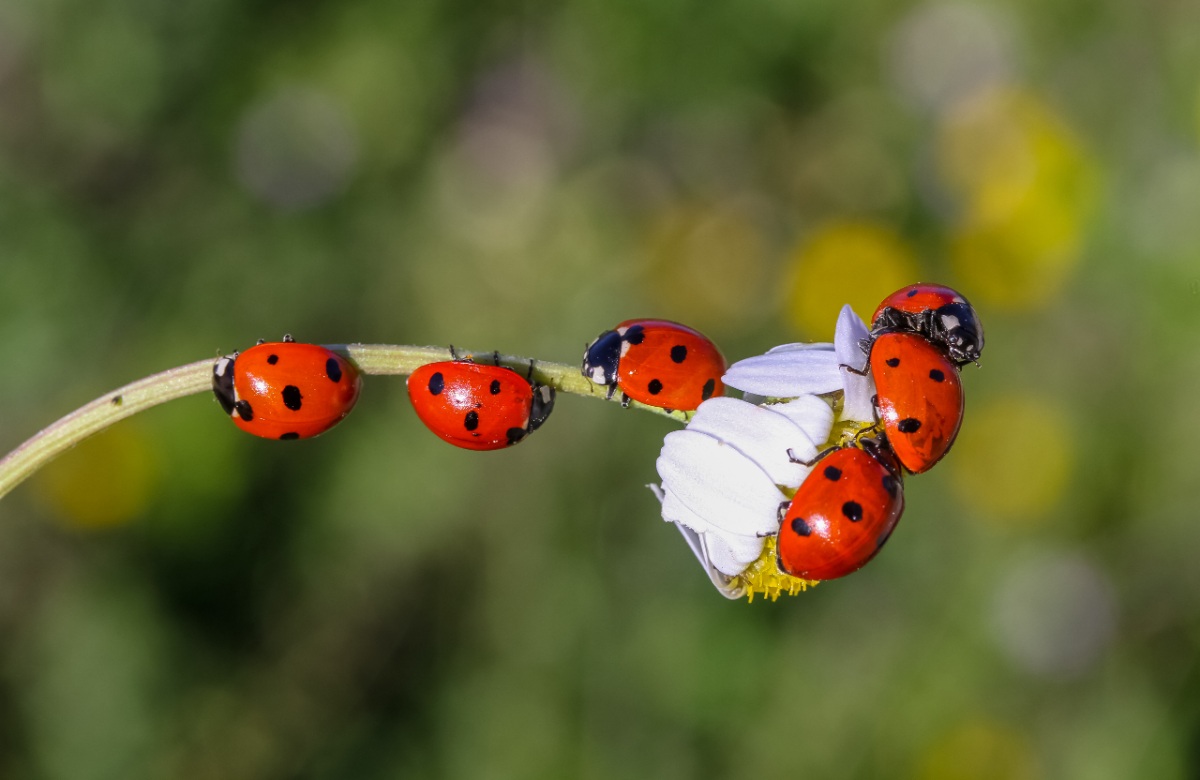
Main Image: Ladybugs clustered on flower stem and bloom. Image Credit: mehmetkrc / Adobe Stock
