| Key Takeaways |
|---|
| • Give cool-season grasses extra summer care: mow higher, skip fertilizer, and decide whether to let the lawn go dormant. • Water deeply and infrequently (1 to 1.5 inches weekly) to build deep roots and survive the heat. • Delay aeration and overseeding until late summer or fall. |

If you’ve dealt with summer lawn care in Des Moines before, you know the drill: brutal July heat, thunderstorm whiplash, and Kentucky bluegrass turning the color of a paper bag.
And the weather is only half of it. On May 4, Central Iowa Water Works (CIWW) announced a lawn watering ban is likely this summer, with nitrate levels in the Raccoon and Des Moines rivers already above federal limits.
This guide covers summer lawn care in Des Moines, watering ban included. Too busy for DIY? Let LawnStarter’s local lawn care pros handle it.
Basics of Summer Lawn Care in Des Moines, Iowa
Most Des Moines lawns grow cool-season grasses: Kentucky bluegrass, fescues, and perennial ryegrass. Zoysia and buffalograss are lower-maintenance summer options but less common here.
Summer lawn care comes down to managing heat stress on cool-season grasses under a likely watering ban: mow higher, adjust watering for a green-or-dormant strategy, prevent grubs, time fertilization, and wait until fall to aerate.
| Task | Timing |
| Mow the grass half-inch taller | 7 to 10 days for non-dormant cool-season lawns; more often for warm-season grasses |
| Keep mower blades sharp | Sharpen evey 20 to 25 hours of use |
| Follow local watering guidelines | Ongoing |
| Water deeply (1 to 1.5 inches per week) | Weekly, or allow dormancy |
| Watch for grubs | Mid-August onward |
| Fertilize warm-season grass only | June to July |
| Spot-treat weeds if necessary | Only when below 85 degrees for 24 hours |
| Fix bare spots | Late August to early September |
| Skip aeration until fall | Late summer or fall |
See Related: Lawn Care Schedule for Iowa
9 Summer Lawn Care Tips for Des Moines
1. Mow the Lawn Half an Inch Taller in the Summer
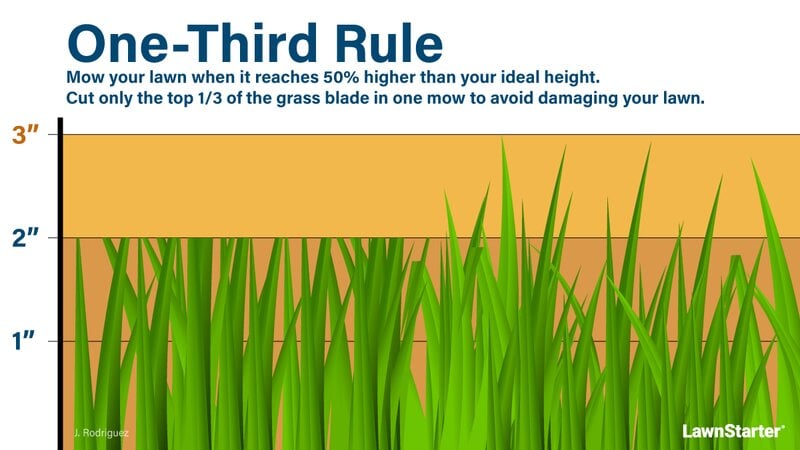
Iowa’s cool-season lawns slow their growth in summer’s heat. Most Des Moines lawns need mowing only every 7 to 10 days and sometimes less during dry stretches.
Keep these guidelines in mind:
Mow during the cooler parts of the day: Early morning (after the dew has dried) or late afternoon. Midday mowing piles heat stress on grass that’s already struggling in Iowa’s summer.
Do not mow a dormant (brown) lawn: Traffic can damage the turf.
Do not mow wet grass: Wet blades cut poorly and clog mower decks, and clippings clump rather than scatter evenly.
Raise the mower blades: Mow the grass towards the higher end of the range in the summer (about half-inch taller than in spring and fall). Taller grass shades the crowns, supports more photosynthesis, and encourages deeper roots.
Here are the recommended summer mowing heights for each:
| Grass | Recommended Mowing Height |
| Kentucky Bluegrass | 2.5 to 3.5 inches |
| Fine Leaf Fescue | 2.5 to 3.5 inches |
| Perennial Ryegrass | 2.5 to 3.5 inches |
| Tall Fescue | 3 to 4 inches |
Source: Iowa State University
For warm-season grasses, mow once a week or more, toward the higher end of the range:
Zoysiagrass: 1 to 2.5 inches
Buffalograss: 2 to 4 inches
Want to skip the mowing? LawnStarter’s Des Moines lawn mowing service averages $54.33 per visit.
See Related:
2. Keep Your Mower Blades Sharp for Summer Lawn Care
Sharp mower blades matter year-round, but they’re especially important during Des Moines summers.
July and August bring frequent muggy stretches, warm nights, and regular rain, conditions that favor brown patch, one of Iowa’s most common summer turfgrass diseases.
According to Iowa State University, dull mower blades create entryways for brown patch fungus. Keeping your blades sharp can help prevent the disease from taking hold and spreading.
Sharpen your mower blade at the start of the season. Do it again mid-summer if you have a large lawn or hit obstacles like sticks or stones.
See Related: How Often Should You Sharpen Lawn Mower Blades?
3. Decide Between Watering and Dormancy
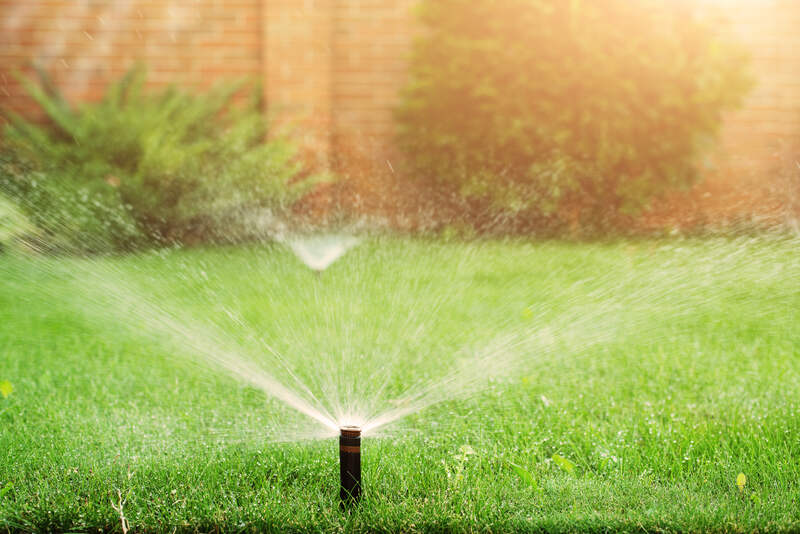
In June 2025, CIWW issued the first-ever total ban on lawn watering across the Des Moines metro and 11 surrounding cities. With nitrate levels already above federal limits this spring, a second ban is likely.
The Iowa State Extension’s advice on summer lawn care is clear. You have 2 paths: Keep the lawn green or let it go dormant. Bouncing between them is the worst thing for your grass.
If a Ban is in Effect
Let the lawn go dormant. Kentucky bluegrass, ryegrass, and tall fescue can sit brown for 4 to 6 weeks without damage and green up once water returns.
Kentucky bluegrass, the most common cool-season grass in Des Moines, is at higher risk than other varieties. It should receive 1 to 1.5 inches of water if it has been dormant for more than 4 weeks. Repeat after a week, and it should green up again.
Buffalograss, a warm-season grass, is far more tolerant of drought and requires very little supplemental water to stay green through an Iowa summer.
If Watering is Allowed
Decide between dormancy and watering through the summer.
Want to keep the lawn green? Apply 1 to 1.5 inches per week in 1 or 2 deep sessions, between 4 a.m. and 8 a.m.
Irrigate when grass shows stress. Kentucky bluegrass turns bluish-green and becomes less resilient when moisture-stressed.
Whatever strategy you choose, stick with it all summer.
| Option | Approach |
| Keep the lawn green | Ensure 1 to 1.5 inches weekly in 1 to 2 sessions per week |
| Allow dormancy | Stop watering; apply 1 to 1.5 inches of water after 4 weeks of dormancy |
See Related: How Long to Water Your Lawn in Summer
4. Follow Des Moines Summer Watering Guidelines
The Des Moines Water Works (DMWW) encourages homeowners to “Use Water Wisely” during the summer in Central Iowa.
Here is the recommended watering schedule in effect at the date of this article:
No watering on Mondays.
Even numbered addresses should water on Sundays, Wednesdays and Fridays
Odd numbered addresses should water on Tuesdays, Thursdays and Saturdays
No irrigating during the hottest part of the day between 10 a.m. and 5 p.m.
Check outdoor hoses and spigots for leaks, and don’t leave water running.
5. Watch for Summer Lawn Pests
For Des Moines homeowners, lawn grubs (white grubs) are the biggest summer pest threat. These beetle larvae hatch in midsummer and feed on grassroots. Damage usually appears suddenly after mid-August, when dry weather exposes the root injury.
Signs of grub damage:
Raccoons, crows, and skunks digging up your lawn
Gray-green discoloration
Wilting in the hot sun
Large irregular dead patches in the turf
Iowa State University Extension reports that populations of 10 or more grubs per square foot will kill grass, though a healthy lawn can sometimes tolerate 20 or more. Watch for damage in late summer and spot-treat with a curative insecticide.
When to treat for white grubs:
Preventive insecticide (Merit, Grub-X): From late May to early August. Only if you regularly deal with grub infestations.
Curative insecticide (Dylox, Sevin, Bayer Advanced 24-Hour Grub Control): August or September. Only if grub symptoms appear.
6. Should You Fertilize Your Lawn in Summer?
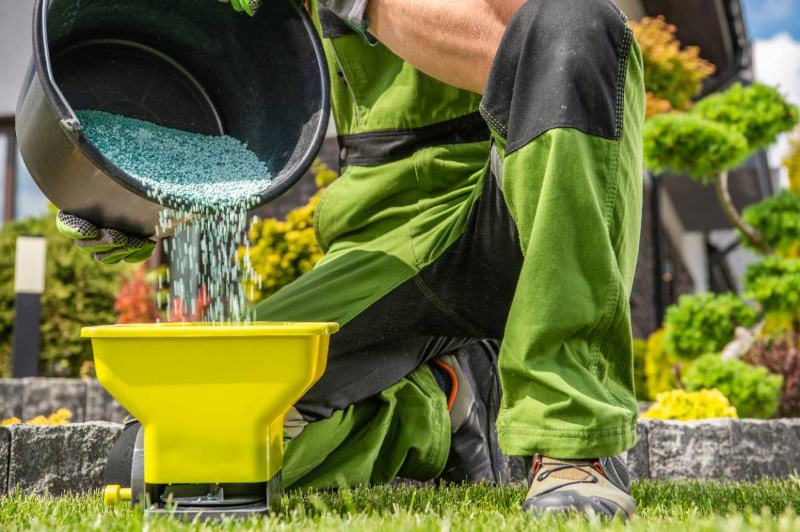
For most Des Moines lawns, the answer is no. The cool-season grasses common here (Kentucky bluegrass, tall fescue, perennial ryegrass, and fine fescue), should not be fertilized in June, July, or August, according to Iowa State University Extension.
Summer fertilizing stresses already-stressed grass and increases the risk of turf diseases. The best times to fertilize cool-season grasses in Iowa are spring, mid-September, and late October or early November.
If you missed your spring application, wait for fall rather than trying to make up for it in summer.
Note: If your lawn has warm-season grass (Zoysiagrass, buffalograss), fertilize from June to July with a slow-release fertilizer. Organic-based fertilizers are a good option.
7. How to Control Weeds in Summer Without Damaging Your Lawn
Iowa State University recommends not spraying broadleaf herbicides when temperatures are forecast to exceed 85 degrees within 24 hours of application.
Hand-pulling is often the best summer option. Pulling crabgrass and goosegrass before they seed reduces next year’s weed pressure.
Spot-treating a few visible broadleaf weeds like dandelion, plantain, creeping Charlie, or white clover is also acceptable in summer if:
Temperatures stay below 85 degrees for 24 hours
Weeds and grass aren’t drought-stressed
No rain is forecast for 24 hours
The best time to control broadleaf weeds in Des Moines is fall, from mid-September to early October. For crabgrass, apply a pre-emergent herbicide in mid-April through May 1 in central Iowa, before soil temperatures reach 55 degrees.
See Related: Common Weeds in Iowa: How to Identify Them
8. When to Fix Bare Spots in Summer
DMWW recommends not installing new sod and grass seed in July and the first 3 weeks of August, the hottest months of the year.
For cool-season lawns, it’s better to wait until late August to early September when temperatures drop. That’s the best time to plant cool-season grass in Iowa.
If you’re repairing winter damage on a warm-season lawn, plant sod or seed the patches in early June.
Ensure the new grass receives enough water:
Water newly planted sod twice-daily for the first 2 weeks. Then reduce frequency gradually beginning in week 3.
Water grass seed 2 to 4 times a day to keep the top 1.5 inches moist until germination, then reduce gradually. Germination takes 3-30 days depending on grass type.
See Related: How to Fix Patchy Grass
9. Should You Aerate Your Lawn in Summer?
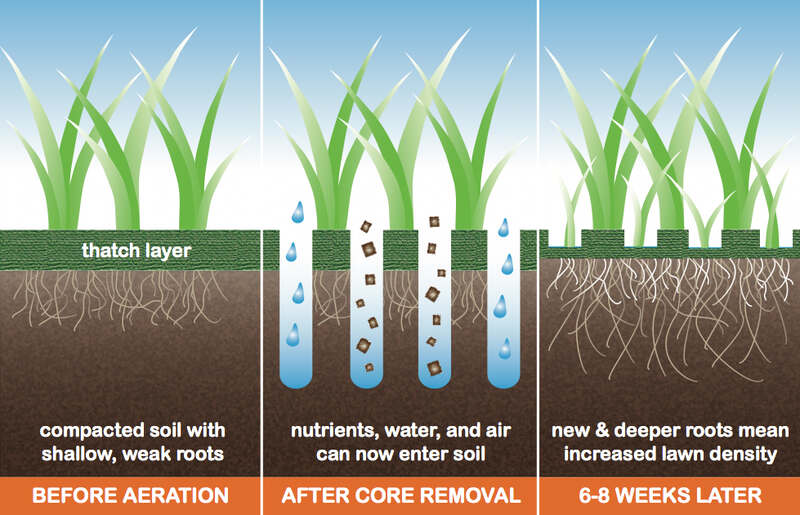
For homeowners in Des Moines growing cool-season grasses, the short answer is: Wait until fall.
Aeration creates small holes that let air, water, and nutrients reach the grass roots. But in summer, it stresses grass that’s already struggling. Wait until late summer or fall, when cool-season grass is actively recovering and can heal the holes quickly.
If you grow warm-season grasses, aerate early to mid-summer.
See Related: Lawn Aeration in Iowa: Everything You Need to Know
Watering Bans, Grubs, Dormancy? Let a Pro Handle It
Between watering restrictions, grub timing, and figuring out whether your lawn is dormant or dead, summer lawn care in Des Moines is a full-time job.
Let LawnStarter‘s vetted Des Moines lawn care pros handle the mowing, weed control, and seasonal treatments, so you can spend your Saturday doing literally anything else.
FAQs
After a storm, remove branches and debris quickly so grass isn’t smothered. If you see standing water, limit foot traffic until the soil firms up. Once the lawn dries, mow only if needed and keep the blade sharp to avoid tearing stressed grass.
Gently pull on a patch of brown grass: If it holds firm, the lawn is dormant; if it pulls out easily, it’s likely dead. You can also check for small green shoots at the base of the plant, which indicates the lawn is still alive.
Usually, yes. Pre-emergent works best before weed seeds germinate, so summer applications often miss the ideal window for crabgrass and similar annual weeds. If weeds are already up, focus on safer post-emergent spot treatments during cooler weather and plan ahead for spring.
Main Image: Lawn mowed by a LawnStarter Pro in Des Moines, IA. Image Credit: LawnStarter