| Key Takeaways |
|---|
| • Fertilize Zoysiagrass during its active growing season: in late spring, midsummer, and late summer. • Never fertilize Zoysiagrass in early spring, fall, or winter, as this encourages weeds and can delay dormancy. • Zoysiagrass needs 2 to 4 pounds of nitrogen per 1,000 square feet per year; a soil test helps you dial in the exact rate. |
Knowing when to fertilize Zoysiagrass is the key to a healthy, green lawn all season long. Fertilize in late spring or early summer, midsummer, and late summer for the best results.
Zoysiagrass is a warm-season grass that typically needs 2 to 4 pounds of nitrogen per year per 1,000 square feet, depending on your soil type and location. Most lawns do well with 2 to 3 fertilizations per year.
Getting the timing, fertilizer type, and application rate right can be tricky. If you’d rather leave it to the pros, LawnStarter’s lawn treatment service takes the guesswork out of fertilizing your Zoysiagrass.
When to Fertilize Your Zoysiagrass Lawn
Time your first application 3 weeks after green up in the spring (typically late April to late May, depending on your region) and space subsequent applications every 4 to 6 weeks through mid-August.
Fertilize Zoysiagrass up to 3 times per year: once in late spring, once in midsummer, and once in late summer. Avoid fertilizing within 6 weeks of your area’s first expected frost.
Zoysiagrass is one of the popular warm-season grasses that thrives in warmer climates, such as the Southern United States. Summer is its peak growing season, making it the ideal time for fertilization.
See Related: Growing Zoysiagrass: Everything You Need to Know
Start with a Soil Test Before Fertilizing Zoysiagrass
Before you buy fertilizer, test your soil. A soil test tells you exactly which nutrients are missing so you apply only what your lawn needs.
Most university Extension programs recommend soil testing every 2 to 3 years, with higher-maintenance lawns benefiting from annual tests. You can buy a soil test kit online, or send a sample to a lab through your local Extension office for more precise results.
Not sure if your lawn needs fertilizer? Look for these common signs of nitrogen deficiency: pale or yellowing grass blades, noticeably slow growth, or a lawn that looks thin and dull compared to early summer.
If your Zoysia already has a dark green color, hold off. Over-fertilizing encourages thatch buildup, weakens roots, and increases disease risk like large patch.
See Related:
When to Fertilize Zoysiagrass in Spring
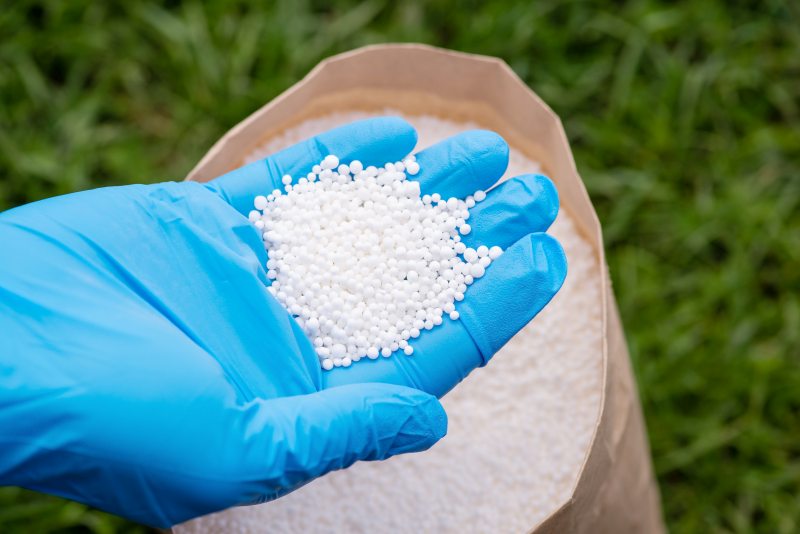
Like other warm-season grasses, Zoysiagrass reaches its peak growing stage during summer. Because of this, March is too early in most areas to fertilize your Zoysiagrass lawn. Fertilizing too early can promote weed growth.
Instead, fertilize about 3 weeks after the lawn has fully greened up. That’s typically mid-April to early June, depending on your region.
| Climate Zone | First Application | Nitrogen Rate |
| Transition Zone | Mid-May to early June | 0.5 to 1 lb per 1,000 sq ft |
| Warm-season grass zone | Mid-April to mid-May | 0.5 to 1 lb per 1,000 sq ft |
Sources: UF/IFAS, UGA Extension, Clemson HGIC, NC State Extension, University of Arkansas Extension, Virginia Cooperative Extension.
Regional note: Green-up timing varies widely across Zoysia-growing regions. In central and north Florida, the first application may come as early as April. In south Florida, year-round growth means applications can spread throughout the year.
In Arkansas, Virginia, or the upper transition zone, green-up typically arrives later, pushing the first application closer to late May. Fertilize when your lawn actually greens up, not by the calendar date.
If you can’t perform a soil test, begin spring fertilization with 0.5 pounds of nitrogen per 1,000 square feet.
When to Fertilize Zoysiagrass in Summer (June – August)
Zoysiagrass is in its peak growing season throughout summer. After your first application in late spring, follow up with your remaining applications spaced approximately 6 weeks apart.
| Climate Zone | Midsummer Application | Late-Summer Application |
| Transition Zone | Late June to early July | Mid-July to Mid-August |
| Warm-season grasses zone | Late June to early July | Mid-August (or later in South Florida) |
Sources: NC State Extension, University of Arkansas Extension, UGA Extension, UF/IFAS Homeowners Guide, Virginia Cooperative Extension, Purdue University.
A soil test can help determine if your lawn needs phosphorus. Starting in midsummer, shift to a fertilizer high in potassium. Potassium improves drought tolerance and helps the grass roots survive winter cold so your Zoysia lawn bounces back faster in spring.
Regional note: The conservative end of the range (mid-July to early August) applies to the northern transition zone (Virginia, Missouri, Indiana) where Zoysia has a shorter active growing window.
The standard end (mid-August) applies to the mid and lower transition zone (North Carolina, Arkansas, Tennessee, northern Georgia) and the Deep South where the growing season is longer.
Zoysiagrass is one of the earlier warm-season grasses to enter fall dormancy, so late-summer nitrogen applications risk pushing tender growth that suffers cold injury. As a general rule, stop nitrogen at least 6 to 8 weeks before your area’s first expected frost.
In south Florida (USDA zone 10b/11a), where Zoysia doesn’t fully enter dormancy, applications can continue year-round.
See Related:
What Fertilizer to Use on Zoysiagrass
Choose slow-release nitrogen over fast-release: Slow-release nitrogen feeds your lawn steadily over several weeks, promoting even growth without burning grass or forcing excessive mowing.
Fast-release nitrogen acts quickly but can scorch your lawn if over-applied and requires more frequent treatments, making it riskier for DIYers.
Check the N-P-K ratio: Every fertilizer bag shows three numbers: nitrogen (N), phosphorus (P), and potassium (K), in that order. For established Zoysia, you want high nitrogen, low or zero phosphorus, and moderate potassium.
Ratios like 4-1-2 or 4-1-3 work well. Add phosphorus only if a soil test specifically shows a deficiency.
What about 10-10-10 fertilizer? Balanced 10-10-10 fertilizers aren’t ideal for established Zoysia. The equal ratios mean too much phosphorus for most Southern soils, and excess can run off into local waterways.
See Related: Can You Over-Fertilize Your Lawn?
How to Apply Fertilizer to Zoysiagrass
Prepare your lawn: Water it a few days before applying fertilizer so the soil is moist but not wet. Mow first if the lawn is overgrown so the fertilizer reaches the soil more easily.
Purchase your fertilizer: Use your soil test results to select the correct nutrient ratio. Read the label instructions carefully.
Apply fertilizer: Spread it evenly across the entire lawn to avoid patchiness and fertilizer burn.
Water your lawn: Water it in after applying so the nutrients reach the soil.
When Not to Fertilize Zoysiagrass
Getting the timing wrong is the most expensive fertilization mistake you can make. Here’s when to keep the bag sealed:
Early spring: Fertilizing too early promotes weed growth before your lawn has fully greened up.
Fall and winter: Late-season fertilization delays dormancy, causing tender new growth that frost easily damages and encouraging winter weeds.
Before heavy rain: Check the forecast before fertilizing. Heavy rain washes nutrients into storm drains before your lawn can absorb them, wasting your money and potentially harming local waterways.
In high heat: Fertilize in the morning or early evening. Midday application when the sun is at its peak causes fertilizer burn.
During drought: Dormant grass can’t absorb nutrients during a prolonged drought. Fertilizing under these conditions only adds stress to your lawn.
See Related: 8 Common Fertilizer Mistakes to Avoid and What to Do Instead
FAQs
Divide the desired pounds of nitrogen per 1,000 square feet by the percentage of nitrogen in your fertilizer (as a decimal). For example, to apply 1 pound of nitrogen using a 15-0-5 fertilizer, divide 1 by 0.15. You’d need about 6.7 pounds of product per 1,000 square feet.
It depends on your soil pH. Zoysiagrass thrives in a pH range of 6.0 to 6.5. If a soil test shows your pH is below 6.0, applying lime can help raise it. If you’re using a quick-release ammonium-based nitrogen fertilizer (such as urea or ammonium nitrate), space the 2 applications at least two weeks apart, because the lime can react with the fertilizer and cause nitrogen loss as ammonia gas.
Choose a slow-release fertilizer high in nitrogen. For established lawns, phosphorus is often unnecessary; skip it unless a soil test shows a deficiency. Ratios like 15-0-15 work well for most applications, with the higher potassium helping Zoysiagrass handle heat and drought. Always let your soil test guide the final decision.
Let LawnStarter Handle Your Zoysiagrass Fertilization
Figuring out the right fertilizer, the right amount, and the right time to apply it takes real expertise.
Professional fertilization typically costs $67 to $405 depending on your lawn size and fertilizer type. Pros bring all their own equipment, so you don’t have to buy a spreader or store bags of fertilizer.
If you’d rather spend your weekends enjoying your lawn, LawnStarter’s lawn treatment pros can handle the fertilization timing and applications that keep Zoysia looking good through summer.
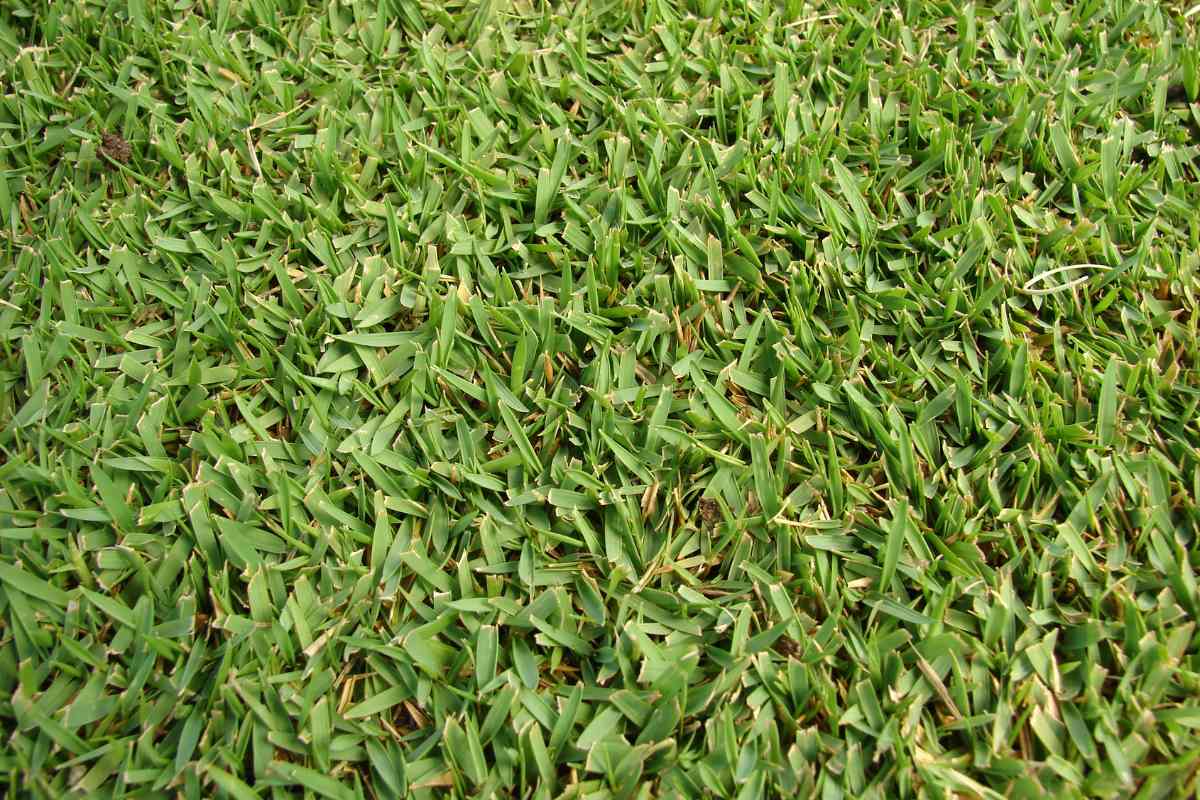
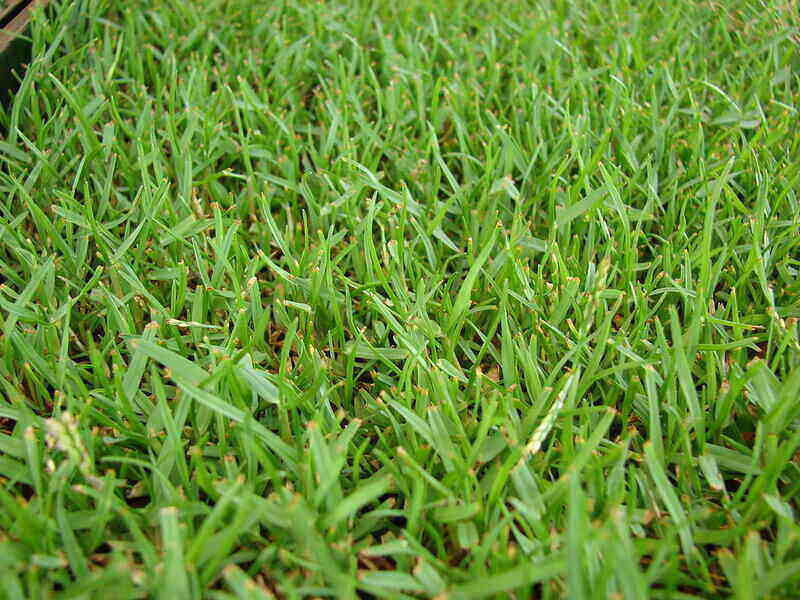
Main Image: Closeup of Zoysiagrass in a lawn. Image Credit: Forest & Kim Starr / Wikimedia Commons / CC BY 3.0
Related Posts: