| Key Takeaways |
|---|
| • Grass that peels away like carpet means grubs have eaten the roots. • Birds, raccoons, or skunks digging in your yard indicate a grub infestation. • Dig up 1 square foot of turf to confirm: 10+ grubs means you need treatment. |
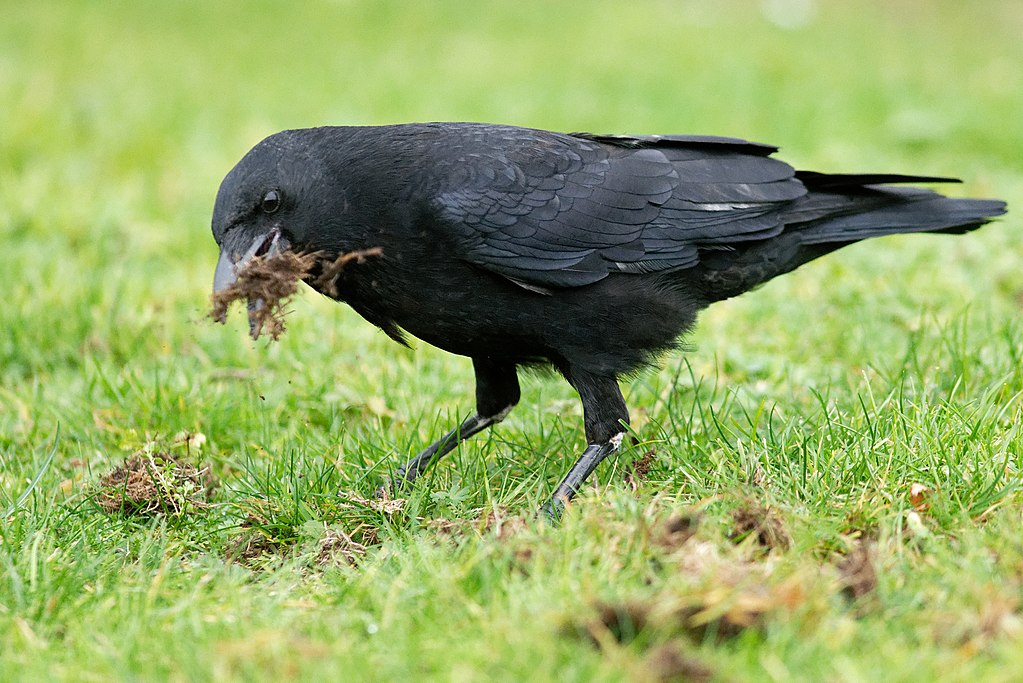
Unidentified lawn damage is unsettling, but lawn grubs are a common pest that’s easy to identify: Brown patches, peeling grass, and birds digging in your yard are telltale signs of lawn grubs.
You can confirm them by digging up a 1-square-foot section of turf. Finding 10 or more white, C-shaped larvae usually means you have an infestation.
This guide shows you how to identify grub damage, confirm an infestation, and distinguish grubs from similar-looking lawn problems.
Think you have grubs? LawnStarter connects you with local lawn treatment professionals who can confirm the diagnosis and treat infestations fast. Get a free quote in seconds.
What are grubs? Grubs are the larval stage of beetles like Japanese beetles and June bugs. They live underground and feed exclusively on grass roots. While most lawns have a few grubs, the damage depends on the numbers, so catching them early is key.
1. Brown or Yellow Patches
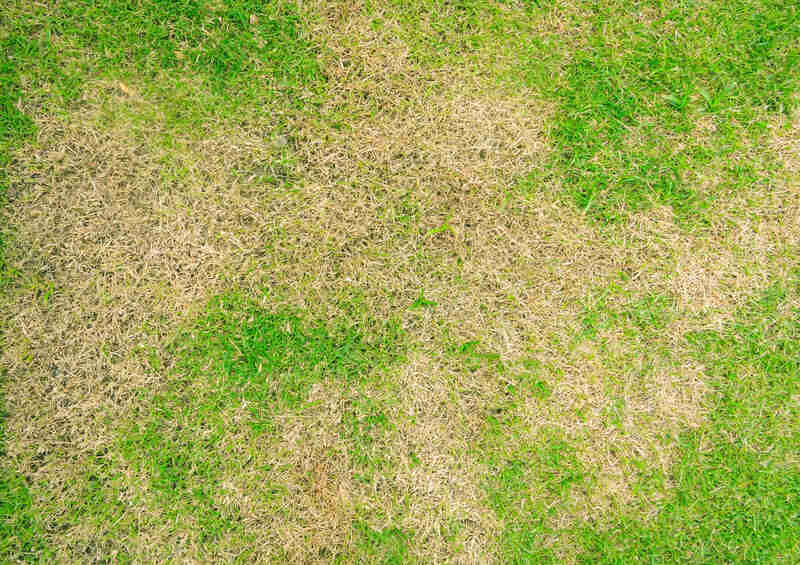
The earliest warning sign is grass that turns gray-green, yellow, or brown in irregular patches. These discolored areas appear even when you’re watering regularly.
Why it happens: Grubs chew through grass roots, causing your lawn to lose its ability to absorb water and nutrients. The grass wilts and discolors from the roots up.
Key differences from drought damage:
- Appears in irregular patches, not uniformly across your lawn
- Doesn’t improve after deep watering
- Grass feels spongy when you walk on it
- Pulling the grass reveals damaged or missing roots
2. Grass That Peels Back Like a Loose Rug
According to Ginny Rosenkranz, principal agent associate at the University of Maryland Extension, “Sometimes pests will infiltrate the lawn, reducing (severing) the roots that help fuel blades of grass.”
Without roots anchoring the turf, the grass becomes completely detached from the soil. So, as Rosenkranz says, “If the lawn appears to be ‘patchy’ or it is easy to pull up out of the ground, more investigation is needed.”
Quick diagnostic test:
- Walk to a brown or thinning area.
- Grab a handful of grass and pull upward.
- Healthy grass should resist firmly.
- If it comes up easily in sheets, suspect grubs.
3. Increased Bird and Animal Activity in Your Yard
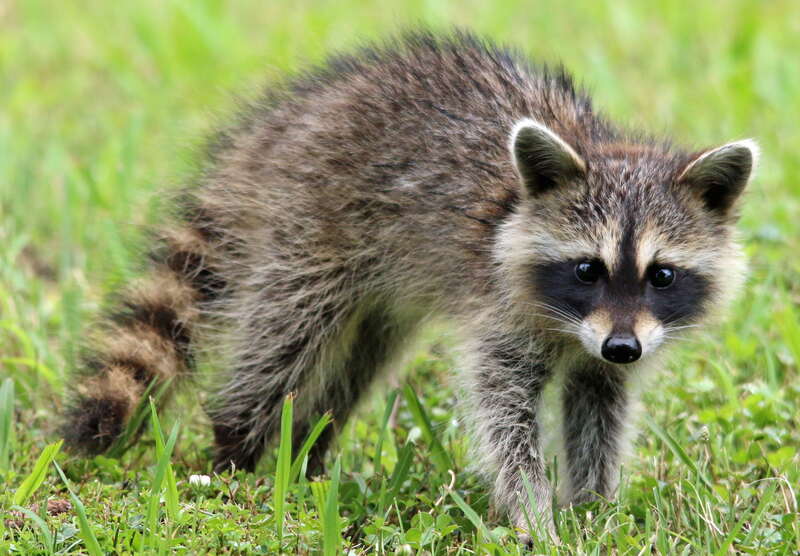
If you’re noticing torn-up patches of turf, the problem might not be the animals themselves, but what they’re hunting. According to Rosenkranz, raccoons and skunks often dig into lawns to feed on grubs they can smell beneath the surface.
While these animals reduce grub numbers, their digging often causes more visible damage than the grubs themselves.
Common grub predators and their patterns:
- Crows and starlings: Peck small holes, work in groups, most active at dawn
- Raccoons and skunks: Create cone-shaped divots 2-3 inches deep, dig at night
- Moles: Create raised tunnels while hunting grubs (also eat earthworms)
- Armadillos (southern states): Dig shallow, broad holes
Important: Occasional visits by one or two birds are normal. Persistent daily wildlife activity in specific areas suggests a grub population large enough to attract predators.
4. Dead Grass in Irregular Patches
As the grass feeding continues, discolored grass eventually dies. Grub damage creates irregular dead patches, not neat circular spots from common lawn diseases.
Typical grub damage patterns:
- Scattered patches from softball-sized to several feet across
- Mostly concentrated in sunny areas where beetles lay eggs
- No distinct circular or ring pattern (unlike fungal diseases)
Critical point: Dead grass from grubs won’t recover because the root system is gone. These areas need overseeding after treating the infestation; otherwise, new grass will be eaten as well. For more information on overseeding, check out our article on How to Overseed a Lawn in 8 Simple Steps.
5. Damage Timing: Late Summer to Fall OR Early Spring
By late summer, grub damage becomes visible: “Adult (beetles) lay their eggs in 1-2 inches of soil from June to August,” Ronsenkranz says.
However, some of these pests have multi-year lifecycles. “When the soil gets cold from winter weather, the grubs move deeper into the soil and move back up to feed on the roots when spring warms the soil,” she says.
In sum, look out for damage during these times of the year:
- Late summer and peak in early fall (August – October)
- Spring (March – May)
Damage outside these windows? It’s likely not grubs. Explore other common pest problems with our article: Common Insect Pests Damaging Your Lawn
6. 10 or More Grubs Per Square Foot
The only way to definitively confirm a grub problem is to dig into your soil and count them. This takes around 10 minutes and removes all guesswork.
The grub confirmation test, according to Rosenkranz:
What you’ll need: Shovel or spade, garden gloves
Steps:
- Choose a damaged area (patchy grass, loose turf, or wildlife digging).
- Cut three sides of a 1-foot section of lawn with your shovel, going 2-3 inches deep.
- Roll back the sod, like opening a book.
- Search the soil and count any white, C-shaped grubs in the soil, with a brown or tan head.
“If only 1-5 grubs are found, it is usually not a problem, but if 10-20 C-shaped white grubs are found in a square foot of soil, there is a problem,” Rosenkranz says.
Found grubs above the threshold? Read our guide, Lawn Grubs: How and When to Kill Them, for treatment products, timing, and prevention.
How to Tell Grubs Apart from Other Lawn Problems
Several lawn issues create brown patches that look similar to grub damage. Here’s how to tell them apart.
What grubs look like: Grubs are white, C-shaped larvae with brown heads that live underground. You won’t see them on the surface, so confirming grubs always requires digging.
Grubs vs. Chinch Bugs
Similarities: Both cause yellowing grass that turns brown
| Feature | Grubs | Chinch Bugs |
| Location of pest | Underground in soil | On grass blades at soil level |
| Turf peels away | Yes, very easily | Sometimes, but not as easily |
| Root damage | Severe, roots completely eaten | Minimal root damage |
| Time of year | Late summer/fall or spring | Mid to late summer (heat) |
| Visible insects | Must dig to find | Visible with close inspection at grass base |
Test it: Part the grass and look at the soil surface. Chinch bugs are tiny (1/5 inch) black insects with white wings that you can see crawling around. Grubs are underground and require digging.
Related: How to Get Rid of Chinch Bugs on the Lawn
Grubs vs. Brown Patch Disease
Similarities: Both cause brown, dead grass in patches
| Feature | Grubs | Brown Patch Disease |
| Shape of damage | Irregular, scattered | Circular rings, often with green centers |
| Turf pulls away | Yes, easily | No, still rooted |
| Root condition | Eaten away | Present but infected |
| Time of day | No pattern | Often worse in morning |
| Moisture | Prefer moist soil, but generally unrelated | Worse in humid, wet conditions |
Test it: Circular patches with defined edges usually point to disease, not grubs.
Related:
– What is Brown Patch Disease?
– How to Treat Brown Patch Disease in Your Lawn
Grubs vs. Soil Compaction
Similarities: Both cause thin, struggling grass; both make grass vulnerable to stress
| Feature | Grubs | Compaction |
| Turf peels away | Yes, very easily | No, still rooted |
| Root length | Roots eaten—very short or gone | Shallow roots due to dense soil |
| Wildlife digging | Common | Never |
| Grubs in soil | 10+ per square foot | Few or none |
| Affected areas | Can appear anywhere | Often in high-traffic areas |
Test it: The grub confirmation test (digging up a square foot) instantly differentiates these. No grubs means not a grub problem. Consider lawn aeration services if compaction is the issue.
Related:
– How to Tell You Have Compacted Soil
– How to Fix Compacted Soil
FAQ
No. While proper mowing, deep watering, and regular aeration make your lawn more resilient, they don’t prevent grubs. Adult beetles fly in from neighboring properties to lay eggs regardless of your lawn care.
However, a healthy lawn will be more resistant to damage. As Rosenkranz explains, “Keeping your lawn mostly grub-free can be achieved by cutting the blades of grass 2 ½ to 3 inches tall (depending on your grass type).”
She notes that “taller blades of grass provide more shade to the soil, keeping it cooler and reducing heat stress on the roots.” Moreover, if a lawn is properly fertilized, “the lawn roots can absorb the nutrients and grow stronger without having to share the nutrients with the blades of grass.”
There are also preventive grub-control treatments you can include in your lawn care maintenance routine.
Grubs concentrate where adult beetles laid eggs, which isn’t uniform. Rosenkranz explains that beetles prefer sunny, moist areas of a healthy, irrigated lawn. Once hatched, larvae don’t travel far, creating localized damage patches rather than affecting your entire lawn.
Yes. Wildlife activity suggests a large population, but many infestations go unnoticed. Factors include grub density, predator presence (dogs and coyotes deter raccoons), and location (urban areas have fewer foraging animals). You can have 10-15 grubs per square foot without ever seeing wildlife. Always confirm by digging and counting.
Ready to Solve Your Grub Problem?
Now you know exactly how to identify grub damage, confirm an infestation, and differentiate grubs from other lawn problems. If you find 10 or more grubs per square foot, your next step is to treat.
Want professional help? LawnStarter connects you with top-rated local lawn treatment pros who can handle diagnosis, treatment, and repair. Get a free instant quote today.
Additional lawn care resources:
– Summer Lawn Pests and How to Get Rid of Them
– Why Is My Grass Dying Even Though I Water It?
Main Image: Crow tearing up a lawn for grubs. Image Credit: Marie-Lan Nguyen / Wikimedia Commons / CC BY 4.0
Related Posts: