| Key Takeaways |
|---|
| • Water and feed your lawn: Keep your lawn healthy with 1 to 1.5 inches of water a week and fertilization in mid-September and mid-October. • Mow until grass growth slows: Springfield’s cool-season grasses actively grow in fall, so keep mowing at your usual height until growth slows to a stop. • Remove debris: Rake or mulch leaves so they don’t block sunlight or attract pests; remove thatch if it’s more than 0.5 inches thick. |

Cooler temperatures make fall the ideal season to refresh your yard. These fall lawn care tips for Springfield will help you keep your lawn healthy and ready for the months ahead.
1. Water Deeply and Infrequently
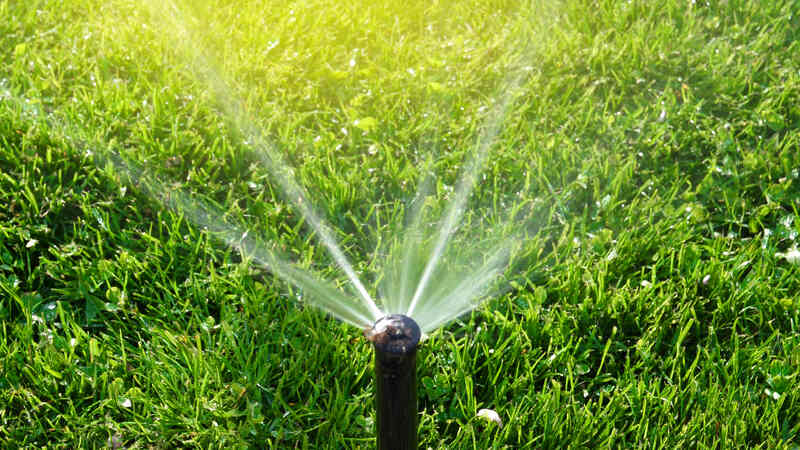
Most lawns in Springfield need about 1 to 1.5 inches of water per week, so water deeply and infrequently, rather than lightly. Deep watering helps develop stronger, deeper roots, making your lawn more resilient.
Remember to keep an eye on the weather forecast — Mother Nature may take care of some of the watering for you.
As temperatures drop in October and November, ensure your lawn enters winter with moist, not soggy soil. Overwatering can lead to disease, while dry soil can stress the grass before dormancy.
See Related:
— How to Water Your Lawn in Fall and Winter
— Signs of Overwatering Your Lawn
— When to Stop Watering Your Lawn
— How Often Should I Water My Lawn?
2. Keep Mowing Until Grass Growth Stops
As fall begins, your lawn will transition out of dormancy and enter a period of active growth. Continue mowing at the regular height, making sure to never remove more than one-third of the grass blade at a time. This keeps your lawn healthy and prevents unnecessary stress.
Unlike common myths, there’s no need to mow extra low for the last mow of the season. Simply maintain your normal height until your grass naturally stops growing.
Also, be sure to keep your mower blades sharp, as dull blades can tear the grass, making it more vulnerable to disease.
See Related:
— Mowing Height Debate: Last Mow of the Season Low?
— How to Mow Your Lawn: A No-Nonsense Guide
3. Remove or Mulch Leaves
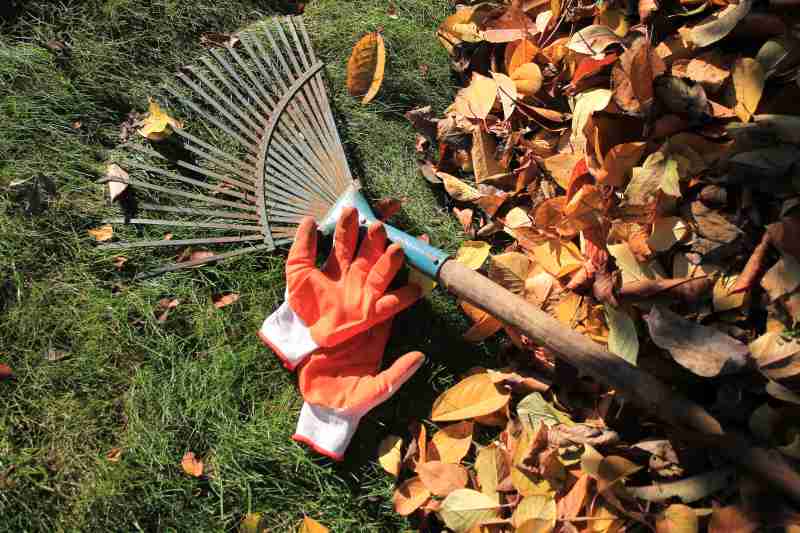
Rake or mulch-mow leaves. Here’s why: A thick layer of leaves can block sunlight and reduce the amount of water your lawn receives, weakening your grass as it heads into winter.
Also, damp, piled-up leaves can attract insects and other pests, creating unwanted issues in your yard.
If you don’t want to rake your leaves (which is A LOT of work), consider mulching the leaves with a mulching mower. This breaks down leaves into small pieces that decompose quickly, adding nutrients back into the soil.
You also can add leaves to your compost pile to recycle nutrients for your garden.
See Related:
— Best Ways to Clean Up Leaves in Your Yard
— How to Rake Leaves
— Is It Better to Rake or Mulch Leaves?
— What Happens If You Don’t Remove Fallen Leaves?
— Composting 101: How to Start Composting
4. Fertilize Your Lawn in Fall
Fall is the most important time for fertilizing your lawn in Springfield, especially since most lawns here are cool-season grasses. Proper fertilization in the fall helps strengthen roots and prepares your lawn for winter dormancy.
Follow this schedule for best results:
- Mid-September: Apply 1 to 1.5 pounds of nitrogen per 1,000 square feet to encourage strong root growth. For a natural alternative, apply 10 to 20 pounds of corn gluten meal per 1,000 square feet to fertilize while helping prevent weeds.
- Mid-October: When temperatures drop to around 50 degrees, apply another round of 1 to 1.5 pounds of nitrogen per 1,000 square feet to give your lawn one final boost before winter.
See Related:
— How to Fertilize Your Lawn
— How Do You Know You Over-Fertilized Your Lawn?
— Common Fertilizer Mistakes to Avoid
5. Remove Excess Thatch
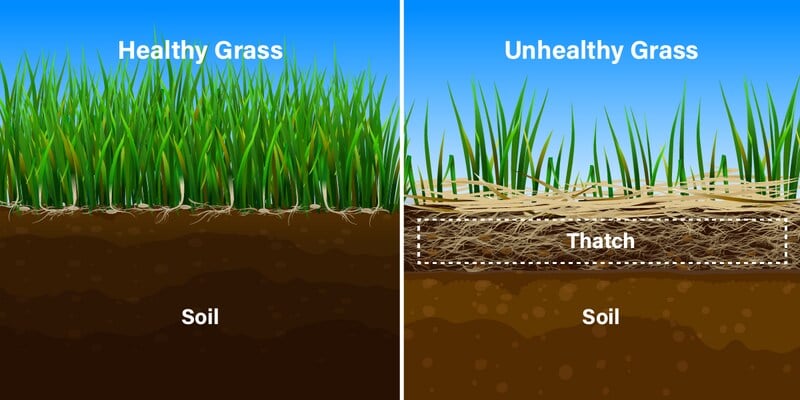
Thatch is a layer of dead grass, roots, and organic debris that builds up between the soil and the grass blades.
A thin layer of thatch (under 0.5 inches) is beneficial because it helps retain moisture and insulate the soil. However, when it becomes too thick, it blocks water, air, and nutrients from reaching the roots, leading to a weaker lawn.
If your thatch layer is thicker than 0.5 inches, early fall is the best time to dethatch. This gives your lawn enough time to recover before winter dormancy.
See Related:
— Top 10 Benefits of Dethatching the Lawn
— Signs Your Lawn Has Too Much Thatch
— When and How to Dethatch Your Lawn
— How Much Does Lawn Dethatching Cost?
Maintain a Healthy Lawn This Fall
Fall is a crucial time to care for your lawn in Springfield, ensuring it stays strong through winter and thrives in the spring. If you need some additional help with your fall lawn care, check out our Springfield lawn care page to connect with local lawn care pros. LawnStarter also provides services in other Missouri cities, including St. Louis and Kansas City.
Read More:
— Spring Lawn Care Tips for Springfield, MO
— Most Common Weeds in Missouri
— Best Grass Seeds for Missouri
— Best Landscaping Plants for Your Missouri Yard
— Best Trees to Plant in Missouri
Main Image Credit: Sasha / Adobe Stock
Related Posts: