| Key Takeaways |
|---|
| • Gear up and clear the yard of rocks, sticks, and clutter before you ever squeeze the trigger. • Work with the wind at your back, nozzle angled down, using steady side-to-side sweeps toward one collection spot. • Choose a dry, calm, ordinance-friendly time, and clean the blower afterward to make the job faster and the tool last longer. |

Improper use of leaf blowers can scatter leaves everywhere and even cause physical harm. Here, you’ll learn how to use a leaf blower the right way, from wearing safety gear to cleaning up.
We’ll also give expert tips on how to assess and prepare the area, start up the leaf blower, and use the right techniques to make leaf cleanup a breeze.
If you would rather skip the work, a LawnStarter leaf removal pro can take the whole job off your hands.
| Project Difficulty: Easy Estimated Time to Complete: 30 minutes to several hours, depending on yard size, number of trees, and volume of leaves Project Cost: Moderate. A leaf blower costs around $90 to $390 (also consider the cost of gas for gas-powered blowers and a new battery for battery-powered blowers), while professional leaf removal costs around $170. |
1. Put On Safety Equipment

While a small leaf blower may not look like a health hazard, Romel de Castro, long-time landscaper and lawn care pro, recommends putting on safety equipment to keep you safe and comfortable no matter your leaf blower’s size.
Some “leaf blowers can shoot out air at speeds of over 150 mph,” he says. But less powerful machines also warrant caution.
Here’s a list of the leaf blower safety equipment you need:
Safety glasses or goggles
Work gloves
Mask or dust respirator
Long sleeves, pants, and closed-toe shoes
Earplugs or noise-cancelling earmuffs
Pro Tip: Since noise levels at or above 85 decibels can damage your hearing, de Castro recommends using a cordless electric leaf blower that produces low noise of around 60 to 75 decibels or below. If you’re unsure or your leaf blower’s product specification doesn’t indicate its noise level, always wear earplugs to protect your hearing.
Cordless electric blowers also skip the pollutants that gas engines put into the air.
2. Choose the Right Time and Weather
The weather makes a big difference in how smoothly leaf blowing goes. Dry, calm days are ideal because dry leaves are light and easy to move, while wet leaves take more power and time to clear.
Wait for dry leaves: Blow leaves when they are dry so they lift easily instead of matting down.
Choose a calm day: Strong wind will scatter your piles and undo your work, so choose a still morning or evening.
Mind the time of day: Avoid very early or very late hours, and check your local noise rules before you start.
See Related: How to Clean Up Wet Leaves in Your Yard
3. Check and Clear the Area
Before leaf blowing, clear the area to help you avoid sending dangerous or heavy items flying. Otherwise, these items can damage your property or, worse, hurt someone.
Remove any clutter: Store away toys, garden tools, or lawn decorations that can easily become projectiles.
Pick up large sticks and branches: Your blower won’t be able to move them easily, and they can even damage the nozzle.
Watch out for rocks and gravel: Pick up any rocks or gravel in the area, as they can fly like bullets if caught in the airflow.
Move pets indoors: Dogs and cats don’t like the loud sound of leaf blowers. Plus, they can get in your way or get hurt by flying debris.
Check for wet spots: Wet leaves are harder to move. Take note of these areas so you can adjust your technique later.
4. Start Your Leaf Blower
You must know how to start a leaf blower, as it depends on the type of leaf blower you’re using. Knowing the right process keeps things simple and helps prevent unnecessary wear and tear.
Gas-powered blowers
Check the fuel and oil levels.
Fill the tank with fuel, if needed (use fresh fuel if it’s been weeks since the last use). For the oil, check your owner’s manual if you need to change it annually or more often.
Examine the nozzle and remove any dirt or blockages.
Set the choke or primer.
Pull the cord in firm, quick motions.
Let the engine warm up for around 30 to 60 seconds before use.
Note: If your gas leaf blower stalls, adjust the choke setting and try again.
Battery-powered blowers
Fully charge the battery and the spare battery.
Inspect the nozzle and ensure it’s firmly attached.
Slide the fully charged battery in until it clicks in place.
Test the trigger to ensure it’s working properly.
Pro Tip: If you’re using a cordless leaf blower with multiple speeds, start at a low setting and increase the power as needed.
Electric corded blowers
Ensure the extension cord is long enough to cover the entire area.
Check the nozzle for clogs and blockages.
Plug it in and switch it on.
Mind the cord to avoid tripping on it as you move.
Safety Tip: Don’t use your electric leaf blower if its cord has frays or cracks, as exposed live wires can cause electric shock and fires.
See Related: How to Choose a Leaf Blower
5. Use the Right Technique

You can’t just point and blast your leaf blower like you’re one of the Ghostbusters. These leaf blowing tips can help make the job faster, easier, and less tiring:
Hold the blower properly: Keep the nozzle angled slightly downward and aimed toward the ground.
Position yourself correctly: Before leaf blowing, check the wind direction so you’ll know where to direct the leaves. “Work with the wind at your back,” says de Castro, “so it won’t undo your hard work.”
Use proper blowing motion: Move steadily and avoid randomly pointing the blower. You’ll have more control if you do a sweeping, side-to-side motion.
Work systematically: Start at one edge of the yard and move across in sections.
Change speed settings when handling different types of debris: Don’t forget to lower the speed setting if you’re removing leaves from flower beds, gravel, or mulch. For stuck or wet leaves, use a higher setting.
Pro Tip: Prevent your leaf blower from overheating by taking breaks every 15 to 20 minutes, especially when using a gas leaf blower.
6. Manage Leaf Piles and Collect Leaves
Blowing the fallen leaves into neat piles makes cleanup a lot easier. A thick layer left on the lawn can smother the grass, so don’t put off collecting them. The key is to work methodically:
Work in zones: Divide your yard into sections and create small piles in each. This way, the leaf piles will be easier to manage, whether you plan to shred with a mulching mower, bag, or add to a compost pile.
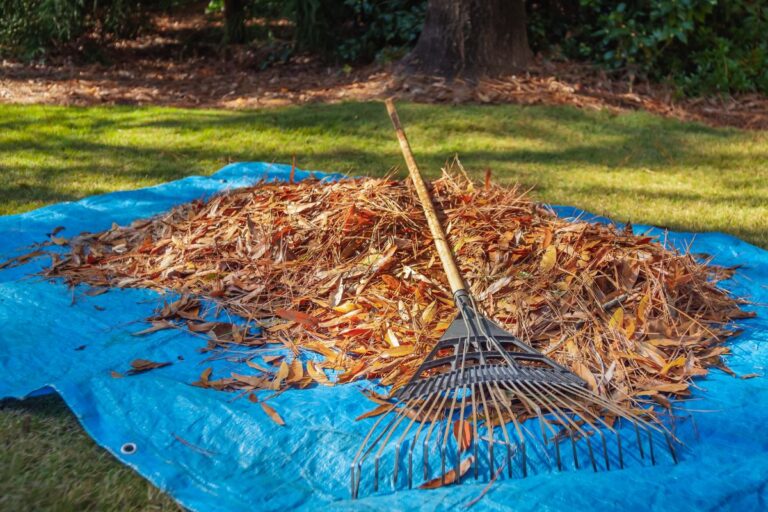
Use a tarp: Blow the leaves onto a tarp, then drag it to your compost pile or bag them from the tarp and bring to the curb for pickup.
Choose a good collection spot: It should be near your compost bin or the edge of your property.
Mind your neighbors: Don’t blow leaves onto the street, sidewalk, or your neighbor’s yard.
See Related:
7. Clean, Maintain, and Store Your Leaf Blower
After wielding your leaf blower like a pro, remember to give your equipment and work area a final once-over.
Final touches: If a few stubborn leaves are clinging to the corners of your flower beds, do a light pass or rake the leaves instead.
Shut it down properly: Turn off the blower. Remove the battery from a cordless blower or unplug an electric model. For gas models, let the engine cool before putting it away.
Clean the equipment: Wipe off dirt and debris, especially around the air vents and nozzle, so airflow stays strong.
A little upkeep keeps your blower running strong season after season:
Check the air filter: Clean or replace a clogged air filter, since a dirty one chokes airflow and cuts power.
Service gas engines: Inspect the spark plug and use fresh fuel, and drain or stabilize the gas before long storage.
Care for the battery: Store batteries indoors at room temperature and avoid leaving them fully drained for months.
Store it right: Keep the blower in a dry, secure spot where it won’t get damaged during the off-season.
8. Avoid These Common Leaf Blower Mistakes
A few common habits can make leaf blowing harder, messier, or unsafe. Steering clear of these mistakes will save you time and keep the peace with your neighbors.
Running at full throttle: Blasting delicate flower beds or mulch at top speed just scatters everything, so ease off the trigger near landscaping.
Blowing into a neighbor’s yard: Aim your leaves toward your own collection spot, not the street, sidewalk, or the yard next door.
Blowing after applying lawn products: Wait before blowing near freshly applied fertilizer or weed treatments so you don’t send them into the air.
Ignoring the tool: Skipping cleanup and maintenance leads to clogs and weak airflow over time.
FAQs
Clogged air filters, dirty spark plugs, weak batteries, or fuel issues can reduce the power of a leaf blower. To restore optimal performance, take your leaf blower to a small engine repair shop or service center for regular cleaning and maintenance.
Yes, you can use your leaf blower to clear light snow, dust from garages, grass clippings, and even dry off equipment or outdoor furniture.
For gas leaf blowers that won’t start, check if you need to refuel or replace the spark plug or air filter. For cordless and electric leaf blowers, check the battery charge or cord.
Save Time By Hiring a Leaf Removal Pro
Even with the necessary know-how, using a leaf blower can still be difficult. And cleaning leaves every week can be too much to handle.
Luckily, you can always hire a LawnStarter leaf removal pro to clean up the leaves and keep your yard tidy without the hassle. Also consider hiring a lawn mowing expert to mow your lawn weekly in the fall.
Read More:
Sources:
Romel de Castro, landscaper and lawn care pro. Personal interview.
Main Image: Leaf blower and bagged leaves amidst autumn leaves in a yard. Photo Credit: SockaGPhoto / Adobe Stock
Related Posts: