| Key Takeaways |
|---|
| • The guide covers 12 common weeds: Broadleaf weeds are the most common type of Virginia weeds, identified by their wide, flat leaves and visible veins. • Virginia's transition zone invites weeds from both climates: Hot, humid summers bring warm-season invaders like crabgrass, while mild winters keep cool-season weeds like henbit and annual bluegrass active into spring. • Virginia buttonweed is especially stubborn: It forms dense mats that smother turfgrass in warm-season lawns and survives mowing. |
Virginia’s transition zone climate is a weed’s dream: hot, humid summers invite warm-season invaders like crabgrass, while mild winters keep cool-season weeds like henbit and annual bluegrass actively growing into spring.
This guide will help you identify the most common weeds in Virginia so you can choose the right control method, whether that’s better mowing habits, a smarter watering routine, or lawn treatment services timed to the season.
Common Broadleaf Weeds in Virginia
Broadleaf weeds are the category most Virginia homeowners deal with. They’re the ones with wide, flat leaves and visible veins, as opposed to the narrow-bladed grassy weeds listed further down. They steal nutrients, water, and sunlight from your turf.
| Weed Name | Life Cycle | Key Identifier |
| Common Chickweed | Winter annual | Mat-forming, white flowers with split petals |
| Dandelion | Perennial | Yellow flowers, white puffball seeds, deep taproot |
| Hairy Bittercress | Winter annual | Rosette form, seed pods that explode on contact |
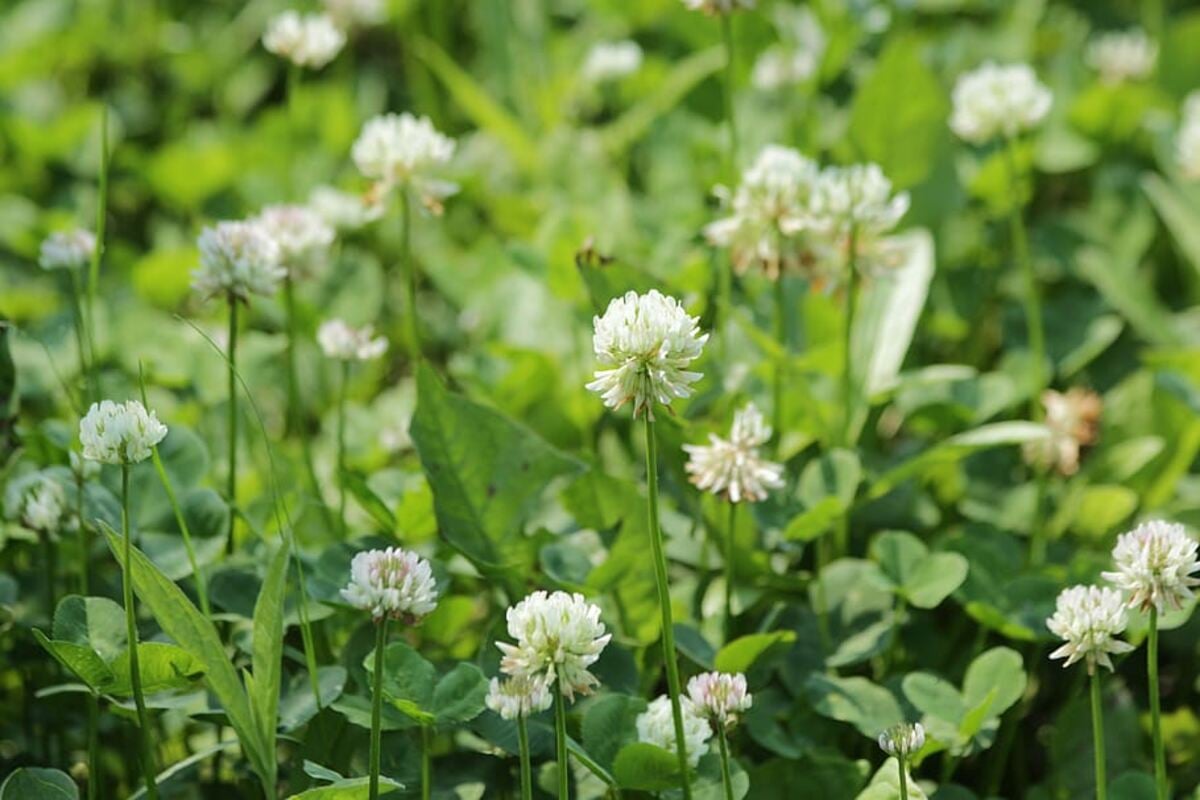
| White Clover | Perennial | Three-leaf clusters, white or pink flowers |
| Virginia Buttonweed | Perennial | Lance-shaped leaves with white veins, four-petaled white flowers |
| Henbit | Winter annual | Square stems, reddish-purple tubular flowers |
| Broadleaf Plantain | Perennial | Oval leaves in rosette, pale green flower spikes |
| Ground Ivy | Perennial | Minty scent when crushed, scalloped leaves |
| Wild Violet | Perennial | Heart-shaped leaves, purple or white flowers |
| Purple Deadnettle | Winter annual | Purple-bronze leaves, no sting despite the name |
1. Common Chickweed
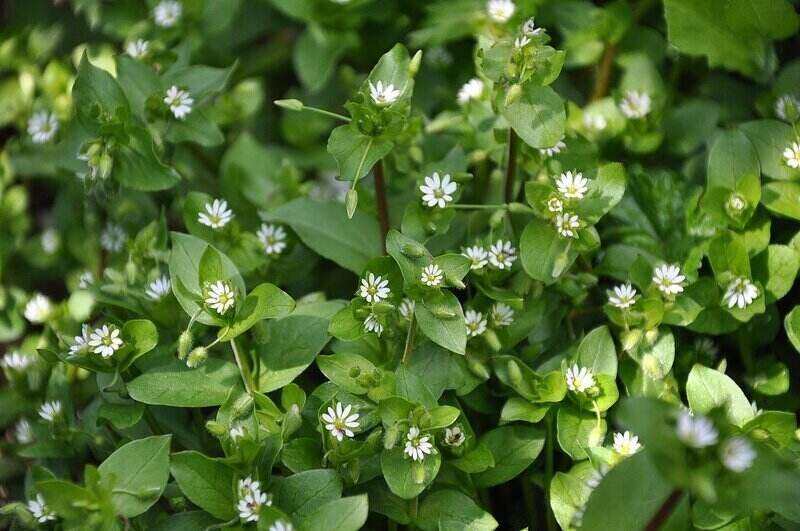
Common chickweed leaves can be used as tasty greens in a salad. But it can also serve as a host plant for pests such as the Western tarnished plant bug and for diseases such as tomato spotted wilt virus.
Life cycle: Winter annual
How to identify common chickweed: Light green, succulent leaves with white flowers that look like they have 10 petals since each of the five is split into two lobes. Thrives in moist, shaded soil.
How to get rid of common chickweed: Hand-weed or hoe before it sets seed. Apply a broadleaf post-emergent in fall or early spring while plants are small; isoxaben as a pre-emergent stops next season’s germination.
2. Dandelion
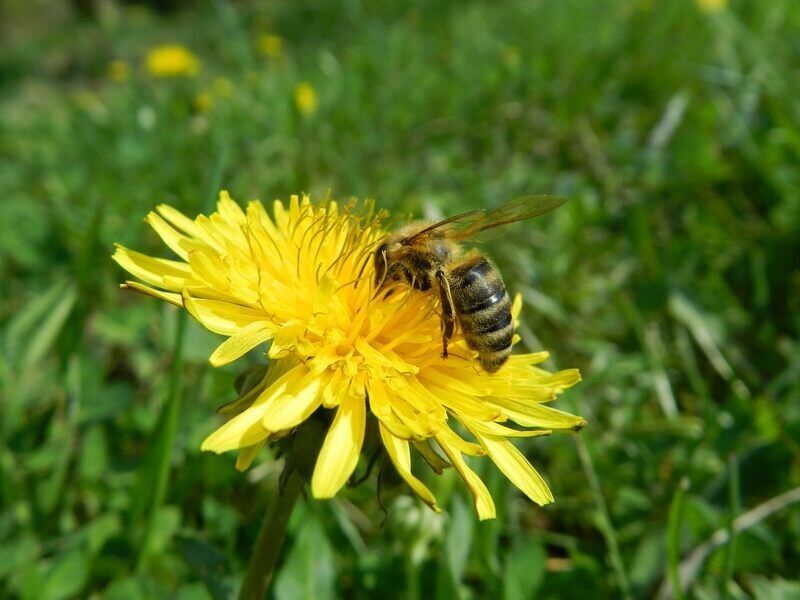
If you want to hop into the “no mow May” trend, you might want to do that earlier, in April, in Virginia to avoid having your lawn overrun by dandelions.
Life cycle: Perennial
How to identify dandelions: Deeply serrated leaves up to 14 inches long cluster in a rosette, with tall stalks topped by yellow flowers that mature into white puffball seed heads.
How to get rid of dandelions: Pull by hand, but get the entire taproot or it grows back. Herbicides containing triclopyr are effective on larger infestations.
3. Hairy Bittercress
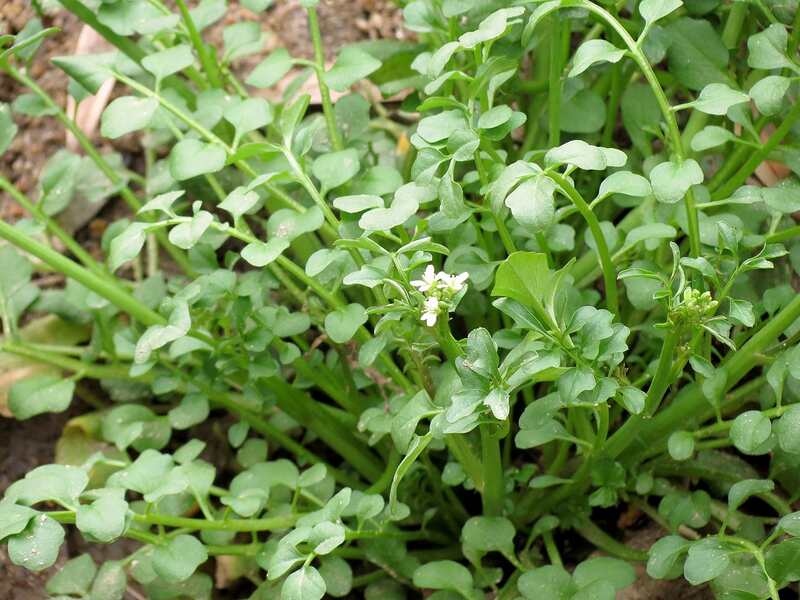
A member of the mustard family, hairy bittercress is also called flick weed, hoary bittercress, lamb’s cress, land cress, shot weed, and springcress.
Life cycle: Winter annual
How to identify hairy bittercress: Rosette of heart-shaped leaves with branching stems 3-10 inches tall and small white flower clusters. Seed pods snap open at a touch, flinging seeds up to 3 feet away.
How to get rid of hairy bittercress: Improve drainage, manage fertility, and overseed thin turf to prevent it. Treat with a post-emergent herbicide in spring or fall.
4. White Clover
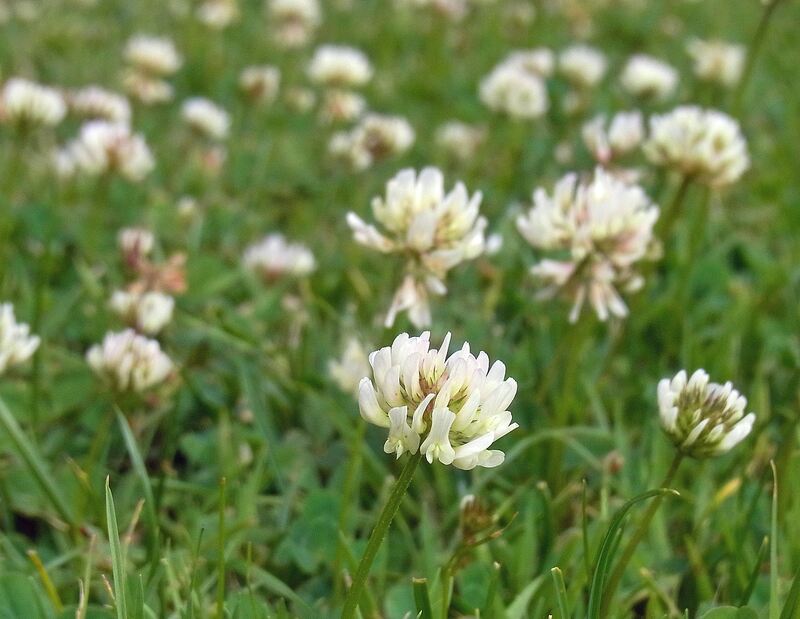
Some people argue that white clover should not be considered a lawn weed. One reason is that clover is important for pollinators. Another reason is that clover might help keep fertilizers out of the Chesapeake Bay, as it has a high nitrogen content that can help your lawn self-fertilize.
Life cycle: Perennial
How to identify white clover: Three rounded leaflets with light bands near the base, and white to light pink flowers up to 1½ inches wide.
How to get rid of white clover: Mow high, correct soil pH, and fertilize adequately, since clover thrives where turf is thin. Most fall-applied broadleaf herbicides control it effectively.
5. Virginia Buttonweed
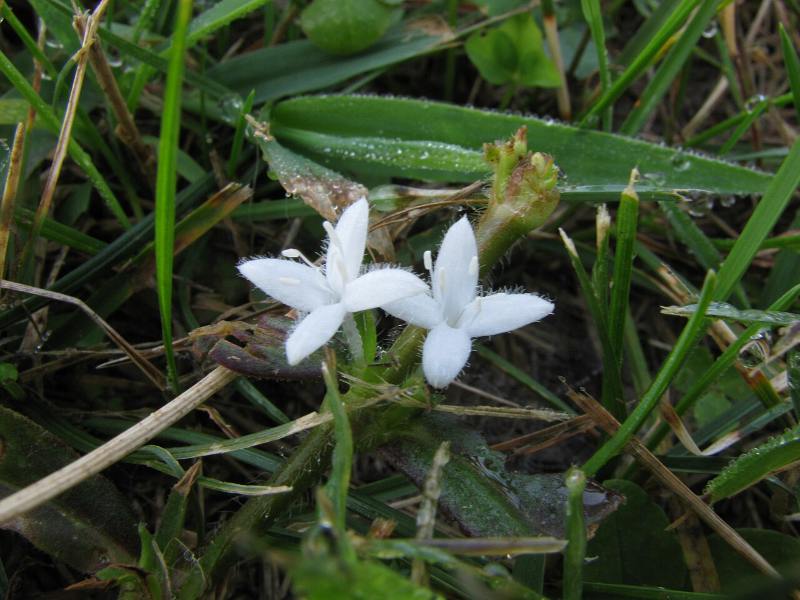
Virginia buttonweed (Diodia virginiana) is one of the most stubborn broadleaf weeds in Virginia warm-season lawns, forming dense mats that smother turfgrass and survive mowing.
Life cycle: Perennial
How to identify Virginia buttonweed: Opposite, lance-shaped leaves with white veins connected by a membrane across a hairy, square stem. Small, four-petaled white flowers bloom from late spring through fall.
How to get rid of Virginia buttonweed: Improve drainage and cut back on watering. Apply post-emergent herbicides containing 2,4-D, dicamba, or metsulfuron during active summer growth, and expect to repeat treatments.
6. Henbit
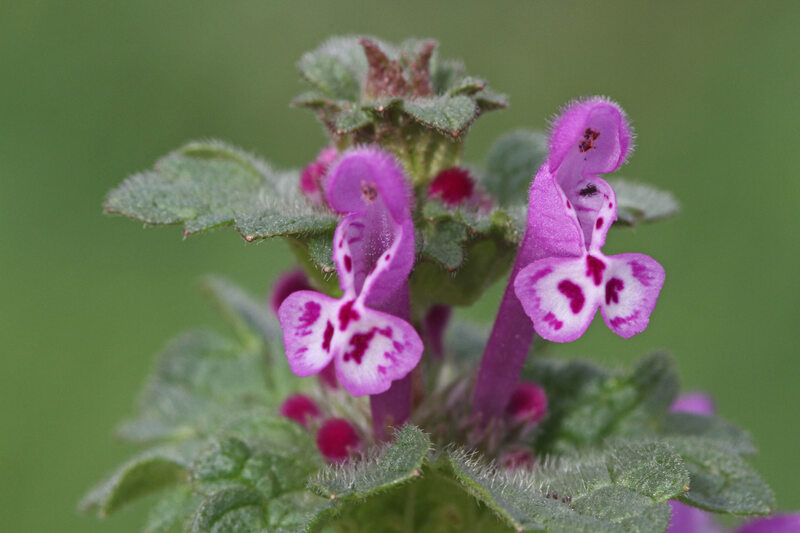
Often confused with: Purple deadnettle and ground ivy. Henbit’s upper leaves clasp directly around the square stem with no leaf stalk — that’s the quickest tell.
Life cycle: Winter annual
How to identify henbit: Greenish-purple square stems with toothed, opposite leaves and reddish-purple tubular flowers. A single plant produces 40–200 seeds that stay viable for 25–40 years, though it dies back in summer heat.
How to get rid of henbit: Thicken your lawn and hand-pull before flowering. Three-way herbicides labeled for Virginia turfgrasses control it well.
7. Broadleaf Plantain
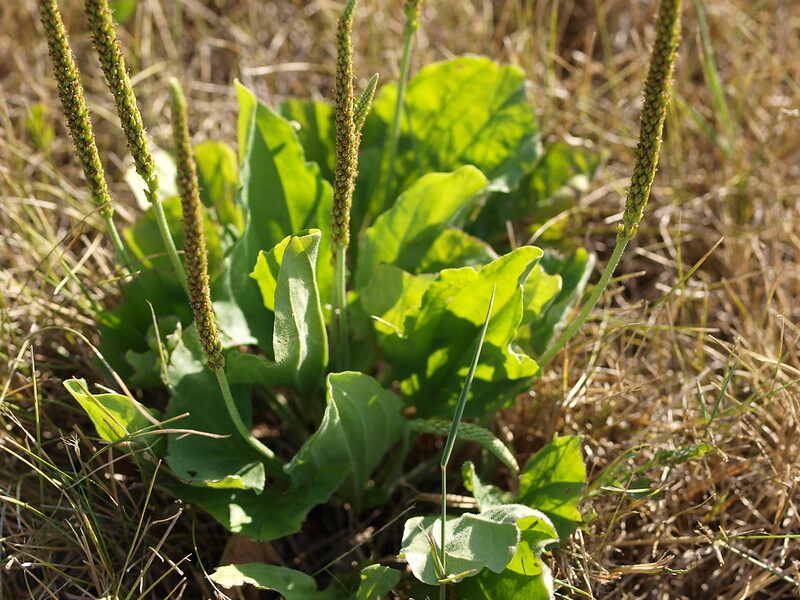
Besides being an annoying weed, broadleaf plantain has been used as a cooking herb and in salads or smoothies, as well as a medicinal herb.
Life cycle: Perennial
How to identify broadleaf plantain: Oval, veined leaves form rosettes 6–12 inches across close to the ground, with pale green flowers on slender spikes about 8 inches long.
How to get rid of broadleaf plantain: Overseed thin turf to crowd it out, and hand-pull or dig young plants. Spring and fall herbicide applications also work.
8. Ground Ivy
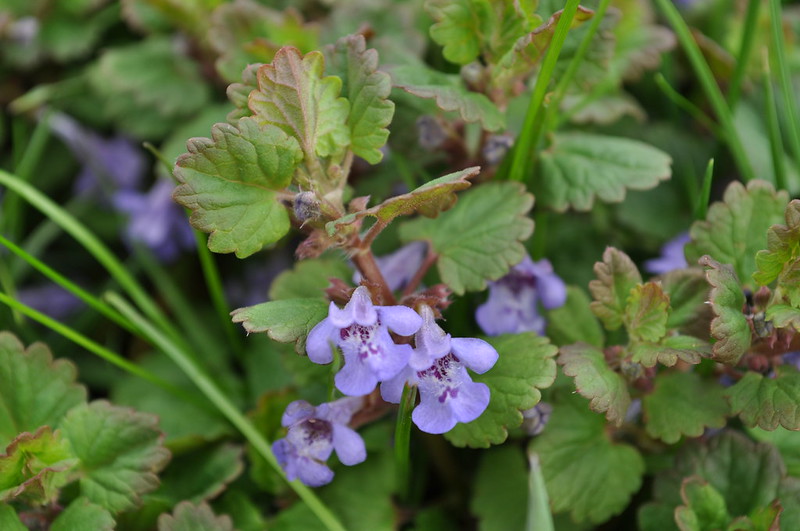
Also known as creeping Charlie, ground ivy spreads up to 30 inches wide by rooting wherever a leaf touches soil, and it can stay green through winter.
Often confused with: Henbit and purple deadnettle, but ground ivy’s round, scalloped leaves give off a distinct minty smell when crushed or mowed.
Life cycle: Perennial
How to identify ground ivy: Round or kidney-shaped leaves have large, scalloped teeth. Creeping square stems are usually hairless. Tube-shaped, blue-violet flowers grow to about ⅓ inch long.
How to get rid of ground ivy: Maintain proper mowing height and prune back shade to discourage growth. Apply the herbicide triclopyr in fall for best control.
9. Wild Violet
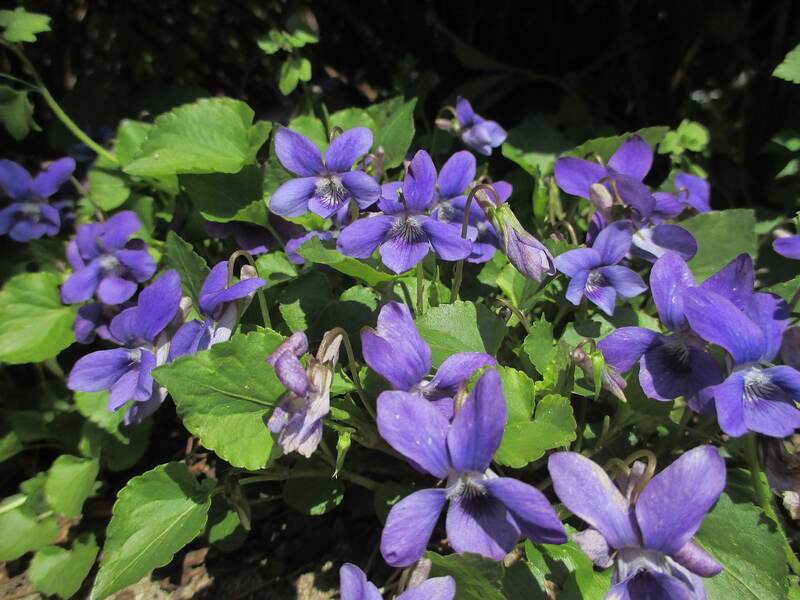
Wild violet twists its foliage away from herbicide sprays, recovers quickly, and spreads aggressively by rhizome, making it one of the harder lawn weeds to eliminate.
Life cycle: Perennial
How to identify wild violet: Low rosettes of serrated, heart-shaped leaves to 3½ inches long, with purple, violet, blue, or white five-petaled flowers.
How to get rid of wild violet: Prune trees and shrubs to reduce shade and favor grass. Triclopyr herbicides give the best control, typically needing repeat fall applications over multiple years.
10. Purple Deadnettle
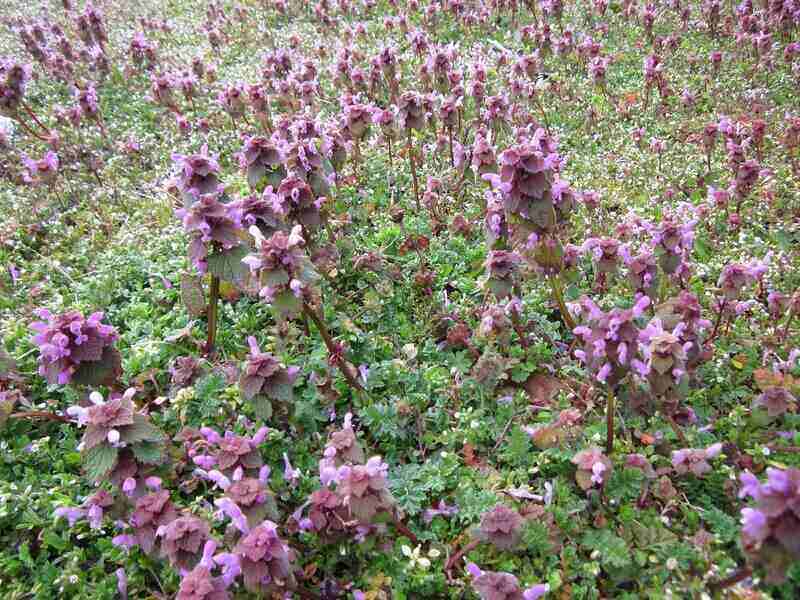
Purple deadnettle produces more than 27,000 seeds per plant and has no sting despite the name.
Often confused with: Henbit and ground ivy. Purple deadnettle has distinctly purple-bronze, triangular upper leaves that are stalked (not clasping the stem like henbit’s).
Life cycle: Winter annual
How to identify purple deadnettle: Hairy, triangular, purple and bronze leaves on square stems, with small, two-lipped, pink-to-purple tubular flowers that have darker splotches inside the petals.
How to get rid of purple deadnettle: Dethatch warm-season lawns and keep turf dense. Hand-pull small patches after rain, and use a pre-emergent in fall plus a post-emergent on actively growing weeds.
Common Grassy Weeds in Virginia
Grassy weeds have narrow, blade-like leaves that blend in with your lawn, making them harder to catch than broadleaf weeds. Crabgrass and annual bluegrass are the two most common culprits in Virginia lawns.
11. Crabgrass
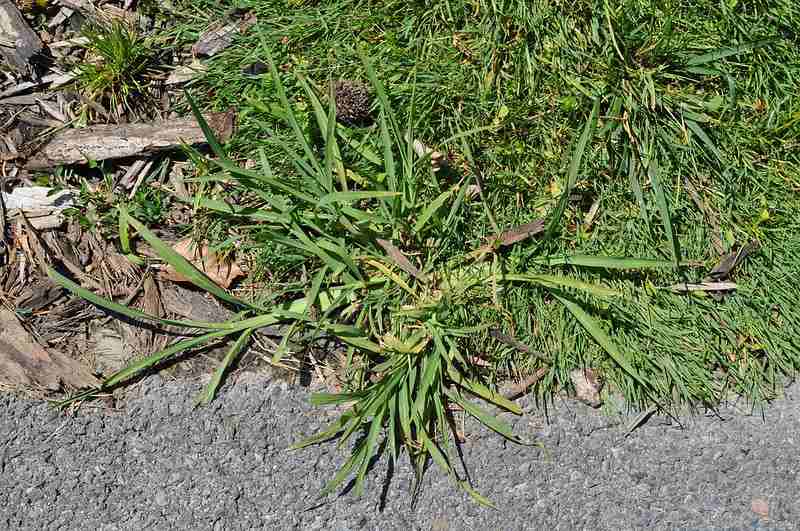
Fighting crabgrass is an ongoing battle that can last from March through August, according to Virginia Tech.
Life cycle: Warm-season annual
How to identify crabgrass: Branched stems with light-purple-tinged leaves and a white center stripe, 2/5–1/2 inch wide.
How to get rid of crabgrass: Maintain dense turf and overseed to avoid a sparse lawn. Apply a crabgrass preventer before crabgrass emerges in spring, when soil temps reach about 50–55 degrees.
12. Annual Bluegrass
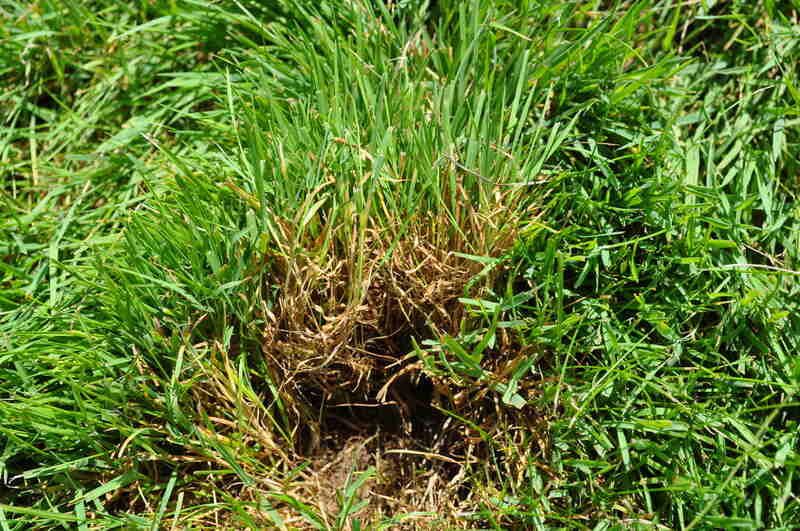
Annual bluegrass germinates in late summer or early fall. Seedlings survive winter, flower and produce seed in late spring, then die. One plant can produce more than 360 viable seeds.
Life cycle: Winter annual
How to differentiate annual bluegrass (Poa annua) from Kentucky bluegrass:
Color: Annual bluegrass has a lighter lime-green color.
Seed heads: Annual bluegrass is especially noticeable in May and June due to prolific seed head production.
Heat tolerance: Annual bluegrass often dies during summer heat, leaving bare patches.
How to get rid of annual bluegrass: Prevent with a properly maintained lawn. Use pre-emergent herbicides in late summer or early fall for large infestations, as long as you aren’t planning to overseed a cool-season lawn. Safe spraying for annual bluegrass requires careful application to avoid injuring desirable turfgrass.
FAQs
In Virginia, pre-emergent timing depends on the weed and the season. For summer annuals like crabgrass, apply in early spring before germination. For winter annuals like annual bluegrass, apply in late summer or early fall. Follow label directions and avoid applying right before overseeding.
Beyond the weeds in this guide, you might also encounter dallisgrass, Indian goosegrass, nutsedge, oxalis, wild garlic, wild onion, and woodsorrel.
Many of these thrive in Virginia’s warm, humid summers. If you spot an unfamiliar weed, use your local Virginia Cooperative Extension office for identification help.
Hand-pulling is the most effective organic method for weeds already growing. Corn gluten meal acts as a mild pre-emergent suppressant and feeds your lawn with nitrogen. It works only before weeds sprout, so timing matters. Maintaining thick, healthy turf is the best long-term organic defense against weeds.
Let LawnStarter Handle Your Weed Control
Stubborn weeds don’t take weekends off, but you should. LawnStarter connects you with background-checked local pros across Virginia who handle identification, pre-emergent, and post-emergent treatments on the right lawn care schedule for your lawn.
Contact our trusted lawn treatment pros or reach out to our mowing pros in cities across the state, including Virginia Beach, Chesapeake, Norfolk, Arlington, Richmond, Newport News, and other areas.
Read More:
Main Image: White clover (Trifolium repens) blooms prolifically in a sunny lawn. Photo Credit: PxFuel
Related Posts: