| Key Takeaways |
|---|
| • The most common landscaping mistakes start with putting the wrong plant in the wrong spot, ignoring drainage, and crowding your beds. • Small habits like scalping your grass and piling mulch against tree trunks damage a healthy yard over time. • Watching your yard's sun, water flow, and mature plant sizes before you dig prevents most costly redos. |

Even the most beautiful yards can be sabotaged by a few well-meaning but costly landscaping mistakes. From scalping your grass and planting the wrong plant in the wrong space to impulse plant purchases, these are some of the most common landscaping pitfalls.
As a landscape designer with decades of experience, I’ll walk you through these 12 landscaping mistakes and show you how to easily avoid them.
Another way to avoid these common mistakes? Hire a LawnStarter pro for all your landscaping, lawn mowing, and lawn care needs.
- 12 Common Landscaping Mistakes to Avoid
- 1. Scalping Your Grass and Skipping Basic Lawn Care
- 2. Putting the Wrong Plant in the Wrong Place
- 3. Placing Seating Areas With No Shade or Cover
- 4. Impulse Buying Plants Without a Landscape Plan
- 5. Crowding Plants
- 6. Building Hardscaping Without Drainage
- 7. Ignoring Poor Drainage and Standing Water
- 8. Supporting Heavy Vines With Flimsy Structures
- 9. Designing a High-Maintenance Landscape
- 10. Piling Too Much Mulch Around Tree Trunks
- 11. Installing a Fence Without Permits
- 12. Overdoing Harsh Outdoor Lighting
- FAQs
12 Common Landscaping Mistakes to Avoid
The most common landscaping mistakes are avoidable planning slip-ups: scalping your grass, planting the wrong plant in the wrong place, ignoring drainage, crowding beds, and piling too much mulch. Below are the 12 I see most often, plus the simple fix for each.
1. Scalping Your Grass and Skipping Basic Lawn Care
Your lawn is the foundation of your landscape. When it’s healthy and green, the whole yard feels complete; when it’s stressed, everything feels off balance. These slip-ups are easy to avoid:
Scalping the grass: Cutting your lawn too short weakens it and invites weeds, heat stress, and bare spots.
Skipping fertilizer: A balanced fertilizer schedule keeps grass strong, green, and resilient through the seasons.
Ignoring the basics: Keep mower blades sharp, water early in the morning, and aim for steady moisture, not constant soaking.
Pro Tip: Treat your lawn like a living carpet. When your grass thrives, everything around it looks more intentional and beautiful.
See Related: 13 Common Lawn Mowing Mistakes to Avoid
2. Putting the Wrong Plant in the Wrong Place
Plants get stressed, “sick,” or simply fail when conditions don’t suit them. Planting a shade-lover in full sun is like sending a redhead to the beach without an umbrella. Study where the sun hits, how water drains, and what your soil is like before planting. Here are three examples:
Planting trees too close to your house: As trees mature, their roots and branches can damage siding, foundation, and roof. Extension experts suggest a safe planting distance of at least 15 to 20 feet, depending on the tree’s mature size.
Shade trees and your pool: Don’t plant shade trees near a pool for automatic shade. You’ll spend more time skimming leaves, and yellow-green pollen coats everything with a fine film.
Tree roots vs. driveways and sidewalks: Shallow-rooted trees like Norway maples crack sidewalks and lift driveways, since expanding roots cause tree root damage. Choose deep-rooted trees and give them space.
See Related:
— Why You Shouldn’t Plant Trees Too Close to Your House
— How to Pick the Right Site to Plant a Tree
3. Placing Seating Areas With No Shade or Cover

Take it from me: Don’t plant evergreens for privacy that drip sap or shed needles near patios, decks, or seating areas. You’ll spend more time cleaning than relaxing. And don’t forget the sun. A spot with full afternoon exposure seems great in spring, but by July it’s a backyard broil.
My Tip: Spend a weekend watching the sun and wind patterns in your yard, then choose a seating spot that stays dry after rain, catches a breeze, and has shade during the hottest hours.
See Related: 11 Best Privacy Hedges
4. Impulse Buying Plants Without a Landscape Plan
It’s a sunny day, so you head to the garden center. Every cart around you looks like a mini botanical garden, so yours soon does too. The problem? Once you get home, those impulse buys often have no real place to go.
My Tip: Before you buy, photograph your yard and note the sun patterns, soil type, and space available. Make a simple list of what you actually need, including height, color, texture, and bloom time, and shop with intention. You’ll save money and a few wilted regrets.
See Related: What Is Landscape Design?
5. Crowding Plants

Placing plants too close together makes a bed look full right away, but those “baby” plants quickly outgrow their space, crowd each other, and force a redo. Give them room and they reward you with healthy roots, better airflow, and less competition.
Pro Tip: Always go by mature size, not the pot size. Checking the plant label for the mature plant size tells you exactly how far apart to space them. If the spacing looks too open, fill gaps temporarily with annuals or decorative mulch.
6. Building Hardscaping Without Drainage
Hardscaping projects always start with the best of intentions, but sometimes the ground has other ideas. That perfect sunny, flat spot might look ideal for a patio, until it rains. In my yard, one wide open area stays dry most of the time, but after a few days of steady rain it turns into a 2-inch-deep pond.
Another common DIY pitfall? Skipping the prep work. I’ve seen homeowners lay pavers straight on dirt or sand. It looks great for a month, then the soil shifts and the walkway feels like a funhouse floor. A sturdy base is everything: compact the soil, add a proper gravel foundation, and make sure the surface slopes away from the house. A good rule when grading the slope is at least 0.5 inch per foot for the first 10 feet.
Pro Tip: Watch your yard after a good rainstorm before you build. Those puddles and soft spots tell you exactly where water collects, and where you shouldn’t put a walkway or patio.
See Related:
— 10 Walkway Ideas for Your Yard and Garden
— Paver Ideas for Your Yard
7. Ignoring Poor Drainage and Standing Water
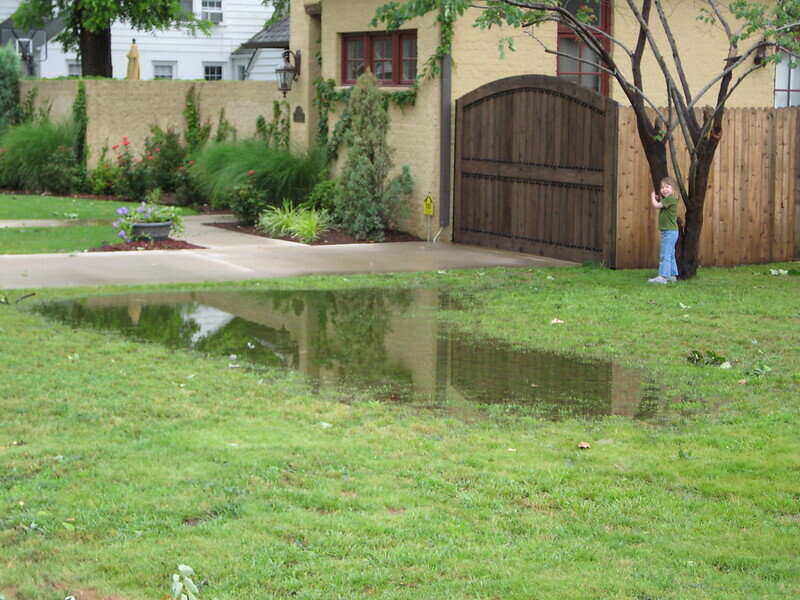
Water always finds the path of least resistance, sometimes straight toward your foundation, your neighbor’s yard, or a brand-new patio. Poor drainage causes soggy lawns, shifting soil, and long-term damage, but it’s one of the easiest issues to fix:
Draining toward the foundation: Water that flows toward your home can cause leaks, cracks, and mold. Make sure the ground slopes away from your foundation.
Small riverstones on slopes: They roll downhill and join erosion rather than stopping it. Use larger stones (3 to 4 inches or more) for stability.
Runoff and neighborly boundaries: Redirecting runoff onto someone else’s property causes flooding and tension. Contain it with rain gardens, French drains, or dry creek beds.
Standing water attracts mosquitoes: Even a bottle cap can become a mosquito breeding spot. After every rain, dump anything holding water.
Pro Tip: After a good rain, walk your yard and watch where the water flows, pools, and drains. Those puddles reveal your landscape’s trouble spots.
See Related:
— 12 Ways to Get Rid of Standing Water
— How to Build a Rain Garden: 6 Steps
— How to Install a French Drain in Your Yard
8. Supporting Heavy Vines With Flimsy Structures
If you love the look of trailing vines like wisteria, clematis, or trumpet vine, make sure your structure can handle the weight. Some, like wisteria, develop woody trunks as thick as small trees. Those dainty pre-made arbors won’t cut it, so start strong with solid 2x4s or metal supports.
See Related: 20 Beautiful Flowering Vines for Your Yard
9. Designing a High-Maintenance Landscape
That formal, perfectly manicured garden might look amazing in your head, but perfection and nature rarely mix. I tell clients all the time: Plants aren’t suits off a rack. They come from different growers, grow at different rates, and no two are identical. Embrace a little imperfection, because it’s what makes a garden feel alive.
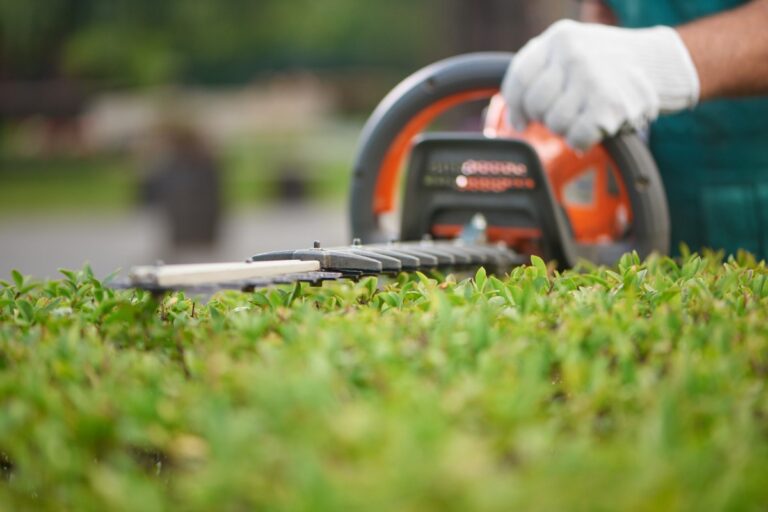
Pro Tip: Choose low-maintenance plants that look great with minimal effort. You have better things to do on weekends than wielding a hedge clipper.
See Related: 11 Low-Maintenance Landscaping Ideas
10. Piling Too Much Mulch Around Tree Trunks

Mulch locks in moisture, suppresses weeds, and looks finished, but more isn’t better. Those towering mulch volcanoes piled around tree trunks trap moisture against the bark, invite pests and fungus, and cause roots to grow into the mulch instead of the soil.
Pro Tip: Keep mulch at a proper mulch depth of 2 to 3 inches and a few inches away from the trunk so the root flare is visible. Think “mulch donut,” not “mulch volcano.”
See Related: How to Mulch Your Yard in 4 Steps
11. Installing a Fence Without Permits
Fences add privacy and structure, or create costly frustrations if you rush them. The three most common fumbles are skipping permits, guessing at property lines, and rushing the install.
Pro Tip: I’ve seen homeowners build gorgeous fences only to find they sit a few inches over the boundary. Another common miss? Tiny gate openings. One client had a gate so narrow the landscaper’s lawn mower couldn’t fit through. Plan for access and measure twice before setting a single post.
12. Overdoing Harsh Outdoor Lighting
Lighting should enhance your space, not overpower it. Harsh spotlights and bright-white bulbs turn a relaxing patio into a landing strip. The best lighting highlights the subject, not the source, drawing the eye to an illuminated tree trunk or garden feature rather than the beam itself. Choose warm, layered lighting: soft path lights, gentle uplighting on trees, and subtle glows on focal points.
Pro Tip: Go green and smart. Solar or Wi-Fi-enabled lighting cuts energy costs and makes adjustments easy. Aim for ambiance, not interrogation.
See Related: Landscape Lighting: 5 Bright and Creative Ideas
FAQs
Skipping the plan. Placing the right plant in the wrong spot causes most other problems, from stressed plants to drainage headaches. Study your yard’s sun, soil, and water flow before you dig, and your plants stay healthier with far less rework.
Costs vary widely with yard size, materials, and whether you hire help. Build a simple plan first, price your plants and hardscape materials, then add a cushion for soil, mulch, and tools. Tackling a big yard in phases keeps the project affordable.
Small planting and mulching jobs are great DIY projects. Grading, drainage fixes, and large hardscapes are where a pro saves you from costly redos. Many homeowners do the easy parts themselves and bring in a pro for the heavy work.
Landscape Lessons Learned
Landscaping isn’t about perfection. It’s about creating a space that works with nature, not against it. When the right plant finds the right place, the hardscaping sits on a solid base, and the lawn gets the care it needs, everything feels intentional. Even seasoned pros like me learn something new with every project, so start small, observe, and design with purpose.
LawnStarter’s local landscaping pros can help you create the perfect yard: a front yard with curb appeal to welcome you home and a backyard oasis when you want to relax. Contact us today to get started.
Main Image: Tree root damaging the walkway, causing visible asphalt cracks. Photo Credit: Michal / Adobe Stock
Related Posts: