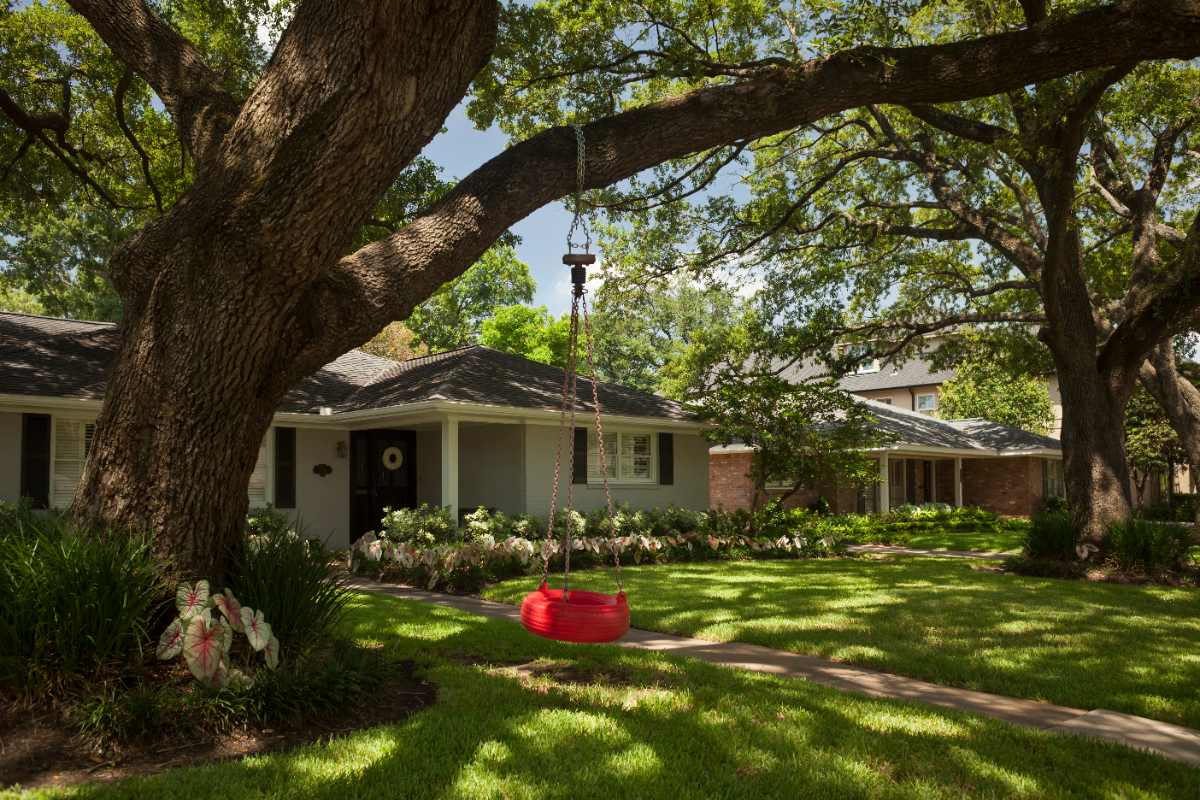
The best landscape trees for Houston include live oaks for shade, crape myrtles for color, and sycamores for fast growth, all hardy in the city’s Zone 9b climate.
The Houston Area Urban Forestry Council recommends planting between mid-November and late February. Pick the wrong species or spot, and you could lose a $500-plus investment to clay soils or summer heat. Below, you will find the right trees for every goal and where to plant them.
Choosing, placing, and caring for landscape trees can feel overwhelming. LawnStarter’s Houston tree care services can handle the heavy lifting for you.
| Key Takeaways |
|---|
| • Mid-November through late February is the best time to plant trees in Houston, giving roots time to establish before the summer heat sets in. • Resilience to heat, drought, strong winds, and heavy clay soils is essential for a tree to thrive in Houston. • The right Houston tree depends on your goal, whether that is shade, privacy, fall color, wildlife habitat, or homegrown food. |
Best Landscape Trees for Houston
The best trees for Houston include live oak, Southern magnolia, bald cypress, and crape myrtle, all proven performers in Zone 9b’s extreme heat, humidity, and heavy clay soil. Here’s how to decide which one belongs in your yard:
| Goal | Best Tree(s) |
| Maximum shade | Live oak, bald cypress, Shumard oak |
| Small yard or near power lines | Redbud, crape myrtle, yaupon holly |
| Year-round privacy | Southern magnolia, cherry laurel, eastern red cedar |
| Fall color | Shumard oak, sweetgum, bald cypress |
| Attract wildlife | Live oak, hawthorn, southern wax myrtle |
| Edible fruit | Pecan, fig, mandarin orange |
Houston sits in USDA Hardiness Zone 9b, which means extreme summer heat, high humidity, occasional flooding, and heavy clay soil that can suffocate the wrong tree’s roots.
The hardiness zone map is shorthand for the lowest temperature range a plant can survive. Zone 9b means winter lows between 25 and 30 degrees. Choose trees rated for Zone 9b that also tolerate clay soil and standing water.
Hurricane season matters too. Live oaks are famously wind-resistant, while brittle species like silver maple and Bradford pear snap in strong storms.
See Related:
— 6 Best Trees to Plant in Houston
— 16 Best Wind-Resistant Trees
Where to Plant Landscape Trees on Your Houston Property
The right landscape tree in the right spot depends on your goals, your lot size, and what is already growing nearby. Start by deciding what matters most: shade, wildlife, curb appeal, or all three.
Choose the best tree planting site based on sun exposure. Plant deciduous trees on the south and west sides to block hot sun. Place evergreen trees on the north side as a windbreak.
Note underground and above-ground utilities on your lot. Plant smaller landscape trees underneath power lines. Keep mature height under 25 feet in these areas.
Estimate available space: According to Texas A&M Forest Service, large trees over 50 feet tall should be at least 20 feet from your home, driveway, and sidewalks.
Consider soil drainage: Most of Houston sits on heavy Beaumont clay that holds water and suffocates shallow roots. If water pools in your yard after rain, stick to flood-tolerant species like bald cypress or cedar elm.
See Related: How to Pick the Right Site to Plant a Tree
How to Choose the Right Landscape Tree for Your Houston Yard
Match the tree to your needs: Decide between flowering or fruit trees, small or large varieties, fast or slow growers, and deciduous or evergreen types.
Match the tree to your yard size: Small yards under 5,000 square feet do best with small landscape trees like crape myrtles, redbuds, and desert willows.
Medium and large yard landscape trees: Medium yards can handle Chinese pistache or cedar elm. Large lots have room for live oak, sycamore, pecan, or bald cypress.
Consider spacing and sunlight: Map sun exposure across your lot at different times of day. Note underground and above-ground utilities before you plant.
Know your soil: If you are in Katy, Sugar Land, or Pearland where clay is especially heavy, lean toward bald cypress, cedar elm, or yaupon holly. Inner Loop neighborhoods with sandier soil have more flexibility.
See Related:
— Tips for Choosing a Tree at the Nursery
— Tree Shapes for Your Yard
The Best Trees for Landscaping Your Houston Yard
Best Shade Landscape Trees for Houston
Houston’s intense summer heat, with most days staying over 90 degrees June through September, makes shade one of the most valuable things a landscape tree can offer. Picking the right size keeps your yard cool without overcrowding it.
| Size | Best Landscape Trees | Best For |
| Large | Live oaks, American sycamore, pecans, bald cypress, sweetgum | Full-yard shade coverage |
| Medium | Chinese pistache, cedar elm, eastern red cedar, American holly | Smaller lots |
| Small | Crape myrtles, redbuds, desert willows | Patios, decks, and walkways |
Large shade landscape trees: A single mature live oak can shade an entire front yard. Explore ways to landscape around trees for design ideas.
Medium shade landscape trees: Cedar elm adapts well to Houston’s clay-heavy soils. Chinese pistache tolerates clay soils if drainage is good.
Small shade landscape trees: Crape myrtles, redbuds, and desert willows work near patios where you need filtered light. Check out shade landscaping ideas for more inspiration.
Deciduous shade landscape trees: Redbuds, sweetgum, and willow oak all provide dense summer canopies. Their leaves drop in fall, letting sunlight warm your home through winter.
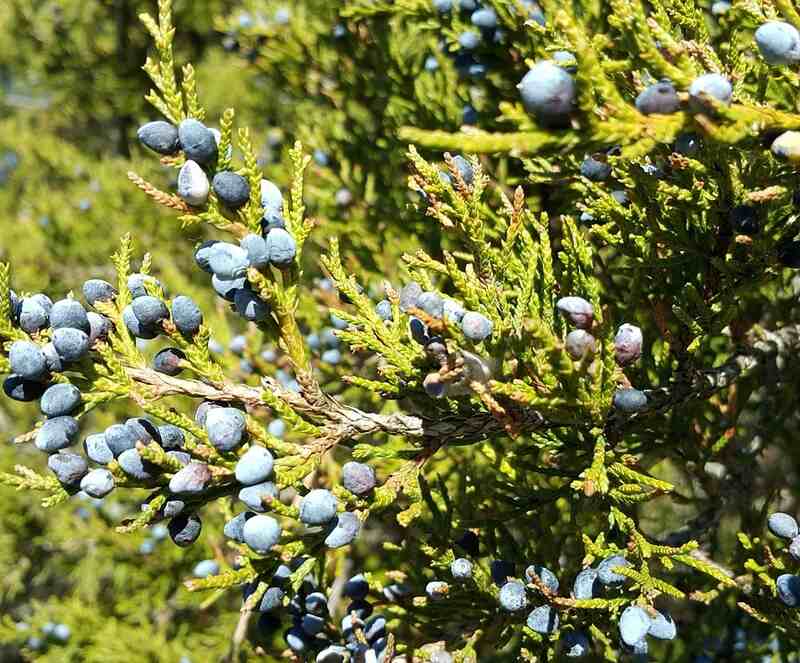
Evergreen shade and screening landscape trees: American holly, southern magnolia, loblolly pine, and eastern red cedar offer year-round cover. They also work as windbreaks and privacy screens.
Drought-Tolerant Landscape Trees for Houston
Houston’s rainfall drops sharply in midsummer: July averages just 3.77 inches, a 37% plunge from June’s 6 inches, according to National Weather Service data. Drought-tolerant landscape trees survive these dry spells without constant watering, saving you time and money.
Best drought-tolerant options: Texas mountain laurel, yaupon holly, Chinese pistache, bur oak, and cedar elm handle dry conditions once their roots are established. Many are also fast-growing shade trees.
Establishment period: Even drought-tolerant landscape trees need regular watering during their first 2 growing seasons.
Water deeply once a week. Aim for 1 to 2 inches per session with a slow-running hose for 20 to 30 minutes. During July and August, newly planted trees may need watering twice a week to survive Houston’s driest stretch.
See Related:
— 20 Best Drought-Tolerant Trees by Region
— How to Plant a Tree
Best Fruit and Nut Landscape Trees for Houston
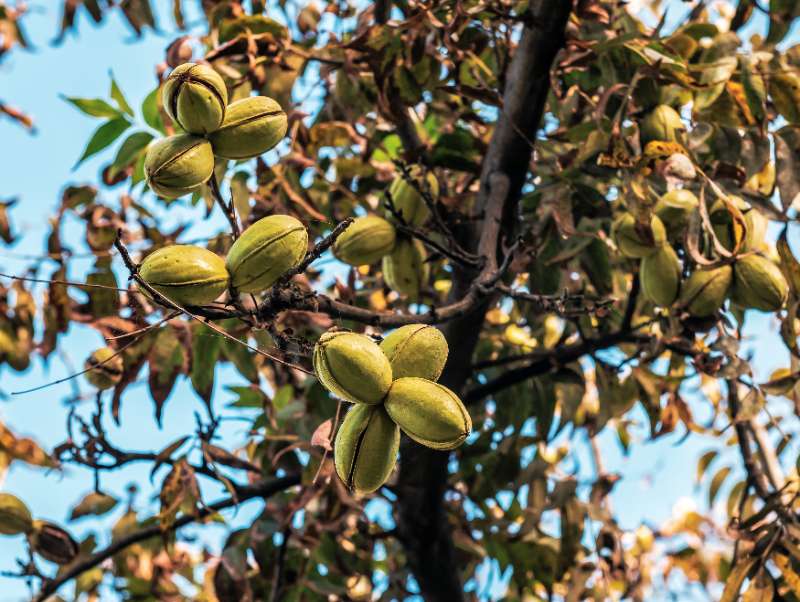
Several landscape trees thrive in Houston and produce fruit or nuts you can harvest from your own yard. The Texas state tree, the pecan, is a popular yard tree for this reason.
Pecan planting tips: Plant pecans in deep, well-drained soil with 35 to 40 feet between trees and at least 20 feet away from your house, garage, and other structures.
To test the soil drainage: Dig a 12-inch hole, fill it with water, and check if it drains within an hour.
Other fruit landscape trees you can plant in Houston:
Citrus:
Grapefruit trees
Kumquat trees
Lemon and lime trees
Mandarin, tangerine, and orange trees
Stone fruit and others:
Apple trees
Avocado trees
Fig trees
Mulberry trees
Nectarine and peach trees
Pear trees
Persimmon trees
Plum trees
Pomegranate trees
Olive trees
Native Landscape Trees for Houston
Native landscape trees are adapted to Houston’s humid subtropical climate, clay soils, and occasional drought. They need less watering, fewer pesticides, and less maintenance once established.
Top native picks: Live oak, bald cypress, eastern redbud, yaupon holly, American beautyberry, and Texas mountain laurel all thrive with minimal care. Consider adding palm trees, like the Canary Island date palm, to your Houston yard for a tropical accent.
Why go native: Native landscape trees resist local pests and diseases better than non-native varieties. They feed and shelter native wildlife, making your yard part of Houston’s urban ecosystem.
Wildlife-friendly native landscape trees: Hawthorns, southern wax myrtles, cherry laurels, and oaks bring birds, butterflies, and other wildlife back to your Houston yard. These trees provide the shelter and food that urban development has taken away.
Need help choosing and planting? LawnStarter’s tree care services connect you with local pros who know what thrives in Houston.
Small Trees for Houston Landscapes
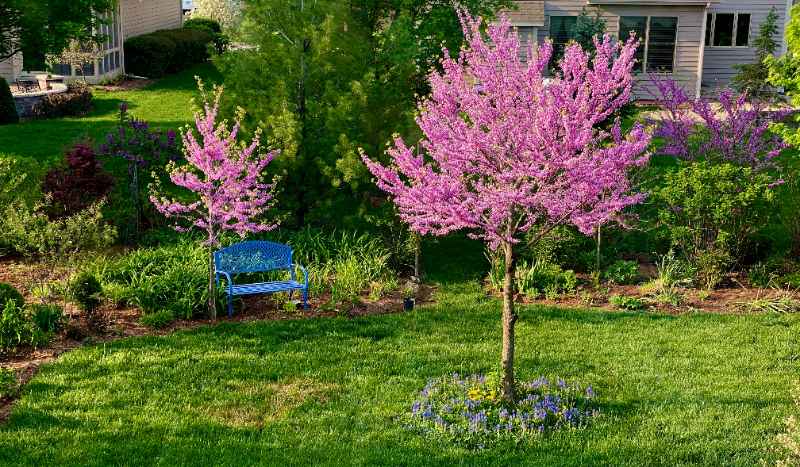
If you have a smaller yard or need to plant near power lines, these compact varieties add beauty without overwhelming your space:
| Tree | Mature Height | Best Feature |
| Eastern redbud | up to 30 feet | Pink spring blooms |
| Crape myrtle | up to 40 feet, depending on variety | Summer flowers, fall color |
| Mexican plum | up to 25 feet | White flowers, edible fruit |
| Yaupon holly | up to 30 feet | Evergreen with red berries |
| Fringe tree | up to 25 feet | Fragrant white blooms |
| American holly | 15–30 feet | Evergreen with wildlife value |
Sources: Trees of Texas, USDA NRCS Plants Database
Why Plant Trees in Houston
Planting a tree typically costs between $565 and $680, though large mature trees can run close to $5,000. That investment pays off quickly.
Property value boost: Mature landscape trees raise curb appeal and attract buyers. Tree-lined streets and well-maintained yards also discourage criminal activity in neighborhoods.
Energy savings: Shade trees planted strategically on the south and west can reduce cooling costs by up to 50% in summer. During winter, evergreen windbreaks on the north side can reduce heating costs by up to 30%, according to Texas A&M Forest Service.
Get Help With Your Landscape Trees From LawnStarter
A professional makes tree planting easier and more affordable than you might think. LawnStarter connects you with vetted tree care pros in Houston, Texas who can help you choose the right trees and handle planting from start to finish.
Go the easy way and get a quote from LawnStarter today. The right landscape trees will bring a forest-like feel to your Houston yard.
LawnStarter also connects you with tree care pros in nearby cities and suburbs like Stafford, Humble, Sugar Land, Friendswood, Spring, and more.
FAQs
Houston’s humid subtropical climate and Hardiness Zone 9b support many species. Ideal landscape trees include oaks, crape myrtles, sycamores, and Southern magnolias. Avoid American arborvitae, crabapple trees, and lilac bushes as they struggle in the heat.
The Houston Area Urban Forestry Council recommends planting landscape trees between mid-November and late February. This window lets roots establish before summer heat arrives.
Choose evergreen landscape trees that stay full year-round for screening. Top trees for privacy in your yard include southern wax myrtle, cherry laurel, eastern red cedar, and American holly.
Avoid American arborvitae, crabapple trees, and lilac bushes as they cannot handle Houston’s humidity and heat. Also steer clear of Japanese blueberry: It’s a bug magnet, prone to a fungus that is nearly incurable, and overall one of the worst trees to plant in Houston.
Mexican sycamore is one of the fastest-growing landscape trees for Houston, adding 3 to 5 feet per year in favorable conditions. Texas red oak and eastern red cedar also grow quickly.
Main Image: Houston yard with large shade trees. Image Credit: Conchi Martinez / Adobe Stock