| Key Takeaways |
|---|
| • El Paso limits residential watering to 3 days per week, with fines from $50 to $500 for violations. • Water early morning between 6 a.m. and 10 a.m. to reduce evaporation and stay within summer restrictions. • Most lawns need about 1 inch of water per week, split across your allowed watering days. |
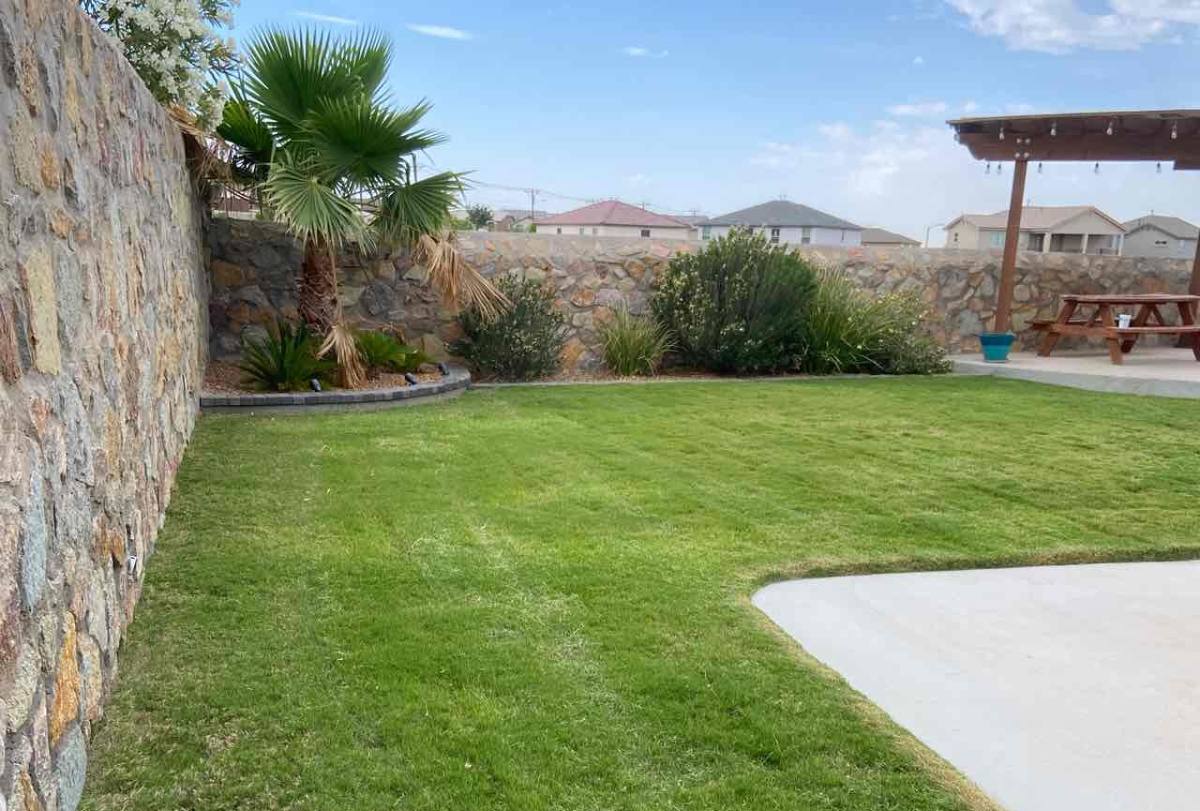
Is your El Paso lawn (or small strip of turf) looking a little stressed this summer? When the Texas heat kicks in, keeping your grass green can feel like a full-time job.
A few simple adjustments to your watering routine can make all the difference. This guide walks you through exactly when, how often, and how much to water your El Paso lawn.
Getting your summer watering schedule just right takes time and the right equipment. If you’d rather spend your weekends enjoying the shade, LawnStarter can connect you with local lawn care pros who handle mowing and other El Paso lawn care needs.
- El Paso Lawn Watering Restrictions
- Best Time to Water Your Lawn in El Paso
- How Much Water Does Your El Paso Lawn Need?
- How Often Should You Water Your Summer Lawn?
- Are You Overwatering or Underwatering? (And How to Tell)
- What Kind of Sprinkler Should You Use for Summer Lawn Watering?
- Water-Saving Tips for Summer Lawn Care in El Paso
- FAQs
El Paso Lawn Watering Restrictions
El Paso enforces a year-round mandatory watering schedule that limits residential irrigation to 3 days per week based on your address number. Violating the schedule can result in fines from $50 to $500, according to El Paso’s water conservation ordinance.
| Address Type | Allowed Watering Days | Restricted Hours (Apr. 1 – Sep. 30) |
| Even-numbered | Tuesday, Thursday, Saturday | No watering 10 a.m. to 6 p.m. |
| Odd-numbered | Wednesday, Friday, Sunday | No watering 10 a.m. to 6 p.m. |
Monday blackout: No residential watering is allowed on Mondays, regardless of your address.
Runoff rules: Water flowing from your property into the street is prohibited. Shorten your watering cycles if your system causes runoff.
Off-season note: From October 1 through March 31, there are no time-of-day restrictions, but day-of-week limits still apply.
Best Time to Water Your Lawn in El Paso
Best time to water: Early morning watering between 6 a.m. and 10 a.m.
According to Texas A&M AgriLife Extension Service, just before or right after dawn is the sweet spot. Not only because of the cool air, but there’s also less wind and the city water pressure is high.
Less wind means less evaporation, and more water reaches the soil where your grass actually needs it.
Avoid these times for summer lawn watering:
Windy conditions: Water gets blown off-target and evaporates faster. In El Paso, where afternoon winds are common, this can mean a significant portion of your water never reaches the grass.
Evening or night: Water droplets cling to grass blades for hours after dark. This creates ideal conditions for fungal diseases that can damage your lawn.
Midday heat: Most water evaporates before it ever reaches the roots.
See Related: Best Time to Water Your Grass
How Much Water Does Your El Paso Lawn Need?
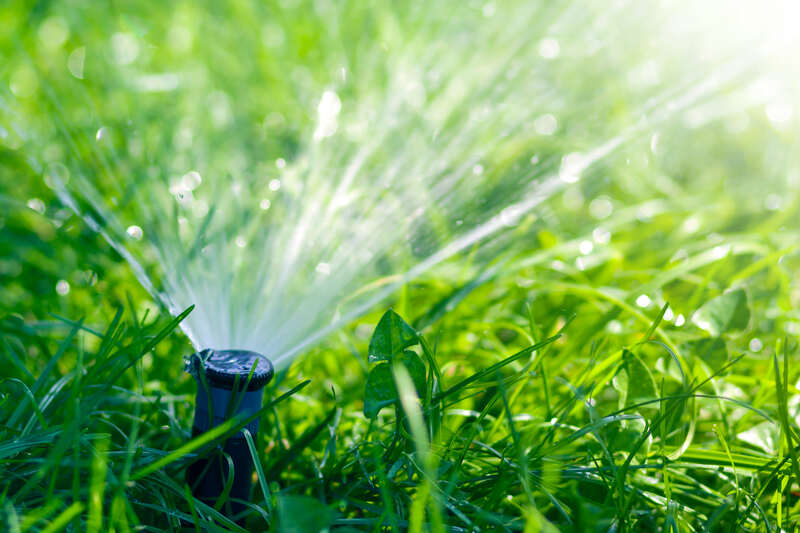
Most El Paso lawns need about 1 inch of water per week during the growing season (roughly March through October in El Paso). In peak summer heat above 100 degrees, your lawn may need up to 1.5 inches.
Use the tuna can test to adjust your sprinklers: Place empty tuna cans around your lawn and run the sprinklers. Measure the water in each can to learn how long your system takes to deliver 1 inch.
Use a sprinkler run time check to dial in your exact schedule. Many in-ground systems deliver about a half-inch in 30 minutes, while hose-end sprinklers often need longer.
For a more thorough evaluation, consider a full lawn sprinkler audit.
See Related: How Long to Water Your Lawn in Summer
How Often Should You Water Your Summer Lawn?
El Paso lawns need 2 to 3 waterings per week during no-rain periods in the summer.
Deep, infrequent watering works better than daily light sprinkling. Let the soil dry slightly between sessions. It prevents shallow root growth and reduces the risk of fungal disease.
Adjust watering schedule to soil type:
Sandy soil: Split your weekly total into 3 shorter sessions. Sandy soil drains quickly, so shorter, more frequent watering keeps moisture in the root zone.
Clay soil: 2 deeper sessions per week work best. Clay absorbs water slowly, so run sprinklers at a lower rate to prevent runoff.
If water pools or runs off before your session is done, use the cycle and soak method. Split watering into 2 shorter cycles with a 30-minute break between them. This gives the soil time to absorb each round.
The most common El Paso grasses are warm-season grasses like Bermudagrass and buffalograss. Both are naturally drought-tolerant and do best with a deep, infrequent schedule.
See Related: How Often Should I Water My Lawn?
Are You Overwatering or Underwatering? (And How to Tell)
Signs You’re Over-Watering Your Summer Lawn
With summer daytime highs routinely exceeding 100 degrees in El Paso, it’s easy to overwater your lawn thinking you’re helping it when in fact, it weakens your lawn over time.
When grass gets too much water too often, roots stay shallow because they never need to reach deeper for moisture, making your lawn less drought-tolerant, not more.
Signs of overwatering:
Grass wilts and turns yellow
Lawn feels spongy or soft underfoot, even hours after watering
Mushrooms or fungal patches appear, especially in corners or shaded areas
Weeds (especially crabgrass and nutsedge) start popping up in previously healthy areas
Thatch is forming faster than in your neighbors’ yards
Check soil moisture after watering with a shovel or trowel. The top 6 inches should feel damp but not soggy.
Water next when the grass shows signs of stress: it wilts, turns a gray, bluish color, and doesn’t bounce back as fast after you walk on it.
See Related: 10 Signs of Overwatering Your Lawn
Signs Your El Paso Lawn Needs Watering
Your lawn shows clear signs when it needs water. Recognizing these signals helps you avoid both under-watering and waste.
Footprint test: Walk across your lawn. If footprints stay visible for more than a few seconds, the grass lacks enough water pressure to spring back.
Color changes: Bermudagrass shifts from bright green to blue-green when thirsty. Straw-yellow means the grass has entered drought dormancy, a survival state where it stops growing to conserve energy.
Curling blades: Grass blades that fold inward along their length are conserving moisture. Water soon.
Screwdriver test: Push a screwdriver into the soil. If it slides in easily to 6 inches, moisture is adequate. If not, water immediately.
See Related:
A Brown Texas Lawn Doesn’t Mean Dead Grass
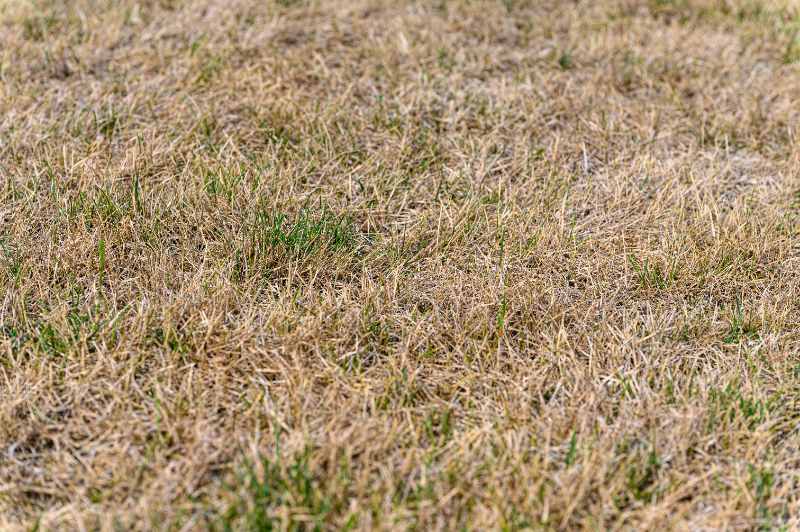
Most Texas warm-season grasses (Bermuda, Zoysia, and buffalograss) turn brown as a survival mechanism during drought. That’s dormancy, not death. They can stay dormant for several weeks and recover with the next rain or watering.
Do a simple tug test: If the grass pulls out easily with no resistance, it may be dead. If the roots hold, it’s dormant and watering will bring it back.
Resume your normal deep-watering schedule and give it 1 to 2 weeks before drawing conclusions. If you still notice your grass dying despite watering, pests or disease could be the culprit.
See Related:
What Kind of Sprinkler Should You Use for Summer Lawn Watering?
If your budget allows it, a subsurface irrigation system is the best choice for watering a lawn in the Chihuahuan Desert: less water lost to evaporation, less runoff.
If you have a regular pop-up sprinkler system, check it regularly. Leaking pipes, clogged sprinklers, and poorly aligned sprinkler heads can lead to poor coverage and brown patches.
Texas A&M AgriLife Extension Service recommends installing more sprinklers so each covers a smaller area. Why? The longer the time the stream passes through the air, the more water you lose to evaporation.
Consider installing weather-based control systems or moisture sensors, to avoid watering the lawn when it’s not needed. Check the El Paso Water rebates program. At the time of this article, they are offering a one-time $75 rebate for a WaterSense labeled smart irrigation controller.
Check the Nozzles and Sprinkler System Before Summer Watering
Before summer hits full force, run each sprinkler zone for a few minutes. Watch for heads that aren’t rotating, are spraying in the wrong direction, or have visible cracks. Extreme temperatures can damage these parts faster than you’d expect.
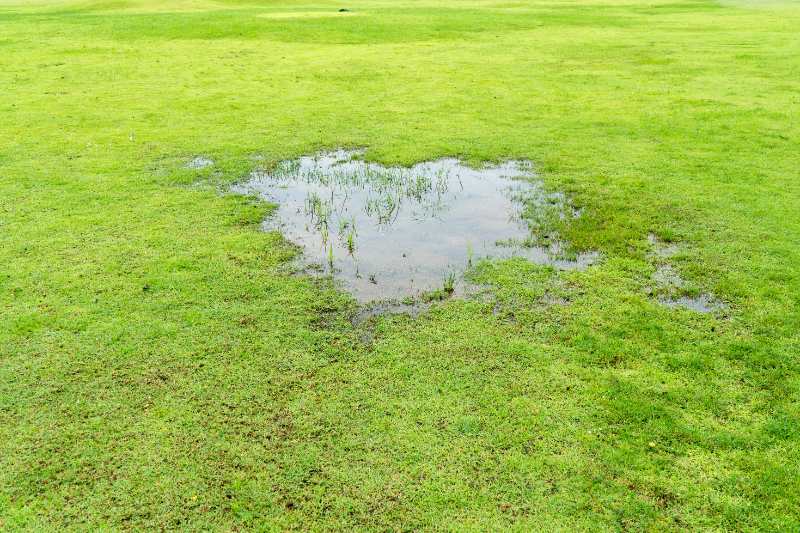
Don’t ignore wet spots or puddles that persist after watering. They’re usually a sign of a leak or a reason to improve drainage.
If a zone keeps misfiring, consider scheduling repairs. The average cost of sprinkler repairs is $130 to $360, and it saves hundreds on your water bill.
See Related: How to Fix and Adjust Lawn Sprinkler Heads (DIY Guide)
Water-Saving Tips for Summer Lawn Care in El Paso
El Paso has some of the highest summer evaporation rates in the country. These habits help you stretch every gallon:
Add mulch: Layer it around trees and flower beds to retain soil moisture between waterings. A bag of mulch costs $3.25 to $6.50, making it a budget-friendly way to reduce sprinkler use.
Mow higher: Taller grass shades the soil, reducing evaporation.
Leave grass clippings on the lawn: They help retain soil moisture and keep the soil cool during summer.
Use a smart controller: Smart controllers adjust your schedule based on weather, Wi-Fi, and rain sensor data. Wi-Fi-compatible models cost $125 to $400. WaterSense-labeled controllers can reduce irrigation water use by up to 30%.
Let LawnStarter Handle Your Summer Lawn Care
Dialing in the perfect summer lawn care routine takes time, attention, and the right equipment. If you’d rather leave it to the experts, LawnStarter is here to help.
We connect you with local, vetted lawn care pros in El Paso who know exactly what your El Paso lawn needs to thrive through the heat.
FAQs
Probably not, but it depends on your sprinkler type. According to Texas A&M AgriLife Extension, fixed spray heads apply 1.3 to 2 inches per hour, while rotors deliver only 0.4 to 1 inch. Ten minutes barely scratches the surface on most systems. Run the catch-can test to find your exact rate.
In El Paso, water 2 to 3 days per week during summer, within the city’s mandatory schedule (Tue/Thu/Sat for even-numbered addresses, Wed/Fri/Sun for odd, no Mondays). Deep, infrequent watering encourages stronger roots than daily light sprinkling, even in extreme heat.
Yes, but only water in the early morning. Midday watering wastes water through evaporation and stresses your grass. During extreme heat, water slightly more frequently while keeping each session deep.
Main Image: Lawn mowed by a LawnStarter Pro in El Paso, TX. Image Credit: LawnStarter
Related Posts: