| Key Takeaways |
|---|
| • Rake leaves before rain to prevent matted buildup that damages your lawn. • Use tarps, leaf scoops, and mulching mowers to cut cleanup time in half. • Work with the wind, divide your yard into sections, and take breaks to protect your back and stay efficient. |
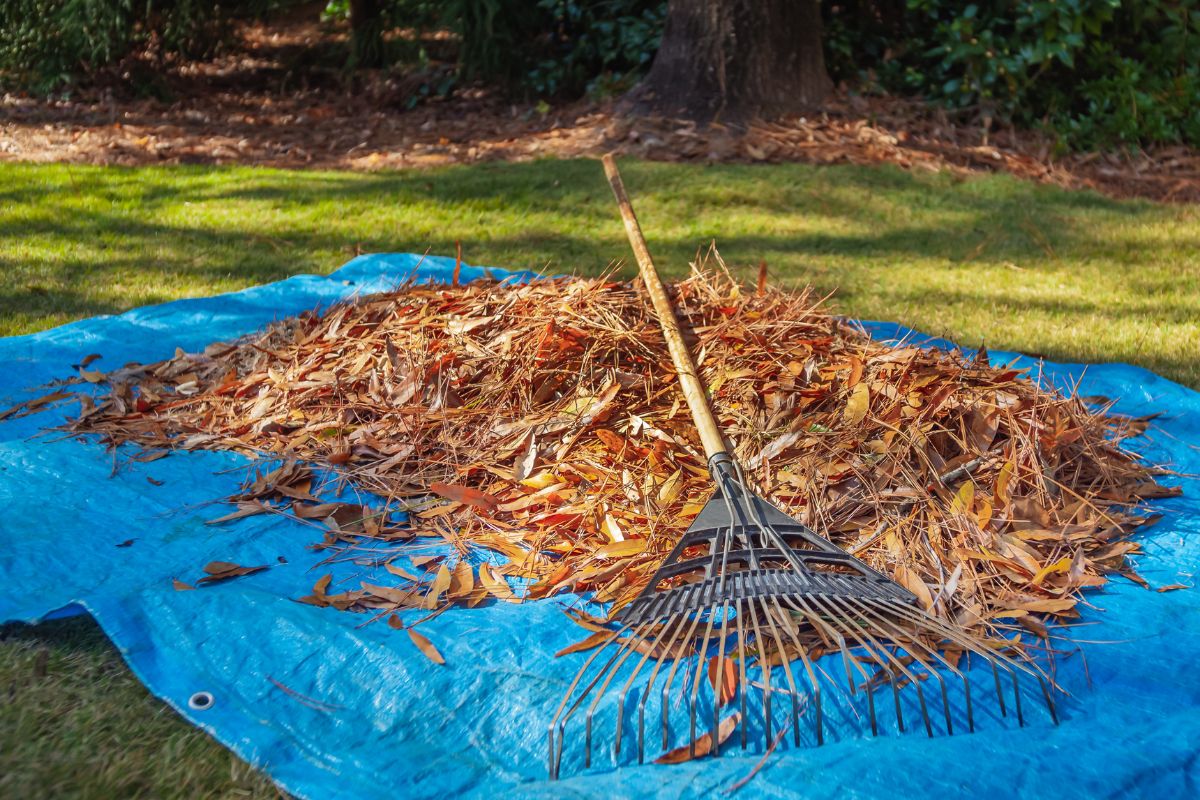
Cleaning up leaves gets easier when you use the right tools and techniques. From choosing a lightweight rake to using tarps and mulching mowers, these 9 tips for cleaning up leaves cover everything you need to work smarter.
You will also learn when to rake, how to protect your back, and ways to speed up bagging so the job takes hours, not an entire weekend.
If leaf cleanup still feels like too much, LawnStarter’s leaf removal pros can handle the heavy lifting while you enjoy your weekend.
1. Choose and Adjust Your Rake
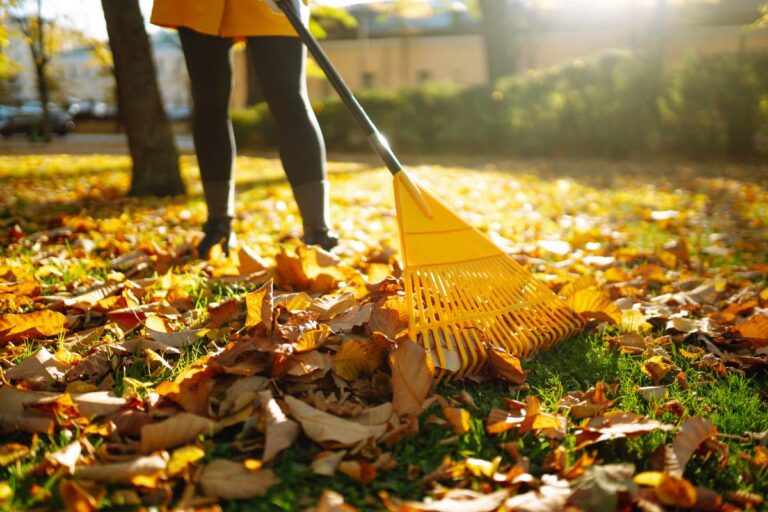
The best rake for leaf cleanup is a lightweight leaf rake with flexible tines. Unlike a stiff garden rake, it won’t dig into your lawn or tear up the grass.
Before you start, adjust the handle so it’s long enough to let you rake with a straight back — a short handle forces you to lean over and strain your lower back muscles.
Then, let the rake do the work for you. You’re removing leaves, not dethatching the lawn. Instead of pressing down and scraping, lift the rake slightly, let it drop on the leaves, and pull it toward you. You don’t need long strokes; landing the tines about a step’s length in front of you is just fine.
See Related: 12 Types of Rakes: Uses and Tips
2. Invest in Leaf Scoops
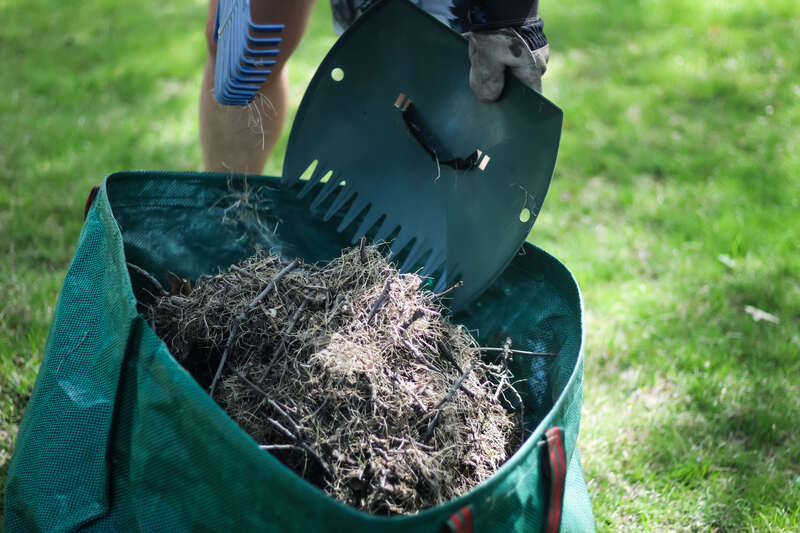
Leaf scoops are the easiest way to pick up leaves. They’re giant plastic claws that slip over your hands with elastic straps. Squat down, sweep leaves between the scoops, then lift and dump into a bag.
Bad knees? Avoid squatting by using a leaf grabber instead. It’s the same scoop but on long handles.
3. Use a Leaf Blower or Vacuum for Large Areas
Which power tool you need depends on the job:
- Leaf blower: Best for yards with heavy leaf coverage. It moves piles faster than raking by hand. Gas-powered models handle wet or matted leaves better, while battery-powered options work well for smaller jobs and are easier on the ears.
- Leaf vacuum: Best if you want to produce your own compost. Unlike a blower, which only moves leaves, a vacuum sucks them up, shreds them, and packs them into bags in one pass. Ideal for lawns with numerous trees or hard-to-reach spots like under shrubs.
Composting also benefits the environment. As gardening expert Jo Ellen Meyers Sharp of The Hoosier Gardener, in Indianapolis, Indiana, puts it, you’re “keeping leaves out of the waste stream.”
Note: Consider a leaf blower-vacuum. It’s a 2-in-1 you can use for blowing leaves into piles and then vacuuming the piles.
See Related:
4. Use a Mulching Mower for Light Leaf Coverage
When leaves cover under 50% of your lawn, skip the rake and grab your mower instead. You’ll save hours of work, and those shredded leaves act like free organic fertilizer for your grass.
A mulching mower works best since it chops leaves into tiny pieces that break down faster. Penn State Extension notes that composting shredded leaves improves soil structure and helps sandy soils hold moisture and nutrients.
Scott Culala, owner of The Lawn Cypress, in Gardner, Kansas, agrees: “Make sure you clean up your leaves, or at least mulch them down.”
See Related:
5. Know When to Rake
Timing matters as much as technique:
- Rake before rain comes, or you’ll work twice as hard — rain-soaked leaves stick to the grass, to the ground, and to each other, and can weigh 2 to 5 times more than dry leaves.
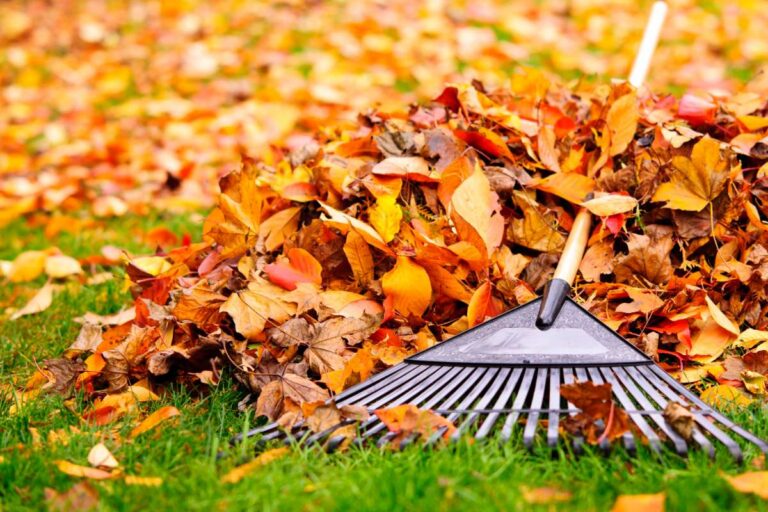
- Don’t wait until every leaf has dropped. The bottom layer of a season-long pile gets soggy and matted, making it harder to rake and suffocating your grass underneath. The smart move: get out there whenever leaf coverage hits around 50%, meaning you can see roughly as much grass as leaves.
See Related:
6. Use Your Whole Body, Not Just Your Arms
Don’t lean and twist like a pretzel trying to reach every leaf. That will wreck your back. Instead, use your feet.
- Step and drag: Take a small step forward and drop the rake on the leaves. Then drag your foot back along with the rake. Do the same if raking from the sides.
- Stay close: Keep your upper arms close to your body. When you need to reach further, take another step forward instead of overextending your arms.
Poor body mechanics while raking put strain on your spine and surrounding muscles. The National Institute of Arthritis and Musculoskeletal and Skin Diseases notes that back pain risk rises when core muscles are weak or when you twist and bend repeatedly.
See Related: How to Rake Leaves
7. Work the Yard in Sections

“Divide and conquer” works wonders for leaf cleanup. Divide your lawn into sections and tackle each one at a time, taking breaks in between.
Within each section, rake leaves toward the center to make small piles. Bag them before moving to the next section, or the next gust of wind might scatter your hard work everywhere.
Before you start, decide where each section’s pile will land. Avoid the middle of the lawn, walkways, or anywhere far from where the leaves are actually headed.
Placing collection points near fences, hedges, or buildings gives you a natural windbreak, and raking with a light breeze at your back (rather than against it) helps push leaves toward your pile instead of scattering them.
8. Master the Tarp Method
The easiest leaf collection method is to rake the leaves directly onto a tarp and then drag the tarp away. Get a thick one — tear-proof polyethylene, at least 16 mil (0.016 inches) thick, in a 6-by-8-foot or larger size with rope handles for easier hauling.
If you have multiple tarps, spread them across different sections of your yard before you start raking, so you can fill each one without walking back and forth. With just one tarp, lay it down in your first section and move it along as you go.
When it’s time to bag, do it while the leaves are still on the tarp. Stomp on the pile to compact it and fit more per bag, then roll the tarp into a funnel and pour the leaves straight in.
If you can’t get to bagging right away, never leave a loose pile sitting on the lawn. Stomp it down, then cover it with a tarp or landscape fabric weighed down at the corners so it stays put until you’re ready.
9. Clean Gutter Spouts
Fallen leaves often clog downspout curves, causing gutters to overflow and potentially flood your foundation during heavy rain.
Try breaking the clogs with a blast from your garden hose. Still blocked? A drum auger or a regular plumber’s snake usually does the job.
Pro Tip: Install gutter guards to keep fallen leaves from clogging your spouts.
FAQs
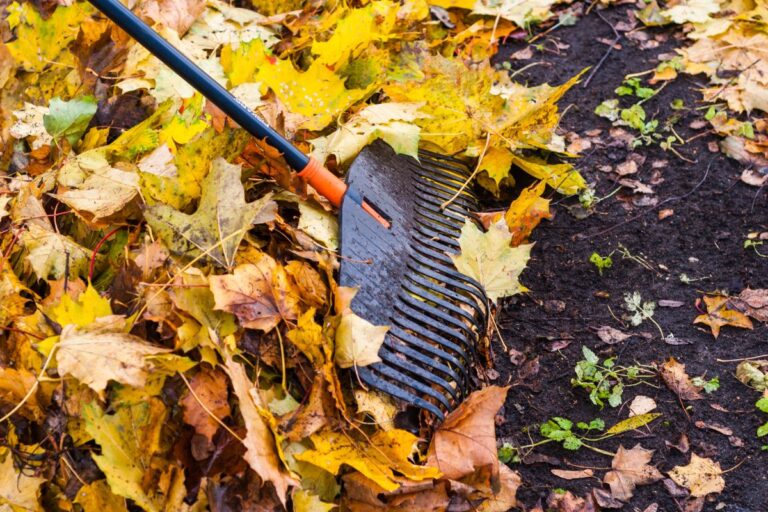
Remove the top layers with a leaf blower first, since matted leaves are too heavy for raking alone. Then use a stiff rake or mower to clean up what remains. If the leaves are wet and stuck to the grass, let them dry before attempting to remove them.
Reduce future raking by trimming trees in winter or early spring, since fewer branches mean fewer fall leaves. You can also plant low-litter tree varieties and use mulching mowers to shred light leaf layers in place.
Tree trimming costs $430 to $640 per tree.
Not necessarily. A thin layer of leaves can benefit your lawn by adding nutrients as it decomposes. But thick layers block sunlight and trap moisture, which can kill grass and invite pests, so clear your lawn when coverage reaches about 50%.
Skip the Work: Hire a Pro
Still overwhelmed by leaf cleanup? Skip the raking and bagging. Hire a LawnStarter leaf removal pro to handle your fall cleanup while you enjoy your weekend.
Read More:
- What to Expect When You Hire a Leaf Removal Service
- Best Ways to Clean Up Leaves in Your Yard
- LawnStarter’s Fall Lawn Care Checklist
Main Image: A fan rake and blue tarp make quick work of a large pile of fallen autumn leaves during a backyard cleanup. Photo Credit: Scott Habermann / Adobe Stock
Related Posts: