| Key Takeaways |
|---|
| • The right tools, good technique, and a smart section-by-section strategy make raking faster and easier on your back. • Rake when leaves are dry and most have fallen. • Reuse leaves as compost or mulch instead of bagging them for the landfill. |

Leaf cleanup is easier when you know how to rake leaves properly. Apart from using effective techniques and having an efficient strategy, you’ll also need to choose the right time and tools.
Follow this step-by-step guide to help you maintain the cleanliness of your yard safely and efficiently.
If you would rather skip the chore, LawnStarter’s leaf removal service connects you with a local pro.
| Project Difficulty: Moderate Estimated Time to Complete: 1 to 3 hours (depends on yard size and leaf volume) Project Cost: Low. DIY raking costs less than $10 if you already have the necessary equipment, while professional leaf removal costs around $170. |
1. Choose the Right Tools
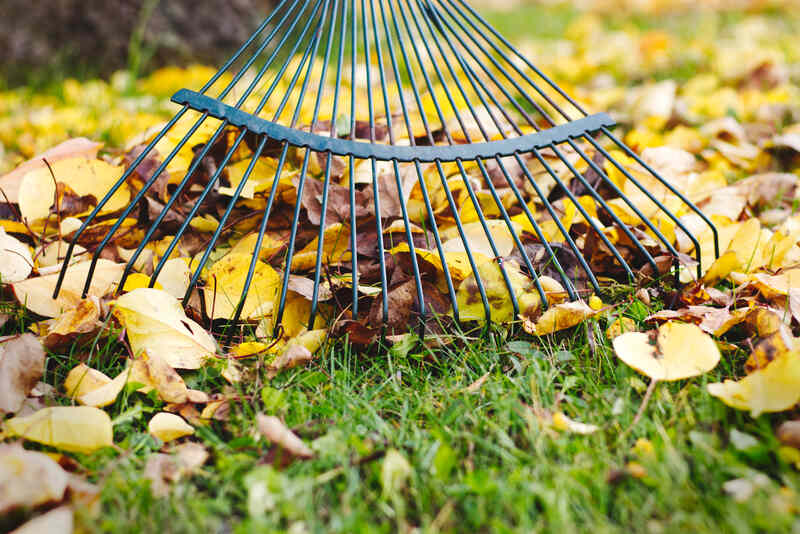
To rake leaves quickly and comfortably, you need just a few key tools. The right gear makes the job faster and easier on your body. Here’s a list of must-have leaf-raking gear:
Leaf rake: A wide plastic rake works well for sweeping dry leaves, while a metal rake with a spring joint is great for damp leaves.
Gloves: Protect your hands from splinters, blisters, and sharp twigs with a good pair of work gloves.
Footwear: Wear sturdy shoes or boots with a good grip to avoid foot injury or slipping, especially when walking on uneven ground.
Eye and nose protection: Debris or dust can fly everywhere, so wear goggles and a dust mask to protect your eyes and nose.
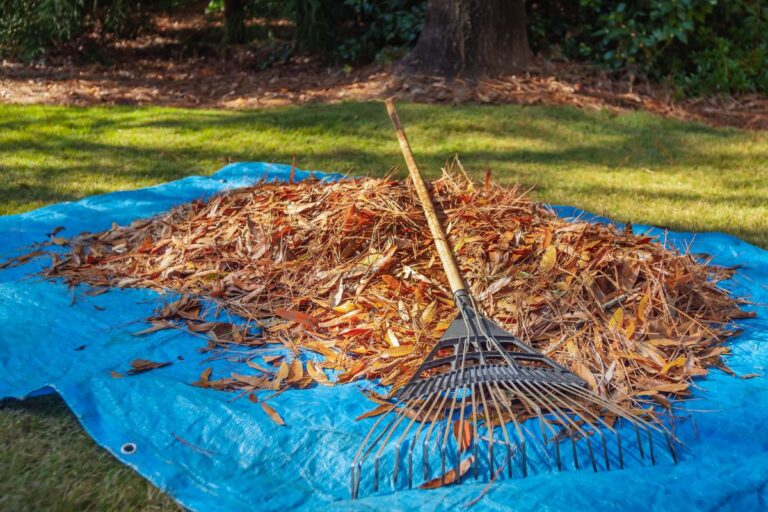
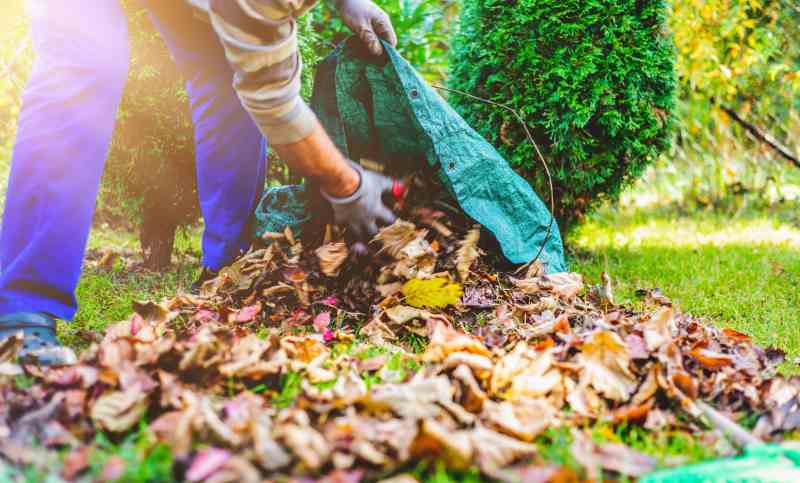
Tarp: Instead of bending over to pick up the raked leaves, you can just rake the leaves onto the tarp, making it easier to haul them.
Leaf scoops and hand rake: Great for reaching tricky spots around shrubs and flower beds.
See Related: 12 Types of Rakes: Uses and Tips
2. Use Proper Techniques to Avoid Injury

To loosen your shoulders, back, and hamstrings and avoid straining your back, warm up with light stretching before raking leaves. Below are proper raking techniques to follow:
Keep your back straight and bend at your knees (not your waist) to avoid putting too much strain on your spine.
Maintain a good stance to distribute weight evenly and minimize strain on your body.
Hold the rake close to your body with one hand near the top of the handle and the other about halfway down.
Avoid twisting your body repeatedly, as it can cause considerable strain on your lower back and possibly injure it.
Use short, smooth strokes rather than aggressive, jerky movements.
Switch sides regularly to avoid overusing one arm or side of your body.
Take a break every 20 to 30 minutes and hydrate, especially if you’re raking a large yard.
Pro Tip: When raking leaves, just think of it as a workout, and good form will make the job easier and almost pain-free.
See Related: Leaf Raking Injuries Are More Common Than You Think. Here’s How to Avoid Them This Fall
3. Have a Good, Efficient Strategy
To save time and energy, you’ll need a sound plan, because having a smart strategy is just as important as working hard. Here are some tips to make leaf raking fast and easy:
Start at the edges and work toward the center. Direct the leaves to your main pile to avoid scattering them in the areas you just cleaned.
Work in sections to make the task more manageable. Mentally divide your lawn into zones and finish one area before moving to the next.
Use small, short strokes. You can cover more ground with big sweeping motions, but this approach can easily tire your arms and cause soreness. Use small strokes instead, which can also lessen shoulder and back strain.
Work with the wind and rake in the same direction. Leaves can get blown to your face, so remember to wear protective goggles to keep your eyes safe.
Rake downhill if you have a sloped yard. Gravity is your friend and will make the task easier for you.
Pull leaves toward you. Compared to pushing, pulling is easier on your muscles. Plus, pushing increases the downward force, making it harder to move the rake.
Create multiple small piles rather than one large heap. They’re easier to bag or move to your compost bin, saving your legs and back from pain and injury.
Use a tarp to gather and transport leaves instead of bending over repeatedly. This way, you can easily drag the tarp to the next section of your yard.
Pro Tip: Nick Pauly, lawn care expert and owner of Denver Home Pros, recommends raking as soon as possible to avoid leaf rot, especially in states with high humidity levels.
See Related:
4. Properly Dispose of Leaves
Don’t know what to do with the fallen leaves? Once you’re done with the leaf cleanup, here are several options for proper disposal:
Bag the leaves: This is the most common method, especially in cities with leaf collection programs.
Compost: Mix dry leaves with kitchen scraps and grass clippings for nutrient-rich compost.
Mulch: Using a mulching mower, mow over the leaves and leave a half-inch-thick layer on the lawn.
Create leaf mold: Pile up moist leaves and let them decompose into rich, crumbly soil conditioner.
When choosing a method, pick the one that aligns with your local regulations. If possible, reuse leaves to feed your garden and lawn naturally.
Pro Tip: You can also use whole leaves to protect plants and shrubs (like rose bushes) in the winter. Just secure them with a burlap screen so they won’t fly everywhere.
See Related: Composting 101: How to Start Composting
Best Time to Rake Leaves
How often you rake depends on your yard. According to Pauly, “It’s highly dependent on the climate you live in, the type of trees you have, and if you have grass under these trees.”
Rake once most of the leaves have dropped in mid to late fall, and clear them before the first snow so they do not smother the grass through winter.
Wait for dry leaves: Dry leaves are light and easy to move, while wet leaves clump together, get heavy, and stick to your rake.
Pick the right time of day: Late morning or early afternoon is ideal, once any dew has dried off.
Rake on a calm day: Little to no wind keeps your piles in place instead of scattering them across the yard.
Keep up with it: If leaves are falling fast, rake every week or two so they never build into a thick, suffocating layer.
LawnStarter pro Scott Culala, owner of The Lawn Cypress, in Gardner, Kansas, warns that a thick layer left on the lawn can “suffocate everything that’s under it, and it’ll kill off the grass.”
See Related: How to Winterize Your Lawn
FAQs
A thin scattering of leaves can stay put and even feed your soil as it breaks down. The problem is a thick, matted layer, which blocks sunlight and air and can smother and damage your grass over winter. If leaves cover much of your lawn, rake them up or mulch them with a mower.
Yes, leaf blowers are faster and easier on your body, especially for large yards. However, raking is quieter and more eco-friendly, and it gives you a little workout, too. Plus, you have more control over where the leaves go with raking vs. blowing.
See Related: How to Use a Leaf Blower
If you have a mulching mower, shredding the leaves and leaving them on your lawn as mulch can improve soil health and provide nutrients. Just be sure not to leave thick layers that can block sunlight and water.
Delegate Leaf Removal to the Pros
You don’t have to dread raking leaves every fall. With the right tools, smart timing, and good technique, you can tackle leaf cleanup quickly and pain-free, too. And if raking’s too much this year, there’s no shame in calling a LawnStarter leaf removal pro. You’ll get a clean yard without the sore back.
Sources:
- Nick Pauly, lawn care expert and owner of Denver Home Pros. Personal interview.
- Scott Culala, LawnStarter pro and owner of The Lawn Cypress. Gardner, KS. Personal interview.
Main Image: Family cleaning up autumn leaves. Image Credit: Pixel-Shot / Adobe Stock
Related Posts: