
The Northeast experiences colder spring temperatures than most of the country, so its lawn care schedule starts much later than the Southern states. While waiting for the frost to thaw, prepare your lawn equipment and conduct a soil test.
Then, clear winter debris and repair bare patches on your lawn. Afterward, control weed growth, fertilize, and diagnose lawn diseases, so you’ll be ready to mow and water your lawn by the end of April.
Your spring lawn maintenance calendar is all about timing each step based on soil or air temperature. Follow this nine-step spring lawn care guide for your Northeast lawn to ensure it grows and stays healthy.
| Spring Lawn Care Checklist for the Northeast |
| ☐ Prepare Your Lawn Equipment |
| ☐ Test Your Soil |
| ☐ Clear Winter Debris |
| ☐ Overseed Bare Patches |
| ☐ Control Weeds |
| ☐ Apply Fertilizer |
| ☐ Look for Lawn Diseases |
| ☐ Mow Your Lawn |
| ☐ Water Your Lawn Properly |
1. Prepare Your Lawn Equipment
Best time to prepare your lawn equipment: March
You’ll want to get your lawn care tools in tip-top shape well before you need to use them. Additionally, this will lessen your lawn equipment maintenance tasks later in the spring. Here’s a checklist for what you might need to inspect this month:
- Lawn mower: Sharpen the blades, lubricate the moving parts, and clean the mower.
- Gas-powered tools: Add fresh gas, replace air filters as needed, and test the spark plugs.
- Battery-powered tools: Charge batteries and replace them as needed.
- String trimmer: Check the length of the remaining string and replace your string trimmer line.
Note: However, you shouldn’t start firing up your tools just yet. Don’t add fuel until just before you need to cut your grass, which isn’t until later in the spring.
2. Test Your Soil
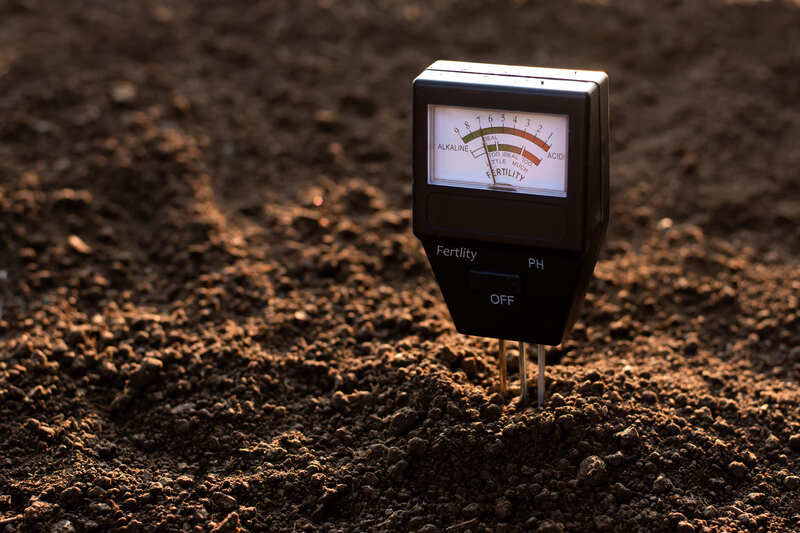
Best time to test your soil: March
Ideal pH: 6.0 to 7.0
Now that the ground has definitely thawed, it’s time to do a soil test on your lawn. The soil test results will show you the nutrient levels of your lawn, which you’ll need to know to fertilize it properly.
You can either use a DIY soil test kit or send soil samples to a local soil testing laboratory. Except for some parts of New York, the soil in the Northeast is typically acidic. Treat acidic soil with lime as needed. Don’t add lime to your soil if it is wet.
3. Clear Winter Debris
Best time to remove winter debris: early April
Once the snow has melted, clean up leaves, branches, twigs, and other debris. A clean lawn is much easier to work with, but it’s also healthier for your grass. A lawn full of debris is more prone to getting diseases, pests, and thatch.
You can use a leaf blower or a rake to clean your lawn. While it’s less convenient, using a rake might be a better choice as it can remove thatch and matted grass, which can prevent new grass from growing.
If you live in Maine, New Hampshire, Vermont, and the rest of New York, Pennsylvania, Connecticut, Rhode Island, and Massachusetts you may still have melting snow in May. Clean up your lawn as soon as you’re able to so your grass will be healthier and less disease-prone.
If you plan to rake your lawn, wait until your lawn is dry. Wet, muddy soil is easier to work with, but you might pull up healthy grass while raking your lawn.
Homeowners in these areas will most likely have melting snow by the end of the month:
- Southern half of Pennsylvania
- New Jersey
- Parts of Connecticut
- Parts of Rhode Island
- Coastal areas of Massachusetts
- Long Island and the coastal areas of New York
- Delaware, Maryland, and D.C.
4. Overseed Bare Patches
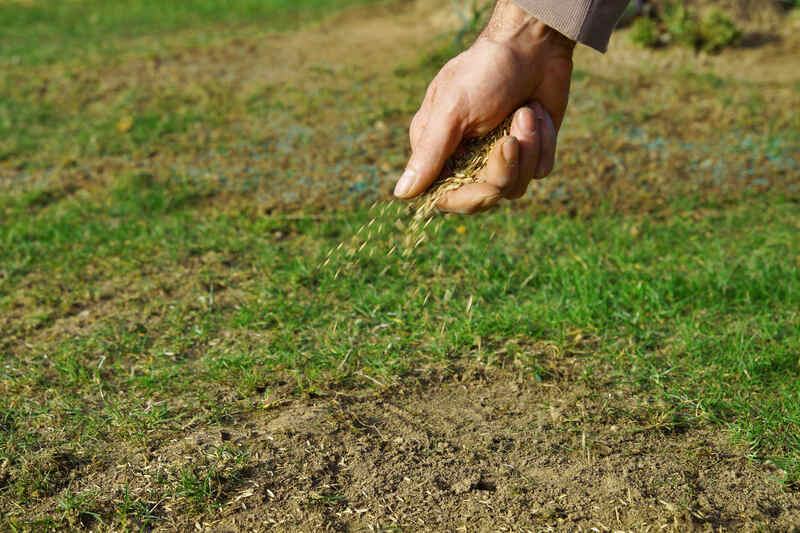
Best time for overseeding: mid-April for cool-season grasses or early June for zoysiagrass
| Type of Grass | Best Time to Overseed |
| Kentucky bluegrass, tall or fine fescue, perennial ryegrass | When the soil temperatures are consistently between 50°F and 60°F |
| Zoysiagrass | When the soil temperatures are above 75°F |
Once you’ve removed debris from your lawn, you may see thin patches of grass. To give your lawn a uniform appearance, you’ll need to overseed these patches. However, the best time to overseed in most areas in the Northeast is between late summer and early fall.
Bunch-type grasses like tall fescue, most fine fescues, and perennial ryegrass recover very slowly as they rarely spread. If you have a mix of grasses on your lawn, this shouldn’t be an issue.
Note: If you need to overseed your lawn, remove weeds, aerate, and dethatch your lawn before seeding. Additionally, ensure the soil is dry before adding the seeds.
5. Control Weeds
Best time to control weeds: From April to early May (depending on your location)
Crabgrass, black medic, spotted spurge, and yellow woodsorrel are some of the common weeds in the Northeast. Weeds start growing as soon as the soil temperatures are warmer. Removing weeds before they grow ensures your lawn grows healthy through the summer.
If weeds have already grown in your lawn, pull them by hand if there are only a few. You can hand-pull dandelions once they bloom.
Pre-emergent weed control: Apply as soon as the soil temperature reaches 55°F (or when the air temperature hits 65°F) to kill weeds at their source before they germinate.
Tip: You can also use forsythia blooms to time your pre-emergent application. If you see these golden flowers, it’s time to apply your pre-emergent weed killer. Don’t wait for the forsythia blooms to drop.
Note: If you’re going to dethatch and aerate your lawn this spring, apply pre-emergent herbicide after. You can dethatch and aerate either before pre-emergent weed control application or postpone these procedures to fall.
Post-emergent weed control: Use post-emergent herbicides this month if any weeds germinate despite their pre-emergent application. You can also hand-pull or resort to other natural weed control methods. You can learn more in our guide to weed control.
6. Apply Fertilizer
Best time to add fertilizer: When the soil temperature is at least 55°F (mid-April to mid-June)
If your soil test results tell you that your soil is lacking in nutrients, fertilize your lawn this month. You can fertilize your lawn when the soil reads 55°F (or at 65°F air temperature).
Most lawns typically need 1 pound of nitrogen per 1,000 square feet. However, 1 pound of nitrogen doesn’t mean 1 pound of fertilizer. Check your fertilizer’s product label to find out how much you can cover with one package.
Note: It’s typically still too cold to fertilize Zoysiagrass in May, even in the southern states of the Northeast.
7. Look for Lawn Diseases
Best time to check for lawn diseases: April
The cool and humid weather of spring can foster fungi that cause lawn diseases. The melting snow doesn’t help with the moist conditions that fungi love. Read the list below to find out about some common lawn diseases during spring:
- Snow mold: Pink and gray snow mold are the primary lawn diseases to look out for in spring. Snow mold cause patches of matted grass that can look gray, tan, or pink.
- Fairy rings and mushrooms: There are three types of fairy rings. They can look like dark green circles of grass, brown circles of grass, or circles of mushrooms.
- Anthracnose: This causes reddish-brown lesions to appear on grass blades. Over time, reddish-brown patches of grass will form on your lawn. They can also appear on trees and other plants.
- Leaf spot: Leaf spot causes grass to develop small brown spots. These spots enlarge over time and develop brown or purplish-red borders. Leaf spot progresses to melting out.
If you discover symptoms of these lawn diseases, it’s best to control the diseases as soon as possible. Otherwise, your lawn might sustain significant damage that only time and proper care can heal.
8. Mow Your Lawn
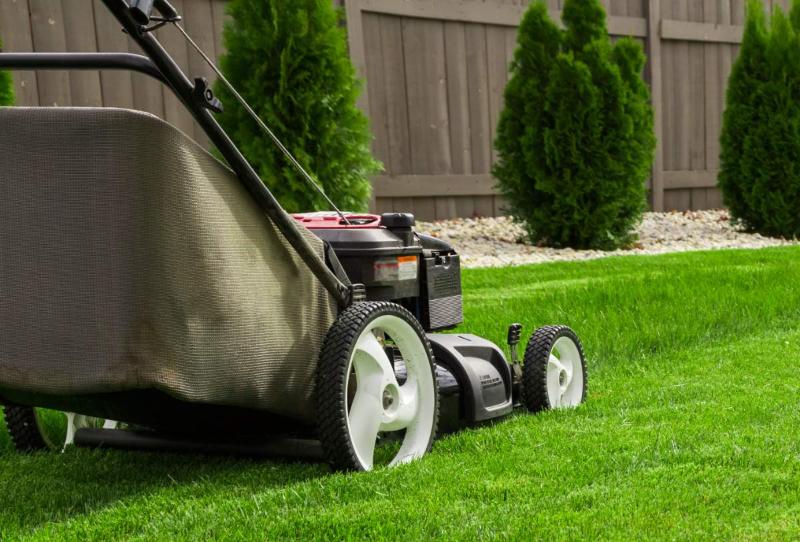
Best time to start mowing: mid to late April
Cool-season grasses grow most vigorously in 60°F to 75°F air temperatures. Homeowners in the following states may have to check on their grass to see if they can start mowing by the end of the month:
- Connecticut
- Massachusetts (mostly coastal areas)
- New Jersey
- New York (mostly coastal areas)
- Pennsylvania
- Rhode Island
- Delaware
- Maryland
Note: Zoysia doesn’t come out of winter dormancy until the temperatures have consistently hovered around 60°F or hotter. It will start growing only at that temperature, so it might take a few weeks before you can mow your Zoysia lawn.
When should I mow this spring? Besides monitoring the air temperature, you should wait until the grass is tall enough before mowing. Consult the table below to find out how tall your grass should be before mowing:
| Grass Type | Recommended Mow Height | Cut Grass When It Reaches This Height |
| Fine fescue | 3 ½ to 4 inches | 4 to 4 ½ inches |
| Kentucky bluegrass | 2 ½ to 3 inches | 3 ½ to 4 inches |
| Perennial ryegrass | 2 ½ to 3 ½ inches | 3 ½ to 4 inches |
| Tall fescue | 3 to 4 inches | 3 ½ to 4 ½ inches |
| Zoysiagrass | 1 to 1 ½ inches | 2 to 2 ½ inches |
Here are some lawn mowing tips you’ll want to remember when it’s time for the first mow of the season:
- Cut only one-third of your grass height when you mow. Any more than that may stress out your lawn.
- Mow down to your turf’s ideal height. Cut your grass too short and you can damage the roots and cause your lawn to become weak and susceptible to lawn diseases and lawn pests. Try to cut down to the higher end of the recommended height, though. Consult the table below to find out your turf’s ideal height.
- Mow in a different pattern every time you mow. This will force your grass to grow in different directions, which makes it more resilient.
- Don’t mow when your lawn is wet. Wet grass can clog your mower, making it spit out clumps of wet grass that can suffocate your lawn.
- When you mow, leave the grass clippings on your lawn instead of bagging them. These lawn-mowing residuals can help add nutrients and a boost of natural, organic fertilizer with no need for expensive chemicals.
9. Water Your Lawn Properly
Best time to start watering your lawn: May
Despite the snowmelt and the spring showers, you will need to water your lawn at some point this spring. Proper irrigation is crucial for good lawn health and disease prevention. Here are some lawn watering tips:
- Water your lawn early in the morning. This is the best time to water your lawn. You want to water your grass before it gets too hot so your lawn has ample time to dry off before the chilly evening temperatures set in. We don’t recommend programming your sprinklers to turn on past 10 a.m.
- Water infrequently but deeply. Your grass will benefit from infrequent and deep watering because it encourages healthy root growth, which will help your grass become more resilient (which is helpful for the coming summer).
- Don’t overwater. Your grass only needs this much water every week:
- Cool-season grass: 1 to 1.5 inches
- Zoysiagrass: 1 inch
Hire a Lawn Care Pro for Your Northeast Lawn
Spring is the time for Northeast lawns to bounce back from the winter cold. However, it won’t be able to recover without your help. Not all homeowners can consistently care for their lawns; some would rather enjoy the season without worries.
If that sounds like you, hire a lawn care professional to maintain your lawn. LawnStarter’s network of local pros is reliable and capable of giving your lawn the TLC it needs to green up this spring. Hire a local lawn care pro through LawnStarter today.
Main Image: Tulips and Statue on a Beautiful Spring Day in the northeast, US. Image Credit: jStock / Adobe Stock