| Key Takeaways |
|---|
| • Fall is prep season for Dallas warm-season lawns, setting them up for a healthy spring. • Timing matters most: Fertilize in early September, apply pre-emergent by mid-October, and overseed around November. • Adjust your mowing and watering as the grass slows down and goes dormant for winter. |
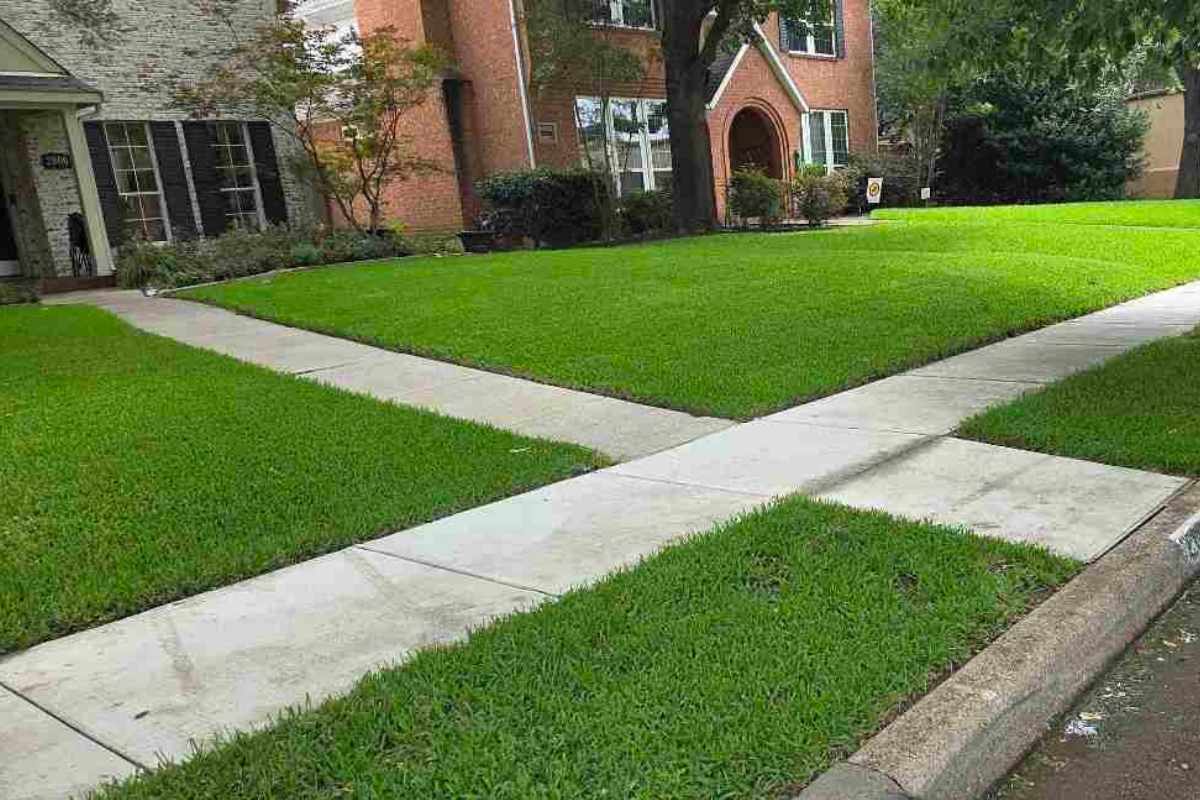
As the cooler weather moves in through North Texas, so does a new set of lawn care chores. Our guide to fall lawn care in Dallas walks you through the 10 steps to cultivate a healthy lawn.
Learn the right time to apply pre-emergent herbicides, the best soil temperatures for overseeding Bermuda in November, when you can stop mowing and irrigating your yard, and much more. From fall fertilizing to yard cleanup, here is everything you need to do to create the perfect Dallas lawn this fall.
10 Steps for Fall Lawn Care in Dallas
1. Mow Growing Grass
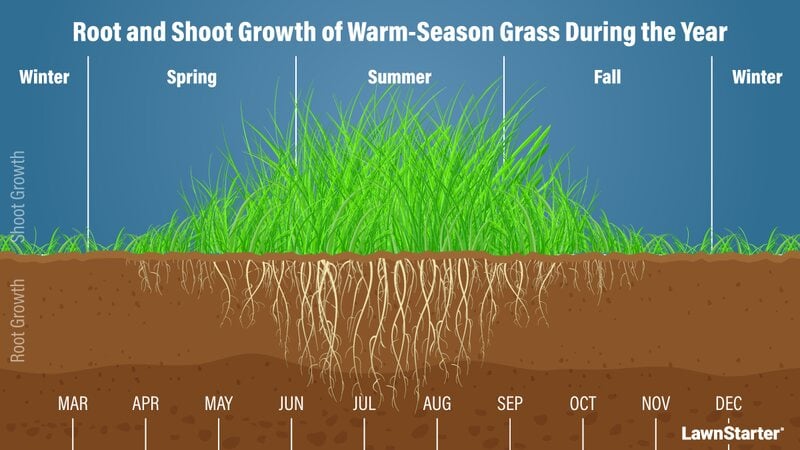
How often to mow warm-season grasses: Mow warm-season grasses less frequently as their growth slows, usually about one mow every 1.5 weeks.
Expect Bermuda and other warm-season grasses to slow noticeably once soil temperatures drop through the 65–70 degree range, with full dormancy setting in as soil temps fall below 50 degrees for sustained periods.
The weather also affects your mowing schedule. Rainfall increases grass growth, so you may have to mow sooner after a rainstorm. But regardless of rainfall, as temperatures cool, the growth rate of your grass will slow down, reducing your mowing frequency.
Why you should mulch your clippings: “AgriLife’s Earth-Kind Principles recommend that all homeowners mulch their grass clippings in place on the lawn,” says Jay Caddel, county Extension agent for Tarrant County at Texas A&M AgriLife Extension. “These clippings break down and add organic matter to the soil. This also alleviates grass clippings from going to the landfill.”
When to stop mowing: Depending on your Dallas grass type, these are the times of year when you can stop mowing your lawn before winter:
| Type of Grass | When to Stop Mowing in the Fall |
| Bermudagrass | November to December |
| Centipedegrass | November |
| St. Augustinegrass | November |
| Zoysiagrass | November |
My Tip: For my family’s Denton lawn, my dad reduces his mowing frequency in August. During September and October, he mows his lawn every 1.5 weeks depending on the grass’s growth rate. In November, he does his final mow of the season.
No time to mow? LawnStarter has you covered. Hire a Dallas lawn care pro to mow your lawn and take care of your other fall lawn care chores.
2. Water Your Lawn Properly
To prevent most of the water from evaporating before it reaches the soil, water the lawn in the morning before 10 a.m.
Your lawn needs less water as the weather cools down, and most warm-season lawns in Dallas go dormant by November. Don’t water warm-season grasses once they are dormant, as this can lead to fall lawn diseases such as large patch.
Dallas watering restrictions also limit landscape irrigation to twice per week and prohibit using automatic sprinklers between 10 a.m. and 6 p.m. from April 1 through October 31; hand watering and soaker hoses are exempt year-round.
3. Clean Up Your Yard
In autumn, falling leaves create a messy lawn, which reduces curb appeal and affects the health of your lawn. Here are ways to get rid of fallen leaves and other debris, such as branches and twigs:
Rake leaves or use a leaf blower to make leaf removal easier.
Mulch leaves with a mulching lawn mower. Mulching mowers shred leaves and grass clippings into smaller pieces and return them to your lawn as natural mulch. This nourishes your lawn by adding nutrients and helps insulate the soil going into winter.
Pro Tip from Jose Tovar, a LawnStarter pro at Tovar Landscaping in Dallas: “My No. 1 tip for lawn maintenance in the fall is to have your lawn clear of leaves so that it doesn’t develop spots with missing grass.”
Fall leaves can leave your yard a mess. LawnStarter can take care of raking the leaves for you with our leaf removal service.
4. Treat Lawn Pests
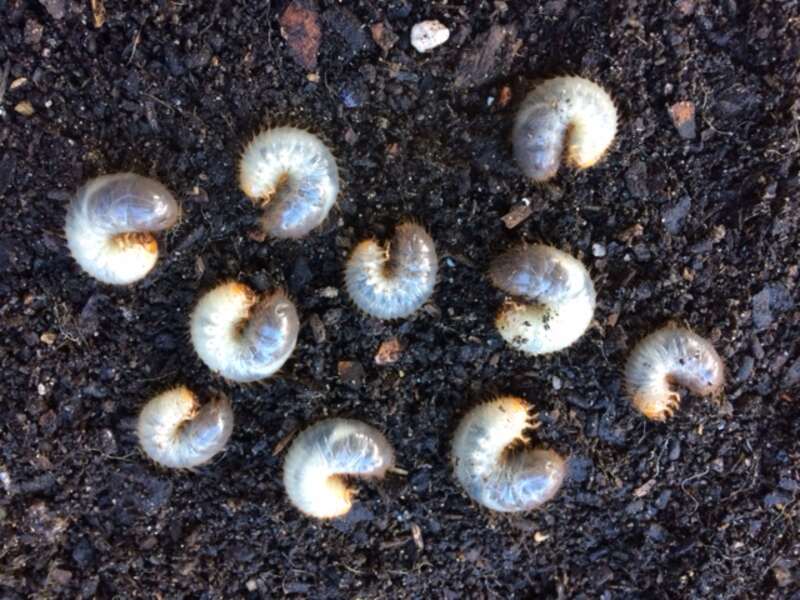
Fall is a good time to treat for lawn pests. To control white grubs, apply treatment in early- to mid-July, about 6 weeks after egg-laying.
If damage appears in fall, treatments with trichlorfon or carbaryl can still target larger larvae, though control is less effective than a summer preventive application.
Scout for fall armyworms by inspecting the turf. You should treat if you count 2 or more caterpillars per square foot. Apply insecticide in early morning or evening, when larvae are most active and most likely to contact the treatment.
See Related: How to Get Rid of Armyworms on the Lawn
5. Treat Weeds
Weeds are a year-round issue in Dallas, so consistent weed control is essential to proper fall lawn care. Apply pre-emergent herbicides when the soil temperature drops to 70 degrees, typically around mid-October.
Pro Tip from Cole Duncan, a LawnStarter pro at Lone Star Mow Co. in Dallas: “I always recommend you have your pre-emergent done for the fall to help prevent the next wave of weeds.”
Here are some common Dallas weeds you can prevent with pre-emergents in the fall:
Annual bluegrass
Chickweed
Henbit
You should incorporate multiple approaches for weed control in the fall:
Use pre-emergent herbicides to prevent winter annual weeds.
Apply post-emergent herbicides to small broadleaf weeds (like clover) or grassy weeds (like annual bluegrass) while they are actively growing and still young, in early-to-mid fall before temperatures drop enough to slow weed uptake of the herbicide.
Create a homemade weed killer with our recipe for vinegar weed killer.
Pull weeds by hand to remove smaller infestations.
Note: Select a pre-emergent herbicide that is suited to the type of grass growing in your lawn. Don’t apply pre-emergent herbicides if you are going to overseed ryegrass in the fall.
6. Test Your Soil

Determine which nutrients your lawn is missing by conducting a soil test every 2 to 3 years. It will take 2 to 4 weeks for the Dallas Extension to give you the results, so test as early as possible to get your results in before you need to fertilize.
A soil test will tell you about the health and texture of your soil and let you know what fertilizer or soil amendments your yard needs.
“We recommend performing a soil test before applying fertilizers so that you are not apply[ing] unnecessary nutrients to the soil,” Caddel says.
There are two different options for testing your soil:
Extension soil test: Homeowners can request soil testing from Texas A&M AgriLife Extension. You will need to prepare a soil sample and pay a fee.
DIY soil test: Purchase a DIY soil testing kit at a local garden store, or use a DIY ribbon test to figure out the texture and type of your soil.
Dallas sits within the Blackland Prairie soil region, whose dominant series, Houston Black clay, typically contains 60% to 80% clay, making it slow-draining but good at retaining moisture and nutrients.
Loamy soil, which is a combination of clay, silt, and sand, is also common in Dallas yards. It doesn’t retain moisture as long as Dallas’s Blackland Prairie soils.
7. Aerate Compacted Soil
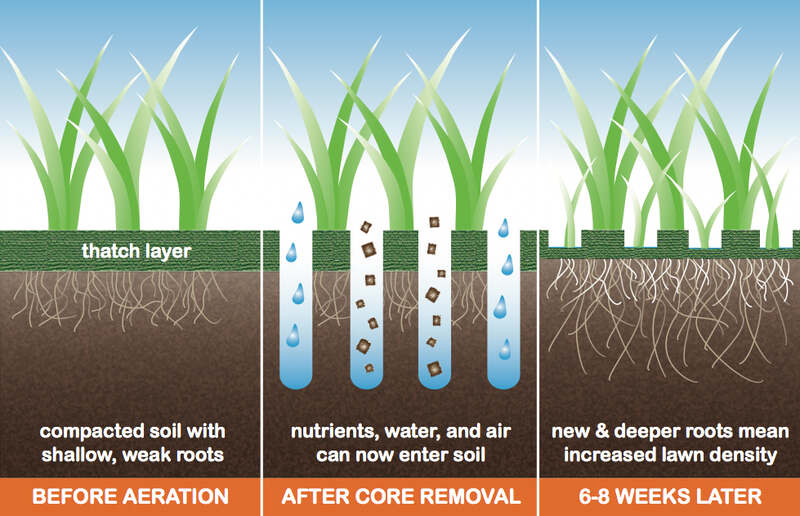
Most Dallas lawns sit on dense clay soil that packs down easily. Add a summer of foot traffic, mowing, and play, and the ground gets compacted enough that air, water, and nutrients struggle to reach the roots.
Core aeration fixes that. A core aerator pulls small plugs of soil from your lawn, opening up space so roots can breathe and drink. Fall is a smart time to do it, since cooler, wetter weather softens the clay and makes the job easier.
Dallas averages about 37 inches of annual rainfall, and fall storms leave the clay soft enough to pull good cores.
It also sets you up nicely: Aerating right before you overseed and fertilize helps seed and nutrients settle into the openings instead of resting on top.
“Aeration helps revive the soil,” says Scott Culala, a LawnStarter pro at The Lawn Cypress in Gardner, Kansas.
See Related: How to Aerate Your Lawn: A Complete Guide
8. Overseed Bermuda with Ryegrass (Optional)

Overseeding Bermudagrass with ryegrass in the fall helps improve the density and health of your fall lawn in Texas. This will also add some green color for fall and winter.
Typically, the right temperatures for fall overseeding start around November 1st or when the soil temperature is around 60 degrees.
9. Fertilize Your Grass
The best time to fertilize your Texas lawn in fall is 6-8 weeks before the first frost.
In Dallas, the average first freeze arrives around November 22, so fertilize your Dallas lawn in early September to give your lawn time to strengthen before dormancy.
Application of a low-nitrogen fertilizer once in the fall is advised for all Texas warm-season grass types except centipede. Apply 0.5 to 1 pound of nitrogen per 1,000 square feet to improve your fall lawn’s density, color, and recovery in spring.
10. Winterize Your Lawn Equipment
The mowing season requires regular use of mowing equipment. However, once the growing season is over, it’s time for you to put your tools and equipment into storage for the winter.
See our guide to learn How to Winterize Your Lawn Mower to protect it during the months when it’s not in use.
Additionally, you should also turn off the water supply to your sprinkler system and make sure it is properly drained. Otherwise, water trapped in your sprinkler pipes could freeze and damage your irrigation system.
FAQs
It is generally not recommended. Overseeding with ryegrass is mainly for Bermudagrass lawns that want green winter color. St. Augustinegrass spreads by runners, and a thick stand of ryegrass can crowd and stress it. For most Dallas St. Augustine lawns, skip the overseeding and focus on other fall care.
Early fall can work. While the soil is still warm, new sod has time to root before dormancy sets in. Late fall is risky in North Texas, though, because the soil cools quickly and the roots do not establish well. For new warm-season sod, spring is the safer planting window.
Make Fall Lawn Care Easy: Hire a Dallas Lawn Care Pro
As things cool down in the fall, your lawn care is still ongoing. Make sure you don’t miss the deadlines to test your soil, apply herbicides and pesticides, and overseed your grass this fall.
From leaf removal to lawn mowing, LawnStarter’s Dallas lawn care pros can take care of your fall lawn care to-do list.
Our lawn care services don’t stop within the Dallas city limits. LawnStarter also connects you with lawn care pros in nearby cities and suburbs like Oak Cliff, Irving, Balch Springs, Duncanville, Mesquite, and more.
Read More: Winter Lawn Care Guide for Dallas, TX
Main Image: Lawn mowed by a LawnStarter Pro in Dallas, TX
Related Posts: