Summer lawn care in Colorado Springs comes with unique lawn care challenges.
A 6,000-plus-foot elevation means intense UV rays that can burn grass cut too short. Our alpine desert climate delivers less than half the national average rainfall annually, yet July is our wettest month, thanks to afternoon monsoon thunderstorms that roll off the mountains almost daily.
To keep cool-season grass healthy in this climate, you need effective irrigation (including a rain gauge), sharp mower blades, a good understanding of your soil, and the right fertilizer.
If keeping up with your summer turf is too much, hire a local Colorado Springs lawn care pro. For those who prefer to DIY, here’s how to work with Colorado Springs’ summers when caring for your turf.
1. Water More During Summer
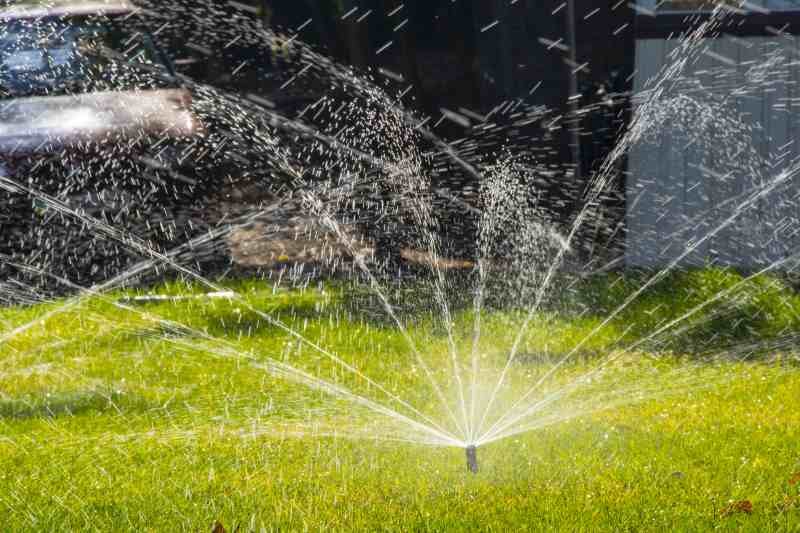
In early summer, from late May to mid-June, switch from watering 1-2 times per week in the spring to 2-3 times per week as temperatures rise. Your lawn will need more water to face our hot days and dry winds.
Watering tips for Colorado Springs summers:
- Use the “cycle and soak” method: Water 5-10 minutes, wait for 30 minutes, repeat. Colorado has clay-heavy soil that absorbs water slowly.
- Water early in the morning between 5 a.m. and 9 a.m.
- Ensure 1-1.5 inches of water per week, but check for signs of dryness. According to CSU Extension, Kentucky bluegrass may need up to 2.25 inches during hot, windy weeks.
- Monitor your lawn for hot spots where grass dries out faster. Adjust the nearby sprinkler heads to ensure those areas receive enough water.
What about watering restrictions? Colorado Springs has recommendations, not restrictions. From May 1 to Oct. 15, water before 10 a.m. or after 6 p.m. to reduce evaporation. You don’t have an assigned watering day — just keep it to less than 3 days a week.
See Related:
2. Adjust for the Afternoon Rain
If you’ve ever watched dark clouds build over Pikes Peak in the early afternoon, you’ve witnessed the start of monsoon season.
These storms typically reach Colorado Springs between 1 p.m. and 3 p.m. and can drop significant rain in 30-60 minutes. Keep a rain gauge in your yard and subtract any rainfall from your weekly watering target. There’s usually no need to irrigate after a good monsoon storm.
See Related: How to Test Soil Moisture
3. Mow the Grass Taller
The instinct to cut grass shorter during summer is understandable. Less frequent mowing sounds appealing when it’s 90 degrees. But for cool-season grasses in Colorado Springs, mowing too short creates more problems than it solves.
Set your mower to 3 to 3.5 inches during the summer months. Taller grass shades the soil surface, protecting the roots from heat and retaining moisture. It also helps crowd out weeds by blocking sunlight from reaching the weed seeds.
Follow the one-third rule when mowing: Never remove more than a third of the height of the grass blade. Removing more than 1/3 at once shocks the plant and weakens the roots — the last thing you want during summer stress.
A few more mowing tips for summer:
- Mow in the morning when possible: Mid-afternoon mowings add heat stress on top of cut stress.
- Keep blades sharp: Dull mower blades tear the grass — it heals more slowly, loses more water, and is more exposed to disease.
See Related:
4. Go Easy on Summer Fertilizer or Skip it Entirely
If your lawn looks pale and yellowish despite regular fertilizing, the problem isn’t a lack of nutrients — it’s Colorado Springs’ alkaline soil. Most local soils have pH values above 7.0, locking essential nutrients like iron in forms that roots can’t absorb.
The solution for now? Try chelated iron instead of nitrogen fertilizer. Iron greens up lawns without triggering growth spurts that increase water needs. Apply as a foliar spray in the early morning or evening.
For the long term, test your soil at Colorado State University’s Soil, Water, and Plant Testing Laboratory. You’ll learn whether you’re dealing with a true deficiency or a pH-related lockout and which treatments to apply.
Don’t try to fix soil pH in summer, though. Sulfur can lower alkalinity over time, but it’s heat-sensitive and can burn grass in hot weather. Save pH correction for fall.
See Related:
5. Prevent Lawn Pests
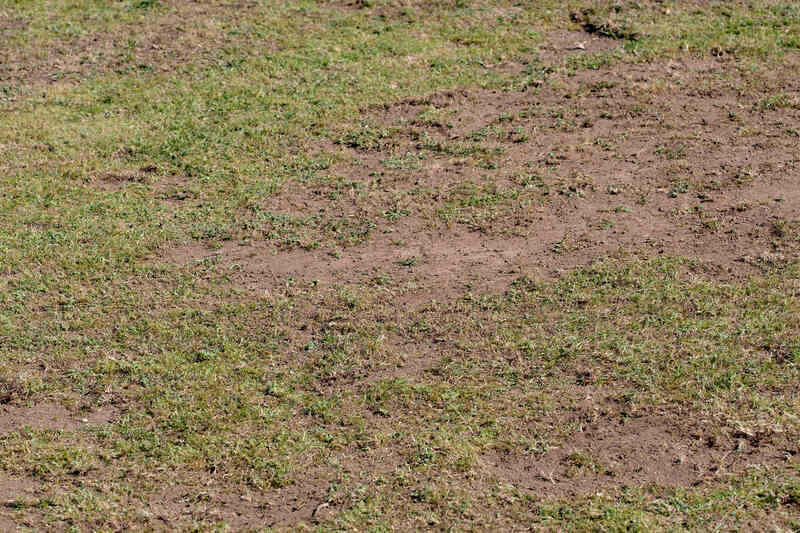
Several insects become active during Colorado Springs summers and can damage lawns if populations get out of control. Catching problems early makes all the difference. Keep an eye out for signs of:
- Billbug damage: Wilting grass in scattered patches, stems that break easily at the soil line, and sawdust-like material at the base of damaged grass. Damage peaks in late June and July.
- White grub damage: Brown patches that don’t respond to watering, turf that peels back from the soil like a loose carpet, and raccoons and skunks digging your lawn. Damage appears from late July through September.
- Sod webworm damage: Small brown patches, grass blades chewed at the base, and green fecal pellets on the soil surface. Damage peaks in July and August.
A healthy, well-watered lawn can often tolerate minor pest activity without visible damage. But if you’re seeing expanding dead patches, treatment may be necessary. Contact a local pest control pro through LawnStarter or head to your local garden supply store to pick up the appropriate pesticide and solve the problem early.
See Related: Common Insect Pests Damaging Your Lawn
6. Watch for Summer Diseases
Hot, humid conditions, especially after afternoon thunderstorms that are common in July and August, can trigger fungal diseases in Colorado Springs lawns. Common diseases to watch for include:
- Ascochyta leaf blight: A fungal problem on drought-stressed lawns showing tip dieback; common in early summer with poor irrigation coverage.
- Brown patch: Appears as circular areas of tan or brown grass, often with a frogeye pattern (grass starts to recover in the center). It develops when nighttime temps stay above 65 degrees and grass remains wet for extended periods.
- Dollar spot: Creates smaller bleached spots (about the size of a silver dollar) that can merge into larger irregular patches. It tends to appear in lawns that are under-fertilized or drought-stressed.
Prevention is straightforward:
- Water early in the morning so the grass dries before nighttime.
- Don’t overwater: Soggy conditions encourage fungal growth.
- Scout for pests by tugging turf or parting grass. It may not be a disease, but an insect damaging your lawn.
If you notice disease symptoms, reduce watering frequency and ensure good air circulation across the lawn (prune shrubs and trees). Fungicide treatment is available for severe cases, but correcting poor lawn care practices is often enough to solve the problem.
See Related: Common Lawn Diseases and How to Identify Them
7. When Brown Doesn’t Mean Dead
If your lawn turns brown during especially hot, dry stretches, it’s not necessarily dying. Most cool-season grasses have a survival mechanism called drought dormancy. When conditions become too stressful, the grass essentially shuts down, turning brown and stopping growth to conserve energy.
A dormant lawn isn’t pretty, but it typically recovers once temperatures moderate and moisture returns, either from rain or irrigation. Provide dormant grass with 1/2 inch of water every 2-3 weeks during summer to prevent turfgrass loss.
Your Colorado Springs Lawn Deserves Expert Care This Summer
Struggling to keep your grass healthy in the heat? Connect with top-rated local LawnStarter pros on our Colorado Springs lawn care page for an instant quote without the hassle. We also serve Denver and other cities across Colorado.
Read Next:
Main Image: Lawn mowed by a LawnStarter pro in Colorado Springs. Illustration by LawnStarter
Related Posts: