| Key Takeaways |
|---|
| • Best defense: A thick, healthy lawn maintained at 3 inches tall. • 3 weed categories: Broadleaf, grass-like, and sedge, each requiring different control methods. • Correct identification: Herbicides that kill broadleaf weeds will not control sedges such as yellow nutsedge. |
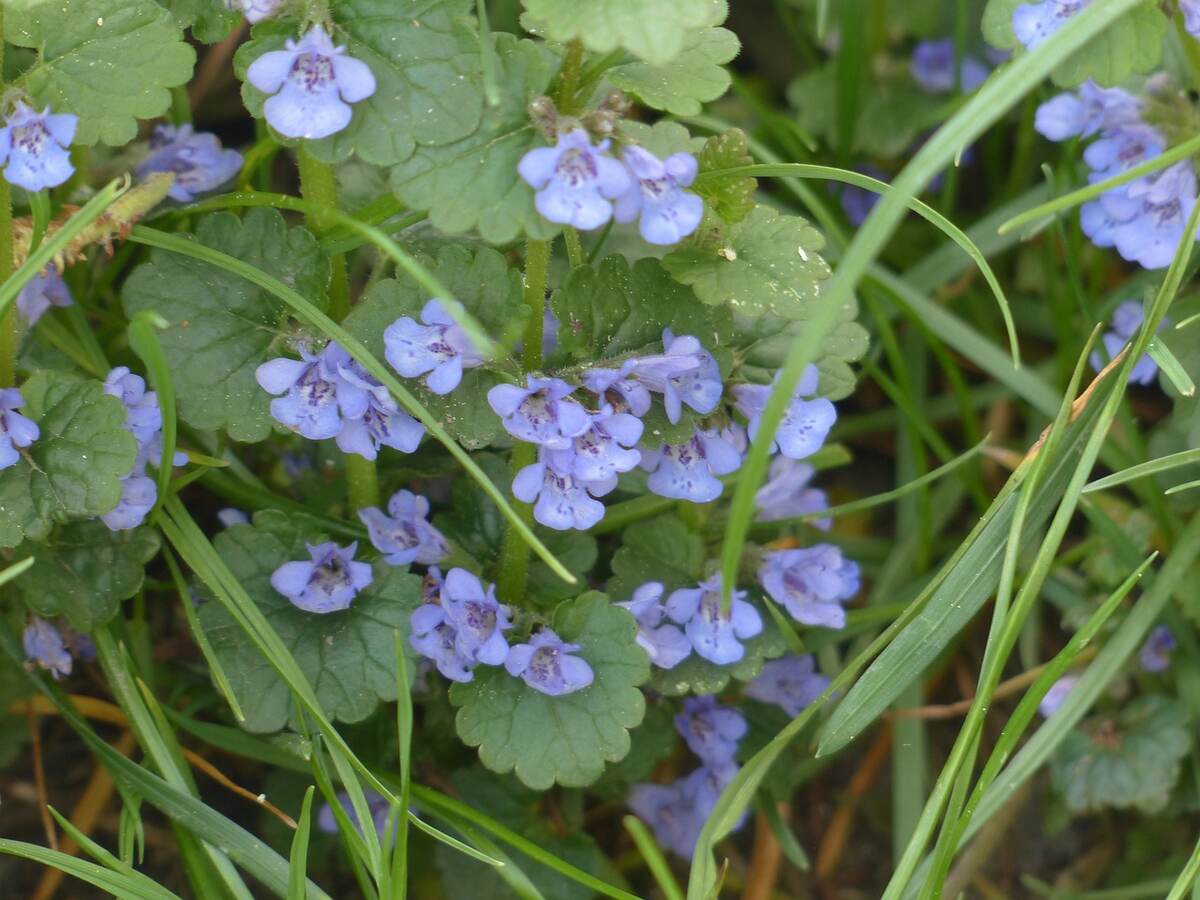
Pennsylvania lawn weeds are relentless, but manageable. The 11 most common fall into 3 groups: broadleaf weeds such as dandelions, white clover, and ground ivy; grassy weeds such as crabgrass; and sedges such as yellow nutsedge.
A few scattered plants? Hand-pull or dig them out. Once weeds spread across the lawn, you’ll need herbicides, and getting the timing right matters as much as the product.
This guide profiles all 11 by type so you can identify and treat each one. And if the fight feels one-sided, LawnStarter’s lawn treatment pros can handle diagnosis, timing, and applications for you.
Weed Types at a Glance
Pennsylvania lawns deal with 3 main categories of weeds. Knowing which category a weed belongs to helps you choose the right control method, as herbicides are often category-specific.
| Weed Type | Key Visual Trait | Examples |
| Broadleaf | Wide leaves with net-like veins; often have showy flowers. | Dandelions, clover, plantain |
| Grass-Like | Looks like turfgrass but grows faster, taller, or in clumps. | Crabgrass |
| Sedge | Looks like grass but has a triangular stem (roll it between your fingers). | Yellow nutsedge |
Broadleaf Weeds
Broadleaf weeds have wide, flat leaves with visible veins. They are the most common weed type in Pennsylvania lawns.
Post-emergent broadleaf herbicides target these weeds without harming grass. Fall is generally the best time to apply them.
1. Dandelions (Taraxacum sp.)
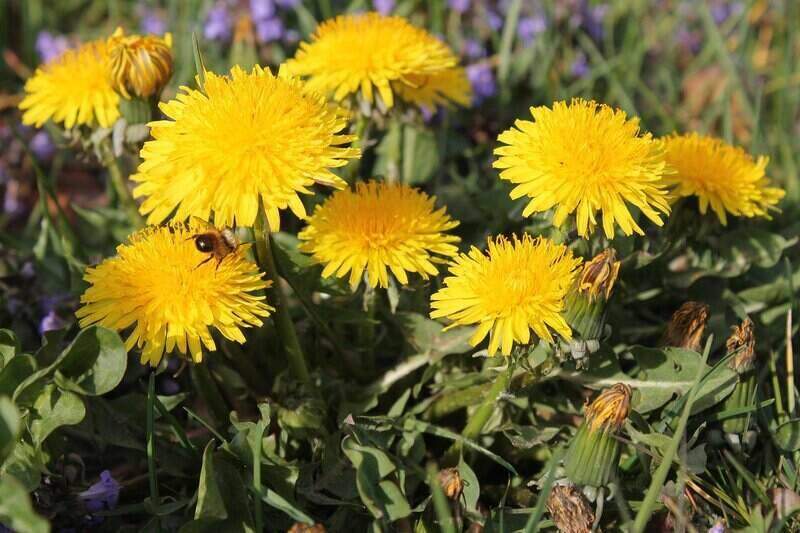
Dandelions have thick taproots that can reach several inches into the soil. An average plant produces around 15,000 seeds per season, each carried by a parachute-like pappus.
Life cycle: Perennial
Where it thrives: Full sun, any soil
How to identify dandelions:
Flat yellow flowers in the spring
Fluffy, white, puffball seed heads
Jagged tooth-like leaves
How to get rid of dandelions: Regular mowing prevents seed heads. Apply pre-emergent herbicides in early spring before germination. Treat with post-emergent herbicides in late summer or early fall.
See Related:
2. White Clover (Trifolium repens L.)
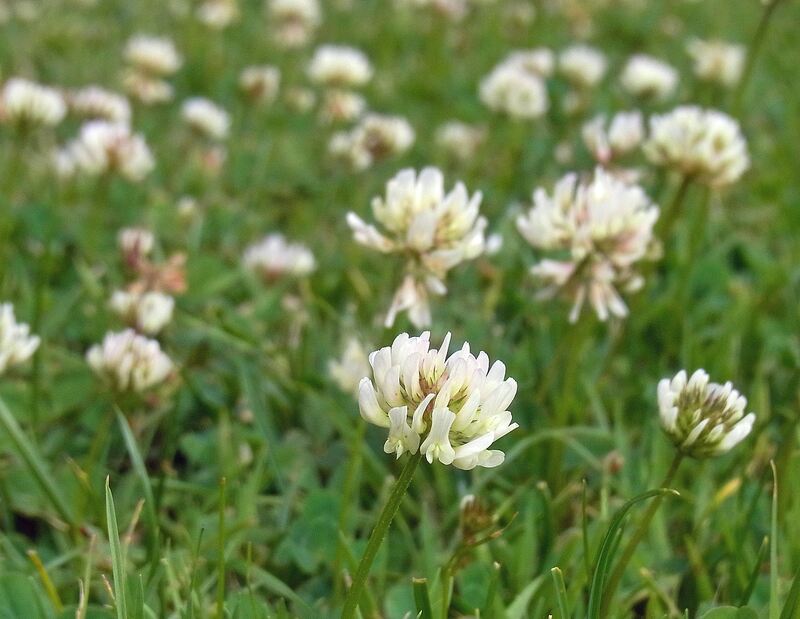
According to Penn State Extension, white clover is possibly the most common weed in home lawns. Because it makes its own nitrogen, clover thrives in under-fertilized lawns, so spreading patches are often a sign your grass needs feeding.
Life cycle: Perennial
Where it thrives: Full sun, well-drained soil, soil pH 6 to 7
How to identify clover:
3 oval leaflets with a white inverted V-shape watermark
Globs of tiny white flowers
How to get rid of white clover: Maintain a thick lawn with regular fertilization. Fall herbicide applications are most effective.
See Related: How to Get Rid of Clover and Not Kill Grass
3. Ground Ivy (Glechoma hederacea)
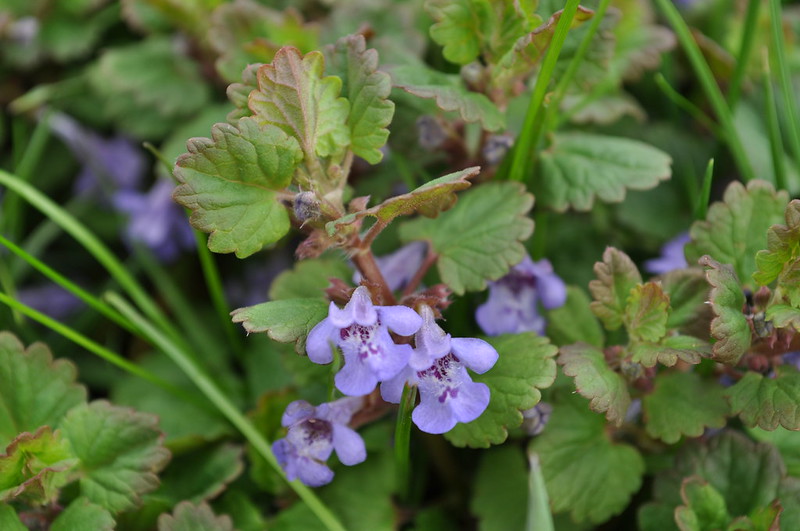
Penn State Extension calls ground ivy a common and aggressive weed of Pennsylvania lawns, and a difficult one to control. It takes hold in shaded areas first, where grass is thinner, then creeps into sunny turf through its stolons.
Life cycle: Perennial
Where it thrives: Shade
How to identify ground ivy:
Evergreen, heart-shaped leaves
Bluish-violet to lavender tubular flowers in clusters of 2 or more
How to get rid of ground ivy: Mow to 3 inches and fertilize adequately. Apply a post-emergent twice yearly: spring (March–May) and late fall (Sept–Nov).
In heavily shaded spots, replacing turf with a shade-tolerant ground cover such as pachysandra or periwinkle can help slow its spread.
See Related: 11 of the Best Ground Covers for Shade
4. Broadleaf Plantain (Plantago major)
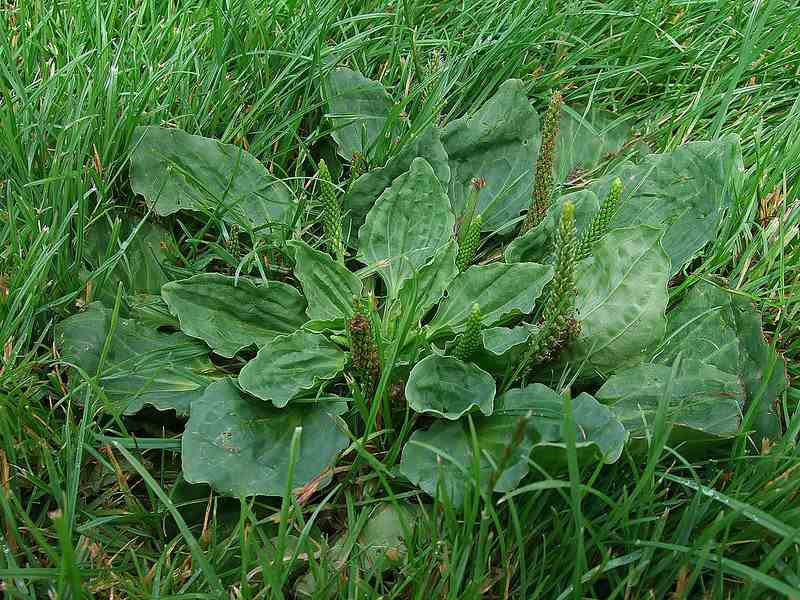
Broadleaf plantain tolerates compacted soil well, so you’ll find it in high-traffic lawns, on and near pathways, and in garden beds with heavy, clay soil. One plant can produce around 14,000 seeds annually.
Life cycle: Perennial
Where it thrives: Sun or shade; compacted, soggy soil
How to identify broadleaf plantain:
Dark green, oval-shaped leaves with 3 to 5 parallel veins
Tiny flowers on tall spikes
How to get rid of broadleaf plantain: Pull by hand when soil is moist. Apply pre-emergent to prevent new seedlings or spot-treat with broadleaf post-emergent.
See Related: 7 Best Pre-Emergent Herbicides for Lawns
5. Black Medic (Medicago lupulina L.)
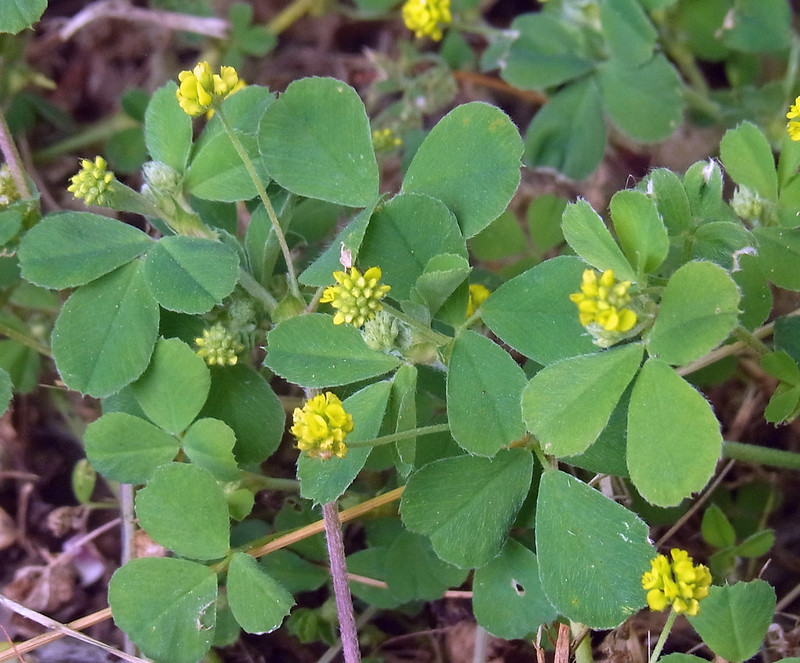
Like white clover, black medic is a legume that fixes its own nitrogen, so it holds on in soil too poor to support dense grass. Penn State Extension mentions it in dry, marginal soils where grass is sparse and poorly fertilized.
Life cycle: Annual
Where it thrives: Full sun, dry, low-nitrogen soil
How to identify black medic:
Leaves with 3 oval leaflets
Yellow flower clusters
Stems that spread flat from a central crown
How to get rid of black medic: Nitrogen fertilization, regular mowing, and a grass suited to the site build the density that crowds out black medic.
For existing patches, apply a post-emergent when plants are small and actively growing.
See Related: 6 Different Nitrogen Sources for the Lawn
6. Yellow Woodsorrel (Oxalis stricta)
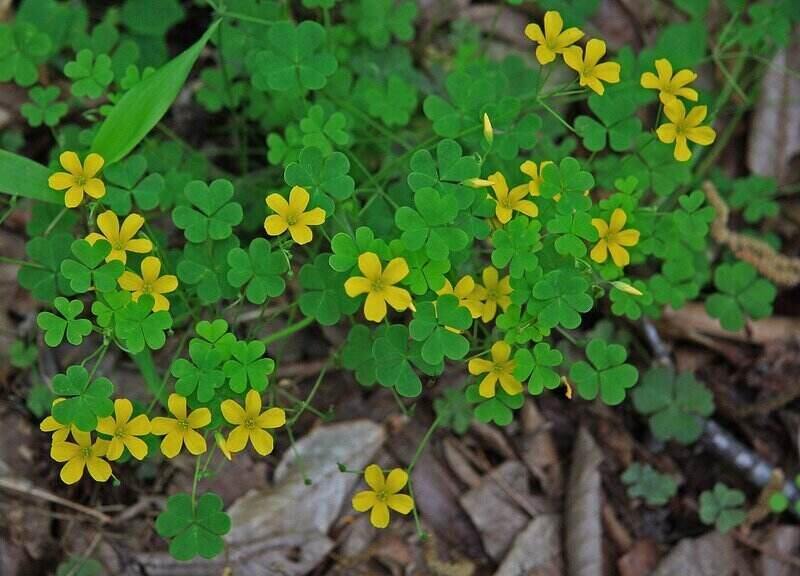
Yellow woodsorrel grows often along sidewalks and flower bed edges, and it usually appears as scattered plants or small patches in turf. It is also not fussy about where it lands: sun or shade, moist or dry soil, a well-kept lawn or a neglected one.
Life cycle: Annual and perennial
Where it thrives: Sun or shade, any type of soil
How to identify yellow woodsorrel:
Leaves fold shut at night and open again in daylight
Yellow 5-petal flowers
Slim okra-like seed capsules split when ripe
How to get rid of yellow woodsorrel: Grow a dense lawn using a grass variety suited to Pennsylvania’s climate. Dig out all rhizomes before flowering.
Treat infested areas with pre-emergents in early spring. Use post-emergents on sprouted plants from late spring through fall.
See Related: Best Grass Seed for Pennsylvania
7. Bull Thistle (Cirsium vulgare)
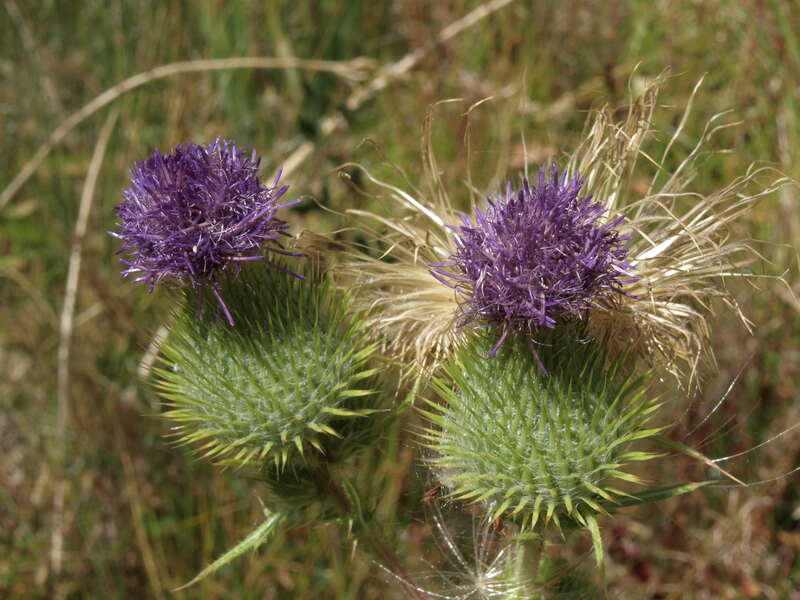
Bull thistle is a Class B noxious weed in Pennsylvania (illegal to sell, plant, or move around the state). You’ll find it statewide, mostly in fields, meadows, and along roadsides. It blooms from June through October and spreads in only one way: by seed.
Life cycle: Biennial
Where it thrives: Full sun, nitrogen-rich soil
How to identify bull thistle:
Big and mean-looking, 2 to 6 feet tall
Spiny “wings” all the way up the stem
Reddish-purple flowers about the size of a golf ball
How to get rid of bull thistle: Dig or pull the rosettes, or mow twice a season before the flower heads open. If you’re spraying, go after the rosette in spring or fall with a broadleaf herbicide.
8. Spotted Spurge (Chamaesyce maculata L.)
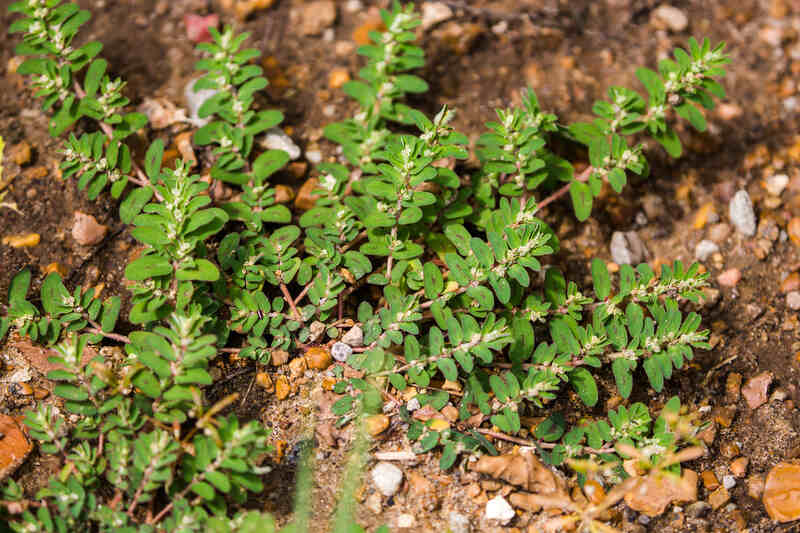
Spotted spurge moves into thin, compacted, or bald spots where the grass has given up. You’ll see it sprawling across sidewalk cracks, driveways, and stressed-out lawns all summer. Its milky sap can irritate skin, so wear gloves when you pull it.
Life cycle: Summer annual
Where it thrives: Full sun or partial shade, poor, compacted soil
How to identify spotted spurge:
Spreads out from one central point, like a mat
Red, fuzzy stems
Small oval leaves, each with a reddish spot in the middle
How to get rid of spotted spurge: Hand-pull or hoe before seed production. Apply pre-emergent before soil exceeds 60 degrees. Mulch to prevent germination.
See Related:
- Types of Mulch: How to Choose the Right One for Your Landscape
- How to Get Rid of Spurge Weed in 3 Easy Steps
9. Dead Nettle (Lamium purpureum L.)
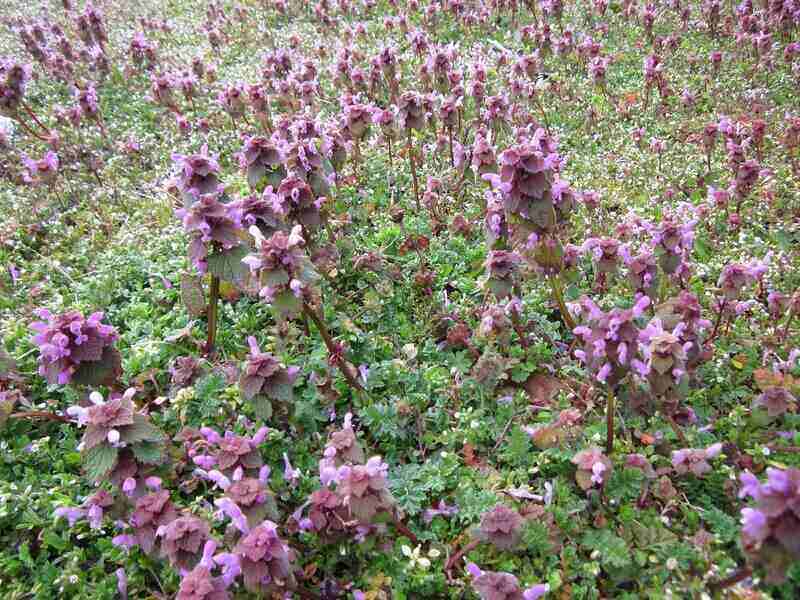
Dead nettle is that carpet of purple you see taking over Pennsylvania lawns, fields, and roadsides in early spring. It’s a mint, not a true nettle, so despite the name, it won’t sting you.
Life cycle: Winter annual
Where it thrives: Sun to moderate shade, moist soils
How to identify dead nettle:
Square stems
Fuzzy leaves with reddish-purple tops
Small pink tubular flowers
How to get rid of dead nettle: Pull while young. Mow at 2 to 3 inches in early spring to remove flower stems. Apply pre-emergents in fall or post-emergents in spring.
Grass-Like Weeds
Grass-like weeds look like your lawn but grow faster, taller, or in visible clumps. Look for a lighter green color, coarser texture, or patches that outgrow the rest of your lawn between mowings.
10. Crabgrass (Digitaria)
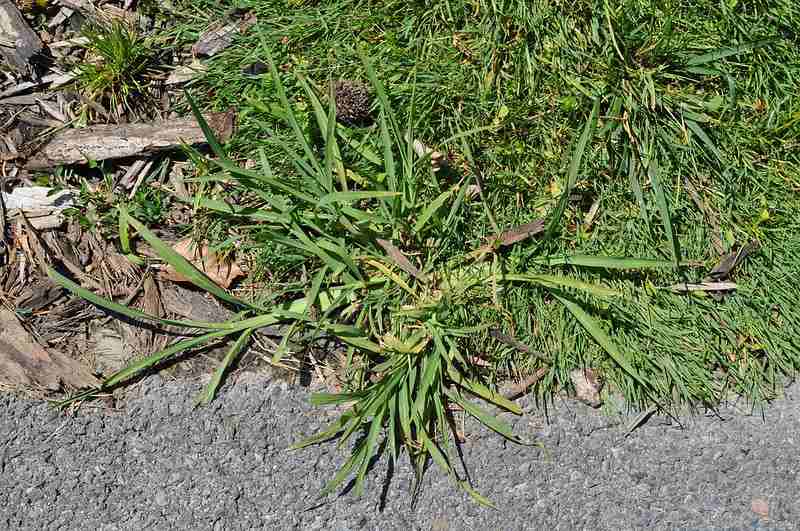
Crabgrass is Pennsylvania’s number-one lawn weed complaint. It grows in clumps and can reach 2 feet if you never mow it. Pennsylvania has 2 kinds: large (hairy) crabgrass and smooth crabgrass.
Life cycle: Annual (summer)
Where it thrives: Full sun, thinned-out lawns
How to identify crabgrass:
Lime-green against darker turf
Stems radiate out from center in a star or wheel
Grows in clumps in the thin, sunny spots
- How to get rid of crabgrass: The best defense is to thicken your lawn with regular fertilization and 3-inch mowing.
Apply pre-emergent in spring before soil reaches 55 to 58 degrees. That means: March 15 to April 15 in southeastern Pennsylvania, April 20 to May 10 in the northern tier and high-altitude counties, and April 1 to May 1 in other Pennsylvania areas.
Spot-spray existing crabgrass with post-emergent herbicides in early summer.
See Related: How to Get Rid of Crabgrass in Your Yard
Sedge Weeds
Sedge weeds look almost identical to lawn grass until you roll the stem between your fingers. If the stem has 3 edges (triangular), it’s a sedge.
Broadleaf or grass herbicides will not kill sedges. You need a sedge-specific product.
11. Yellow Nutsedge (Cyperus esculentus)
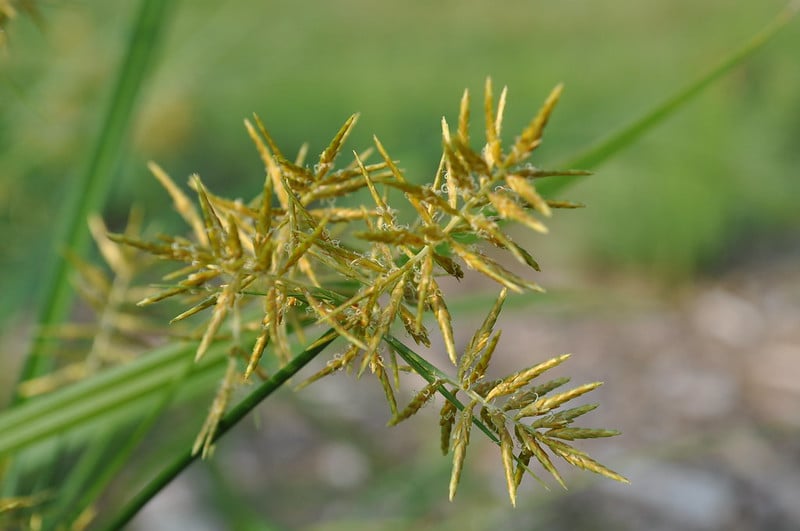
In a Pennsylvania summer, yellow nutsedge is the weed that outruns your lawn, shooting up faster and greener than your cool-season grass in the heat. It spreads by tubers, which is why yanking it barely helps. Every tuber left behind sprouts a fresh plant.
Life cycle: Perennial
Where it thrives: Full sun, moist, poorly drained soil
How to identify yellow nutsedge:
Yellow-green blades, glossier and stiffer than turfgrass
Seed heads like little bottle brushes in summer
How to get rid of yellow nutsedge: Hand-pull early if the patch is small. Standard broadleaf or grass herbicides won’t control nutsedge. Use sedge-specific products in late spring or early summer during active growth.
When to Treat Common Lawn Weeds in Pennsylvania
Miss the treatment window and even the right herbicide won’t work. Here’s when to apply each type in Pennsylvania:
| Application Timing | Soil Temperature | Typical Months in PA |
| Spring (pre-emergent) | 50 to 55 degrees | Late February – April |
| Summer (post-emergent) | Active growth period | Late May – July |
| Fall (broadleaf post-emergent) | Cooling toward 70 degrees | Late August – September |
Late spring to early summer: Treat sedges like yellow nutsedge with targeted post-emergent herbicides once they actively grow and emerge above your turfgrass.
Fall control: Fall is the best time to apply post-emergent broadleaf herbicides. Weeds like dandelions and clover are storing nutrients for winter and will pull the herbicide deep into their taproots.
See Related: Month-to-Month Lawn Care Schedule for Pennsylvania Homeowners
FAQ
Weeds can help identify underlying soil conditions:
• Dandelions: Compacted soil
• White clover: Compacted soil or low nitrogen
• Crabgrass: Low-fertility soil, drought-stressed lawn
• Chickweed or yellow nutsedge: wet, poorly drained soil
A soil test through Penn State Extension can confirm what your weeds are signaling.
Usually, yes, but for different reasons. Annuals like crabgrass die off each fall yet drop thousands of seeds that sprout the next spring. Perennials like dandelions and ground ivy skip the seed step and just regrow from their roots.
Yes. Common yellow woodsorrel is native to Pennsylvania and frequently appears in lawns. While it is technically a wildflower, it spreads aggressively through rhizomes and seed capsules.
When to Call the Pros
Lawn weeds in Pennsylvania are persistent, but you don’t have to fight them alone. LawnStarter connects you with local lawn treatment pros who know which weeds are invading your yard and how to get rid of them.
Most LawnStarter customers pay $79 to $120 per visit for a seasonal weed control plan. It includes pre-emergent applications, post-emergent treatments, and fertilization timed for Pennsylvania’s climate through treatment services.
Read More:
Main Image: Delicate purple ground ivy flowers bloom among green leaves and grass. Photo Credit: Hans / Pixabay