| Key Takeaways: |
|---|
| • Mulching leaves feeds your lawn for free; research shows there’s no damage to your lawn if leaves are finely shredded. • Bagging is the best option for dense, wet leaf piles or yards with HOA restrictions. • Rule of Thumb: Mulch or bag leaves once they cover more than 20% of your lawn. |
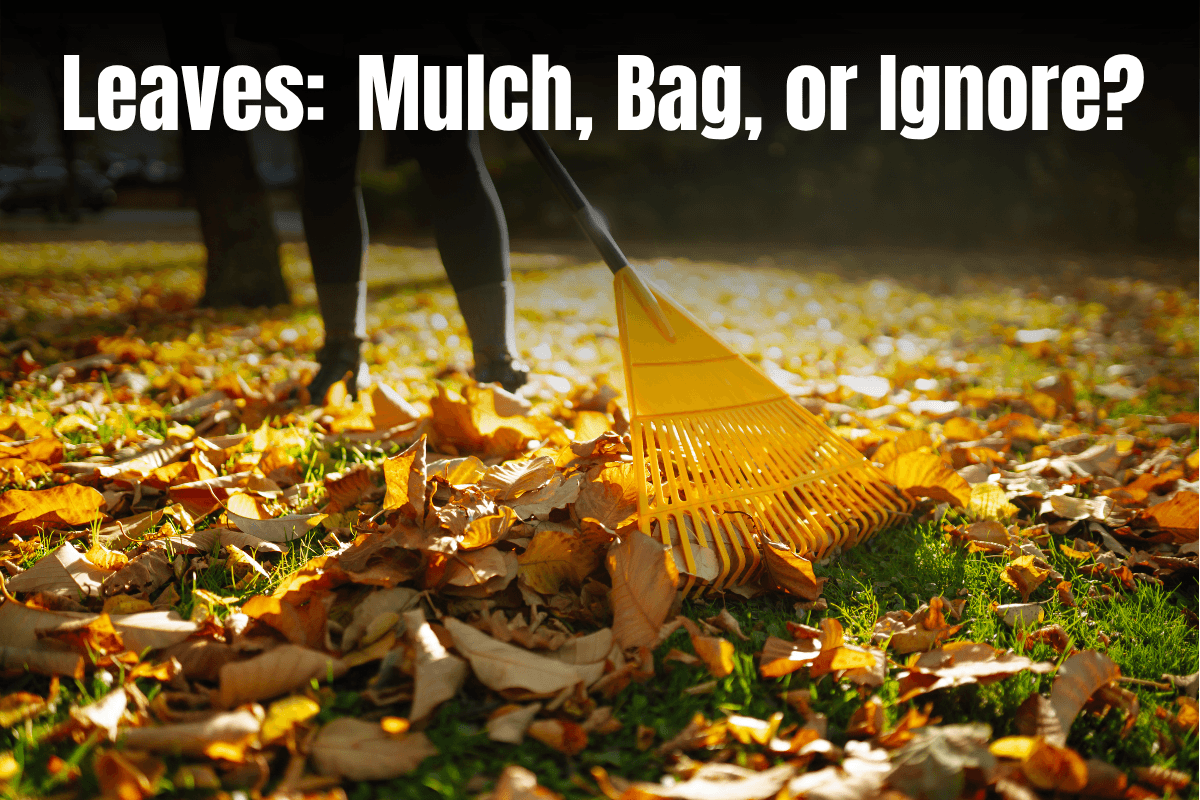
There are 3 ways to deal with leaves on your lawn: Mulch, bag, or ignore them. For most yards, mulching is the best option. It’s less work and turns leaves into free fertilizer instead of yard waste.
But that’s not the whole story. Thick, wet leaf piles are better bagged, and a thin scattering of whole leaves left in beds or under trees can actually help local wildlife and benefit your soil.
Here are the pros and cons of each method plus how to decide which method is right for your yard this fall.
If leaf season already has you dreading a full weekend of yard work, a local leaf removal pro can handle mulching, bagging, or a mix of both for you.
3 Methods At a Glance
| Mulch | Bag | Ignore (Beds/Under Trees) | |
|---|---|---|---|
| Effort level | Low; 1-2 mowing passes | High; rake, bag, haul | None |
| Cost | $0 (use existing mower) | Bags + possible hauling fee | $0 |
| Best for | Thin-to-moderate dry leaf cover on turf | Thick, wet, or matted leaves; HOA/curbside pickup required | Under trees or fence lines |
| Effect on lawn health | Adds nutrients, suppresses weeds | Prevents suffocation and harm | Harmful if large amounts of leaves are left on turf; OK if only a light layer |
| Wildlife/soil benefit | Some (fertilizer) | None (leaves are removed from the yard) | High (pollinator habitat) |
The Case for Mulching Leaves
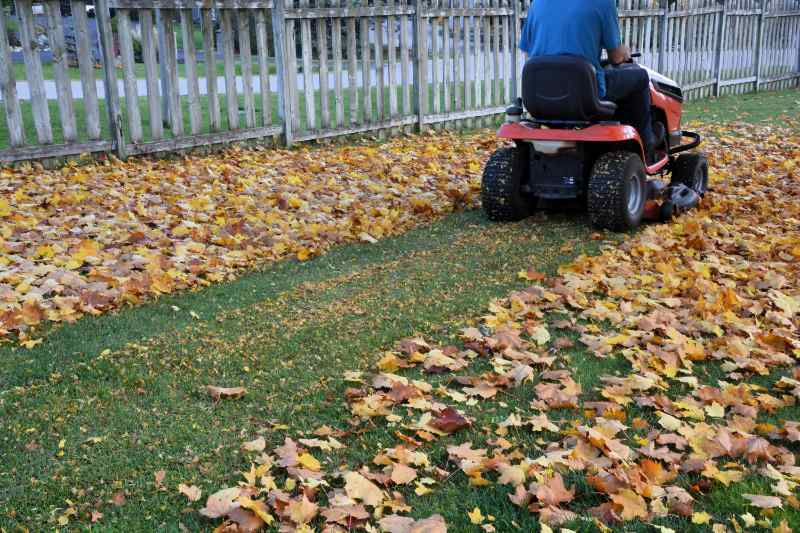
Mulching means running your mower over leaves (sometimes with a dedicated mulching mower) until they’re shredded finely enough to slip between the grass blades and soil instead of sitting on top of it. If done right, it acts as free winter fertilizer for your lawn.
“Mulching leaves back into the turf is a great use of the leaves, benefits overall lawn health, and takes little extra effort,” says Alison O’Connor, Extension professor of horticulture at Colorado State University Extension in Fort Collins.
Here are some other reasons to consider mulching your leaves:
- Mulched leaf litter breaks down over winter and boosts soil moisture retention and root growth, according to research by University of Minnesota Extension.
- The University of Illinois Extension estimates that 2 inches of mulched leaves adds roughly 3.44 pounds of nitrogen, 0.46 pounds of phosphorus, and 1.49 pounds of potassium per acre, which is enough to meaningfully cut back on annual fertilizer needs.
- “Michigan State found that mulching leaves into the lawn over a 3-year period reduced weed populations, like dandelions and crabgrass, nearly 100%,” O’Connor says. By filling in gaps in the lawn and blocking light to weed seeds, a mulched layer suppresses weeds before they can germinate.
Here’s how it works: “In the fall, remove the bag from the mower, and simply chop the leaves into smaller pieces and leave them on the lawn,” O’Connor says. “If you have a lot of trees, you may need to mulch the leaves on a regular basis – perhaps up to a couple of times a week.”
Keep in mind that mulching works only if the pieces are small enough to filter down between grass blades. “As long as you can see grass through the leaf litter, you won’t cause damage to the lawn,” O’Connor says. If not, mow with a second pass if there are visible clumps.
Pro Tip: “Like most gardening tasks, it’s easier to do leaf maintenance on a regular basis,” O’Connor says, rather than all at once.
See Related:
The Case for Bagging Leaves
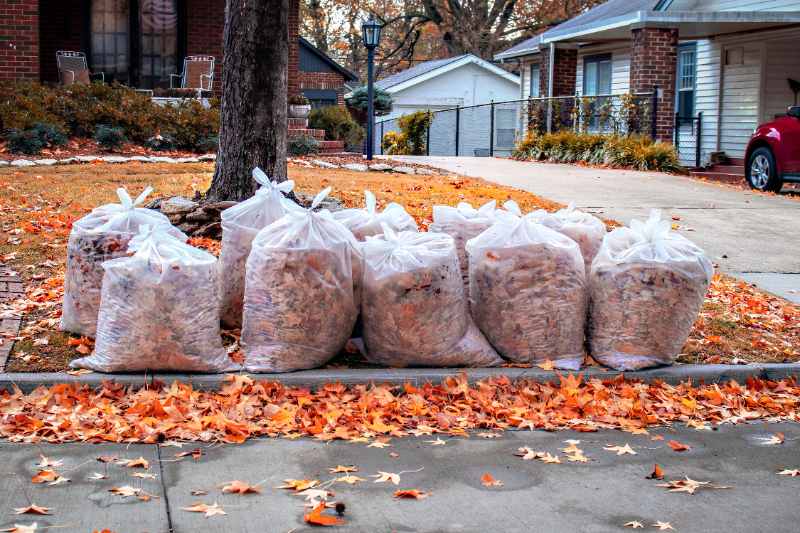
Bagging is the right call when leaf volume surpasses what a mower can realistically shred. Bagging is also a good choice if your HOA has rules about visible leaf litter on the lawn.
Here’s when to bag leaves:
- Thick leaf piles: Grass should still be visible under the leaves. Otherwise, the leaves will smother the grass.
- Matted, wet leaves: Wet leaves clog up your lawn mower and can suffocate the grass.
- Yard with more mature trees. Lots of large trees drop big piles of leaves. If you have heavy leaf litter in your yard, it’s better to bag.
The trade-off is that if you bag, you lose the opportunity to fertilize your yard. You give up the nutrient and weed-suppressing benefits of mulching. You also don’t save as much time: Bagging by hand is one of the most time-consuming fall lawn care chores.
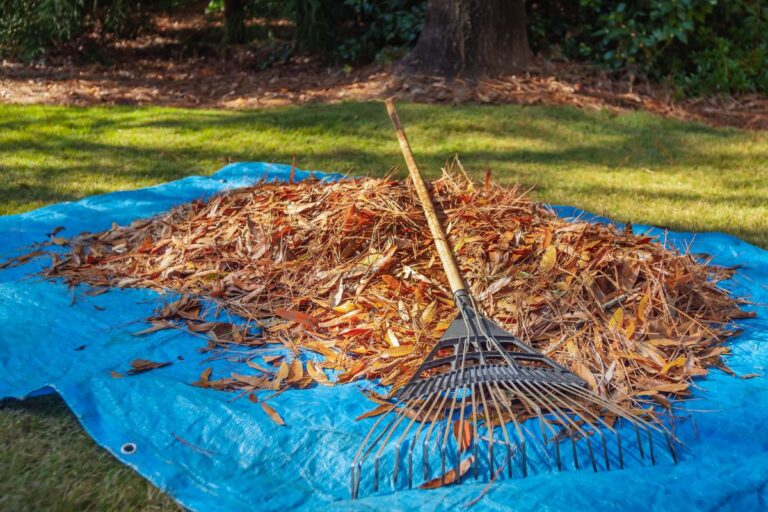
The right tools (a tarp, leaf blower, or leaf vacuum) reduce yard cleanup time significantly. If you’d rather skip the labor entirely, professional leaf removal typically costs an average of $170 per service, depending on lot size and leaf volume.
Pro Tip: Whatever you do, “Avoid sending them to the landfill,” O’Connor says. “You can bag leaves if you’re going to use them elsewhere on the property.”
But what can you do with all those leaves? Turn bags of leaves into rich compost, or shred them and use them to insulate plants over winter. See other ideas for What to Do With Fallen Leaves in Your Yard in our article.
See Related: How to Clean Up Wet Leaves in Your Yard
The Case for Ignoring Leaves
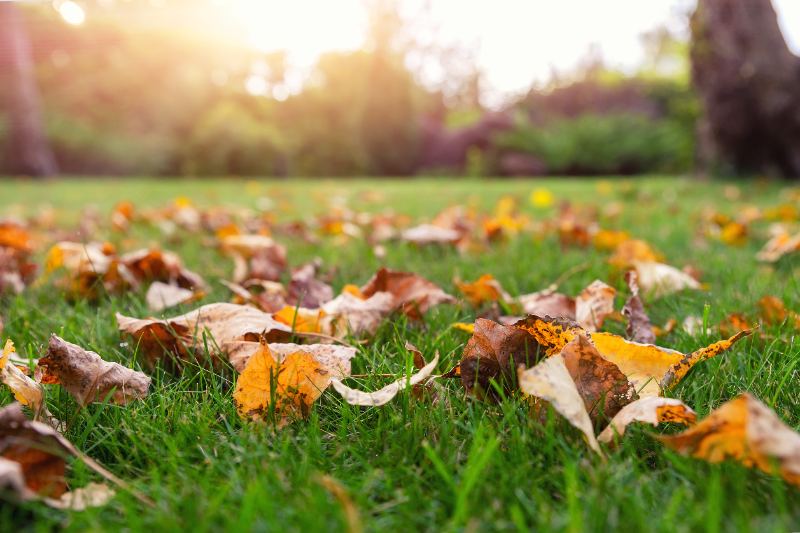
Leaves can be ignored only if you have a few leaves or a thin layer of leaves on your lawn, O’Connor says.
“For the most part, homeowners should address leaves, and at least once or twice in fall, run the mower over the lawn to break up leaves.”
Rule of thumb: You can ignore leaves if they cover up to 20% of your lawn. If leaves cover more than 20% of your lawn, you should mulch or bag them. Otherwise, if you don’t remove fallen leaves, they block sunlight and airflow, harming your grass.
“Ignoring” leaves is a deliberate choice to leave whole leaves in place, usually under trees or along a fence line rather than out on open turf.
Undisturbed leaf litter shelters overwintering insects, including:
- Turtles
- Toads
- Birds
- Small mammals
- Bumblebees
- Butterflies
- Other insects that songbirds rely on in the spring
Instead of removing leaves, homeowners can build a brush shelter of leaves to create a safe place for wildlife to shelter over the winter, or you can leave piles of leaves on the fringes of the yard where they won’t kill your grass.
There are other benefits that decomposing leaves provide to your lawn:
- Supply food for microbes
- Boost earthworm activity
- Recycle nutrients by acting as free lawn fertilizer
- Save you the effort of bagging and hauling leaves
A 2025 National Wildlife Federation (NWF) survey found that the number of homeowners who leave some leaves in place is on the rise. However, roughly a third of homeowners still bag 6 or more trash bags per season.
So Which One Actually Wins?
There’s no single winner between bagging, mulching, or ignoring the leaves. What’s best for your lawn depends on how much leaf cover you’re dealing with, how wet your yard is, and whether the leaves are sitting on turf or in a bed.
Here are some considerations to guide your decision:
- When to mulch: There is thin, dry leaf cover on the lawn, and leaf coverage isn’t too thick.
- When to bag: Less than 50% of your lawn is visible, and your yard is full of thick, wet, or matted leaves your mower can’t shred.
- When to ignore leaves: When there’s a light layer of leaves in garden beds, under trees, or along fences. Leave these leaves alone to help wildlife and boost soil health.
Most yards end up using all 3 methods: Mulch the lawn, bag the overflow, and leave the rest in the beds.
FAQ
According to Kansas State University, “Six inches or more of fallen leaves can be chopped by the mower (per season) and returned to the soil without causing damage.”
To reiterate, this includes frequent mowing over the course of the fall season. This does not mean you can mulch 6 inches of leaves at one time and expect it to benefit your grass.
A typical push mower operates best when leaves cover only up to 50% of the lawn, which is best for your mower and your lawn’s health. By contrast, specialized mulching mowers can handle higher leaf volume, but this isn’t ideal since large amounts of leaf mulch can smother your grass.
Yes, composting leaves is an eco-friendly way to get rid of leaves on your lawn. Leaves are rich in carbon, which makes them great for composting.
See Related: Composting 101: How to Start Composting
Hire a Local Lawn Care Pro
Getting leaf cleanup right takes the right equipment and time you may not have. If you’d rather leave it to someone who does this every day, LawnStarter makes it simple: Get an instant leaf removal quote, pick a time, and a vetted local pro will handle the rest.
Get a free leaf removal estimate near you →
Sources:
Alison O’Connor, Extension professor of horticulture at Colorado State University Extension, Fort Collins, CO. Personal interview.
Main Image: A woman rakes a thick pile of autumn leaves on a sunny fall day. Photo Credit: maxbelchenko / Adobe Stock
Related Posts: