| Key Takeaways |
|---|
| • Florida spans U.S. Department of Agriculture (USDA) hardiness zones 8b in the northwest Panhandle to 11b in the Florida Keys. • Your zone is based on the average coldest winter temperature and guides which plants will survive. • The 2023 USDA map shifted many Florida areas about half a zone warmer, so it is worth rechecking your ZIP code. |
Florida’s growing zones range from the warm Zone 11b in the Florida Keys to the cooler Zone 8b along the state’s northwest border with Alabama. Your zone shapes what you can plant and when.
If you are setting up a new lawn or garden, knowing your growing zone is the first step. It tells you which plants can handle your coldest nights so you can plan with confidence instead of guessing.
Getting a Florida landscape right takes the correct plants, good timing, and steady upkeep. When you would rather enjoy your weekend than work in the yard, LawnStarter’s lawn mowing service connects you with a local pro.
How Florida’s Growing Zones Work
A growing zone, or USDA hardiness zone, tells you the average coldest winter temperature your area sees in a typical year. Florida sits in some of the warmest zones in the country.
That warmth is why so much can grow here year-round. The map splits the country into 10-degree zones, then into warmer and cooler 5-degree half-zones marked “a” and “b” (for example, 9a is cooler than 9b).
The USDA’s 2023 map places Florida in hardiness zones 8 through 11, from 8b in the northwest Panhandle to 11b in the Keys, and the state’s climate can affect whether a plant survives even in the right zone.
Knowing your zone helps you choose plants that will survive your coolest nights instead of losing them to a cold snap.
Map of Florida Growing Zones
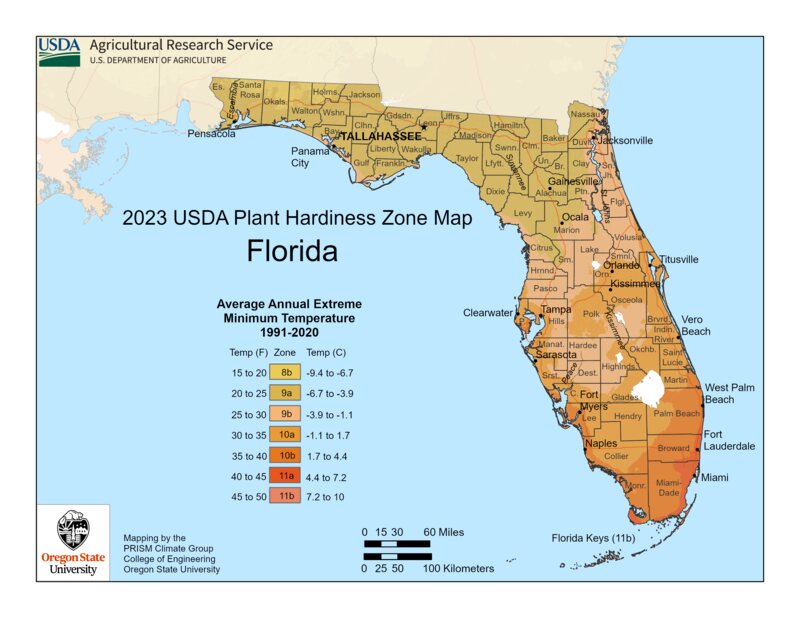
This map shows all of the growing zones you will find in the state of Florida. For more on how to read it, see our guide on the updated and warmer USDA hardiness zone map. You can also dig into specific parts of the state:
Florida’s Growing Zones by Region
Florida runs from Zone 8b along the northwest Panhandle down to Zone 11b in the Keys. Here is what each zone looks like, moving from north to south.
| Zone | Avg. minimum winter temp (degrees) | Where it is found |
| 8b | 15 to 20 | Northwest Panhandle at the Alabama border |
| 9a | 20 to 25 | Panhandle and most of inland north Florida |
| 9b | 25 to 30 | Coastal north Florida into central Florida |
| 10a | 30 to 35 | Central Florida and inland south Florida |
| 10b | 35 to 40 | Southwest Florida coastline |
| 11a | 40 to 45 | Southeast Florida coast |
| 11b | 45 to 50 | The Florida Keys |
Zone 8b: Northwest Border With Alabama
Zone 8b is the smallest and most northwest zone in Florida, covering only a tiny area of the Panhandle bordering Alabama. With an average minimum winter temperature of 15 to 20 degrees, it is also the coolest zone in the state.
Because Florida’s Zone 8b is so small, it does not fully cover any single county. It does include parts of several counties, namely Okaloosa, Holmes, Santa Rosa, Walton, and Escambia. Zone 8b does not contain any major Florida cities.
Zone 9a: The Panhandle and Most of Inland North Florida
By contrast, Zone 9a is the largest individual planting zone in Florida. It covers the rest of the Panhandle and is northern Florida’s main growing zone. Zone 9a has an average minimum winter temperature of 20 to 25 degrees.
Zone 9a covers the remaining areas of the 8b counties, plus many counties from Jackson and Gulf down to parts of Marion and Citrus. This zone includes several major cities: Gainesville, Ocala, Pensacola, parts of Panama City, and the state capital, Tallahassee.
Zone 9b: Coastal North Florida Down to Central Florida
Zone 9b is an oddly shaped Florida growing zone. It runs along the coastlines and covers the remainder of northern Florida, and it is one of central Florida’s main growing zones too. At an average minimum winter temperature of 25 to 30 degrees, Zone 9b gets plenty of the famous Florida heat.
In terms of major cities, Zone 9b contains Jacksonville. It also at least partially covers counties as far north as Nassau and as far south as DeSoto. The zone’s hook-like shape means it rarely covers a whole county, but it is widespread all the same.
Zone 10a: Central Florida and Parts of Inland South Florida
Moving out of north Florida, Zone 10a is another oddly shaped zone that borders 9b and covers much of central Florida, plus some of the more prominent growing areas of south Florida. Zone 10a has an average minimum winter temperature of 30 to 35 degrees.
Like 9b, Zone 10a runs along the coastline and forms a hook, so it covers more partial counties than full ones. It reaches as far north as Volusia County and as far south as Collier. Zone 10a also includes major cities like Tampa and Orlando, along with Sarasota, Clearwater, Kissimmee, and Vero Beach.
Zone 10b: The Southwest Florida Coastline
Zone 10b is a smaller zone deep in south Florida. It borders much of the western coastline and parts of the east. This zone has an average minimum winter temperature of 35 to 40 degrees, making it one of the warmest zones in the state.
Zone 10b contains the major cities Fort Myers and West Palm Beach, plus parts of Monroe, Martin, Lee, Collier, Broward, Palm Beach, and Miami-Dade counties.
Zone 11a: Southeast Florida Coast
Zone 11a is another very small Florida growing zone, one that hugs the southern coastline. Zone 11a has an average minimum winter temperature of 40 to 45 degrees, so it is practically never cold enough to feel chilly.
In terms of major cities, Zone 11a contains Miami and Fort Lauderdale. This zone does not fully cover any county, but it does cross into parts of Miami-Dade, Broward, Monroe, and Palm Beach counties.
Zone 11b: The Keys
The last and most southern of Florida’s growing zones is Zone 11b. Zone 11b has an average minimum winter temperature of 45 to 50 degrees, making it the warmest zone in Florida and one of the warmest on the USDA map.
This zone does not contain any of the Florida mainland or any counties or major cities. Zone 11b is reserved for the Florida Keys, a small island chain off the southern coast.
Check out our guide on landscaping in Key West for ideas on what to do with your outdoor space.
How to Find Your Florida Growing Zone
The fastest way to find your exact zone is to look up your area with the USDA’s ZIP code search, which returns your zone instantly. That matters because a single county can span two half-zones.
The map above gives you the big picture, but a quick ZIP code check confirms which zone your yard falls into before you buy plants. If your area shifted after the 2023 update, the ZIP code search will show it.
What to Plant in Your Florida Zone
Your zone tells you which plants can handle your winters. In south Florida, lawns and many plants show active growth year-round, while north and central Florida run mainly from about April through September.
As Jo Ellen Meyers Sharp of The Hoosier Gardener in Indianapolis, Indiana, notes, once you know your zone you can “use that temperature guidance to know when to set your plants out.”
Pair your zone with your local frost dates to time planting well, since frosts hit central Florida occasionally and south Florida rarely. That long frost-free stretch lets much of the state plant more of the year.
South Florida, for instance, typically sees its last spring freeze before January 16, so cold-sensitive plants can go in the ground earlier there than up north.
More Lawn Care and Landscaping Resources for Florida
Your growing zone is far from the only thing that shapes your lawn and garden. Check out some of our other Florida guides for more on landscaping and lawn care:
FAQs
No. The USDA places Florida within zones 8, 9, 10, and 11, based on average lowest winter temperatures. Zone 6 areas see far colder winters than anywhere in Florida, so you will not find Zone 6 in the state.
Yes. Because the map uses fine-scale GIS data, cities with more pavement and concrete can register in a warmer half-zone than nearby rural land due to the urban heat-island effect.
Roughly every 10 years. The 2023 map replaced the 2012 edition and used 1991–2020 climate data instead of 1976–2005, which is why so many areas shifted warmer.
Not always. Tropical plants that thrive in south Florida’s Zone 11 can be damaged by winter cold in the Panhandle’s Zone 8b. Match plants to your specific zone, and check frost dates before planting anything cold-sensitive.
Find a Florida Lawn Care Pro
Whether you are in Miami, Fort Lauderdale, Tampa, or Hollywood, knowing your specific zone helps you pick the perfect plants for your space. You do not want to waste time, money, and energy on something that will die once winter hits.
If you need help with your Florida lawn, LawnStarter’s landscaping service connects you with a local pro near you. They can handle the mowing and upkeep so you do not have to worry about it.
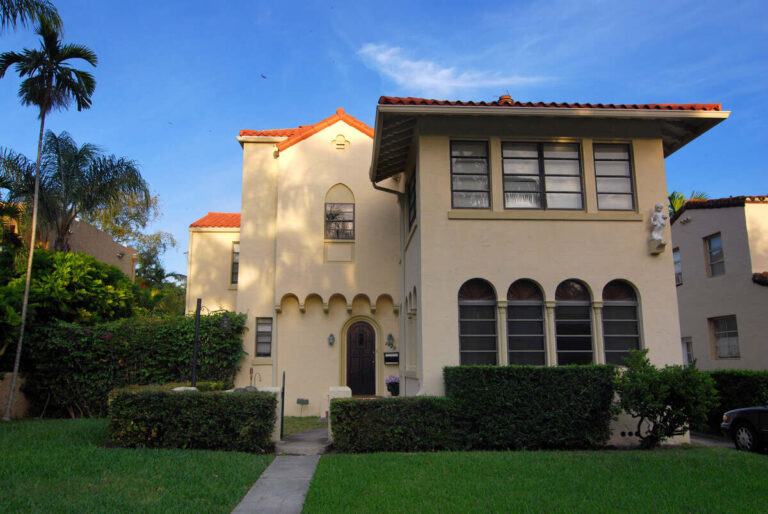
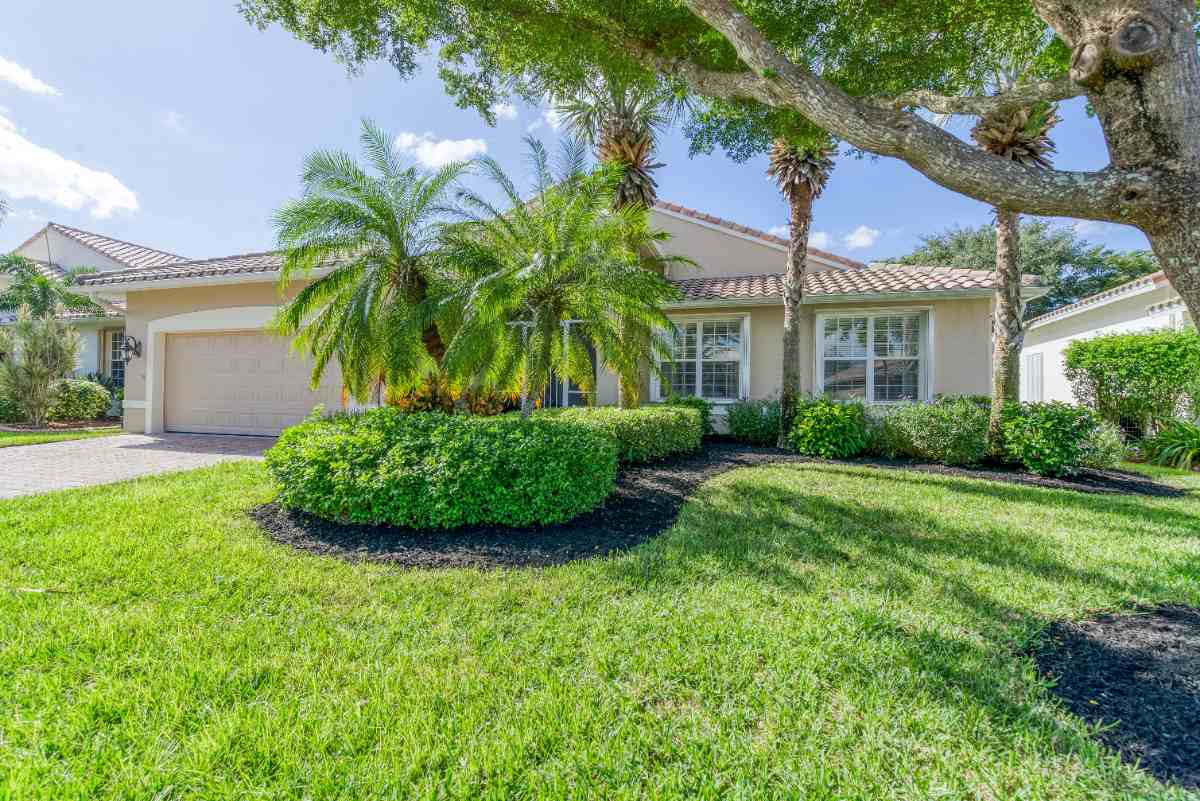
Main Image: A Florida ranch home with mature palm trees and manicured landscaping. Photo Credit: Bryan Scariano / Adobe Stock
Related Posts: