As your grass starts to wake up here in North Dakota, you have to do a few things to get your lawn up and running. Start by preparing your lawn equipment, testing your soil, and removing winter debris. Then, add fertilizer, remove weeds, and overseed.
By May, you can start mowing and watering your lawn. Spring lawn maintenance helps your grass recover quickly from dormancy and stay healthy throughout the long growing months.
Follow this 8-step spring lawn care checklist to ensure your North Dakota lawn grows lush and healthy.
1. Prepare Your Lawn Equipment
When to prepare your lawn equipment: Late March
Your lawn mower and other lawn equipment have been idle in the garage through the winter. While the late March weather is still unpredictable and can sometimes dip below 32 degrees, especially in eastern and western North Dakota, it’s time to prepare your lawn equipment.
Here’s how you can get them lawn duty-ready:
- Sharpen lawn mower blades: Check your mower and hedge trimmer, and sharpen the blades if necessary.
- Gas-powered tools: Stock up on gas, replace the engine oil and oil filter, and change the spark plug.
- Electric tools: Check the batteries and replace them if they’re in poor condition.
- Weed eater: Check if it has enough string. If there’s less than half, replace the string so you don’t have to worry about it throughout the season.
2. Test Your Soil

When to test your soil: End of March
Soil testing helps you identify the right fertilizer for your grass. You can test the soil yourself with a DIY test kit or send it to a local soil-testing laboratory for a comprehensive analysis.
You should test your soil before fertilizing your lawn to help you choose the right fertilizer. Additionally, testing your soil at least once a year will help you care for your lawn more effectively.
Cool-season grasses grow best in soil with pH levels between 6.0 and 7.0. If the pH is higher (alkaline soil), treat it with elemental sulfur. If it’s lower (acidic soil), treat it with lime.
Here are the common cool-season grasses in North Dakota and their ideal pH levels:
| Cool-season Grass Type | Ideal pH Levels |
| Kentucky bluegrass | 6.0 and 7.0 |
| Perennial ryegrass | 6.0 and 7.0 |
| Tall fescue | 5.5 to 7.0 |
| Fine fescue | 6.0 to 6.5 |
3. Clean Up Yard Debris
When to clean up winter debris: Early April
Grab your rake and remove dead leaves, twigs, and other debris to allow sunlight, water, and other nutrients to reach the grass and soil.
Ensure your lawn is dry before raking.
Note: If you’re in western or eastern North Dakota, your grass is probably still wet in the first week of April. Wait until it dries so you don’t pull out healthy grass.
4. Fertilize Your Lawn
When to add fertilizer: April (if you didn’t fertilize in the fall)
The best time to fertilize cool-season grasses is in the fall. However, if you didn’t fertilize in the fall, you should do so in April. Use slow-release fertilizer to keep your grass healthy as it grows.
- Kentucky bluegrass/perennial ryegrass: 1 pound of slow-release nitrogen per 1,000 square feet
- Tall fescue/fine fescue: 1.5 pounds of slow-release nitrogen per 1,000 square feet
5. Remove Weeds
When to remove weeds: First week of April for pre-emergent weed control or late May for post-emergent weed control
Weeds spoil the appearance of your lawn and deprive your grass of the nutrients it needs to grow green and healthy. Crabgrass is common in North Dakota, so be on the lookout for light yellow weeds on your lawn. You can hand-pull weeds if there are only a few.
Pre-emergent weed control: Apply pre-emergent herbicides in the first week of April to prevent weeds from germinating. Ensure your soil temperature reaches approximately 55 degrees before applying it.
Note: Pre-emergent herbicides prevent grass seeds from germinating. So, if you want to overseed your lawn after applying pre-emergent, wait at least 3 to 4 months.
Post-emergent weed control: If weeds have started to sprout in your grass, apply post-emergent herbicides in late May.
6. Repair Bare Patches
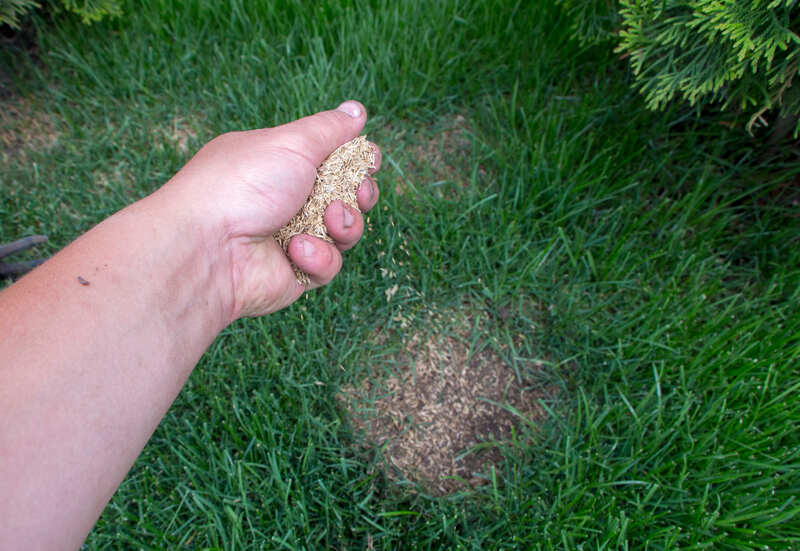
Best time to overseed: In early April, before weeds start to grow
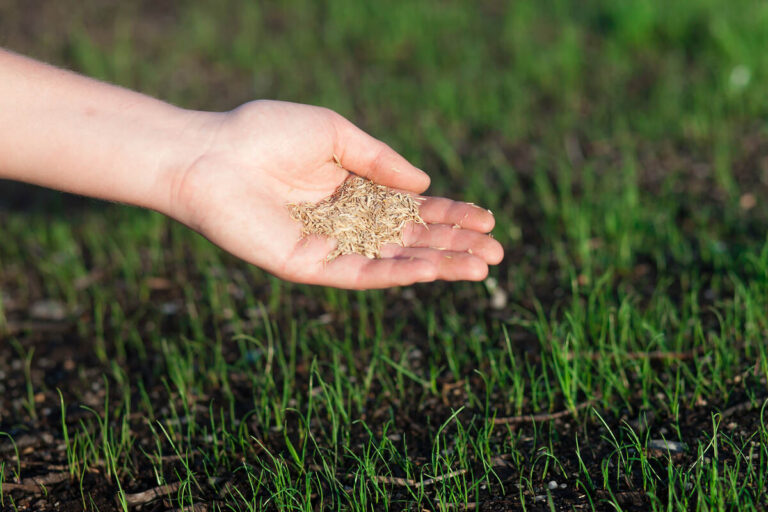
Overseeding is an effective way to repair bare patches on your lawn. This improves your lawn’s health and prevents weeds from growing in the bare spots. Ideally, overseeding should be done in late summer or early fall in North Dakota.
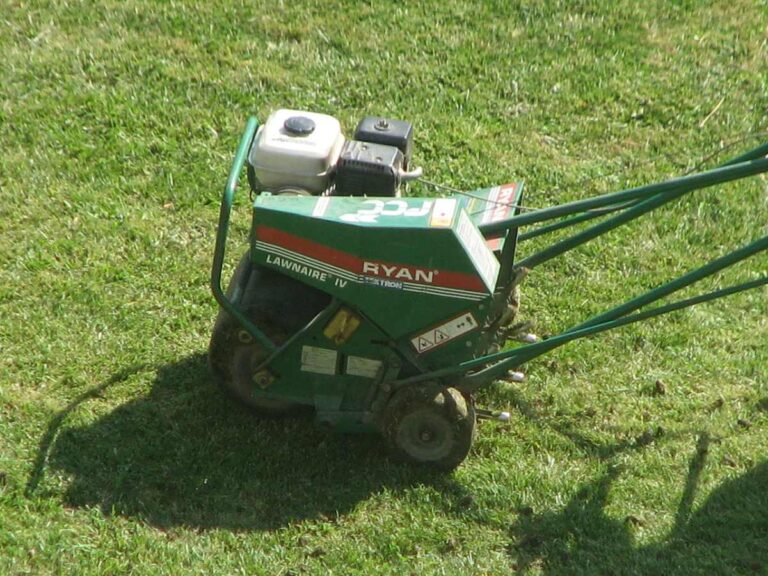
Before overseeding: Remove weeds, aerate, and dethatch your lawn to ensure the seeds reach the soil.
| Cool-Season Grass Types | When to Seed |
| Kentucky bluegrass/perennial ryegrass | When soil temperatures are above 55 degrees |
| Tall fescue/fine fescue | When soil temperatures are between 60 and 65 degrees |
7. Mow Your Lawn
When to start mowing: May
In May, your grass will start growing rapidly, so be ready to mow. Here’s the recommended mowing height for the popular cool-season grass types in North Dakota:
- Recommended mowing height: 3 inches
- When to mow: Before your grass reaches 4.5 inches tall
As your lawn grows rapidly, follow the one-third rule: Never cut over one-third of your grass in one mowing.
8. Water Your Lawn
When to start watering your lawn: May (depending on weekly rainfall)
Regular watering is crucial for a vibrant and healthy lawn. Most North Dakota lawns require an inch of water a week, which can be applied in 2 or 3 sessions.
May is rainy in North Dakota, so account for weekly rainfall when watering your lawn. Overwatering and underwatering are both bad for your lawn. Overwatering invites pests, fungus, and diseases, while underwatering makes your grass lose its color.
- Best time to water your lawn: Early morning (5 to 9 a.m.)
- How to check if your lawn needs watering: Insert a screwdriver about 3 to 4 inches into the ground. Remove the screwdriver and check for moisture. If it’s wet, your lawn doesn’t need watering.
When to Hire a Lawn Care Pro
From Scandinavian Heritage Park to Icelandic State Park to the Roosevelt Zoo, North Dakota is home to many beautiful places. With so much to see, it’s understandable that you’re tempted to spend your weekends exploring the state with your family. Let LawnStarter’s North Dakota lawn mowing pros take care of your lawn while you’re outside having fun.
Main Image: Lush green lawn outside building in Bismarck, North Dakota. Image Credit: David / Adobe Stock
Related Posts: