Between triple-digit heat, salty coastal air, and stretches without meaningful rain, your lawn can go from green to stressed in a matter of weeks during summer in Corpus Christi. The key is adjusting your routine to the season.
That means watering deeply, mowing frequently, and watching for chinch bugs. In this guide, we’ll walk you through the most important lawn care steps to keep your lawn healthy despite the Coastal Bend heat.
But if you’d rather spend your weekend enjoying a breeze along Ocean Drive instead of adjusting sprinklers and mower blades, connect with a Corpus Christi lawn care pro who can handle the hard work for you.
1. Adjust Your Watering Schedule

When South Texas heat settles in, it’s tempting to water your lawn more frequently just to keep it from looking stressed. However, frequent light watering can actually make things worse. This encourages shallow root growth, and shallow roots dry out faster, leaving your grass more vulnerable to heat stress.
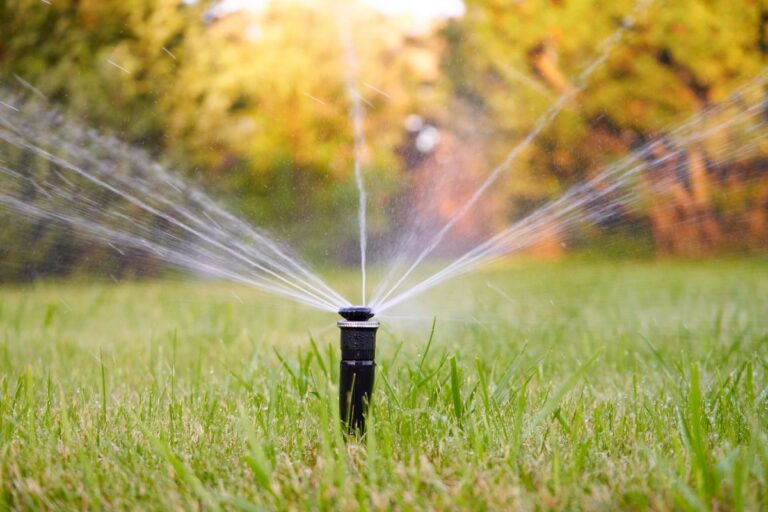
Instead, water deeply and less often. A thorough soaking 1 or 2 times a week encourages roots to grow deeper into the soil, where moisture lasts longer, and turf can better tolerate those long heat waves. Most warm-season lawns need about 1 inch of water per week.
Note: Stay aware of local watering restrictions. Check Corpus Christi’s drought status before turning on your sprinklers. If the city is under Stage 3 drought restrictions, outdoor landscape watering is not allowed.
See Related:
– How Often to Water Grass in Summer
– How Long to Water Your Lawn in Summer
2. Mow More Frequently
The most common grasses in Corpus Christi and in Texas in general are warm-season grasses. These grasses grow the most during the long summer days, so this is the time when your mower will see the most action. Keep these tips in mind:
- Plan for more frequent mowing: weekly or sometimes bi-weekly (2x per week).
- Raise your mowing height in July by about 1/2 inch to help shade the soil and protect the grass crown from extreme heat.
- Follow the one-third rule of mowing and never remove more than one-third of the grass blade at a time.
If the lawn is overgrown, reduce the height gradually over several mowings, trimming a little every few days instead of cutting it all at once, to avoid stressing the turf.
See Related:
– How to Mow Tall Grass In Your Lawn
3. Watch for Chinch Bugs

Chinch bugs are notorious for attacking St. Augustinegrass lawns in the Corpus Christi area. They are a serious pest that may also feed on other warm-season grasses like Zoysia, Bermuda, centipede, and bahiagrass.
Because their damage mimics drought, they’re easy to miss at first. Watch for:
- Irregular yellow or brown patches that appear in sunny locations
- Grass that looks drought-stressed but doesn’t recover after watering
- Small black bugs moving in the thatch
- Turf that continues to thin or die despite proper irrigation
If you confirm you have an infestation, check out our article on How to Get Rid of Chinch Bugs on the Lawn.
4. Prevent Summer Lawn Diseases
Summer in the Texas Riviera brings heat and humidity, the exact conditions many lawn diseases, like gray leaf spot, love. Gray leaf spot often appears as green to brown water-soaked spots and lesions on leaves.
This disease spreads quickly when moisture lingers on grass blades, and turf is stressed, so here’s what to do to prevent it:
- Water early in the morning.
- Avoid overwatering.
- Aerate once a year to relieve compaction and improve drainage.
- Avoid excessive nitrogen fertilization during peak heat.
If you already have gray leaf spot in your lawn, you’ll need to apply products like Compass or Heritage. Read more about how to get rid of this disease in our article: Gray Leaf Spot: How to Identify, Control, and Prevent It.
5. Fertilize Carefully (If at All)
You can fertilize your lawn in summer, but it’s usually better to focus your main fertilizer applications in spring and fall. Summer fertilization makes the most sense if you’re on a moderate or high-maintenance lawn care program, establishing new turf, or trying to revive a neglected lawn.
If you’re going to fertilize during summer, keep these guidelines in mind:
- Space applications at least 45 to 60 days apart.
- Choose fertilizers with slow-release nitrogen.
- Avoid fertilizing before heavy rain and in peak summer heat.
- Avoid liquid fertilizers, as they increase the risk of fertilizer burn if applied at over 3/4 pound of nitrogen per 1,000 square feet.
See Related:
– When to Fertilize Lawns in Texas
– How to Fertilize Your Lawn
– What Is Slow-Release Fertilizer For the Lawn?
6. Get Rid of Summer Weeds
Ideally, you would have made one (or two) pre-emergent herbicide applications in spring to stop summer weeds from ever sprouting. But if you’re seeing weeds pop up in Corpus Christi’s summer heat, you still have options.
For isolated weeds, hand-pulling is often the safest option. Just make sure to remove the entire plant, including the roots, before it has a chance to go to seed.
Additionally, you can apply a post-emergent herbicide. The key is to spot treat, avoiding blanket applications, especially during extreme heat. Apply only to affected areas when temperatures are below 85 degrees to lower the risk of harming your grass.
Enjoy Your Coastal Summer
With the right strategy, your warm-season grass can handle the long, hot days in Corpus Christi just fine. But if you’d rather kayak along the Laguna Madre instead of mowing your yard, visit our Corpus Christi lawn care page to get in touch with a LawnStarter professional. We also provide lawn care services in many other Texas cities, including San Antonio and Houston.
Read More:
– Landscaping Tips for Corpus Christi
– Fall Lawn Care Tips for Corpus Christi
Main Image: Lawn mowed by a LawnStarter pro in Corpus Christi, TX. Illustration by LawnStarter
Related Posts: