| Key Takeaways |
|---|
| • You can trim a neighbor's branches and roots back to the property line, but only if it doesn't harm the tree and you don't enter their yard without permission. • If a tree's trunk straddles the boundary, both neighbors own it and must agree before removing or heavily pruning it. • Damaging or killing a boundary tree can make you liable for its full value, so talk to your neighbor and consider an arborist before you cut. |
That massive oak tree’s overhanging branches are damaging the shingles on your home’s roof. You want to trim them, but the tree sits on the property line between your place and your neighbor’s. Would you break the law by trimming the branches of the trees on a property line?
The rules depend on who owns the tree, whether the trunk crosses the line, and the local ordinances where you live. You’ll hear from an expert to give insights into your rights, your neighbor’s rights, who pays when a tree falls, and how to settle a dispute without a courtroom.
Once everything is settled, LawnStarter’s local tree care pros can handle the trimming so you can skip the drama.
Trees Are Worth More Than Their Shade
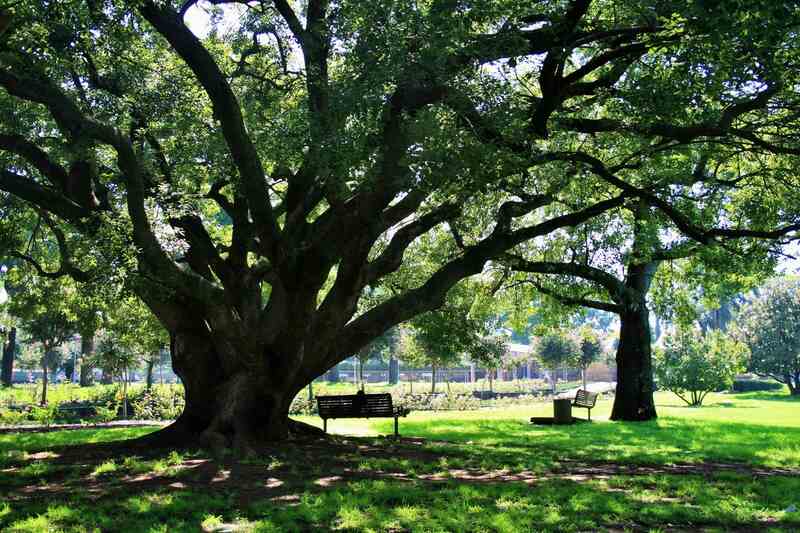
You can usually trim branches back to the property line, but whether you break the law depends on local rules. Be aware that inadvertently damaging the tree while trimming those tree branches could become very costly.
“It is predictably difficult to justify paying attorney’s fees over a tree, on either side. But disputes over trees near the property line can involve large sums of money, especially if the tree is damaged or dies,” says Cleve Clinton, partner at Gray Reed law firm, based in Dallas, Houston, and Waco, Texas.
Aside from the aesthetic value of the tree and its contribution to the environment, a tree may have a monetary value to the homeowner, depending on the location and the yard’s landscaping. This value could be based on:
Decreased property value if the tree is removed or damaged.
Expenses to treat a damaged tree, or to remove a dangerous or dead tree.
Replacement cost. This could include labor and cleanup costs.
See Related:
Who Owns a Tree on the Property Line?
If the tree’s trunk sits on the property line, it is what the law calls a boundary tree: Both property owners share the tree’s value and are responsible for upkeep on their side of the property line. But there are things to consider if there’s a problem with a tree on a shared property line.
| Where the Trunk Sits | Who Owns the Tree | Who Maintains and Pays |
| Entirely on your lot | You | You |
| Entirely on your neighbor’s lot | Your neighbor | Your neighbor, though you may trim to the line |
| Straddling the line | Both of you (a boundary tree) | Shared, and both must agree to remove it |
Can I Cut Down a Tree on the Property Line?
The short answer is no. If the tree trunk is on the property line, you and your neighbor own the tree. You must both agree to remove it.
What Are Your Rights to Trim a Boundary Tree?
Your rights depend on where the trunk sits and how far the branches and roots reach. Here is what you can and cannot do:
Is It Legal to Prune or Remove the Tree?
Laws vary among states, counties, and cities, so it is important to consult with local authorities before you break out the saw. Generally, if any part of the trunk is on both your and your neighbor’s property, it is considered the common property of both homeowners.
Key takeaway: Neither you or your neighbor can damage or destroy the tree without the other’s consent.
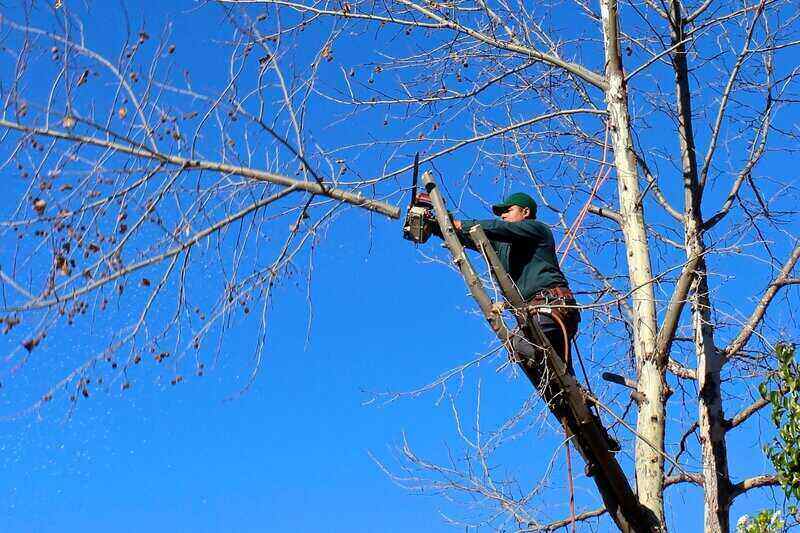
Tree trimming: You are allowed to maintain your property not only to the lot line, but also under the ground and the sky above it. Trimming is only legal to the property line and is the responsibility of the party doing the trimming, says Clinton.
“Absent clear danger, neither party can trespass on the other’s property to trim a tree. If a tree is damaged or destroyed by a neighbor, it is the responsibility of the person causing the damage, conceivably in dollar damages,” he says.
Those dollars add up: Harm a tree and you can be liable for up to three times its tree replacement value, and most trees are worth thousands of dollars.
Other tree maintenance: The tree doesn’t have to be chopped down to cause a legal battle. Whether you decide to trim branches, cut tree roots, or treat parts of the tree with a chemical that ultimately damages that tree or your neighbor’s trees, you could be liable for damages.
Cutting Roots and Overhanging Branches
What can you do about overhanging branches or roots that damage sewer lines or leaves that clog gutters? What about a tree with broken limbs or cracked trunks?
If it’s a dangerous tree, you have the right to trim branches and cut and remove tree roots that intrude into pipes or foundations within your real estate. This includes a tree whose trunk is entirely on a neighboring property. But you are also responsible for any costs incurred to do so.
“However, an arborist should be consulted, and perhaps retained, to trim or cut invading roots,” Clinton says. “Any permanent damage to a neighboring tree is the responsibility of the property owner who trims (or) cuts the roots.”
A couple of things to consider:
Be careful: If you decide to trim the tree’s branches, keep its health in mind. If you cut back a branch and disease attacks it, it may no longer be a healthy tree.
Don’t chop without a plan: Some case law exists in which a property owner was awarded damages because the neighbors trimmed a tree to the point where it was no longer visually pleasing.
See Related:
Can My Neighbor Come Into My Yard?
Courts give great deference to private property lines in the U.S. Your neighbor may not come into your yard to trim a tree’s branches without your permission. The same is true for you.
But this is where legalities end and being a good neighbor begins. If you like the tree and intend to prune it on your property, Clinton says that it’s best to ask permission for the tree trimmer to go into the neighbor’s yard. That way, trimming around the entire tree is consistent and makes all sides of the tree look good.
He adds that the concepts of tree ownership, trespass, and damages are essentially the same in all states. “However, the specific facts and local laws (such as municipal ordinances that prohibit unpermitted tree removal) will control the final result.”
Bottom line: “Good fences and good trees make good neighbors,” Clinton says. “Communication counts, and friendly, get-along communication at that.”
When a Neighbor’s Tree Becomes a Hazard
A dead, leaning, or storm-damaged tree raises safety and liability questions of its own. Here is how to handle it:
What to Do About a Dangerous Tree
A dead limb or leaning tree next door can put your home and family at risk, and you have options short of a lawsuit. Start by telling your neighbor about the hazard in writing, and keep a copy for your records.
If they ignore a clear danger, report the tree to your city or local code enforcement, since many towns require owners to remove hazardous trees on private property. Photos and dated notes help if the problem later leads to a claim.
A certified arborist can inspect a shaky tree and tell you whether it is safe or should come down.
See Related: 13 Signs Your Tree is Dying
What if the Tree Falls?
In most locations (and laws may vary in your area), property owners are responsible for boundary tree damages on their own property.
But what if that tree’s trunk is on your property, and a storm sends a branch through the neighbor’s window? It’s not your responsibility, since it was caused by Mother Nature. Your neighbor will have to file an insurance claim.
The exception: Let’s say the branch has been dead for years. Your neighbor has complained and asked you to cut it down, but you failed to do so. In that case, you might be liable.
The same is true for a tree whose trunk is in the neighbor’s yard: If that massive snowstorm causes a big branch to fall on your car, you can’t expect the neighbor to pay for the damage. That’s between you and your insurance company, unless your neighbor has been negligent in taking care of a dead branch.
FAQs
No. Tossing your neighbor’s trimmed branches back over the line can be treated as illegal dumping in some places, so dispose of the clippings yourself or agree in advance on who handles cleanup.
Usually not, because in many states the fruit still belongs to the tree’s owner even when a branch hangs over your yard. You can trim the overhanging branch back to the line, but picking the fruit without permission can leave you on the wrong side of the law.
Giving notice is smart even when it isn’t strictly required, since it lets your neighbor fix the problem and protects you if a dispute follows. It matters most when the work is large, close to the trunk, or could affect a shared boundary tree.
Call in the Pros
To keep trees and neighborly relationships healthy and strong, sometimes it’s best to call in the pros. One of LawnStarter’s local tree care pros is your best bet to maintain healthy, robust trees on a property line and across your landscape.
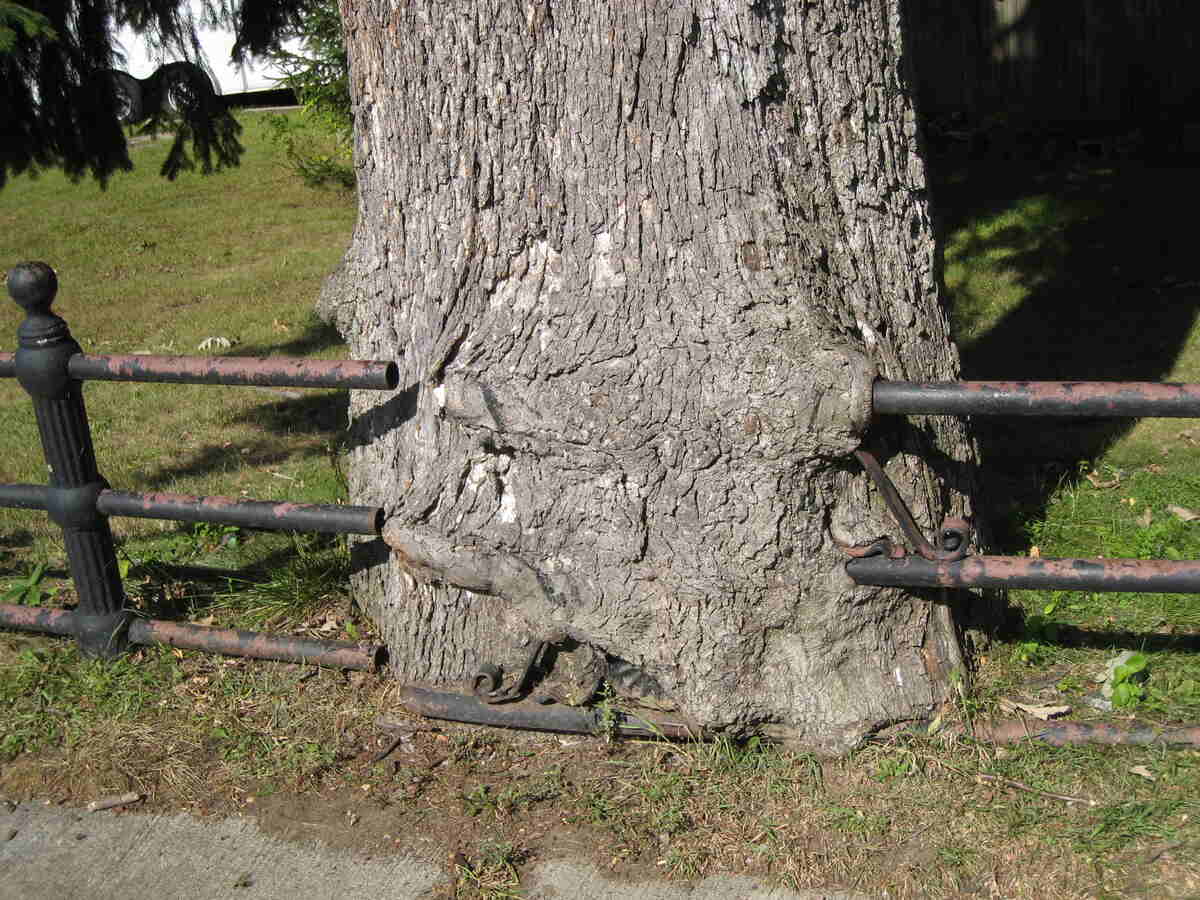
Main Image: A mature tree has slowly grown around and absorbed the rails of an old wrought iron fence over decades. Photo Credit: sethoscope / Flickr / CC BY-SA 2.0
Related Posts: