| Key Takeaways |
|---|
| • Measure before you shop: Subtract your stand, topper, and 6 to 10 inches of clearance from the ceiling height, and check the room’s width too. • Test for freshness: Gently pull along a branch with the grain, and pass on any tree that drops green needles from the tips. • Water it right away: Get your tree into water within a couple of hours, and keep the stand full, especially during the first few days. |
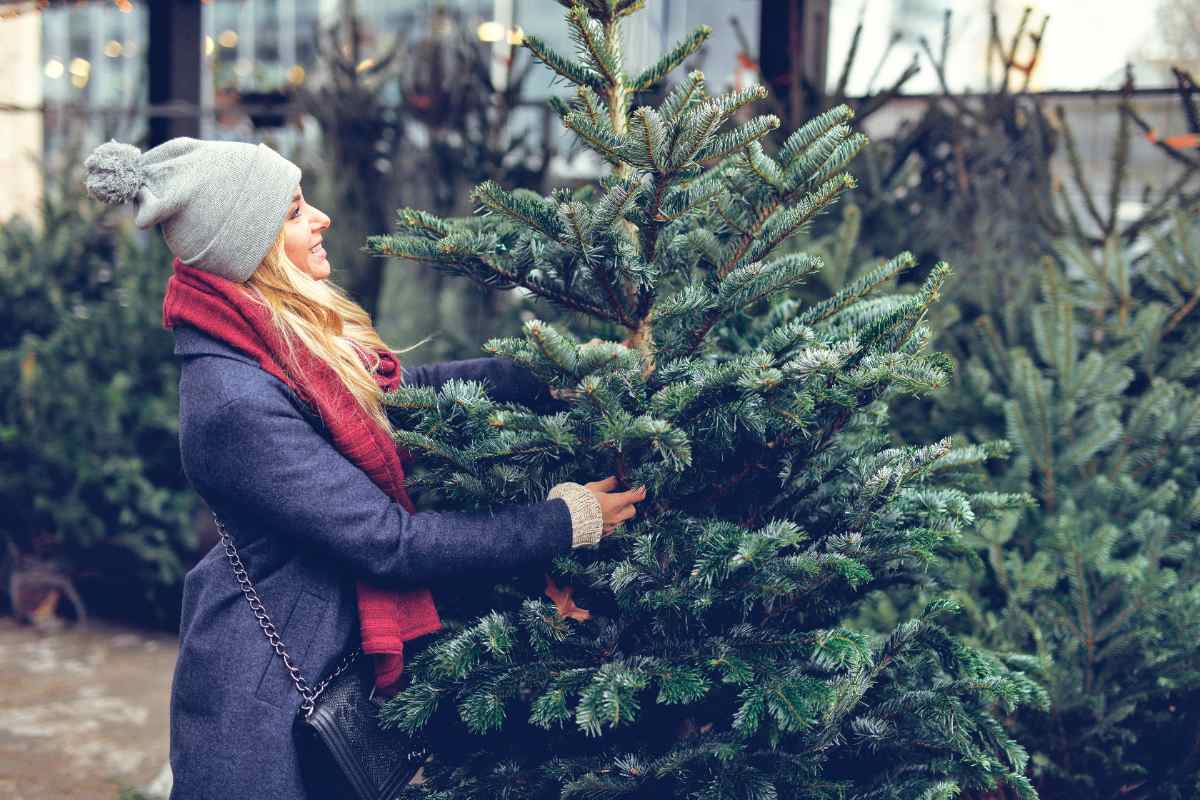
Choosing a Christmas tree is simple: Measure your space, choose a species that fits your needs, and inspect the tree for shape, a straight trunk, and freshness.
This guide combines my personal tips from years of tree shopping with expert advice from Christmas tree professionals.
Hauling a tree home and sweeping up needles add work to a busy season. LawnStarter’s local lawn care providers can handle the yard with a yard cleanup service.
Size Up Your Space
Before you shop, measure the ceiling height and the floor space where your tree will stand. You don’t want a tree too big for the space, nor one that looks underwhelming.
Here’s how to size up your space:
Pick the spot: First, decide where you’ll put it. Avoid placing your tree near heat sources like radiators, heating vents, or fireplaces.
Do the math: Take the height of the ceiling and subtract the height of the tree stand, your tree topper ornament, and 6 to 10 inches to keep the tree from brushing the ceiling. This gives you the maximum tree height to buy.
Width matters as much as height. Most farm-grown Christmas trees are about 80% as wide as they are tall, so a 10-foot tree could measure roughly 8 feet across at the base.
Know Your Trees Before You Go
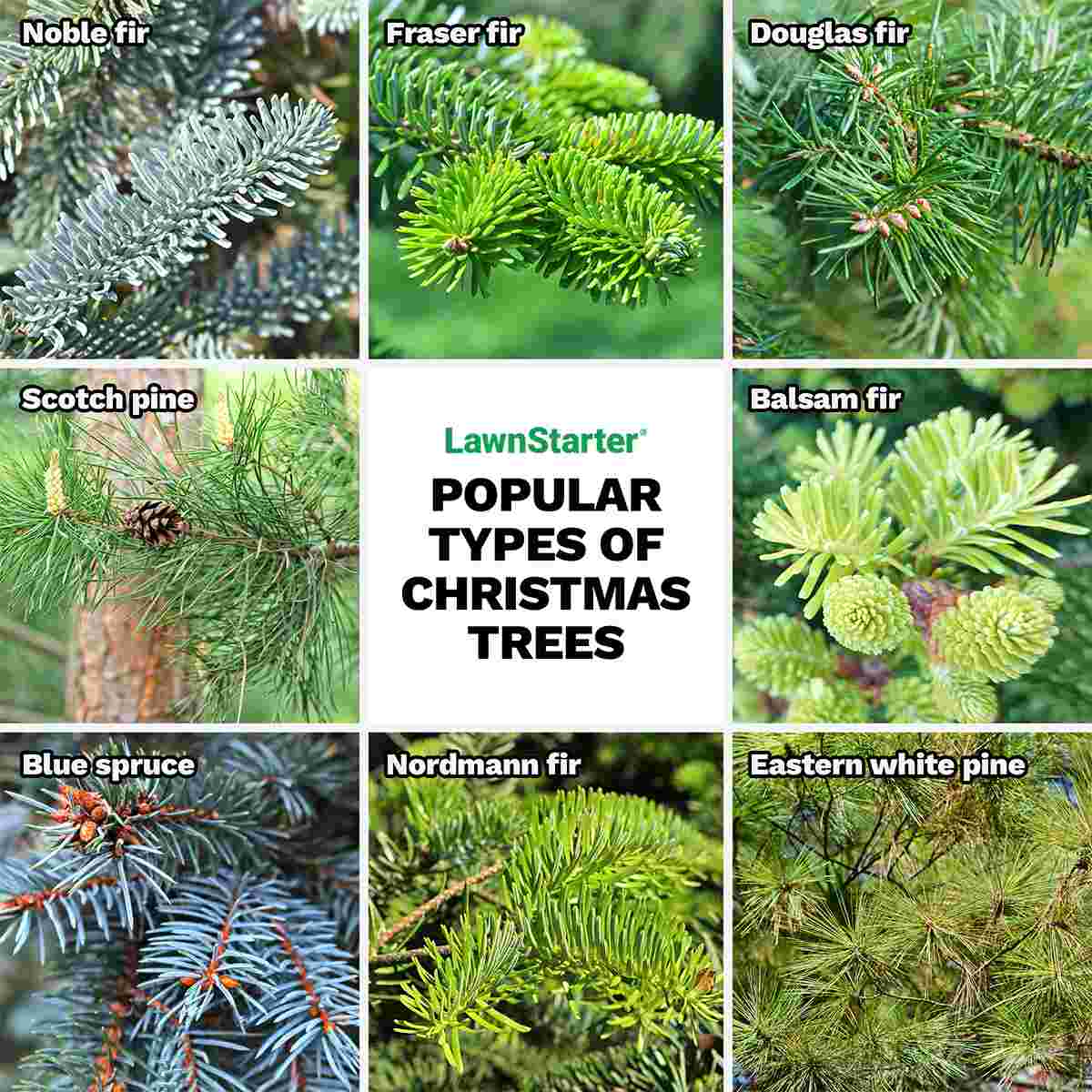
It’s helpful to have an idea of what you want before you head out.
Many Christmas tree species are grown across the U.S., but most lots and tree farms offer only a handful to choose from. The exact varieties will depend on local clientele preferences, as well as the specifics of the farm.
Jeff Coates, 1st-generation owner of Coates Christmas Trees in Auburn, Washington, says he grows varieties that are “conducive to the soil that I’m growing them in.” His No. 1 seller is the noble fir.
Scott and Jill Western, 3rd-generation owners of Western’s Tree Farm in Applegate, Michigan, can’t grow nobles. He has to consider his “cold climate” and “shorter growing season.” For Western’s, the “Fraser has come out on top.”
In Idaho Falls, Idaho, Angela French, nursery supervisor at Town and Country Gardens, is limited by what she can get from her wholesalers. She’d like to try a newer variety, the Korean fir. “One of our companies grows it,” but the trees aren’t big enough to sell yet.
| Popular Types of Christmas Trees: When picking out a tree, I suggest thinking about what’s important to you. Do you want a tree that smells good or is a particular color? Or do you need one with sturdy branches to hold heavy ornaments? Below is a quick rundown of popular options. | |
| Noble fir | Features rigid branches ideal for heavy ornaments |
| Fraser fir | Has excellent needle retention, which means less shedding (and less to vacuum) |
| Douglas fir | Has soft needles and a full shape |
| Scotch pine | Has sturdy branches that hold their shape |
| Balsam fir | Offers a classic, strong Christmas scent |
| Blue spruce | Stands out with striking silver-blue needles, though they’re pretty sharp |
| Nordmann fir | Has minimal aroma, a good fit if strong scents bother you |
| Eastern white pine | Offers soft, gentle needles perfect for families with young children |
While it may seem like tree farms have an endless supply, they may sell only a certain number of a specific tree each year. And lots may order only a set number, and not receive a second shipment.
If a farm or a lot is out of the tree you want, you’ll need a second choice.
Pre-Cut or Cut Your Own?
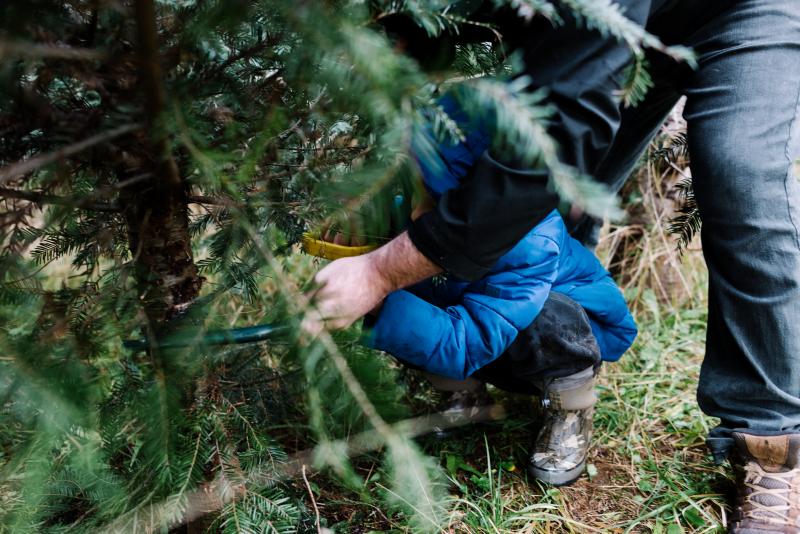
The last big question to answer at home: Do you want a pre-cut tree, or do you want to cut your own? Both are popular options.
Historically, 25 to 30 million real Christmas trees sell in the U.S. each year, per the National Christmas Tree Association’s (NCTA) quick tree facts.
In the NCTA’s 2023 season tree price survey, buyers purchased an estimated 21.58 million real trees. About 25% came from choose-and-cut farms, and buyers paid a median price of $75.
Each option has pros and cons, and the choice comes down to personal preference.
| The Pros of Tree Lots | The Cons of Tree Lots |
| ✓ Convenient location ✓ No physical exertion ✓ No equipment needed ✓ May support local organizations, churches, or small businesses | ✗ Trees aren’t as fresh ✗ Popular sizes and species sell out quickly ✗ Less of an experience ✗ Trees are often transported long distances |
| The Pros of Cutting Your Own | The Cons of Cutting Your Own |
| ✓ Freshest tree possible ✓ More to choose from ✓ Creates lasting holiday memories ✓ Supports local farms ✓ Shorter transportation distance = smaller environmental footprint | ✗ Takes more time ✗ Labor-intensive ✗ You’re outside in winter conditions ✗ Usually further away ✗ Popular farms are busy on weekends |
The Westerns feel the No. 1 advantage of cutting your own is that “the selection is limitless, when you’re walking out in a field,” but the experience itself adds to it.
“I think when you’re going out to cut a tree in the field, it’s a whole different anticipation of an experience. You’re dressing for it. You’re gonna make sure you’re gonna take photos,” Scott says.
Jill adds, “It’s pretty touching…it’s a family experience, you know, to bring everybody together and to have those memories, (and we) get to be in the mix of all of it.”
How to Check a Christmas Tree for Quality
Big-box trees deserve a closer look for freshness, because trees at large retailers may have been cut months before reaching the lot. Here’s what you need to pay attention to:
View the Tree From All Angles
Walk around the tree looking at it from every side. You want a tree that looks good from multiple angles, especially if it will be visible from different areas of your home. Look for bare patches, uneven growth, or flat spots that aren’t easily visible.
Town and Country Gardens “hang(s) them off the ground.” French says. “That way, people can see all sides of the trees.”
My Experience: I always tuck our tree in a corner, so I focus on what will end up being the front and sides. I can hide a hole or a wonky branch against the wall.
Inspect the Trunk
Make sure the trunk is reasonably straight, especially the bottom 6 to 8 inches. A crooked trunk will make the tree unstable in the stand and hard to position.
To help customers, Coates explains, “We tie sticks in the tops so that we can make sure they grow straight.”
The trunk also needs to be narrow enough to fit in your tree stand. Shaving it down removes the cambium layer underneath the bark, and your tree won’t take in water.
Check Pre-Cut Trees for Freshness
According to French, the best way is the pull test.
“Evergreens naturally have needle drop on the inside of the tree, so you can’t just look at needle drop in general. Take your hand and kind of grab the branch, and pull along it, not against the grain.”
“If you get a whole bunch of green needles that come off, then that tree hasn’t been stored properly. It’s drying out faster.”
Shake It Out
Pick up pre-cut trees and tap the trunk on the ground a couple of times.
It’s normal for dead needles to fall from the center of the tree, but you don’t want a lot to fall off the ends of the branches or for green needles to drop.
Scott Western says pine trees hold their needles for only 2 years, “so they have a lot of dead within them.” Spruces and fir “hold upwards of 5 years’ worth of needles, so there’s a lot less dead inside.”
How to Keep Your Christmas Tree Fresh at Home
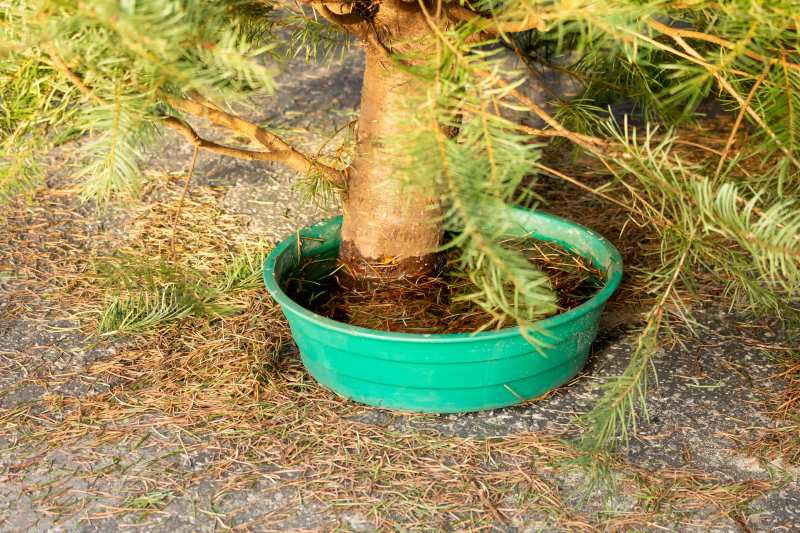
Picking a fresh tree is only half the job. Here’s what you can do to keep them looking their best for the longest time possible:
Get It in Water Right Away
Coates says the most important thing is to put your tree in water as soon as you get home, even if you aren’t bringing it indoors right away.
“I always let customers know that they’ve got about a 2-hour window after we give the tree a fresh cut before the sap will begin its process to cover up the butt of the tree,” he says.
“So, if you’re not going to have it up and in water in 2 hours, then you need to give it a fresh cut.”
Keep the Stand Full
The most important thing is keeping the base of the trunk covered with water.
Follow a simple tree watering guide: A fresh tree can drink up to 1 quart of water a day per inch of trunk diameter.
“(Your tree) will take a lot of water at the beginning,” Coates says. “A lot of people will fill the stand, and then the tree sucks it all up at nighttime. You get up the next day, and the water is below the butt of the tree.
“All it has to do is sit for a couple of hours, and it will begin to sap over, and it won’t take any more water the rest of the time. So the first couple of days, you really, really need to do what’s necessary to keep that stand full of water,” he says.
Skip the Water Additives
According to Bert Cregg, professor at Michigan State University in East Lansing, Michigan, “We recommend plain tap water. The most important thing is to provide a steady supply of water and to not allow the tree to run out of water.
“Floral preservatives, aspirin, bleach, soda pop, etc., will not improve water uptake,” he says.
Coates notes that preservatives don’t keep the tree fresh, but he believes they can be helpful. “Tree preserve leaves that film on the bottom of the tree, to keep that sap from forming (a barrier), so it’ll keep taking water.”
Mist the Branches
Trees primarily absorb water through their trunk, not their needles, but misting will provide some benefits.
Town and Country Gardens hoses their trees down twice a day. French confirmed trees don’t absorb much water through their needles, “but the main key is to keep the humidity up so they’re not losing as much (water) through the needles,” she says.
Light misting can also help reduce static and dust, making your tree look fresher.
What to Do If Your Tree Stops Drinking
A tree will stop taking in water if the water level drops below the bottom of the trunk, allowing the sap to harden.
To get it drinking again:
Make a fresh cut: Remove the tree from the stand and cut about 1 inch off the bottom of the trunk.
Clean the stand: Thoroughly clean the stand and return the tree to it.
Refill: Fill the stand with fresh water.
FAQs
A well-watered tree will last “on average 3 weeks before you get to the point where if you touch it, you’ll get that needle drop,” French says. Fraser and noble firs can last longer, while varieties like Norway spruce tend to shed sooner.
Shop early in the season, soon after Thanksgiving, for the best selection. Popular sizes and species sell out, and lots may not get a second shipment. Until you bring it in, store the tree outdoors or in a cool garage with the cut end in a bucket of water.
Ready to Find Your Christmas Tree?
With these tips, you’re ready to select a beautiful, fresh Christmas tree that will last throughout the holiday season.
If you’re interested in cutting your own tree, see our step-by-step guide on how to cut down a Christmas tree below. And when the holidays end, read the best ways to dispose of your tree responsibly.
Once spring arrives, LawnStarter’s local lawn care providers can clear winter debris with a cleanup service and start mowing your lawn.
Read More:
Sources:
Angela French. Nursery supervisor, Town and Country Gardens, Idaho Falls, ID. Personal interview.
Bert Cregg, Ph.D. Professor of Forestry and Horticulture. Michigan State University, East Lansing, MI. Personal interview.
Jeff Coates, 1st-generation owner of Coates Christmas Trees, Auburn, WA. Personal interview.
Scott and Jill Western, 3rd-generation owners of Western’s Tree Farm, Applegate, MI. Personal interview.
Main Image: A woman choosing a pre-cut Christmas tree from a Christmas tree lot. Photo Credit: Serhiy Hipskyy / Adobe Stock
Related Posts: