| Key Takeaways |
|---|
| • Oklahoma's most common lawn weeds fall into 2 categories: broadleaf weeds and grassy weeds, and the category determines which herbicide you need. • Timing your herbicide application to the weed's life cycle is the single most important factor in effective weed control. • A thick, healthy lawn is your best long-term defense, since dense turf naturally outcompetes most common Oklahoma species. |
Oklahoma lawns deal with 2 main categories of weeds: broadleaf weeds (wide, flat leaves like dandelions and henbit) and grassy weeds (narrow blades that look like turfgrass, such as crabgrass and dallisgrass).
The category matters because the herbicides that kill one type will not work on the other. Choosing the wrong herbicide can waste money and stress your turf.
LawnStarter’s lawn treatment service handles pre-emergent and post-emergent weed applications, along with the rest of the seasonal schedule.
Broadleaf Weeds
Broadleaf weeds have wide, flat leaves with visible veins and often produce flowers. These weeds are controlled with selective broadleaf herbicides containing 2,4-D, dicamba, or mecoprop that target weeds without harming turfgrass.
| Weed | Key Identifier | When It Appears |
| Henbit | Purple tubular flowers, square stems | Late winter |
| Dandelion | Yellow flowers, puffball seed heads | Early spring |
| Chickweed | Small white star-shaped flowers | Fall |
| Spotted Spurge | Brown spot on leaf center | Summer |
| Ragweed | Fern-like leaves, hairy stems | Late spring to summer |
Henbit (Lamium amplexicaule)
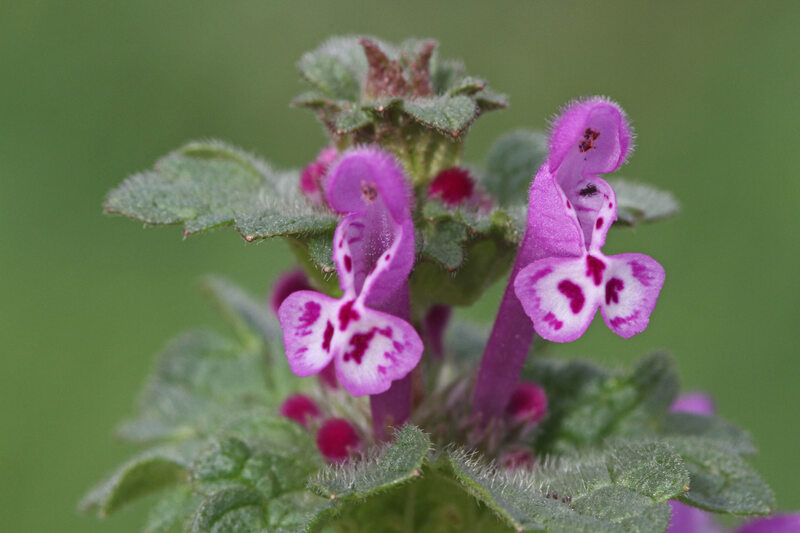
Henbit is one of Oklahoma’s most common late-winter weeds. A member of the mint family, it thrives in cool, wet weather from January through March.
Life cycle: Winter annual
How to identify henbit: Hairy, rounded leaves with deep veins. Square stems. Purple, tubular flowers.
How to get rid of henbit: Apply pre-emergent in early to mid-September. Apply post-emergent in October or November if missed. Corn gluten meal in late summer works as an organic pre-emergent.
Dandelion (Taraxacum officinale)
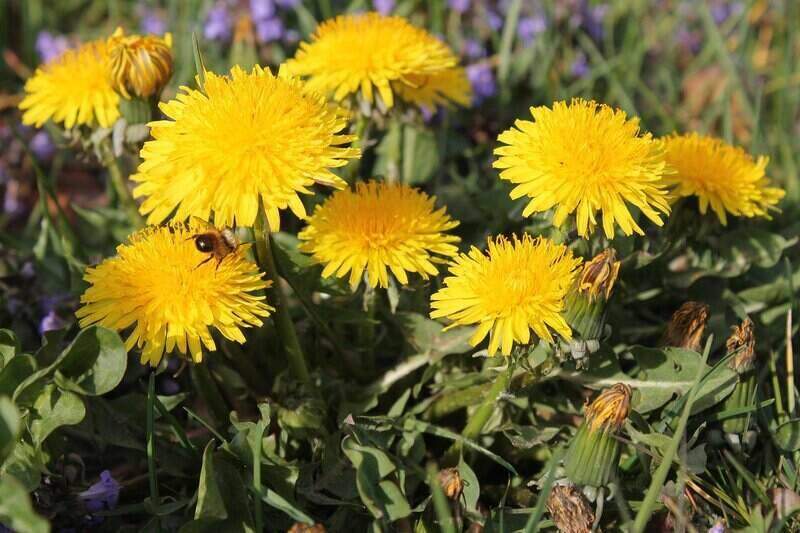
Dandelion’s taproot grows deep and regenerates if you pull only the top. A single plant can produce hundreds of wind-carried seeds.
Life cycle: Winter perennial
How to identify dandelion: Bright yellow flowers, puffball seed heads, long serrated leaves pointing to the rosette center. Its presence can indicate acidic soil, making soil testing a smart first step.
How to get rid of dandelion: Dig out the taproot in early spring. A broadleaf post-emergent herbicide during fall is generally more effective on perennials.
Common Chickweed (Stellaria media)
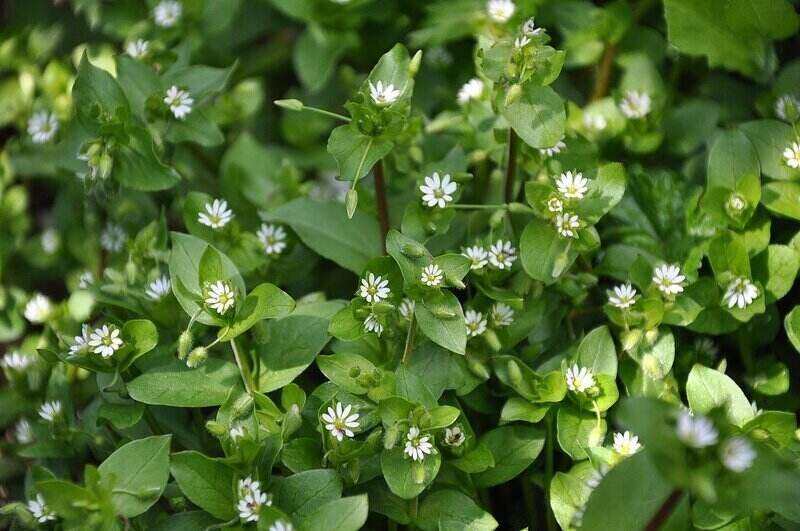
Chickweed emerges in fall and can creep into your lawn, creating large, dense patches if left untreated.
Life cycle: Winter annual
How to identify chickweed: Slim stems with fine hairs on one side. Small white flowers in clusters.
How to get rid of chickweed: Shallow roots make hand-pulling easy. Chickweed can be controlled with post-emergent herbicides during fall and early spring.
Curly Dock (Rumex crispus)
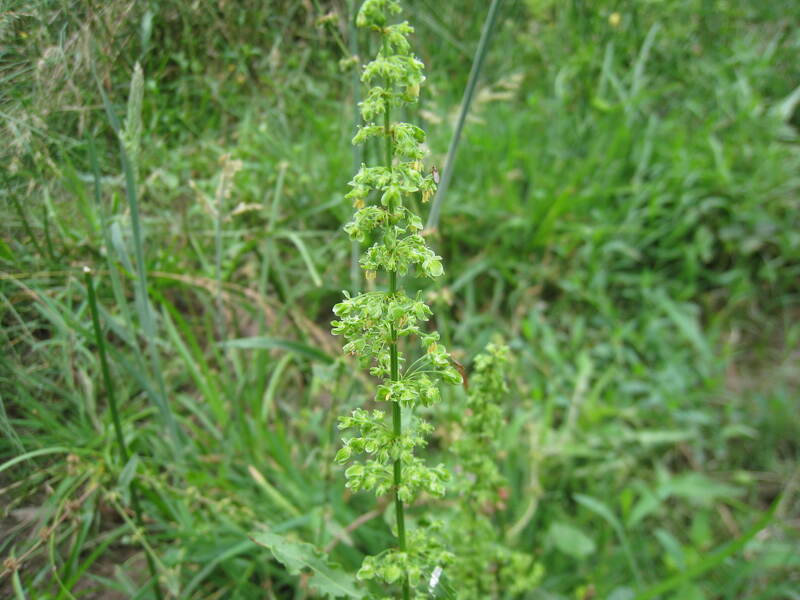
Curly dock can reach 2 to 3 feet tall. Its deep taproot intensifies growth when turfgrass is heat-stressed.
Life cycle: Summer perennial
How to identify curly dock: Light green leaves with wavy borders that gain a reddish hue. Small green flowers bloom in clusters.
How to get rid of curly dock: Apply a spring post-emergent herbicide when the plant is small. Fall applications are more effective once established, and multiple treatments may be needed.
Broadleaf Plantain (Plantago major)
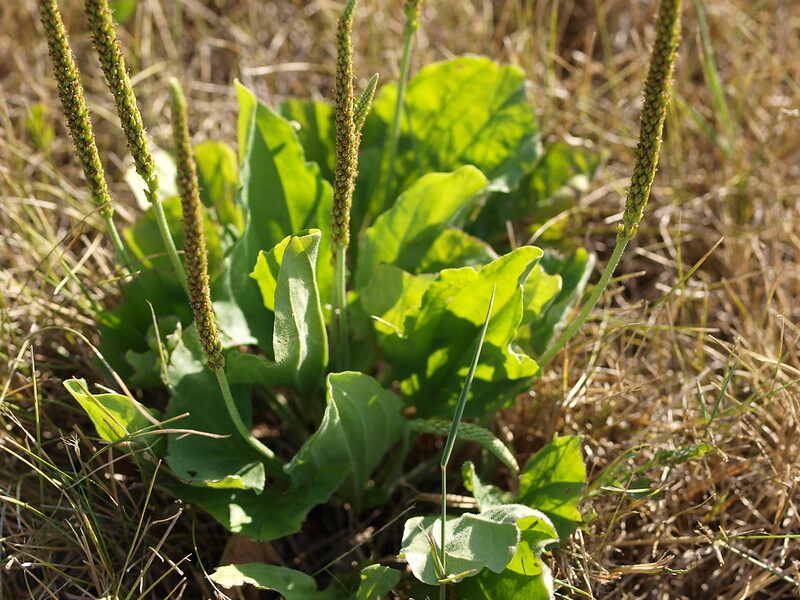
Plantain’s rosette grows close to the ground, crowding out turf and resisting mowing.
Life cycle: Summer perennial
How to identify plantain: Elliptical leaves that rest flat, with wavy borders and prominent veins. Small flowers along upward-pointing stems.
How to get rid of plantain: Short taproot makes hand pulling easy. Spot treatment with post-emergent herbicides also works.
Black Medic (Medicago lupulina)
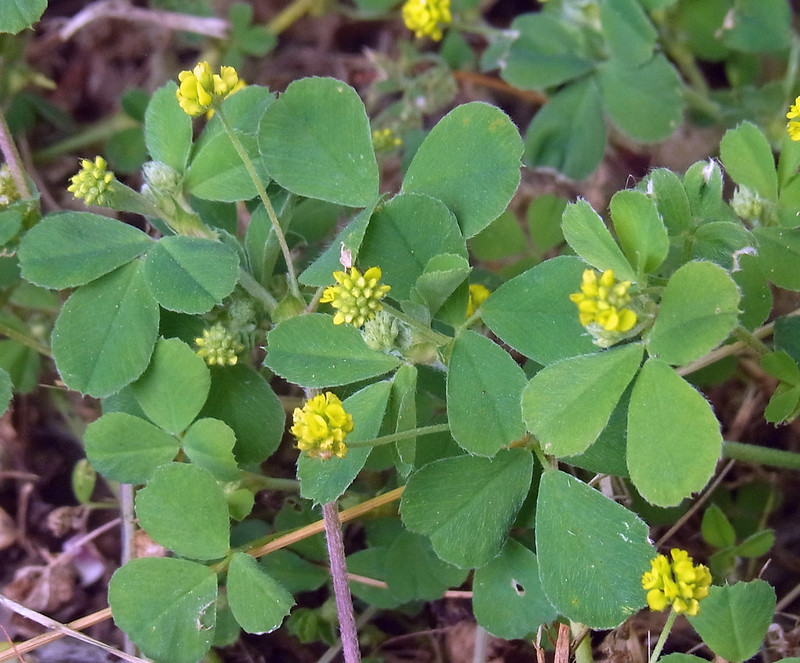
Frequently mistaken for white clover, black medic creeps into lawns with a deep taproot and prostrate stems.
Life cycle: Summer annual (can behave as perennial in mild winters)
How to identify black medic: 3 leaflets per leaf, similar to clover. Small yellow flowers in dense clusters.
How to get rid of black medic: Nitrogen fertilization is very effective at prevention. Post-emergent broadleaf herbicide for bigger infestations.
Prostrate Knotweed (Polygonum aviculare)
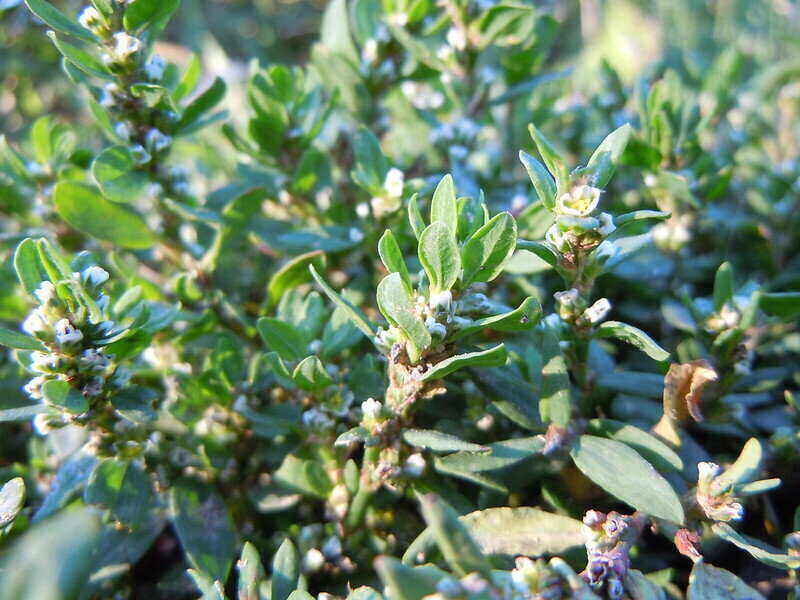
If knotweed is in your lawn, it’s almost always a sign of soil compaction. LawnStarter’s aeration service is the go-to fix when the soil is packed down, and water and grass roots can’t get where they need to go.
Life cycle: Summer annual
How to identify knotweed: Prostrate stems form a mat with “knotted” nodes. Tiny flowers bloom where the stem meets the leaf.
How to get rid of knotweed: Regular aeration, with typical aeration cost of $107 to $202, is your best defense. Once established, several post-emergent applications are usually necessary.
Purslane (Portulaca oleracea)
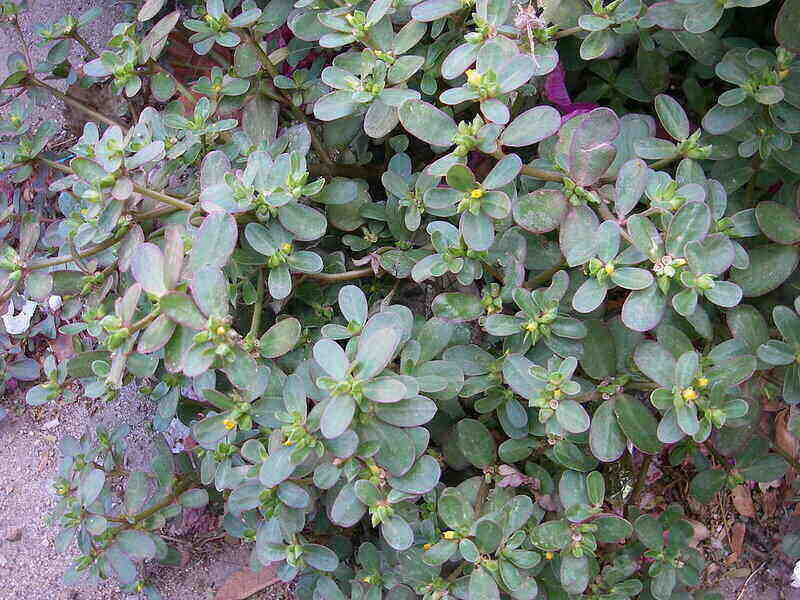
This warm-season annual forms a dense mat that shades turfgrass and spreads fast in thin lawns.
Life cycle: Summer annual
How to identify purslane: Red-brownish stems, shiny green wedge-shaped leaves, bright yellow flowers.
How to get rid of purslane: Hand-pull, use a homemade weed killer, or spot-treat while young. Purslane doesn’t tolerate traffic or shade.
Spotted Spurge (Euphorbia maculata)
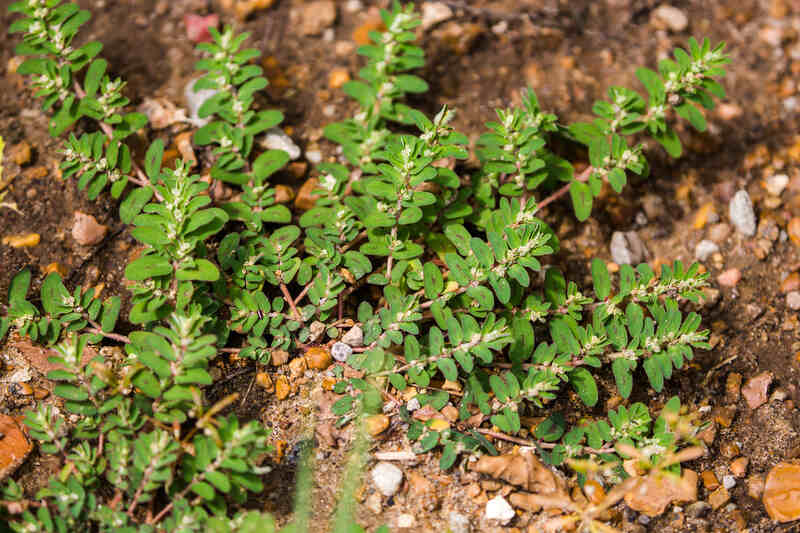
Look for the distinctive brown spot in the center of each leaf. It produces enormous numbers of seeds, so early control is critical.
Life cycle: Summer annual
How to identify spurge: Brown spot in the leaf center. Milky sap when stems break.
How to get rid of spurge: Hand-pull single plants. Improve turf density through overseeding in spring, since according to the University of Delaware Extension, dense turf shades weed seeds and prevents them from germinating for long-term control.
Common Yarrow (Achillea millefolium)
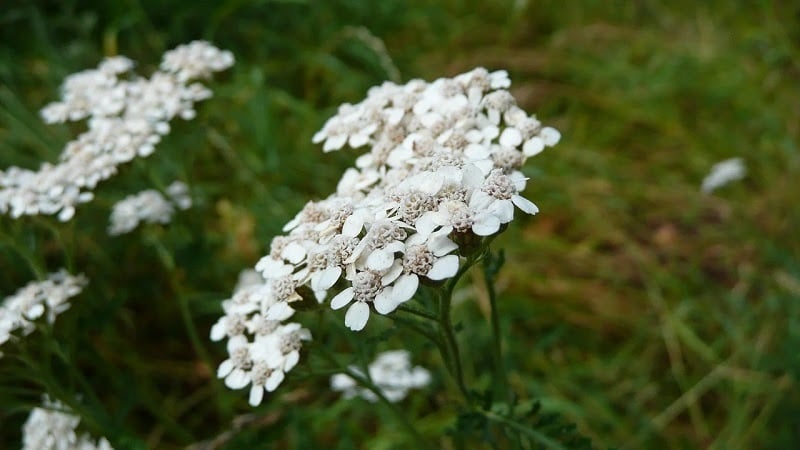
Yarrow spreads through underground rhizomes and hugs the ground in dense patches that bounce back after mowing.
Life cycle: Summer perennial
How to identify yarrow: Fern-like leaves resembling cultivated carrots. Hairy stems. Distinctive herbal scent when crushed.
How to get rid of yarrow: Fertilizing to improve growing conditions is the most effective cultural approach.
Spiny Sowthistle (Sonchus asper)
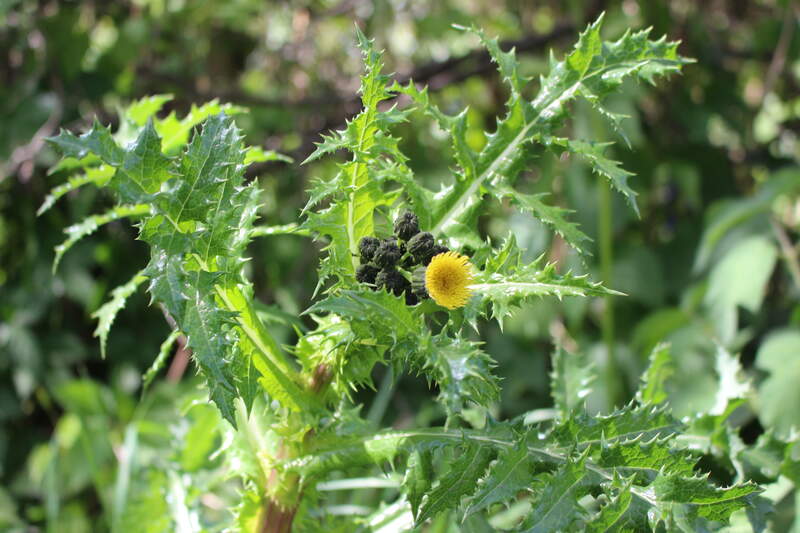
Spiny sowthistle usually appears in newly established lawns. Its seeds spread by wind, rapidly taking over.
Life cycle: Summer annual, occasionally biennial
How to identify spiny sowthistle: Bright yellow flowerheads in summer. Leaf margins have soft, spiny teeth.
How to get rid of spiny sowthistle: Hand-pull small infestations (remove entire taproot). Post-emergent herbicides also work well.
Ragweed (Ambrosia artemisiifolia)
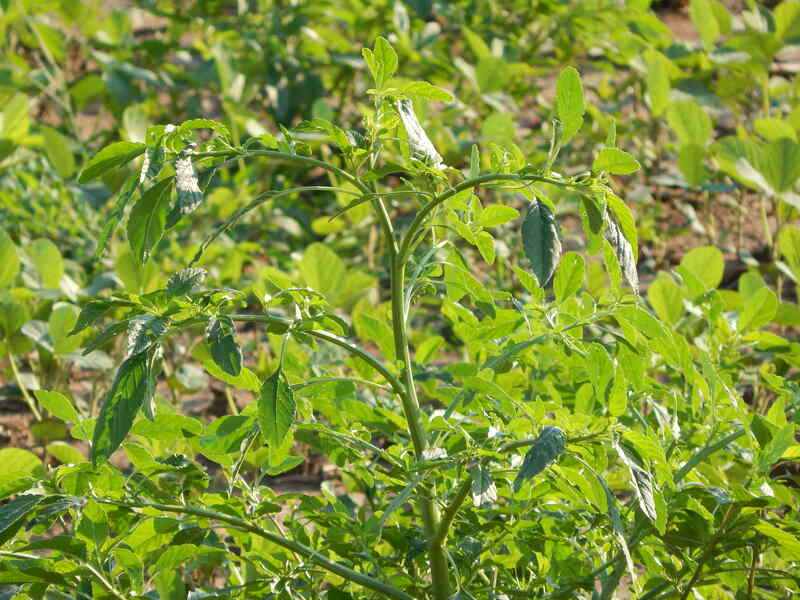
Oklahoma’s leading cause of hay fever, ragweed season typically runs from mid-August through the first frost in late October. Ragweed can also cause contact dermatitis.
Life cycle: Summer annual
How to identify ragweed: Hairy, branched stems reaching up to 6 feet. Fern-like compound leaves covered in fine hairs.
How to get rid of ragweed: Easy to control with pre-emergent or post-emergent herbicide applications.
Pigweed (Amaranthus retroflexus)
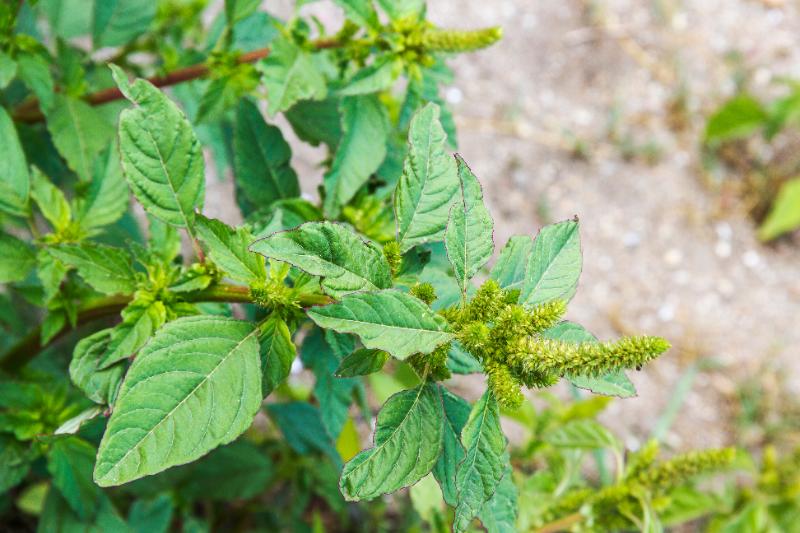
Redroot pigweed is highly poisonous and can be herbicide-resistant.
Life cycle: Summer annual
How to identify pigweed: Egg-shaped leaves and dense, small hairs along the stem.
How to get rid of pigweed: Cultural practices work best: Regular mowing, dense turf, and hand-pulling young plants.
Wood Sorrel (Oxalis stricta)
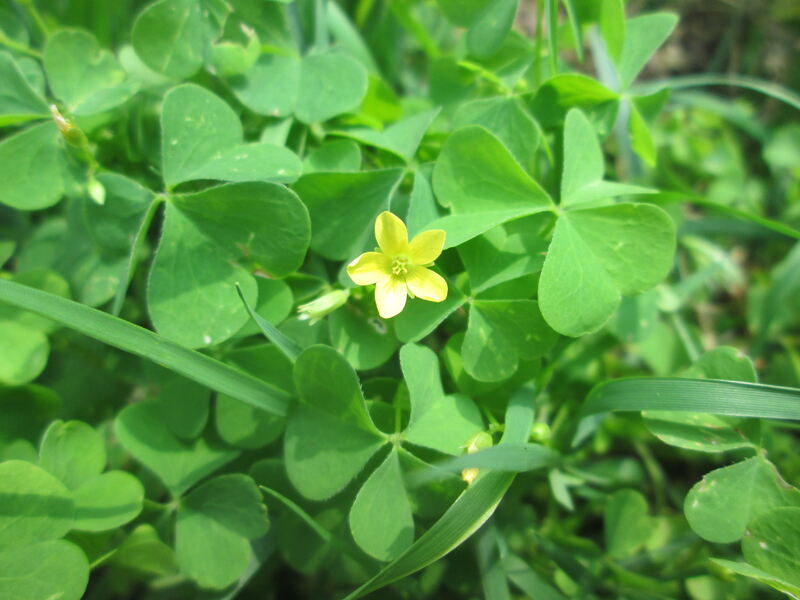
Frequently confused with clover, wood sorrel grows from mid-spring to late autumn.
Life cycle: Perennial
How to identify wood sorrel: Erect, pink-colored stems. 3 heart-shaped leaflets with hairy edges. Bright yellow flowers.
How to get rid of wood sorrel: Pre-emergent herbicide in early spring works best. Once established, its rhizomes and stolons are nearly impossible to fully remove.
Grassy Weeds
Grassy weeds have narrow, blade-like leaves and parallel veins, making identifying weeds in this category harder until they produce seed heads. Broadleaf herbicides won’t touch them. These weeds require pre-emergent herbicides for prevention or grass-selective post-emergent products.
Smooth Crabgrass (Digitaria ischaemum)
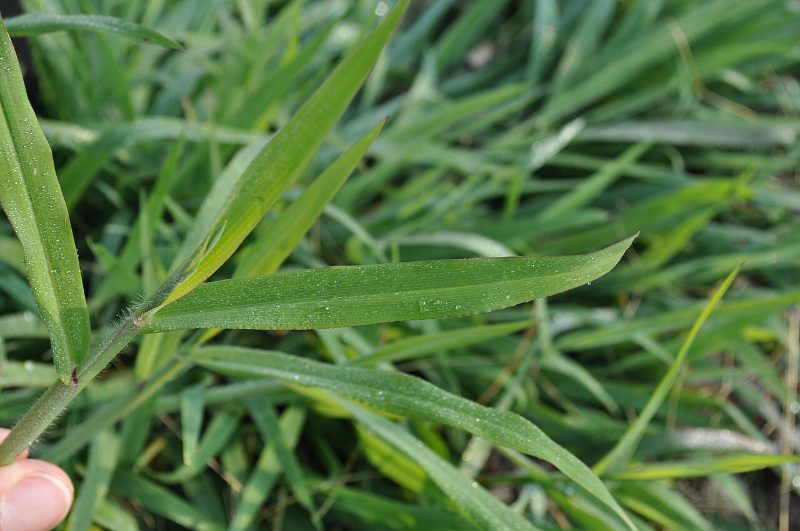
Crabgrass germinates fast, typically once soil temperatures reach 57 to 64 degrees, and thrives where lawns are stressed, especially near driveways and sidewalks where heat radiates from concrete.
Life cycle: Summer annual
How to identify smooth crabgrass: Light-green with noticeable nodes; leaves grow in a zig-zag pattern. Large crabgrass (Digitaria sanguinalis) has hairs on the leaf surface.
How to get rid of smooth crabgrass: Apply a crabgrass preventer before germination, then mow higher, fertilize properly, and mulch clippings to block sunlight. The plant hugs the ground, making hand-pulling difficult once established.
Johnsongrass (Sorghum halepense)
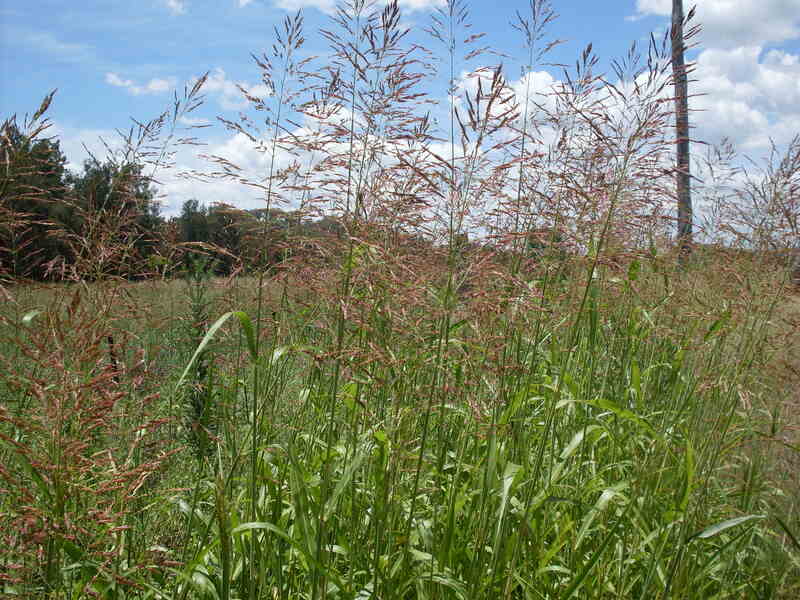
One of Oklahoma’s most aggressive weed grasses, it spreads through both seeds and dense underground rhizomes, making removal extremely difficult.
Life cycle: Perennial
How to identify johnsongrass: Smooth leaves with a center vein. Stems are pink to reddish near the base.
How to get rid of johnsongrass: Hand-pull small infestations. Larger ones require mowing combined with herbicide applications in early summer.
Annual Bluegrass (Poa annua)
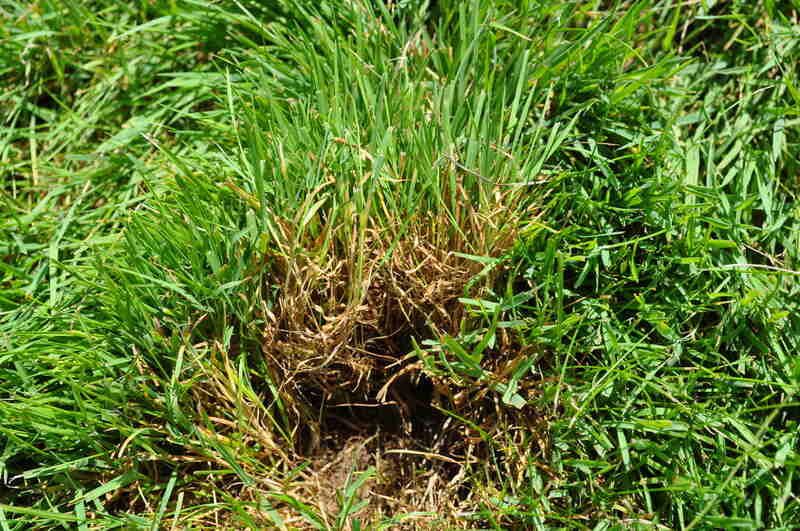
A winter weed that sneaks in during fall and thrives while your turf is slowing down. It produces abundant seeds spread by wind, animals, and water.
Life cycle: Winter annual
How to identify annual bluegrass: Yellow-green leaves with whitish flowers.
How to get rid of annual bluegrass: Remove small plants early. Seeds can lie dormant for years, so apply pre-emergent in fall. Regular fertilizing also helps prevent this weed.
Dallisgrass (Paspalum dilatatum)
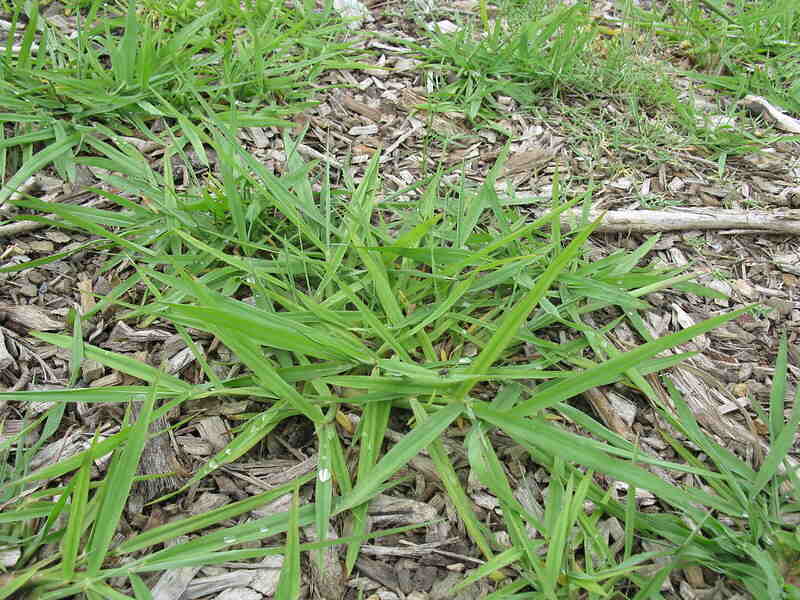
One of the hardest grassy weeds to eliminate, it spreads through both seeds and short underground rhizomes.
Life cycle: Perennial
How to identify dallisgrass: Distinctive mid-rib. Seed heads form a raceme with hairy spikelets.
How to get rid of dallisgrass: Dig out young plants and apply pre-emergent herbicide. Spot-treat established plants through careful weed spraying with post-emergent herbicide.
FAQs
Use post-emergent herbicides with 2,4-D, dicamba, or mecoprop for broadleaf weeds. For grassy weeds, use a pre-emergent for prevention or a grass-selective post-emergent like quinclorac for crabgrass.
Apply pre-emergent herbicides in early spring, before soil temperature reaches 55 degrees, for summer weeds and in early to mid-September for winter weeds.
Most post-emergent herbicides require 2 to 4 applications, with application intervals of 10 to 14 days between treatments, per OSU Extension guidance. Always follow the manufacturer’s instructions to avoid damaging your lawn.
Don’t Let the Weeds Creep You Out
You don’t need to try identifying your weeds on your own. If you’re unsure about the weeds infesting your lawn and how to get rid of them, we have an Oklahoma lawn care pro near you.
We have trusted lawn care pros in Tulsa, Oklahoma City, Del City, Norman, Edmond, and many more cities across the Sooner State.
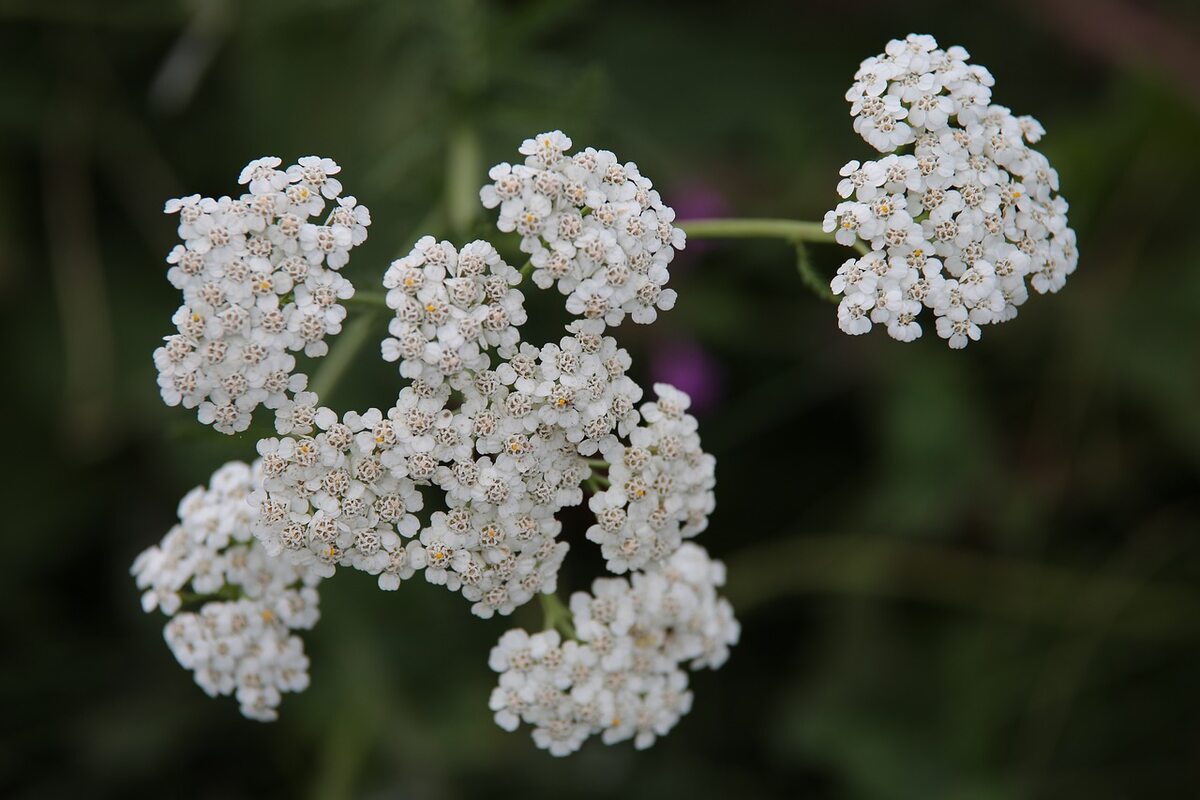
Main Image Credit: White yarrow flowers. Photo Credit: Pixabay
Related Posts: