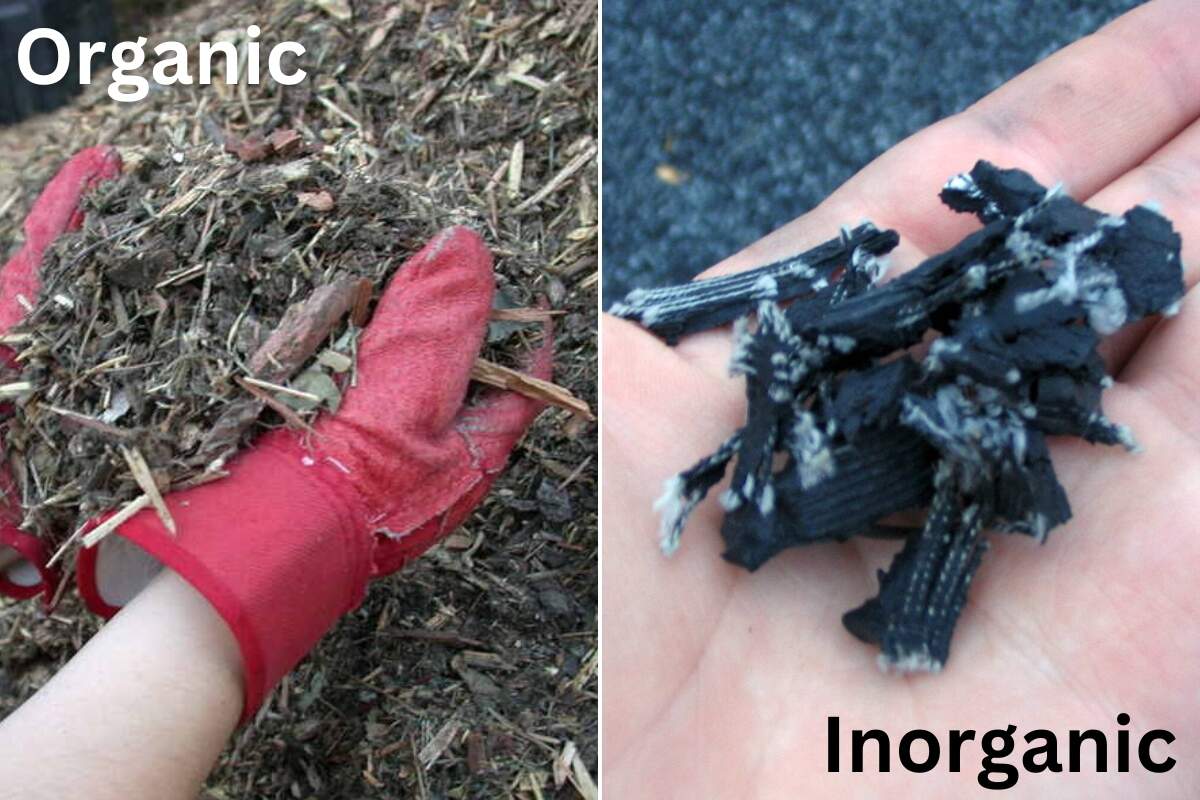
When choosing mulch, the biggest decision is how long you want it to last and what you expect it to do. Organic mulch, like shredded wood, decomposes over time and enriches your soil, while inorganic mulch, like rocks or rubber, lasts for years without breaking down.
Both options help control weeds, retain moisture, and regulate soil temperature, but they do so in different ways. Organic mulches support long-term soil health and plant growth, while inorganic materials prioritize durability and low-maintenance.
This guide compares organic and inorganic mulch side by side, so you can decide which makes the most sense for your landscape and maintenance style.
Want help installing mulch? Hire LawnStarter’s local landscaping pros to handle the job for you, from delivery and installation to cleanup.
| Key Takeaways |
|---|
| • Organic mulch improves soil health as it decomposes, but needs replacement more often. • Inorganic mulch can last for decades with minimal maintenance, but doesn’t enrich soil. • Choose organic for vegetable gardens and soil building; choose inorganic for permanent landscapes and low-maintenance needs. |
Quick Comparison: Organic vs. Inorganic Mulch
The table below compares organic and inorganic mulches side by side, highlighting the key differences between them:
| Feature | Organic Mulch | Inorganic Mulch |
| Soil Health | Enriches soil by breaking down and adding nutrients | Does not add nutrients to the soil |
| Durability | Must be replaced often, every 2 weeks (grass clippings) to 2 years | Lasts 2 (landscape fabric) to 20+ (stone) years with minimal degradation |
| Moisture Retention | Excellent: creates protective barrier on soil surface | Variable: rocks allow evaporation, plastic prevents it |
| Weed Control | Effective but may contain weed seeds (straw, grass clippings) | Excellent with landscape fabric; gaps between rocks allow some weeds |
| Cost | $20-$110/cubic yard; annual replacement adds up | $40-$400/cubic yard; higher upfront, no replacement |
| Erosion Control | Excellent: prevents washaway on slopes | Good but may prevent water infiltration |
| Temperature | Provides natural insulation from extremes | Can cause overheating with dark materials |
| Best For | Gardens, beds, natural landscapes, soil refinement | Pathways, modern designs, xeriscaping, low-maintenance areas |
What Is Organic Mulch?
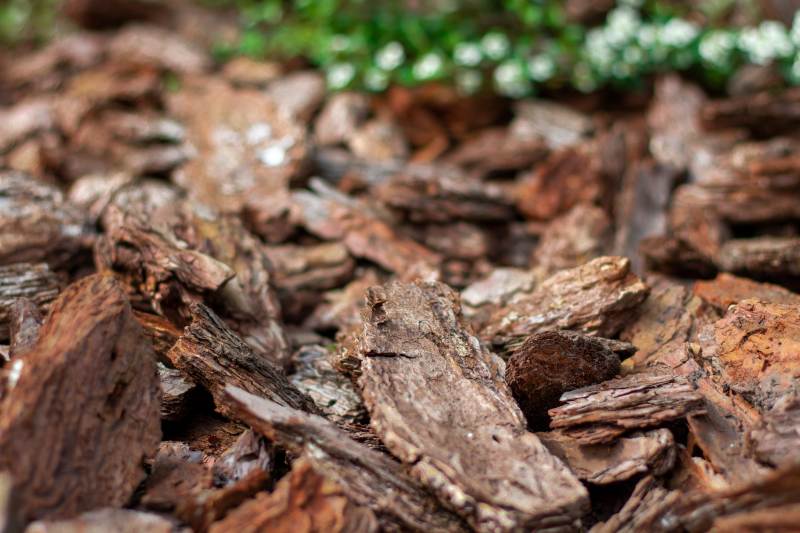
Organic mulch consists of natural, plant-based materials that decompose over time. As these materials break down, they release nutrients back into your soil and improve its structure.
Common organic mulches include:
- Wood chips and shredded bark: Best for perennial beds and for mulching around trees
- Grass clippings and leaves: Free option, good for vegetable gardens
- Straw and pine needles: Keeps produce clean by avoiding contact with the soil
- Compost: Rich in nutrients, ideal for new plantings
- Cocoa hulls: Attractive but toxic to dogs; avoid if you have pets
“As it decomposes, organic mulch adds nutrients (organic matter), enhances soil structure, and supports beneficial microorganisms,” says Allison Bailey, agriculture and natural resources agent at the University of Georgia.
This decomposition process is the key advantage. Organic mulches actively improve your soil year after year. However, you’ll need to replenish them annually because they degrade.
See Related:
– How to Improve Your Lawn With Mulch
– Types of Organic Mulch For Your Landscape
What Is Inorganic Mulch?
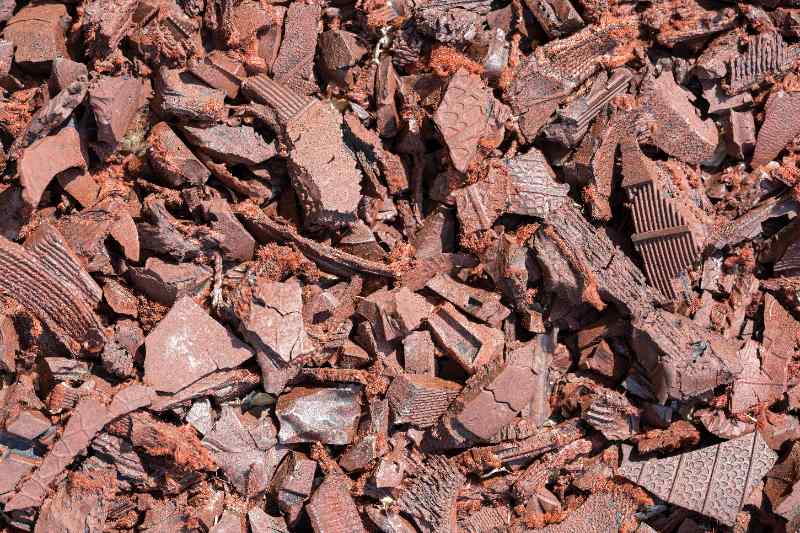
Inorganic mulch refers to non-plant materials that don’t decompose or break down significantly over time. These materials provide ground coverage and weed suppression without changing your soil composition.
Inorganic mulching materials include:
- Rocks and decorative stones: Permanent solution for pathways and modern landscapes
- Gravel and pea gravel: Good drainage for xeriscaping
- Rubber mulch: Long-lasting, cushioned surface for play areas
- Landscape fabric: Weed barrier, often used under other mulches
- Plastic sheeting: Agricultural use, effective moisture retention
Because inorganic mulches don’t decompose, they last much longer than organic options: often 10 to 20 years or more. This durability makes them popular for low-maintenance landscapes, xeriscaping, and areas where you don’t want to add organic matter.
The tradeoff? “Some inorganic mulches like plastic sheeting can hinder water infiltration and root aeration,” Bailey warns. “Some materials (e.g., black plastic, rubber mulch) absorb heat, raising soil temperature and stressing plants.”
See Related: Types of Inorganic Mulch: Which Is Best?
Organic vs. Inorganic Mulch: Cost Comparison
At first glance, organic mulch appears to be the cheaper option. Organic materials typically cost $20 to $110 per cubic yard, but they break down over time and usually need to be replenished every year.
Inorganic mulch has a higher upfront cost ($40-$400 per cubic yard), but it rarely needs replacement. Because of this, the cost difference often evens out around years 3 to 5, after which inorganic mulch can become the more economical option.
The average price of mulch installation ranges from $77 to $94 per cubic yard, including materials and labor.
See Related:
– Signs You Need to Replace Your Mulch
– Mulch Calculator: How Much Mulch Do You Need?
How to Choose: Organic or Inorganic Mulch?
There’s no single “best” mulch for every landscape. The right choice between organic and inorganic mulch depends on how much upkeep you’re willing to handle and what you want your mulch to do for your soil.
Here’s a quick decision guide:
- Growing vegetables or building soil? → Organic mulch
- Want set-it-and-forget-it coverage? → Inorganic mulch
- Have different needs in different areas? → Use both strategically
For additional help deciding, follow the steps below:
Step 1: Identify Your Primary Goal
Organic mulch is great for making your soil healthier, but maybe this isn’t what you’re after:
Choose organic mulch if you want to:
- Build healthier, more fertile soil over time
- Grow vegetables, herbs, or annual flowers
- Improve poor or depleted soil conditions
- Create a natural, woodland aesthetic
- Support beneficial insects and soil organisms
Choose inorganic mulch if you want to:
- Spend minimal time on maintenance (no replacement needed)
- Build a modern, minimalist, or contemporary landscape design
- Create pathways or decorative beds
- Xeriscape or design water-wise gardens
- Save money long-term after the initial investment
See Related: What is Xeriscaping?
Step 2: Match Your Climate
The right choice depends heavily on the climate in your area:
- Hot, dry climates: Organic mulch retains moisture better, but “inorganic mulch can be helpful for xeriscaping,” says Bailey. Avoid dark rubber or plastic that can overheat (around 15-20 degrees higher) the soil and stress plants.
- Cool, moist climates: Organic provides excellent insulation but can hold too much moisture, which, according to Bailey, increases the risk of fungal diseases. Organic mulch can also keep soil 10-15 degrees cooler in summer. Inorganic stone works well if drainage is an issue.
Step 3: Match Your Soil Type and Plants
The right mulch depends on how your soil behaves and what your plants prefer. Matching mulch to both can improve moisture balance, drainage, and overall plant health.
- Sandy soil: Use organic mulch. It adds structure and moisture retention that sandy soil desperately needs.
- Clay soil: Bailey explains that clay soil is heavy and can hold too much water. Organic mulch helps break up heavy clay and improve drainage over time.
- Loamy soil: It’s naturally rich and balanced, so it works well with either type of mulch, depending on your plants’ needs.
- Vegetable gardens, perennials, shrubs, and trees: Always use organic (straw, wood, grass clippings, compost) for the nutrient boost.
- Drought-tolerant plants: “Inorganic mulch, such as gravel or rocks, is better because it prevents excess moisture and mimics the plant’s natural habitat,” Bailey explains.
See Related: Guide to Soil Types: Pros, Cons, and Plant Suggestions
Step 4: Consider Using Both
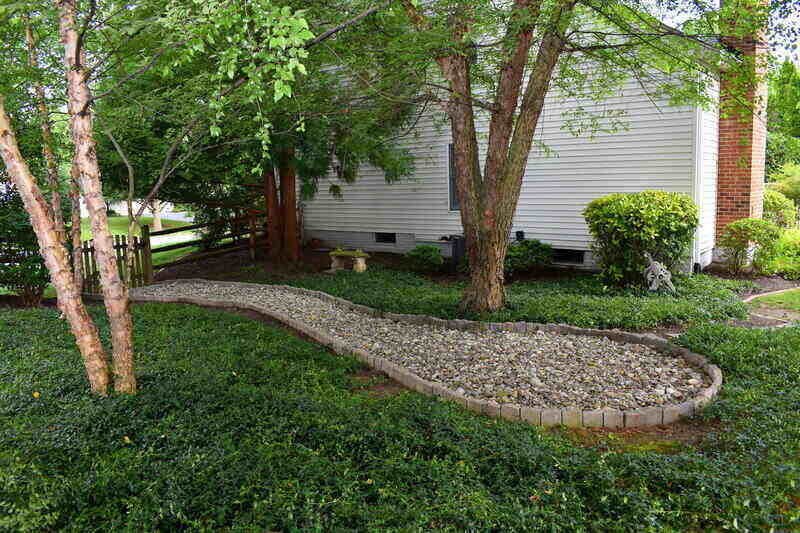
Most professional landscapers don’t choose just one mulch type; they use both strategically across the property:
Smart combination approach:
- Organic mulch: Vegetable gardens, flower beds, around trees and shrubs
- Inorganic mulch: Walkways, driveways, foundation borders (prevents termites), modern focal points
- Result: You get soil improvement where it matters and permanent coverage where you need low maintenance.
Example for a typical yard:
- Front foundation: River rock (prevents termites, modern look)
- Vegetable garden: Straw, wood, or compost (nutrients, moisture)
- Backyard trees: Shredded bark (soil improvement, natural)
- Garden paths: Pea gravel (permanent, drainage, contrasts with beds)
FAQ
There is no need to remove old organic mulch. It enriches your soil as it decomposes. Simply add a fresh 2-3 inch layer on top once the existing layer has broken down to about 1 inch. However, if you’re switching from inorganic to organic mulch, you’ll need to remove stones or fabric first, which can be labor-intensive.
See Related: How Deep Should Mulch Be?
Yes, if improperly applied. “Some organic mulches can harbor invasive or destructive insects, rodents, plants, or fungi,” says Bailey.
To minimize problems: Keep mulch 2-3 inches away from structures and plant stems, don’t exceed 4 inches deep, and avoid piling mulch against tree trunks. Fresh wood chips may temporarily tie up nitrogen, so add nitrogen fertilizer if plants show yellowing.
Yes, you can. Many tree care services offer free wood chips from trees they’ve recently removed. Municipal composting programs often provide free compost to residents.
You can also make your own mulch from grass clippings, fallen leaves, pine needles, or straw if available in your area. Just be sure grass clippings are from lawns that haven’t been treated with herbicides if you’re using them in vegetable gardens.
See Related: Where to Get Free Mulch
Make the Right Mulch Choice for Your Landscape
The organic vs. inorganic mulch decision comes down to your priorities: soil health and natural improvement versus durability and low maintenance. For most homeowners, the best solution is using both types strategically.
Ready to upgrade your landscape with professional mulch installation? LawnStarter’s experienced local landscapers can help you select the perfect mulch type for each area of your property and ensure proper application for long-lasting results.
Read Next: How to Mulch Your Yard: A Step-by-Step Guide
Source:
Allison Bailey, agriculture and natural resources agent at the University of Georgia, Washington, GA. Personal interview.
Main Image: Side by side image of Organic mulch and Inorganic mulch.
Image Credits:
Organic Mulch: Dvortygirl / Wikimedia Commons / CC BY-SA 3.0
Inorganic Mulch: Phasmatisnox at English Wikipedia / Wikimedia Commons / CC BY 3.0 created using Canva Pro