| Key Takeaways |
|---|
| • Improving yard drainage comes down to moving surface water away from the house and helping compacted or clay soil absorb it. • Fixes range from quick, low-cost jobs like filling low spots and extending downspouts to bigger projects like French drains and rain gardens. • When standing water keeps returning, a landscaping pro can pinpoint slope and soil problems before they harm your lawn or foundation. |
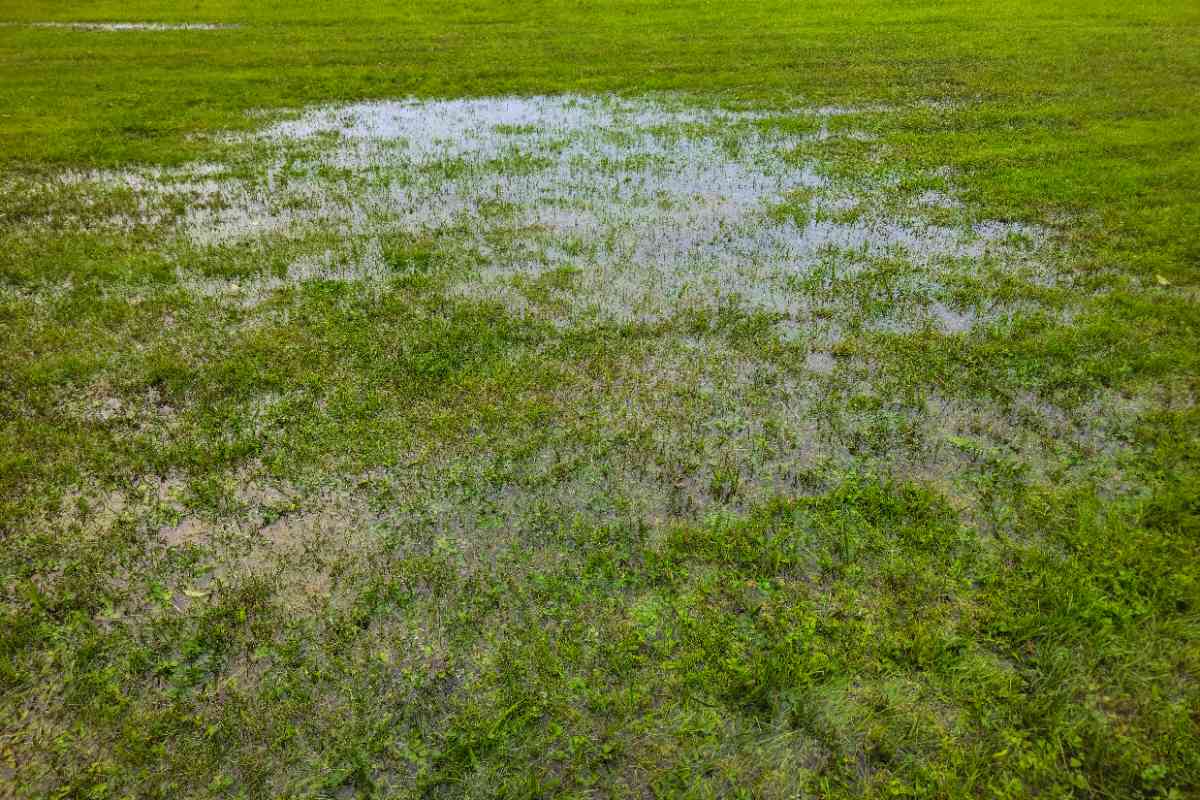
Water standing in your yard is almost always a sign of poor drainage, especially if it lingers more than a day.
Compacted soil, low spots, or clogged gutters are often the culprits. Sometimes the water even streams in from a neighbor’s yard. Here are 7 ways to improve drainage in your yard.
Ways to Improve Drainage in Your Yard
Poor drainage usually traces back to a few culprits: compacted or clay soil, low spots that collect water, or runoff with nowhere to go. The 7 fixes below range from quick afternoon jobs to bigger weekend projects, and most aim to move water away from your house.
| Method | Best for | Effort |
| Build up low spots | Puddles in sunken areas | Low |
| Aerate the lawn | Compacted, slow-draining soil | Low |
| Install a French drain | Redirecting subsurface water | High |
| Build a rain garden | Absorbing runoff attractively | High |
| Create a swale | Channeling water along slopes | Medium |
| Add a dry creek bed | Moving water with rock | Medium |
| Clean gutters, add downspouts | Roof runoff near the foundation | Low |
Pro Tip: Clearing clogged gutters and yard debris is often the messy first step. If you would rather skip the mess, LawnStarter offers gutter cleaning and yard cleanup services to get you started.
1. Build up Low Spots
Some areas of your yard may have low or sunken spots that hold water and are slow to drain.
Mound organic material, such as topsoil mixed with compost or rotted manure, over these low areas. Add enough to create a slight rise above the surrounding soil.
If standing water returns, repeat the process once or twice.
Once the low spot is stable, sow grass seed and cover it with straw or another lightweight material to protect the seed from birds.
Remove the cover when the grass sprouts.
If a low spot keeps developing, consider consulting a landscape professional to assess the problem.
2. Aerate the Lawn
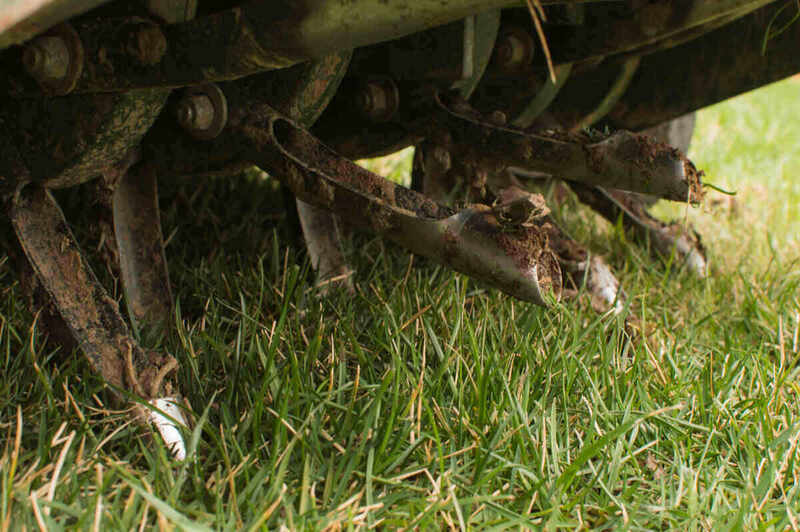
Use aeration where soil is compacted from people walking or playing on the lawn, because compacted soil cannot absorb water well.
An aerator pulls plugs of soil from the ground and leaves behind tiny holes that relieve compaction. The plugs look a bit unsightly, but they break down within a couple of weeks.
Core aeration opens up the soil so water is absorbed faster. It also makes room for oxygen and nutrients to reach the plants’ roots.
You’ll need a core aerator to get this done. Renting a core aerator runs about $100 per day, while professional aeration costs $107 to $202 for an average-sized yard.
If you have clay soil, top-dress with compost after you aerate to improve soil structure, recommends Iowa State University. Heavy clay holds water far longer than sandy or loamy soil.
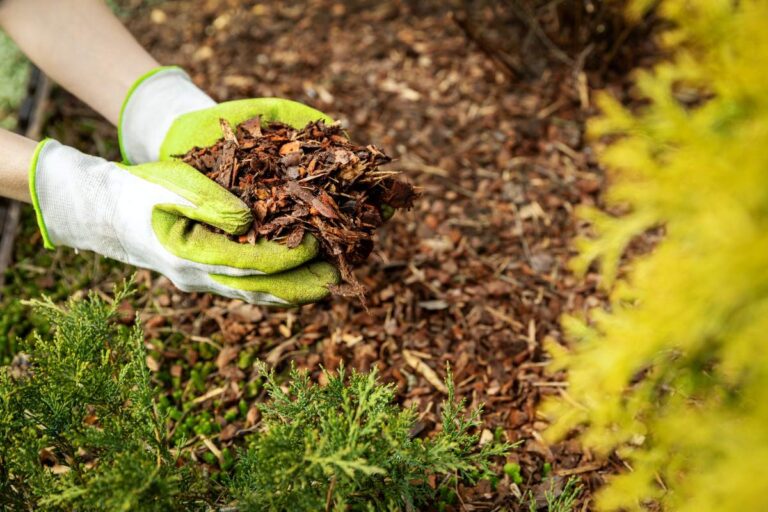
Poor drainage in your garden beds? Wood mulch and compost can also get compacted by rain and repel water, causing runoff. Use a rake to loosen the mulch or compost so it absorbs water again.
See Related:
3. Install a French Drain
The magic of a French drain is all underground. Sometimes called channel drains, these are trenches dug up to 2 feet deep and lined with gravel. A perforated pipe sits on the gravel, and the trench is backfilled and covered with soil or stones.
Location is critical because water needs to flow away downhill by gravity. The trench should follow a steady downhill slope so the pipe drains properly.
Building a French drain is an advanced DIY job with real engineering involved, so you may want to hire a landscape company for this one.
A professionally installed French drain costs, on average, about $5,000, with projects ranging from $1,650 to $12,250 depending on yard size.
See Related: How to Install a French Drain in Your Yard
4. Build a Rain Garden
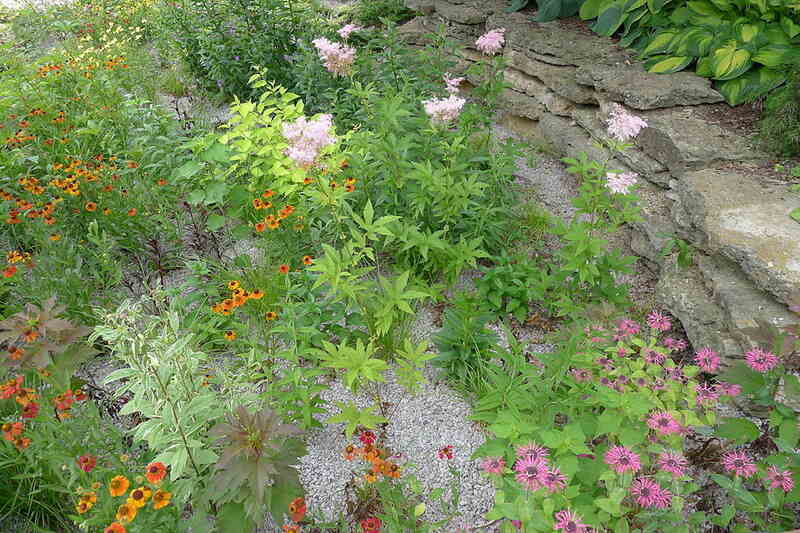
Several water-loving plants thrive in rain gardens, where perennials, shrubs, and trees tolerate both wet and dry conditions. The plants absorb water and slow it down as it moves through, letting it soak into the soil and reduce runoff.
A rain garden is more than dropping plants where the ground stays wet. It involves excavating 2 or 3 feet of soil, leveling the base, and building a berm and a catch basin for overflow.
Building a rain garden yourself costs about $2 to $5 per square foot. If drainage is bad and standing water is common, it may be time to call a pro, which costs more for larger or more complex gardens.
See Related: How to Build a Rain Garden: 6 Steps
5. Create a Swale
A swale is a fancy word for a drainage ditch or a sunken, marshy channel on the property. Swales often run parallel to the road in suburban and rural areas, and others form between properties where the land slopes.
Sometimes plants, stones, or boulders are arranged in the swale to steer water slowly away from the property so it doesn’t wash out landscape soil. Cattails are popular for swales, but plant only the native broad-leaved cattail (Typha latifolia).
Some swales need periodic cleaning, or they back up and flood your property. A critical spot to clear is the culvert that runs under paved surfaces, such as a driveway, where debris builds up.
A swale is a cheaper alternative to a French drain, and creating a swale costs around $0.50 per square foot.
6. Add a Dry Creek Bed
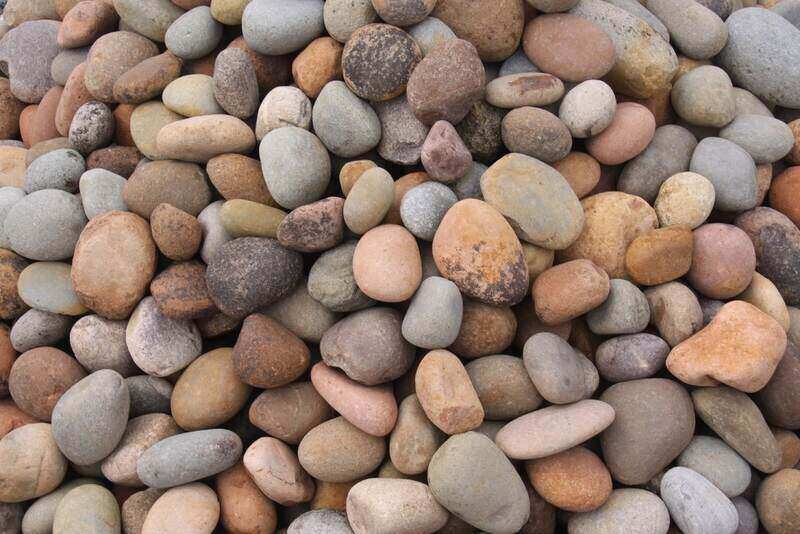
As the name implies, a dry creek bed becomes a creek when it rains. Also called an arroyo, it is a shallow trench filled with stone, such as river rock. It is designed to move water quickly but in a controlled way as it flows among the rocks.
Dry creek beds move water through the landscape without washing out soil. The water flows to a drainage area, such as a swale or catch basin. Plant perennials or shrubs at the edges of the bed, but not directly in it.
A dry creek bed is usually one of the more budget-friendly drainage projects, since it needs mostly rock, gravel, and landscape fabric rather than pipes or deep excavation.
7. Clean Gutters and Add Downspouts
House gutters full of leaves and debris overflow, which can cause leaks at the foundation. Remove the debris from clogged gutters, or hire a gutter cleaning pro to handle the job for you.
Attach a vinyl downspout extender to carry water to a better spot. If possible, bury the extender to move the water underground.
Why Improving Drainage Matters
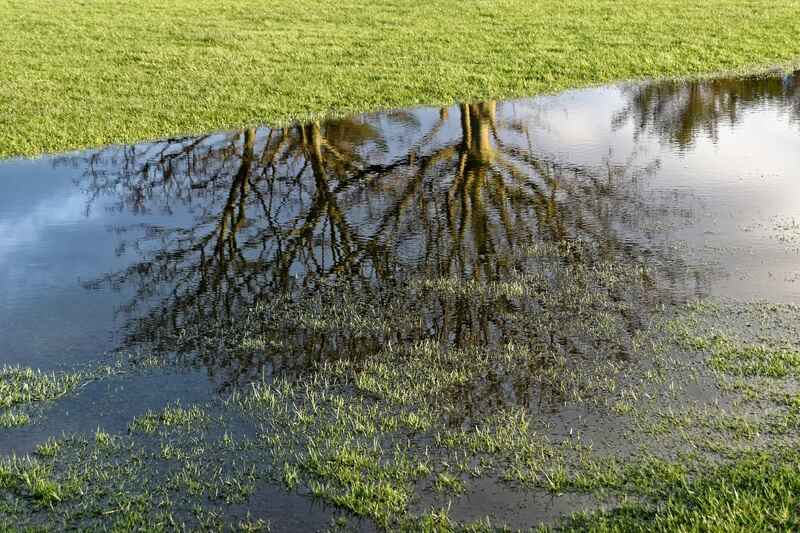
Water that sticks around too long can cause all kinds of problems, from structural weakening to insect habitat. Here are other reasons improving drainage matters:
Water that sits on the lawn or garden beds for long periods will smother and drown plants, including grass.
Still water can become a breeding pond for mosquitoes
Water draining toward your home, garage, or other structure can wash out the foundation and seep inside, causing water or flood damage.
When water sits for days, it turns stagnant and can smell bad.
Heavy runoff can wash away soil and add to sewer and waterway problems, especially when it carries fertilizers, pesticides, or other pollutants.
Drainage problems left unattended can cost thousands of dollars to repair water damage.
Surface water on walkways or driveways can be a safety hazard if it freezes.
Pro Tip: States and counties have Soil and Water Conservation offices. Experts there can help assess drainage issues, offer advice, and share rules and regulations for your area.
When to Call a Pro
Filling low spots, aerating, and cleaning gutters are weekend jobs. French drains, rain gardens, and swales are not; they depend on reading slope, soil, and where the water actually goes. Get the grade wrong, and you move the problem instead of solving it.
Call a pro if water still stands 24 hours after rain, pools near your foundation, or comes in from a neighbor’s yard. LawnStarter connects you with local drainage installation pros who can correct drainage issues and restore your lawn.
FAQs
Rain gardens, dry creek beds, and swales soak up standing water fastest, and moisture-loving plants help too. Good perennials for wet spots include bee balm, cardinal flower, swamp milkweed, marsh marigold, and sedge.
Sometimes. A gravel-filled pit, called a dry well, can collect water and release it slowly, but it only works if the surrounding soil actually absorbs water. In heavy clay, a dry well fills up and stays full, so pair it with soil amendment or route the water to a better outlet.
Several native trees and shrubs thrive where they can soak up extra water. A few good options:
• Buttonbush (Cephalanthus occidentalis)
• Red chokeberry (Aronia arbutifolia)
• Summersweet (Clethra alnifolia)
• River birch (Betula nigra)
• Black tupelo, also called black gum (Nyssa sylvatica)
Main Image: Standing water pools across a residential lawn after heavy rainfall, a sign of poor drainage. Photo Credit: sablinstanislav / Adobe Stock
Related Posts: