| Key Takeaways |
|---|
| • Grass spiders are venomous, but not dangerous to humans. Their bites are rare, mild, and typically cause only minor redness, itching, pain, or swelling. • Grass spiders are beneficial predators that control insects like aphids and flies in your lawn, so removal is rarely necessary. • Keeping your lawn mowed and free of clutter is usually enough to reduce grass spider activity. |
How can you get rid of grass spiders? A better question is whether you should, as these fast spiders kill other insects that damage your lawn and plants and pose no real threat to you.
But if you’d rather not see grass spider webs sparkling in the morning dew, lawn mowing and keeping your outdoor areas free of overgrowth are the first steps.
Keeping grass spiders at bay means consistent yard maintenance, from regular mowing to clearing brush and debris. If that sounds like a lot, LawnStarter’s mowing service can handle it for you.
What Are Grass Spiders?
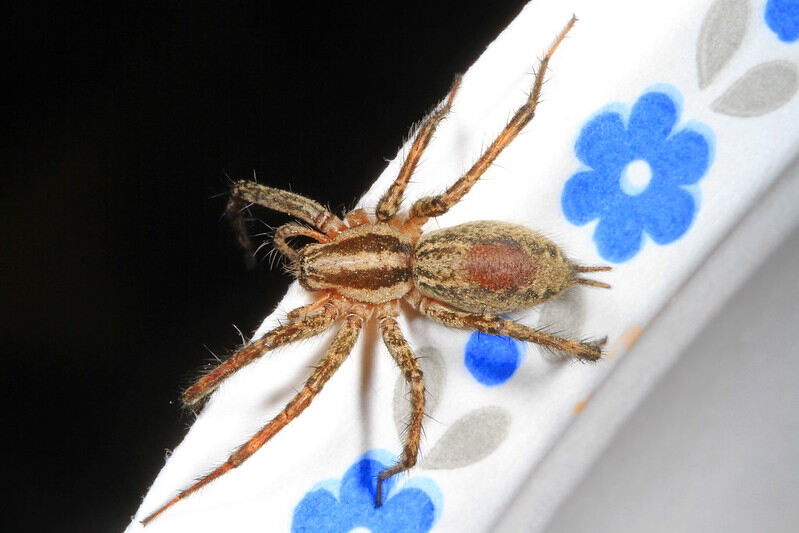
Grass spiders (Agelenopsis spp.) are yellowish-brown, striped arachnids. The females are ½ to ¾ inch long (not including the legs), while males are slightly smaller.
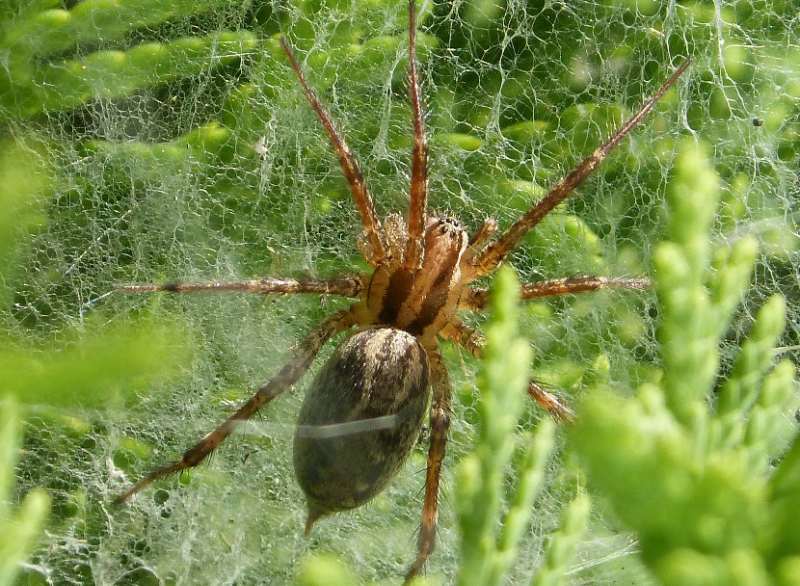
Using their long spinnerets, these spiders craft nonsticky, sheet-like webs with a narrow funnel at one end where they hide. The posterior pair of spinnerets is noticeably long, giving the back of the abdomen a tail-like look.
Once an insect wanders onto the web, the grass spider rushes out to immobilize its prey.
Grass spiders belong to the Agelenidae (funnel-weaver) family and are commonly found in tall grasses, ground cover, bushes, and shrubs. If you’ve spotted a flat, sheet-like web in your lawn with a narrow funnel at one end, that’s almost certainly a grass spider’s handiwork.
Where Do Grass Spiders Live?
Grass spiders prefer outdoor habitats with plenty of hiding spots and structural support for their webs. Here is where you are most likely to find them:
Typical locations: Tall grasses, dense ground covers, low-hanging shrubs, window wells, and building crevices. They build flat, sheet-like webs low to the ground, anchored between grass blades or at the base of shrubs.
Peak activity: Their seasonal activity peaks from late summer through fall, when webs are most abundant and adults are fully grown.
Why they come indoors: As temperatures drop in autumn, grass spiders wander indoors in search of warmth. A cup and a piece of paper are all you need to relocate them outside.
Life cycle: The life cycle usually ends for adults before winter, while their eggs overwinter and hatch the following spring.
Are Grass Spiders Dangerous to Humans or Pets?
Grass spiders are not dangerous to humans. They are venomous, but their venom is used to subdue insects and poses no real threat to people.
Grass spiders are shy and avoidant, and they rarely bite people. Bites happen only when the spider feels trapped. For example, when they are accidentally pressed against skin inside a shoe or garden glove.
The amount of venom is meant to affect small insects, so the effects of a grass spider bite on animals and people are minor.
If bitten by a grass spider, expect:
Pain
Itching
Redness
Mild swelling
According to Penn State University, these symptoms subside in 1 to 10 days.
Grass spiders generally pose no danger to dogs or cats, even if accidentally ingested (they are not poisonous).
Note: Watch for signs of allergic reactions after any spider bite. Note that other spider species, such as the black widow and brown recluse, can be dangerous to pets if bitten.
Should You Get Rid of Grass Spiders?
In most cases, no, you should not get rid of grass spiders. Here is why:
Natural pest control: Grass spiders eat lawn insect pests that would otherwise damage your garden plants. They are one of the many beneficial predators that help keep your lawn healthy without chemicals.
No health risk: They are not dangerous to humans or pets.
Temporary presence: Most grass spiders die off naturally during winter. If you are seeing them now, they will be gone by the first hard frost.
Leaving grass spiders alone is also a simple way to encourage biodiversity in your yard. However, there are a few downsides to letting them stay:
Too many webs can make a lawn look unkempt: Spider webs, though natural, are often associated with neglect.
Slim chance of a defensive bite: If a grass spider is accidentally disturbed during outdoor play, it may bite in defense (though this is unlikely).
The real problem is the insects that attract the spiders. Removing food particles, sealing outdoor trash cans, and cleaning up spills deter insects and, in turn, remove any reason for these spiders to move in.
If webs are clustering near your door or spiders are coming inside, some targeted removal makes sense. Otherwise, they’re earning their keep.
See Related: Beneficial Insects for Your Lawn and Garden, Plus Where to Buy
How to Get Rid of Grass Spiders
The occasional web on your lawn is nothing to fuss over. You can leave it be, sweep it with a broom, or wash it away with a water hose.
But if you are worried your yard will become overrun with grass spider webs, here is how to get rid of them:
Natural Grass Spider Control
Effective natural pest control for your lawn starts with routine maintenance. Stop grass spiders before they move in by following these tips:
Get rid of tall grasses, weeds, and brush piles: They make great homes for grass spiders. Regularly mow the lawn and trim bushes, hedges, and shrubs.
Do not let trash accumulate: Human food crumbs also attract the insects these spiders consume.
Use natural repellents: Chestnut and mint oil can help repel spiders. Spraying your lawn with a mix of water and these essential oils may help ward them off.
Use food-grade diatomaceous earth: This powder, made from fossilized aquatic organisms, is a proven organic pest control option. It is low risk to humans and pets when used as directed, but lethal to spiders and other insects.
According to the National Pesticide Information Center, “Diatomaceous earth causes insects to dry out and die by absorbing the oils and fats from the cuticle of the insect’s exoskeleton.”
Apply it dry around web-heavy areas, and reapply after rain.
Note: Peppermint and other essential oils can be toxic to dogs and cats. Avoid spraying where pets spend time.
See Related:
— How to Use Diatomaceous Earth for Lawn Pest Control
— Natural Pest Control for Your Lawn That Works (Hint: They’re Not Homemade Recipes)
Chemical Control for Grass Spiders
Pesticides should be your last resort to get rid of grass spiders. According to the Intergovernmental Science-Policy Platform on Biodiversity and Ecosystem Services (IPBES) assessment, pesticides are a major driver of pollinator decline, and insecticides can also harm people and pets.
If you’re dealing with a large population of grass spiders or it’s already fall and they want to migrate into your home, you can use insecticides to create a barrier around your house. Products with bifenthrin, cyfluthrin, or deltamethrin are commonly used against spiders.
However, keep in mind that these are toxic to humans, pets, and pollinators. Only use chemical control if you’re dealing with a severe infestation or a more dangerous type of spider, such as a:
Black widow (shiny black with a red hourglass on the underside of the abdomen)
Brown recluse (dark cream to dark brown, with a violin-shaped marking on the top).
Of the two, the brown recluse is more likely to be mistaken for a grass spider.
How To Tell if It’s a Grass Spider or a Brown Recluse Spider
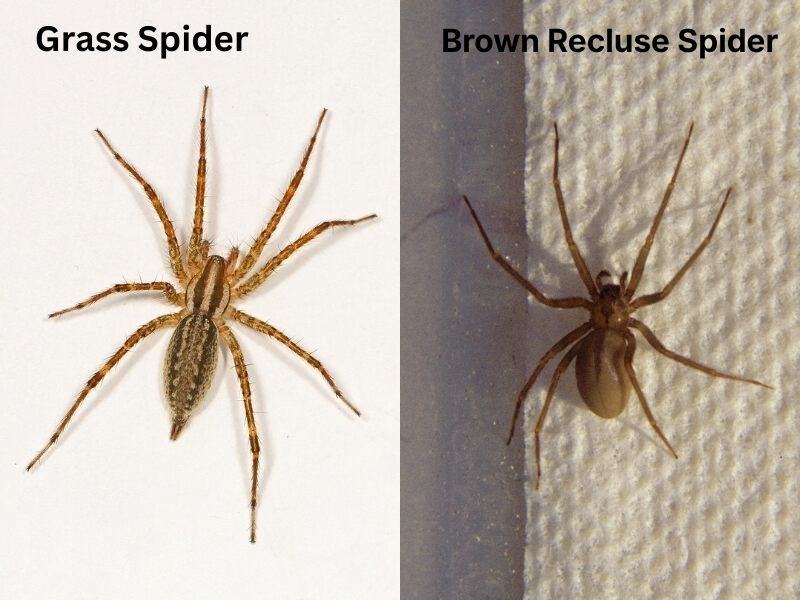
Grass Spider: Judy Gallagher / Flickr / CC BY 2.0,
Brown Recluse: Eddie McGriff, University of Georgia, Bugwood.org
Here are the main differences between brown recluse spiders and grass spiders so you can tell one from another:
Habitat: You’ll most likely find brown recluse spiders living in undisturbed areas like garages and crawl spaces (and those old cardboard boxes left in the attic). They are usually found walking around rather than on the web.
Grass spiders are more often found outdoors (although they can sometimes sneak into your house). They like to take shelter at the bottom of their funnel-like webs, usually in grassy areas and window wells of buildings.
Physical appearance: Brown recluse spiders have slim, long legs. They are light brown and have a characteristic dark brown, violin-shaped patch on the head. Unlike most spiders, the brown recluse spider has 6 eyes instead of 8.
Grass spiders, on the other hand, are yellowish-brown and have two longitudinal stripes on their abdomen. They can also be identified by their long, noticeable hind spinnerets.
Bite: While grass spider venom is not a cause for concern, a brown recluse spider bite can cause serious injury and require immediate medical attention. It is particularly dangerous to young children, the elderly, or immunocompromised people.
Let LawnStarter Handle Your Grass Spider Prevention
The best way to deter grass spiders is to maintain a clean, well-kept lawn. Regular mowing and yard cleanup eliminate the hiding spots these spiders need.
If you want a pristine yard without spending your weekends on yard work, hire one of LawnStarter‘s local lawn care professionals. Our vetted pros handle lawn mowing, bush trimming, and yard cleanup to keep pests at bay.
Get an instant quote in about a minute and take back your free time.
FAQs
No. Grass spiders are fast runners but do not jump. Unlike jumping spiders, grass spiders rely on speed to ambush prey on their funnel-shaped webs. If startled, they will sprint into the funnel retreat rather than leap toward you.
Grass spiders build funnel-shaped webs and wait for prey, while wolf spiders do not build webs and actively hunt. Wolf spiders are also stockier and have a distinct eye arrangement. Both are harmless to humans, but their behaviors and habitats differ significantly.
No. Grass spiders are carnivores that feed on insects and occasionally other spiders. They use grass blades as structural anchors for their funnel-shaped webs, not as a food source. Your lawn is safe from them. In fact, grass spiders may benefit your lawn by reducing populations of plant-damaging insects.
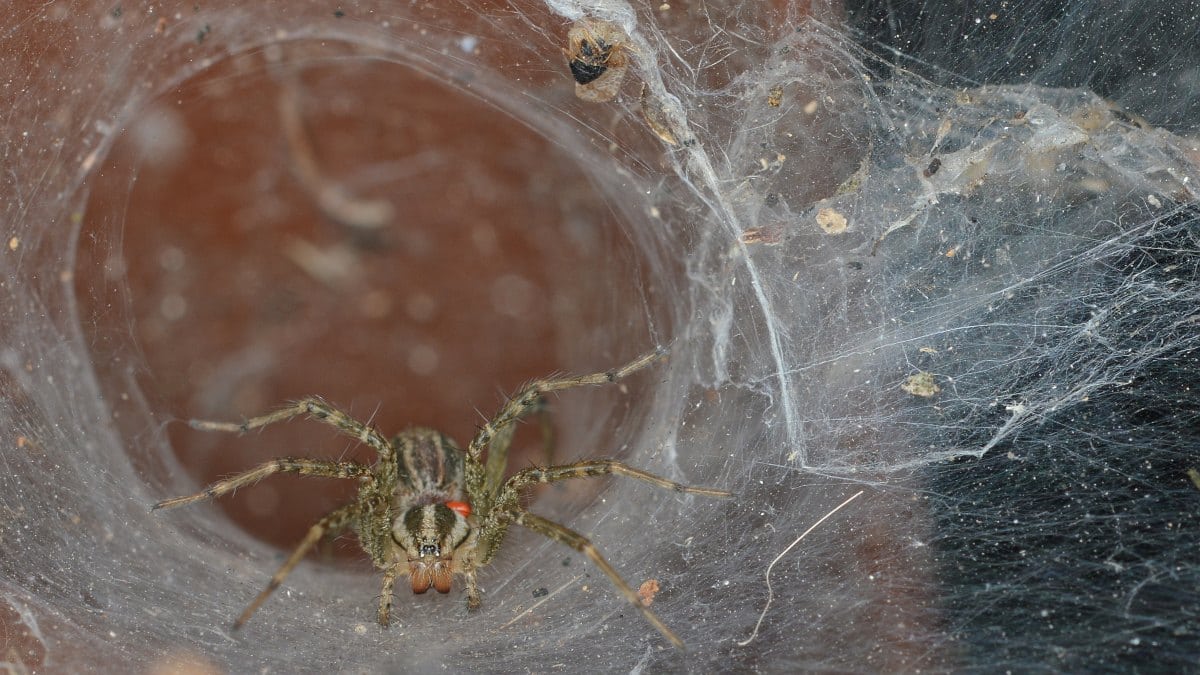
Main Image: Grass spider waiting inside a dusty funnel web. Image Credit: Ryan Hodnett / Wikimedia Commons / CC BY-SA 4.0
Related Posts: