As the last traces of snow melt and signs of spring pop up along the Great Miami River, follow these spring lawn care tips for Dayton to help your grass recover from the cold and prepare for the months ahead.
What’s involved? Prepare your lawn equipment and conduct a soil test before the ground thaws. Then remove weeds, fertilize, mow, and water your lawn at the right time to ensure your grass thrives as it grows.
This 9-step spring lawn care checklist can help you give your Dayton lawn a strong start.

1. Prepare Your Lawn Equipment
When to prepare your lawn equipment: Late February to early March
Spring in Dayton brings unpredictable weather, so sharpen your mower blades and organize your yard tools well before your first mow.
What to do:
- Lawn mower: Sharpen the blades, check the oil levels, and replace the air filter.
- String trimmer: Replace the trimmer line.
- Other lawn equipment: Remove debris, check for signs of damage, and sharpen tools if necessary.
2. Test Your Soil

Best time to test your soil: March (once the ground thaws)
| Type of Grass | Ideal pH Levels |
| Kentucky bluegrass (cool-season) | 6.0 to 7.5 pH |
| Fine fescue (cool-season) | 6.0 to 6.5 pH |
| Tall fescue (cool-season) | 5.5 to 6.5 pH |
| Perennial ryegrass (cool-season) | 6.0 to 7.0 pH |
Before you apply any fertilizer this spring, test your soil to see what your lawn actually needs. A soil test measures pH levels and nutrient content, helping you identify any deficiencies that could be keeping your grass from being lush and healthy.
You can pick up an at-home test kit at any garden center to check your soil’s basic pH levels, but we recommend contacting your local Extension Office to submit a soil sample for a more detailed analysis.
Always ensure your soil is dry before collecting soil samples. The results of your soil test includes custom fertilizer recommendations, so you won’t waste money on the wrong fertilizer or harm your lawn by over-fertilizing.
3. Clean Up Your Yard
When to clean your yard: March (or once the soil temperature consistently reaches 55 degrees)
Once the ground thaws, it’s time to give your grass a clean slate. Use a rake to remove twigs, dead leaves, and other debris from your lawn.
This removes excess thatch and prevents lawn diseases like snow mold and pests. Additionally, raking ensures nutrients, sunlight, and water reach your grass as it grows.
4. Get Ahead of Weeds Early
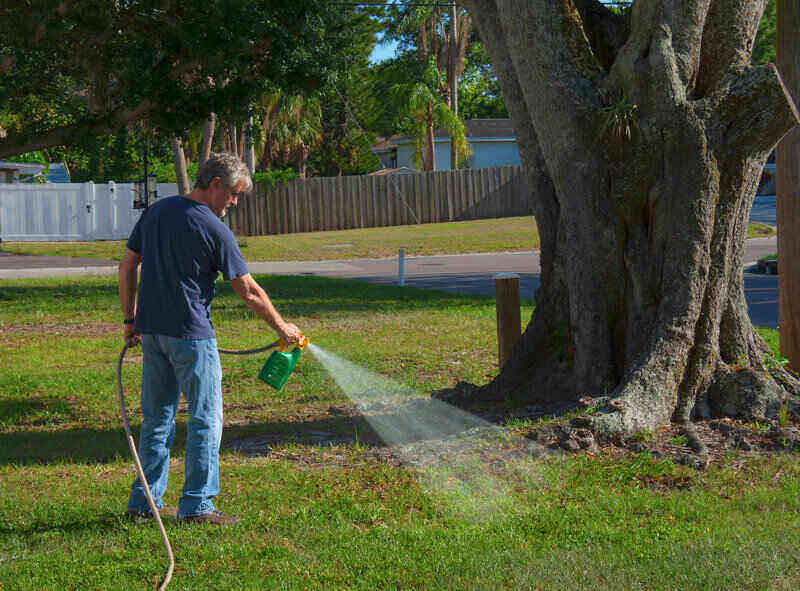
When to apply pre-emergent herbicide: Between mid-March and mid-April (as soon as the soil temperature consistently reaches 50 degrees)
Apply pre-emergent herbicide before crabgrass, dandelions, and other weeds sprout in your yard. Proper weed control is all about timing to prevent common weeds from stealing your grass’s nutrients.
If you see some stalks of crabgrass or dandelions, you can hand-pull them. However, this means you’ll need to use a post-emergent herbicide instead of a pre-emergent one to control weeds in your yard.
- Pre-emergent herbicide: Apply between mid-March and mid-April (or as soon as soil temperature consistently reaches 50 degrees).
- Post-emergent herbicide: Apply inMay, when the soil temperature is above 50 degrees, and weeds are less than an inch tall. This is a good time to stop broadleaf weeds like chickweed and oxalis from taking over your yard.
5. Aerate Your Lawn
Best time for aeration: March (or when the soil temperature reaches 55 degrees)
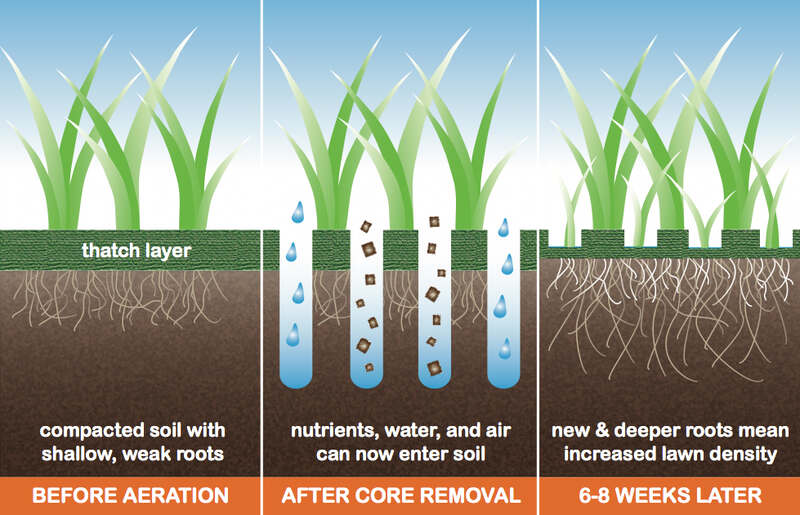
While fall is the ideal time to aerate lawns in Dayton, early spring aeration can be beneficial — especially if your soil has become compacted over the winter. Compacted soil prevents grass roots from getting the nutrients, water, and air needed to grow strong and healthy.
Aeration works by punching small holes into the soil, loosening it up, and allowing essential elements to reach the root zone. Aeration also helps improve the effectiveness of fertilizer, overseeding, and herbicide applications.
6. Reseed Bare Spots
Best time to reseed: mid-March to early April (or when the soil temperature consistently hits 55 degrees)
If parts of your lawn didn’t survive the winter, spring is a good time to reseed those bare or damaged areas. Filling in these spots helps prevent weeds from taking hold and keeps your lawn looking full and healthy.
However, if you’re considering overseeding your entire lawn, it’s better to wait until fall, when conditions are more favorable for cool-season grasses in Dayton. Follow these steps to ensure your newly planted grass thrives:
- Aerate your soil to ensure your grass receives adequate nutrients as it grows.
- If your lawn has compacted soil and a thick layer of thatch, you can dethatch and aerate at the same time.
- Don’t apply pre-emergent herbicide before reseeding.
7. Fertilize at the Right Time
Best time to fertilize your lawn: early April (when soil temperature consistently reaches 55 degrees)
Applying fertilizer in the spring will help your grass grow strong roots and come in healthier. Fertilizer will help your grass withstand environmental stressors, like the changing weather here in Dayton.
A lawn care professional can help you figure out the best timing for this first fertilizer application of the year, and put together a schedule for other fertilizer applications.
Scott Zanon, from the Ohio State University, recommends the following spring schedule:
- Fertilize your lawn between April 1 and 15 with a slow-release fertilizer.
- Optional: Make a second application around May 15 to 30 with a straight or one-nutrient fertilizer. If you notice many broadleaf weeds in your lawn, apply a fertilizer that includes broadleaf weed control instead.
Note: if you’ve already fertilized your lawn in the fall, apply fertilizer only in early April and skip the second application in May.
8. Mow Properly
Best time to mow your lawn: April (or when the soil temperature is consistently 50 degrees)
Now that your grass is growing rapidly, it’s time to mow your lawn. Mowing regularly at the right height helps your grass thrive and receive proper nutrients. Wait until your grass is around 3 inches tall before mowing.
| Type of Grass | Recommended Mowing Height |
| Kentucky bluegrass | 2 to 2 ½ inches |
| Fine fescue | 2 to 2 ½ inches |
| Perennial ryegrass | 2 to 2 ½ inches |
| Tall fescue | 2 ½ to 3 inches |
Cool-season grasses in Dayton thrive in the spring, so get ready to mow every week or so. Always remember the one-third rule: Never cut more than one-third of the grass blade per cutting.
9. Water Wisely
When to water your lawn: Starting in April (or when your grass starts growing)
Now that you’re mowing your lawn, it needs about 1 inch of water weekly. However, March and April typically bring unpredictable weather, including heavy rainfall. Adjust the water amount based on recent rainfall.
Here are tips on how to water your lawn wisely in the spring:
- Give your lawn 1 inch of water every week to soak 6 to 8 inches of soil. Use a trowel to check the depth of the wet soil before watering.
- Monitor the amount of rainfall and adjust your watering accordingly.
- Place an empty tin can on your lawn to check the amount of rainfall during the previous days before your scheduled watering.
- Water your lawn early in the morning to ensure the grass roots receive enough water.
Hire a Lawn Care Pro to Give Your Grass a Strong Start
With the right care, your lawn can bounce back from winter and thrive through the growing season. Spring is the perfect time to ensure your lawn grows lush and healthy during its peak growing time.
Need help preparing your lawn? Visit our Dayton lawn care page to hire a local LawnStarter pro to help with all your spring lawn care needs. Local pros can also mow your grass, trim around fences and flower beds, and blow debris off your driveway, sidewalk, and patio throughout the year.
Main Image: Lawn mowed by a LawnStarter pro in Dayton, OH. Illustration by Amy Stenglein / LawnStarter
Related Posts: