| Key Takeaways |
|---|
| • Most Ohio weeds fall into 1 of 3 categories: broadleaf, grassy, or sedges, and each requires a different control approach. • Wait until mid-July to spray crabgrass that's already up. June is too early. • Fall is the best time to treat perennial weeds; stubborn ones may need a spring follow-up. |
Ohio’s fertile soil is great for lawns and gardens, but it also produces a bumper crop of weeds, from crabgrass, dandelions, and clover to noxious species such as Japanese knotweed.
Identifying which weeds are invading your yard is the first step of lawn care in Columbus, Cincinnati, and across the Buckeye State. With expert tips, this guide covers the 15 most common Ohio weeds and how to control each one, including when lawn treatment can help keep them from coming back.
Getting the right herbicide at the right time can be tricky. LawnStarter’s lawn treatment service connects you with local pros who handle it all.
Types of Weeds
A weed is any unwanted plant that grows quickly and competes with wanted plants for nutrients and sunlight. Ohio weeds can be classified by their looks or their life cycle.
By appearance:
| Type | Characteristics | Examples |
| Broadleaf | Wide leaves with netlike veins; tap or fibrous roots | Dandelions, clover |
| Grasses | Look like lawn grass; grow in bunches; coarse texture | Crabgrass, foxtail |
| Sedges | Triangular stems; grass-like appearance | Yellow nutsedge |
By life cycle: Weeds are annuals (one growing season), biennials (2 years), or perennials (return year after year from deep root systems).
For annuals, maintaining a thick, healthy lawn is usually enough to keep them from being a problem, says David Gardner, a turfgrass science professor at Ohio State University who specializes in weed control.
Perennials are where most homeowners go wrong. “Everyone controls in the spring because that’s when they see them — dandelion in bloom, for example. But if you see them in the fall, spray them then,” Gardner says. “You get much longer-lasting and more effective control.”
Use the identification chart below to identify lawn weeds and figure out what you’re looking at.
Ohio Weed Identification at a Glance
| Weed Name | Type | Quick ID Tip |
| Dandelion | Broadleaf | Yellow flower, jagged leaves, white puffball seed head |
| Poison Ivy | Broadleaf | Leaves of 3, glossy surface |
| Common Ragweed | Broadleaf | Triangular, hairy leaves, up to 6 feet tall |
| Ground Ivy | Broadleaf | Creeping vine, kidney-shaped leaves with scalloped edges |
| Stinging Nettle | Broadleaf | Sawtooth leaves, tiny hairs on stem |
| Yellow Woodsorrel | Broadleaf | Looks like clover, small yellow flowers with five petals |
| Henbit | Broadleaf | Square stems, reddish-purple flowers |
| Common Blue Violet | Broadleaf | Heart-shaped leaves, purple-blue flowers |
| Common Chickweed | Broadleaf | Bright green pointed leaves, small white flowers |
| Japanese Knotweed | Broadleaf | Looks like bamboo, oval leaves pointed at tip |
| Crabgrass | Grass | Coarse texture, yellow-green, spreading stems |
| Giant Foxtail | Grass | Fuzzy, drooping seed head resembling a fox’s tail |
| Annual Bluegrass | Grass | Light-green leaves with boat-shaped tips |
| Yellow Nutsedge | Sedge | Triangular stem, yellowish-green leaves |
| Bush Honeysuckle | Shrub | Egg-shaped leaves, tubular flowers, red berries |
If you can’t identify a weed, your local extension office can help. “Take a picture of the entire plant with something recognizable for scale,” says Bruce Ackley, a weed science and agronomy lecturer at Ohio State University. Add a close-up of 1 or 2 features that set it apart from lookalikes, like a seedhead or fruiting structure.
Common Ohio Broadleaf Weeds
1. Dandelion (Taraxacum officinale)
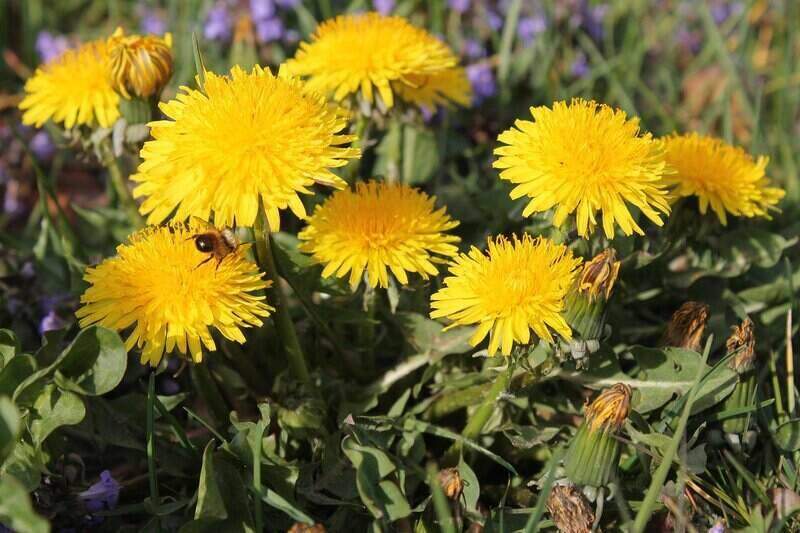
Dandelions reproduce by seeds and root remnants. Their deep taproots make them tenacious. If you try to get rid of dandelions by digging, remove all taproots to prevent regrowth.
Life cycle: Perennial
Where it thrives: Moist soil and sunlight
How to identify dandelions:
Single yellow flower on a hollow stem with jagged basal leaves
White, fluffy seed head at maturity
Dandelions are often confused with Canada thistles because of their look-alike leaves. The spines are what tell them apart. “Dandelion is the one you step on barefoot and keep walking; Canada thistle is the one you step on barefoot and cuss,” Ackley says, who has coached Ohio State’s Weeds Judging Team for over 20 years.
How to get rid of dandelions: Use a pre-emergent or post-emergent herbicide. You can also dig dandelions up, snip the flowers, and heavily mulch the leaves.
See Related: How to Get Rid of Dandelions
2. Poison Ivy (Toxicodendron radicans)
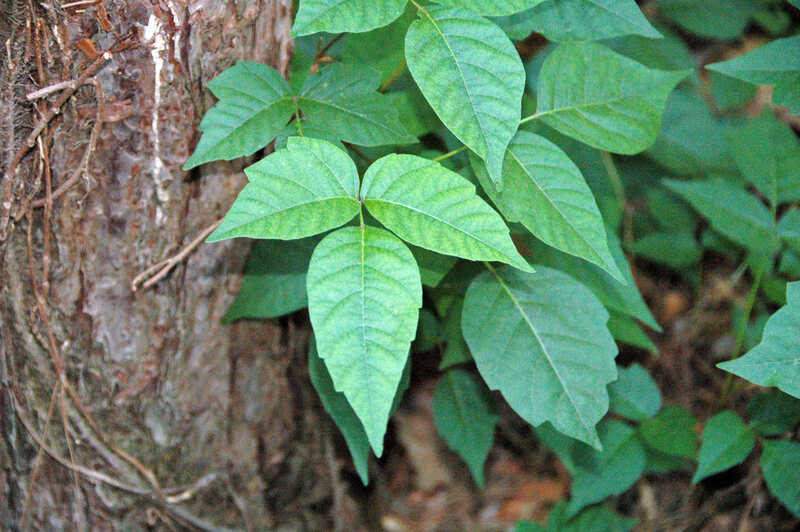
Poison ivy grows as a ground cover, a shrub, or a vine that spreads along the ground until it finds something to climb on.
“Never allow poison ivy to climb,” says Hannah Mathers, a horticultural researcher who runs Mathers Environmental Science Services in Columbus, Ohio. Once poison ivy sends aerial stems up a tree or a fence, it switches from vegetative growth to reproductive growth and becomes far harder to kill, she says.
Life cycle: Perennial
Where it thrives: Soil with high calcium content
How to identify poison ivy: 3-leaflet clusters with glossy leaflets that may be jagged or egg-shaped.
How to get rid of poison ivy: Roundup Poison Ivy Plus Tough Brush Killer and Ortho Ground Clear Poison Ivy, which contain triclopyr, work well, says Mathers, who spent 26 years researching herbicide performance.
You’ll need 2 applications. “One in the fall, when plants are sending their carbohydrate to the roots, is very important,” she says, “and another in the early spring when new growth appears.”
You can also hand-pull or cut, but do not burn. Smoke can cause breathing problems. Its oil causes a severe rash with swelling and blistering, so wear protective clothing when removing it.
3. Common Ragweed (Ambrosia artemisiifolia)
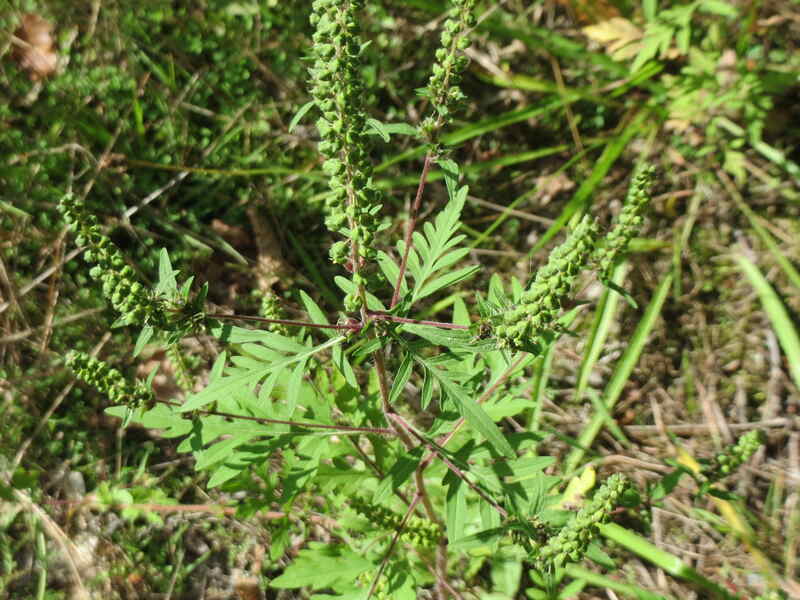
In Ohio, ragweed allergy starts in early August and can continue until November, with September being the highest pollen month. Each ragweed plant can produce 30,000 to 60,000 seeds and will smother your turf and native plants as it takes over the yard.
Life cycle: Summer annual
Thrives in: Any soil; prefers full sun
How to identify common ragweed:
Up to 6 feet tall
Green to purple stems and triangular, hairy leaves
How to get rid of common ragweed: Use pre- or post-emergent herbicides. (Note: Some Ohio varieties are glyphosate-resistant.) Mowing before flowering also helps.
See Related: Glyphosate: Pros, Cons, and Alternatives
4. Ground Ivy (Glechoma hederacea)
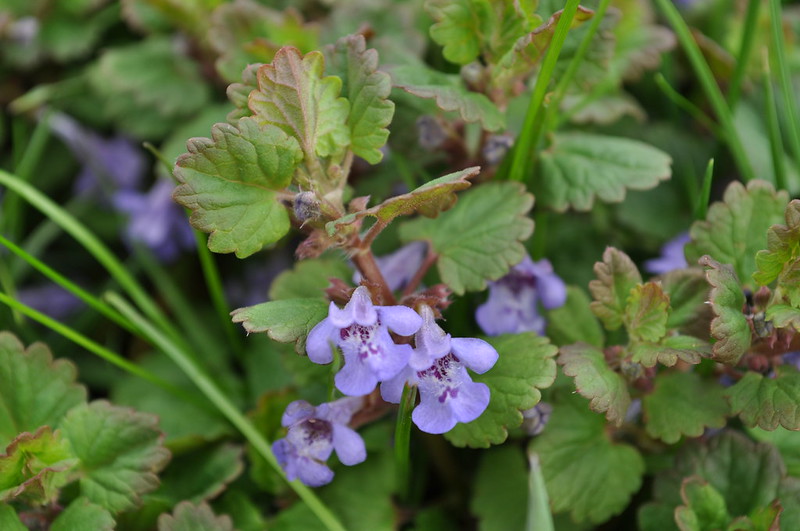
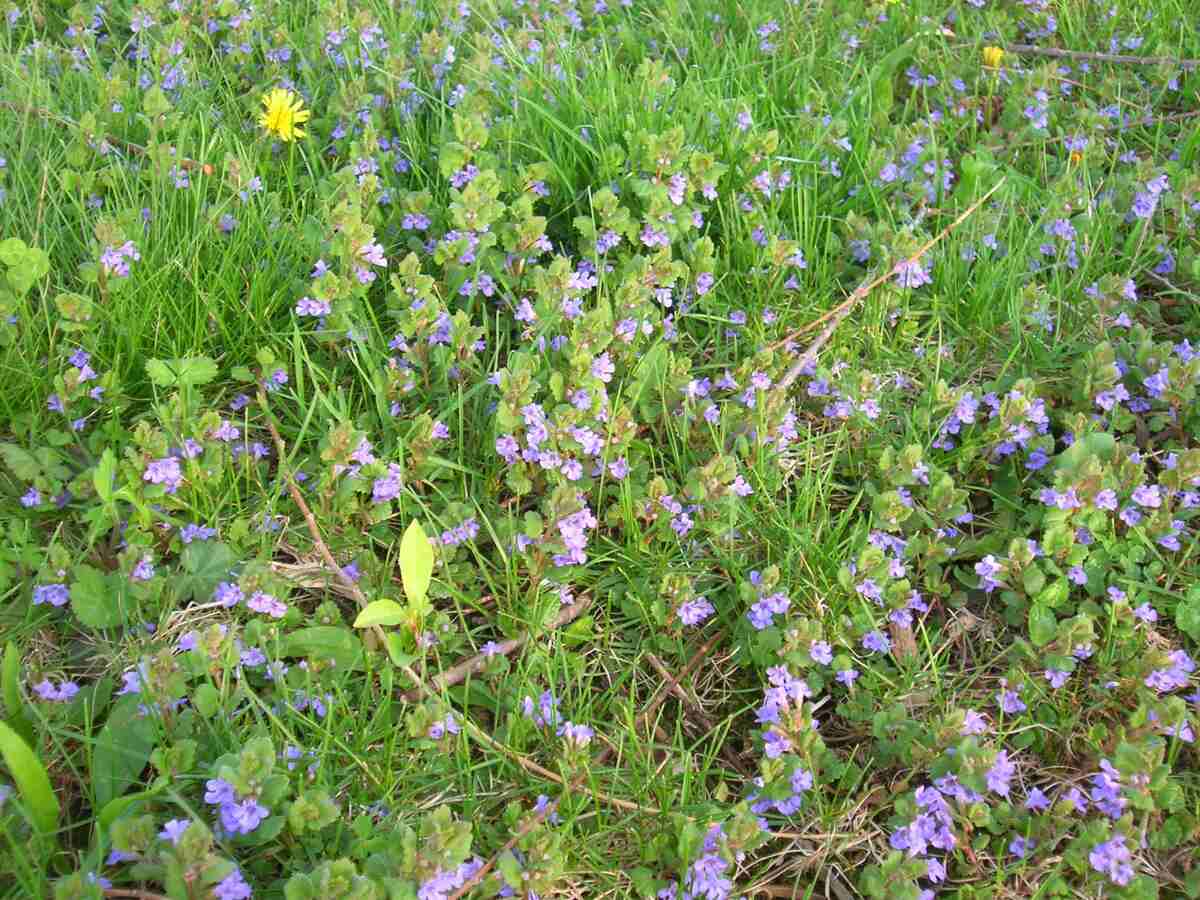
Ground ivy spreads by rooting wherever its stems touch soil, forming thick mats that crowd out turfgrass. According to Gardner, it’s one of the most difficult weeds to control in Ohio lawns, along with wild violet.
Life cycle: Perennial
Thrives in: Shade and moist soils
How to identify ground ivy:
Kidney-shaped leaves with scalloped edges
Purplish-blue flowers
Sprawling, creeping growth
How to get rid of ground ivy: “Control in the fall with a spray of triclopyr,” Gardner says, who recommends the ester formulation (look for triclopyr ester on the label). “Be careful around trees and other sensitive vegetation.”
Pulling by hand or using a power rake may also work.
See Related: 8 Best Power Rakes
5. Stinging Nettle (Urtica dioica)
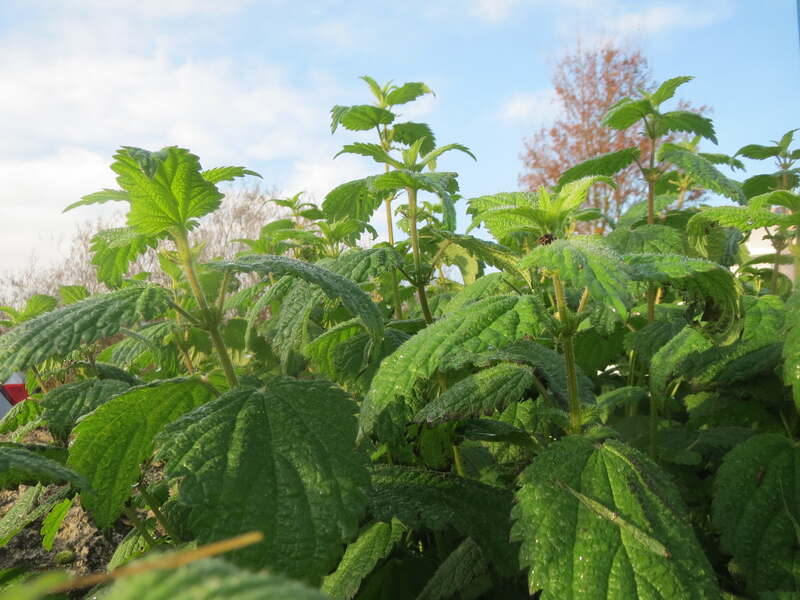
The tiny hairs on stinging nettle’s stems inject an irritating compound on contact. Its underground stem network allows it to repopulate quickly; according to OSU, the network can spread 5 feet or more in a season.
Life cycle: Perennial
Where it thrives: Sun and damp, nutrient-rich soil
How to identify stinging nettle:
Grows 3 to 6.5 feet tall
Bright to dark green sawtooth leaves
Clusters of tiny greenish-white flowers
How to get rid of stinging nettle: Use an herbicide that attacks the root system. Digging or pulling also works. Wear protection and don’t leave pulled plants in the yard. Frequent mowing can thin the colony.
6. Yellow Woodsorrel (Oxalis stricta)
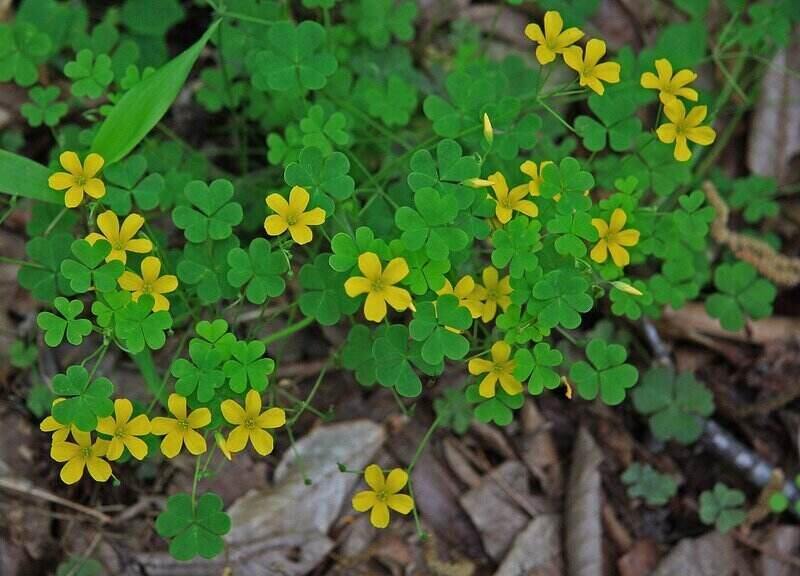
Yellow woodsorrel (also called oxalis) can indicate drainage issues. It germinates late and may appear after other broadleaf weeds have gone to seed.
The Pet Poison Helpline notes the soluble oxalate it contains can be toxic to dogs and cats in large quantities.
Life cycle: Perennial
Where it thrives: Full sun and moist soil
How to identify yellow woodsorrel:
3 heart-shaped leaves resembling clover
Small yellow flowers with five petals
Yellow woodsorrel is one of the easier weeds to catch early, Ackley says, because it looks much the same from seedling to maturity. The heart-shaped trifoliates are consistent.
How to get rid of yellow woodsorrel: Herbicides containing triclopyr and fluroxypyr are effective. Hand-pick young plants before they flower. Mulch garden beds to prevent germination.
See Related: Clover vs. Oxalis: What’s the Difference?
7. Henbit (Lamium amplexicaule)
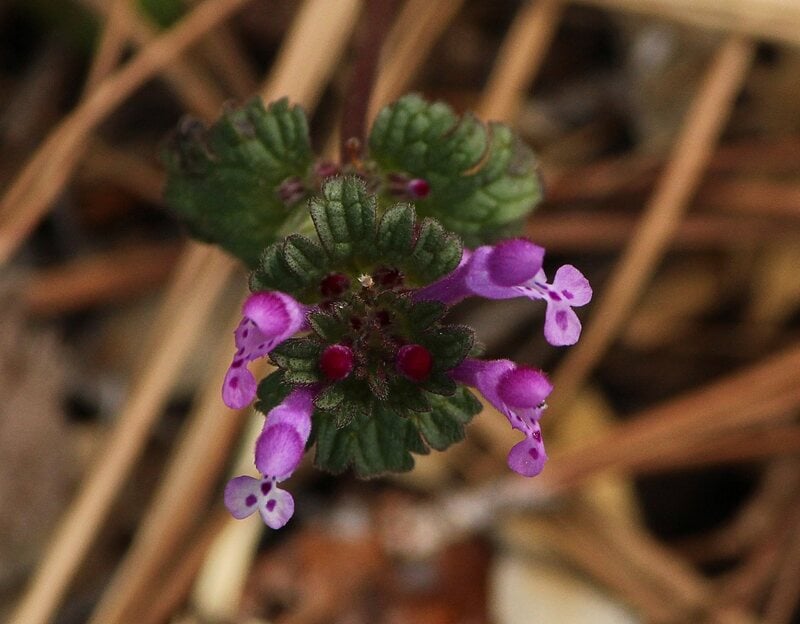
Henbit provides pollen for bees and nectar for hummingbirds but quickly invades thin turf. It is commonly confused with purple deadnettle.
Whichever weed you have, henbit or purple deadnettle, the fix is the same: dense turf or hand-pulling, as they both have shallow root systems.
Life cycle: Winter annual
Thrives in: Shade and cool, moist areas
How to identify henbit:
Grows up to 16 inches high
Green to purple square stems
Egg-shaped leaves with blunt-toothed edges and reddish-purple flowers
How to get rid of henbit: Dense turf is the best prevention method. Post-emergent herbicides work best when plants are seeding or flowering. Small plants can be hand-pulled.
8. Common Blue Violet (Viola sororia)
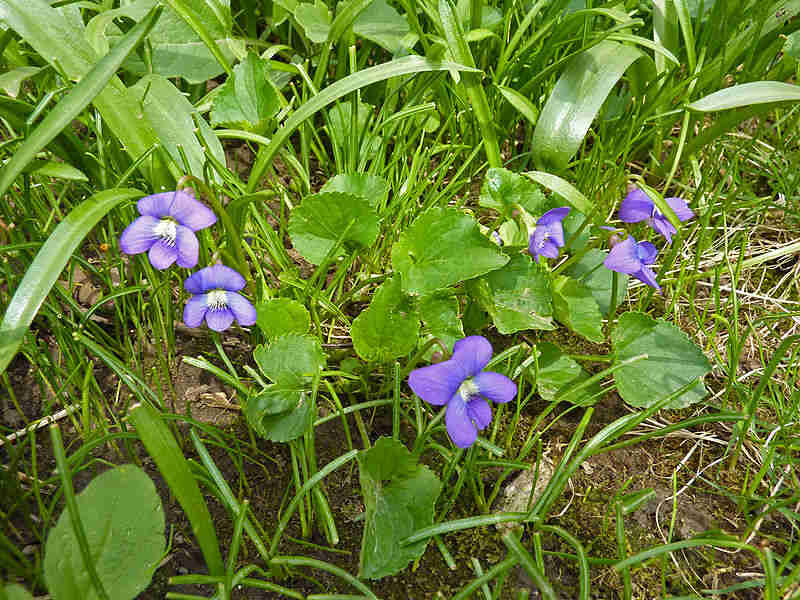
Common blue violet is one of several wild violet species found in the Midwest. The others are woolly blue violet (Viola papilionacea) and confederate violet (Viola sororia f. priceana).
While some people welcome the plant as a ground cover, it can spread and compete for resources with turfgrass.
Life cycle: Perennial
Thrives in: Partial sun and moist soil
How to identify common blue violets:
About 4 inches high
Heart-shaped leaves with rounded teeth
Purple-blue flowers
How to get rid of common blue violets: Hand-pull them if you catch them early, according to OSU. For established plants, Gardner gives the same advice as for ground ivy: a fall spray of triclopyr ester.
9. Common Chickweed (Stellaria media)
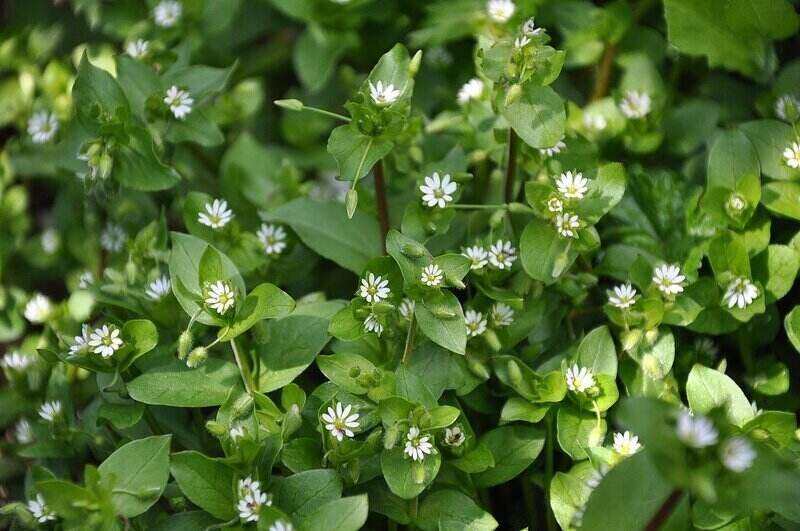
Common chickweed germinates in fall, overwinters, then flowers and sets seed in spring before dying. According to OSU, each chickweed plant can produce on average 25,000 seeds, so early treatment is critical.
Life cycle: Cool-season annual
Thrives in: Full sun or partial shade; moist soil
How to identify common chickweed:
Up to 4 inches tall
Bright green leaves with pointed tips
Small white flowers with 5 deeply divided petals
How to get rid of common chickweed: Apply pre-emergent herbicides in late fall. Post-emergents are most effective on seedlings. Mulching and hand weeding also help.
10. Japanese Knotweed (Polygonum cuspidatum)
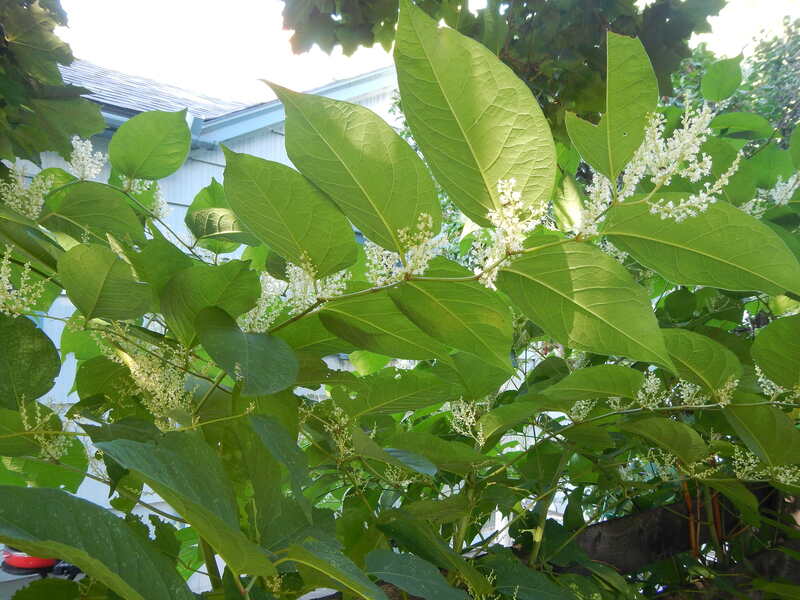
Japanese knotweed can grow up to 10 feet in one growing season and can burst through pavement or exploit foundation cracks. It is considered a noxious weed in Ohio.
Life cycle: Perennial
Type: Broadleaf
Thrives in: Full sun (tolerates shade); moist soil
How to identify Japanese Knotweed:
Hollow, jointed stems (occasionally mistaken for bamboo)
Oval leaves pointed at the tip
Clusters of whitish-green flowers
How to get rid of Japanese Knotweed: Its massive rhizome system makes eradication difficult. Mowing works, but bag all parts and clean equipment. Use caution when applying herbicides near waterways.
Grass-Like Weeds in Your Ohio Lawn (Including Nutsedge)
11. Crabgrass (Digitaria spp.)
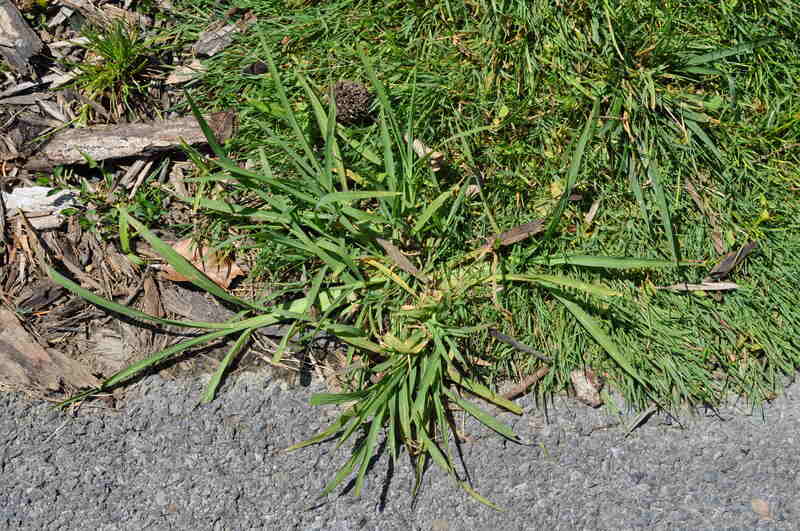
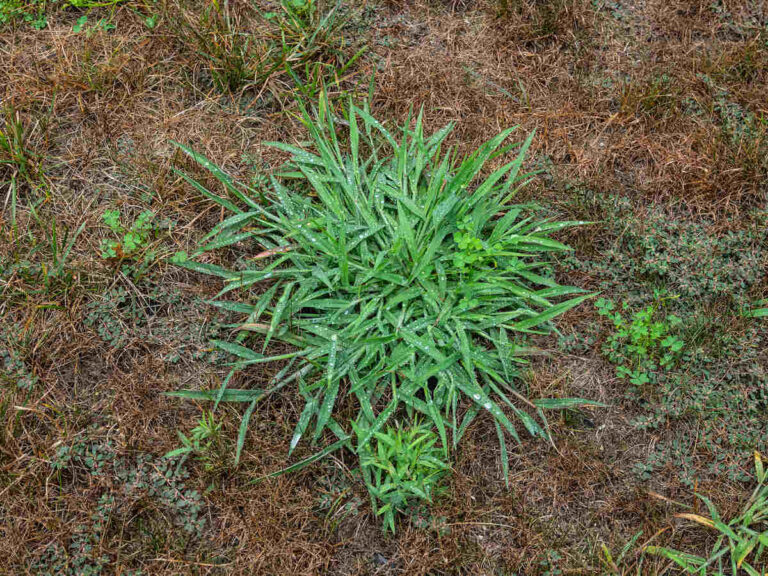
Crabgrass grows in compacted soil, which signals your yard may need aeration. A single crabgrass plant can produce up to 150,000 seeds, helping crabgrass spread easily in lawns and gardens.
Life cycle: Summer annual
Where it thrives: Full to partial sun; compacted soil in thin, sunny turf
How to identify crabgrass:
Coarse-textured, yellow-green color
Spreading stems that grow outward
Patches in bare or thin lawn areas
How to get rid of crabgrass: The best time to apply crabgrass preventer in Ohio is between mid-March and mid-April when soil temperatures are 50 to 55 degrees.
For crabgrass that’s already grown, spray quinclorac herbicides once plants have 5 tillers (side shoots), usually mid-July, Gardner says.
“Big mistake is to spray when you first notice it, which is in June,” he says. “That’s a bit too early for our herbicides to work well.” Suppression only lasts a couple of weeks, and you’ll need 2 applications. Treat before seed heads form.
See Related: How to Get Rid of Crabgrass in Your Yard
12. Giant Foxtail (Setaria faberi)
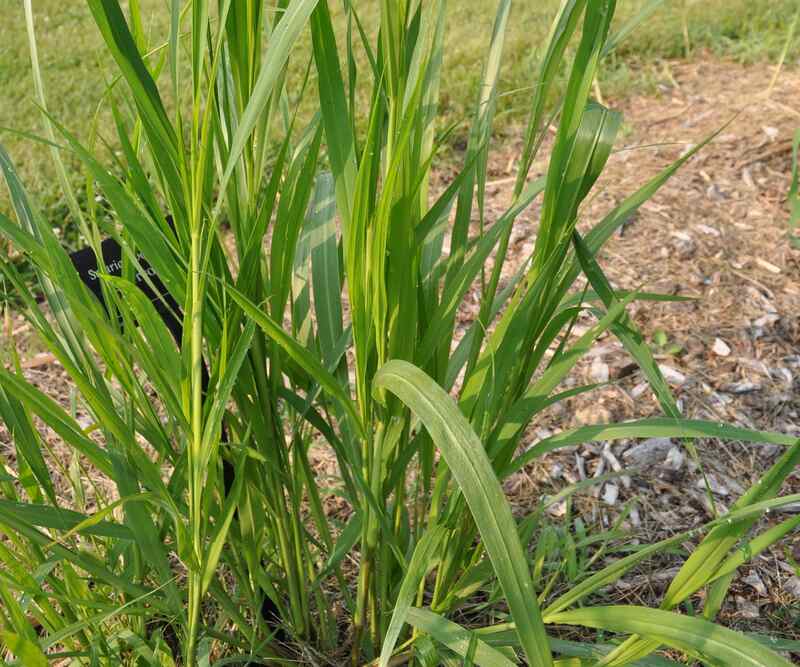
Giant foxtail is one of 3 foxtail species common in Ohio. This drought-tolerant, bunch-type weed is an aggressive self-seeder that is difficult to control once established in lawns or pastures.
It’s also dangerous for pets. According to PetMD, foxtail seeds have backward-facing barbs that burrow into skin, introducing dirt and bacteria.
Life cycle: Summer annual
Thrives in: Sun and compacted soil with high nitrogen
How to identify giant foxtail:
Up to 4 feet tall with light green, floppy leaves
3- to 7-inch drooping seed head resembling a fox’s tail
How to get rid of giant foxtail: Apply pre-emergent herbicides in early spring. Post-emergent weed spraying may require multiple rounds. Mow before seed heads form.
13. Annual Bluegrass (Poa annua)
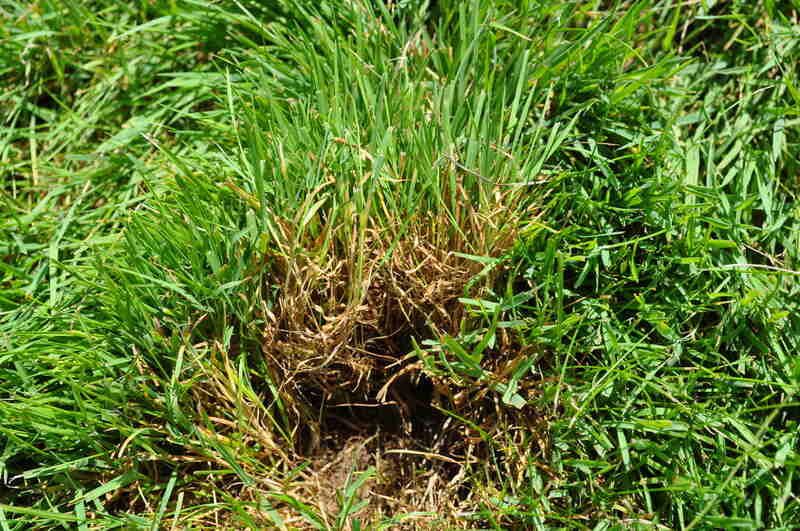
Annual bluegrass chokes out turfgrass and dies back in summer heat, but the seeds it dropped germinate in fall. It usually signals compacted soil.
It’s also widely confused with Kentucky bluegrass, the grass many Ohio homeowners are trying to grow. Kentucky bluegrass is dark green and spreads evenly by rhizomes, Ackley says. Annual bluegrass is lighter and clumpy.
Life cycle: Cool-season annual
Thrives in: Shady, moist, compacted soil
How to identify annual bluegrass:
Light-green leaves with a boat-shaped tip
Greenish-white seed heads in spring
Grows in tufts
How to get rid of annual bluegrass: Proper lawn maintenance and aeration are the best preventatives. Dig up small patches. Apply pre-emergent herbicide in fall.
See Related: How to Aerate Your Lawn: A Complete Guide
14. Yellow Nutsedge (Cyperus esculentus)
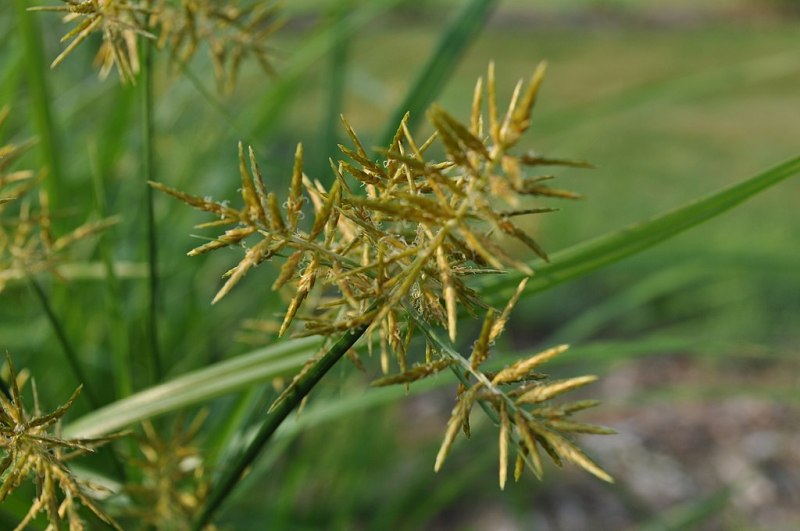
Yellow nutsedge looks like grass but is a sedge that doesn’t respond to standard grass herbicides, and it’s difficult to remove. It regrows from its belowground material, says Ed Nangle, an associate professor in the turfgrass program at Ohio State’s Agricultural Technical Institute in Wooster, Ohio. If you want to remove it by hand, you must dig out its roots.
Life cycle: Perennial
Thrives in: Sun and moist areas
How to identify nutsedge:
Grows 12 to 16 inches tall
Yellowish-green leaves with a triangular stem
Golden-brown flower heads
How to get rid of nutsedge: Use a nutsedge herbicide like halosulfuron, Nangle says. Glyphosate “has virtually no effect due to a thick waxy cuticle on the plant which limits the ability of the active ingredient to truly kill the underground tubers,” he says, “and so after some discoloration it regrows.”
Young plants can be dug out, though be sure to dig 10 inches deep and 8 to 10 inches around the plant.
See Related: How to Control Nutsedge in Your Yard
Common Ohio Shrub Weeds
15. Bush Honeysuckles (Lonicera spp.)
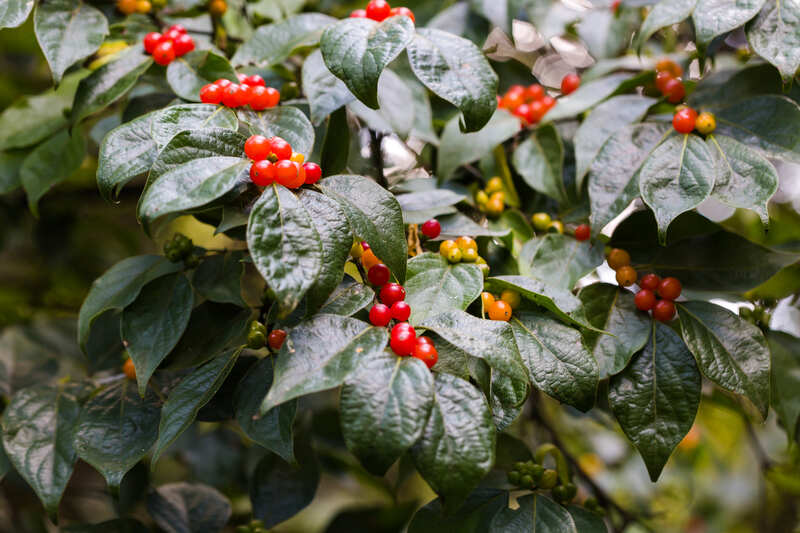
Bush honeysuckles come in 3 varieties: Amur, Morrow, and Tatarian. Birds spread them by eating their berries, which are less nutritious than native berries. Birds eat more of them to get the same return, scattering that much more seed, Mathers says. The shrubs also spread vegetatively, which is part of why they dominate a landscape once established.
Life cycle: Perennial
Thrives in: Shaded, woody areas with moist soils; fields and open areas also at risk
How to identify bush honeysuckles:
6 to 20 feet tall
Egg-shaped leaves (Amur variety has a sharp point)
Pink or white tubular flowers; red berries.
How to get rid of bush honeysuckle: Mow, cut, pull, or dig small plants in early summer, according to OSU. For larger shrubs, cut bush honeysuckle close to the ground and apply herbicide directly to the stump.
When to Treat Common Ohio Weeds
| When | Do This | Stops |
| Early spring (mid-March to mid-April, when forsythia blooms) | Apply crabgrass pre-emergent | Crabgrass, foxtail |
| Early summer (late May–early July) | Spot-spray post-emergent | Nutsedge and other summer weeds, while they’re young |
| Late summer (mid-August to mid-September) | Apply fall pre-emergent | Winter annuals: chickweed, henbit, annual bluegrass |
| Fall (September to October) | Apply broadleaf post-emergent | Perennials: dandelion, ground ivy, wild violet |
Pay attention to soil temperatures and plant behavior. A cold spring can push these back a couple of weeks.
If you had severe pressure from winter annuals, consider applying a pre-emergent in late August, Gardner says. “Same ones we use for crabgrass control – pendimethalin, prodiamine, dithiopyr.” Or, treat any emerged winter annuals in the fall when you’re spraying perennial weeds.
The one rule worth remembering: Pre-emergents go down before weeds sprout, post-emergents after they’re up and growing.
FAQs
Ohio’s prohibited noxious weed list includes species such as Canada thistle, poison hemlock, giant hogweed, musk thistle, kudzu, Palmer amaranth, and Japanese knotweed, which is one of the 15 weeds profiled in this article.
Immediately wash your skin with soap and lots of cool water to remove the plant’s oil. Apply calamine lotion to calm itching. Do not scratch, as bacteria under your nails can cause infection.
3 common Ohio weeds pose pet risks:
• Yellow woodsorrel: A plant that’s toxic to dogs and cats in large quantities
• Stinging nettle: Causes painful contact rashes
• Giant foxtail: Seeds burrow into skin, eyes, or ears and require veterinary removal
Let LawnStarter Handle Your Weed Control
There’s no need to deal with Ohio’s stubborn weeds on your own. LawnStarter can connect you with vetted local pros who treat all common Ohio weeds using the right herbicide at the right time.
The lawn treatment service program includes 7–8 visits per year for fertilization, pre-emergent, and broadleaf weed control. Our pros cover Columbus, Cincinnati, Dayton, Akron, Cleveland, and many other cities across the Buckeye State. Get your free quote now.
Read More:
Main Photo Credit: Ground ivy. Photo Credit: klm185 / Flickr / CC BY 2.0
Sources:
Bruce Ackley, weed science and agronomy lecturer at Ohio State University, Columbus, OH. Personal interview.
David Gardner, turfgrass science professor, Ohio State University, Columbus, OH. Personal interview.
Ed Nangle, associate professor at Ohio State University/ATI, Wooster, OH. Personal interview.
Hannah Mathers, horticultural researcher and owner of Mathers Environmental Science Services in Columbus, OH. Personal interview.
Related Posts: