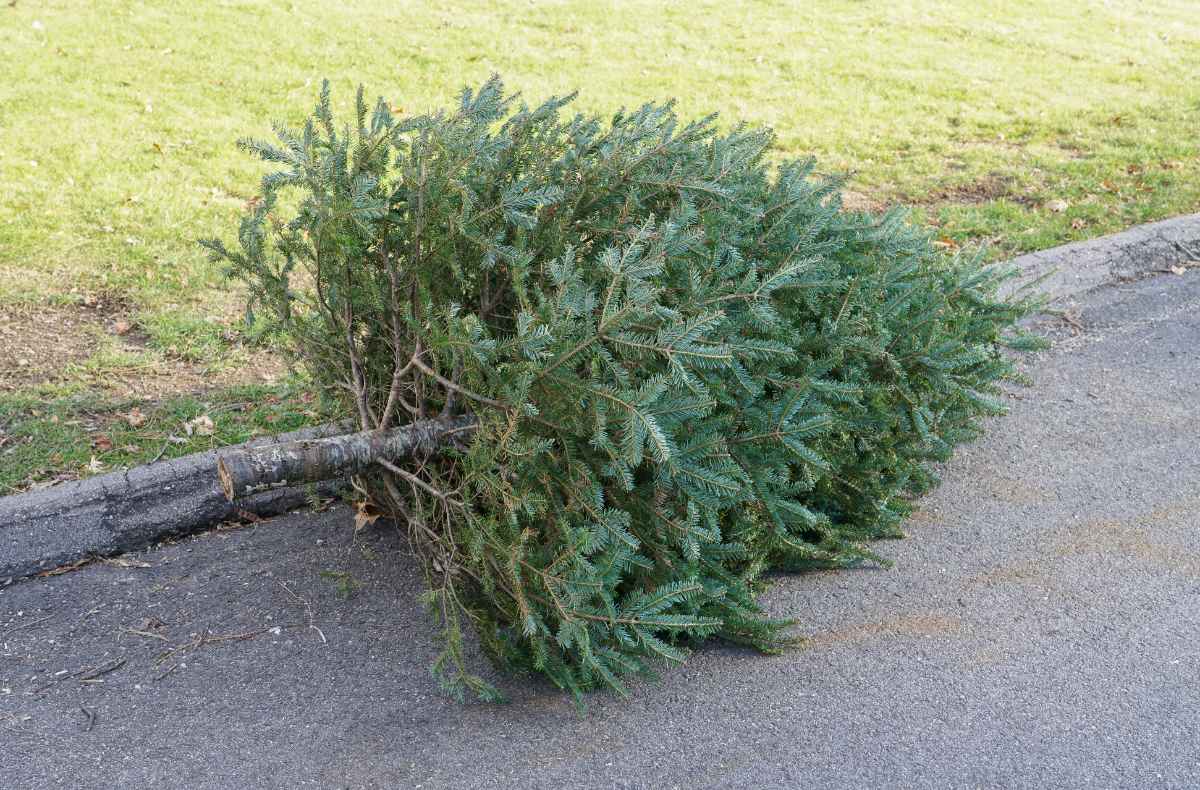
After the holidays, your Christmas tree doesn’t have to end up in a landfill. There are numerous eco-friendly ways to recycle, repurpose, and dispose of your tree.
From creating nutrient-rich mulch for your garden to providing shelter for wildlife, your old tree can serve valuable purposes long after the decorations come down. Whether you participate in municipal programs, donate to local farms and zoos, or transform it into practical materials for your home, proper tree disposal benefits both the environment and your community.
- 1. Participate in Municipal Collection Programs
- 2. Drop Off at a Recycling Center
- 3. Create Garden Mulch and Compost
- 4. Provide Wildlife Habitat and Shelter
- 5. Build a Fish Sanctuary
- 6. Use for Erosion Control
- 7. Extract Pine Needles for Crafts and Around Your Home
- 8. Support Local Animal Farms and Sanctuaries
- 9. Cut Into Firewood
- FAQ About Disposing of a Christmas Tree
1. Participate in Municipal Collection Programs
Many cities and municipalities have free curbside pickup of Christmas trees in early January as part of their waste management services. Other cities, like here in Idaho Falls, Idaho, don’t do curbside service but have drop-off locations around town.
“Christmas trees are bulky and require special equipment and additional personnel to collect, which would slow down regular trash routes,” says Kimberly Felker, public information officer for Idaho Falls. “The drop-off sites allow Sanitation crews to manage the volume more safely and efficiently.
“The mulch created from recycled Christmas trees is used in public gardens and public areas. It is also free to those who reside inside the city limits of Idaho Falls.”
Check your local government’s website for collection dates and specifics, including if and when residents can pick up free mulch.
“Residents should remove all plastic bags, lights, ornaments, tinsel, stands, and any other decorations,” Felker says. “The tree must be completely bare before being dropped off so it can be safely processed into mulch.”
My Tip: If you are close to a drop-off location, but don’t want to put it in or on your car, throw it in a sled and drag it over. I do this with our tree.
2. Drop Off at a Recycling Center
In areas that don’t offer curbside pickup, you can take your tree to one of over 4,000 community recycling centers nationwide. Similar to local municipalities, they typically chip trees into mulch that residents can take home for free.
Some recycling centers accept trees year-round as part of their regular yard waste programs. Call ahead to confirm hours and size limitations. Most programs only accept untreated, real trees. They have to be free of decorations, and they can’t be in plastic bags.
3. Create Garden Mulch and Compost
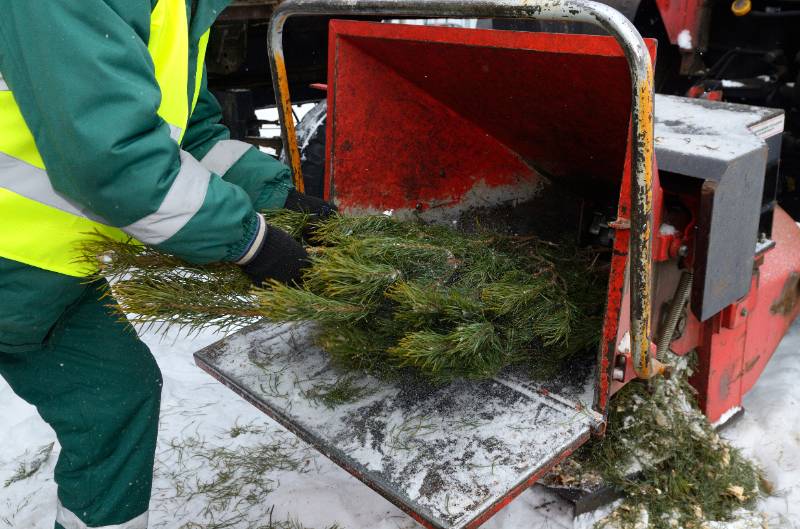
Transform your beloved Christmas tree into valuable garden nutrients by creating your own mulch and compost. This natural approach enriches your soil while reducing waste.
How to do it: Use a wood chipper or hand pruners to break branches into smaller pieces, then spread the mulch around garden beds, shrubs, and trees. Dried pine and fir needles make excellent acidic mulch for azaleas, rhododendrons, and blueberries.
Add smaller twigs and needles to your compost bin, mixing them with other materials to help them decompose.
See Related:
— How to Mulch Your Yard: A Step-by-Step Guide
— How to Use Compost in Your Yard
4. Provide Wildlife Habitat and Shelter
You can repurpose your Christmas tree as a backyard wildlife sanctuary for birds and small animals by putting it in your yard or garden. The dense branches make excellent shelter for birds and small animals like rabbits and squirrels, offering protection from wind, snow, and predators.
To attract residents, decorate it with suet cakes, orange slices, or pinecones smeared with peanut butter.
5. Build a Fish Sanctuary
Christmas trees make excellent fish habitats when submerged in ponds, lakes, reservoirs, or retention basins. The branches create protective cover for small fish, giving them a place to hide from predators. Algae will grow on the tree as it decomposes, which attracts baitfish.
Many state agencies and local fishing organizations run tree collection programs after the holidays specifically for creating fish habitats in public waters.
In Kentucky, the Department of Fish and Wildlife Resources accepts Christmas trees from December 26th through January 15th at designated drop-off locations across the state. The trees are anchored to environmentally friendly weights and submerged in lakes and reservoirs to create refuge and feeding habitat.
Contact your state’s Department of Natural Resources (could be called Fish and Game or Department of Wildlife Resources) to find participating programs.
6. Use for Erosion Control
Christmas trees also help combat soil erosion along shorelines, riverbanks, and hillsides.
Trees can be stacked horizontally along eroding banks or dunes to create natural barriers. Their dense branch structure slows water flow and traps sediment, allowing vegetation to reestablish.
Some coastal communities, like the Save Our Beach Association in Surfside Beach, Texas, organize restoration projects to rebuild dunes using donated Christmas trees. In areas like that, the dunes are vital for controlling flooding and wave action during tropical storms and hurricanes.
Contact your local conservation district, soil and water conservation office, or environmental organizations to learn about erosion control programs that are accepting Christmas tree donations.
7. Extract Pine Needles for Crafts and Around Your Home
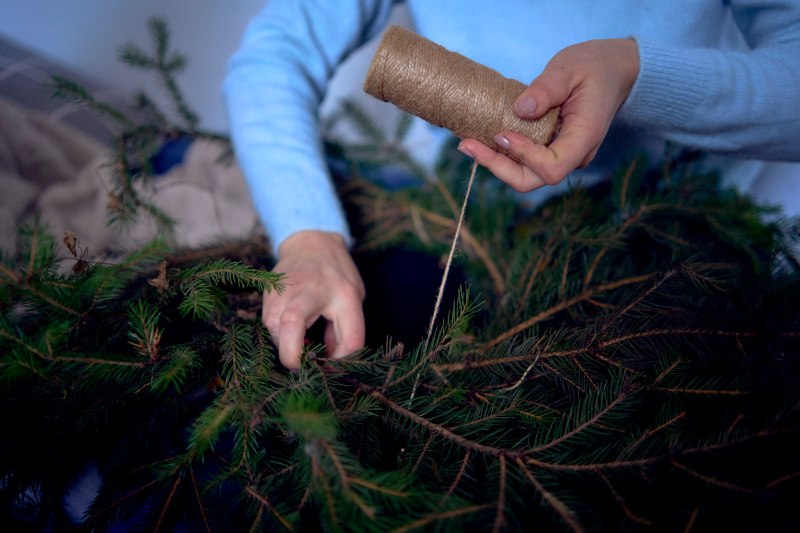
You can make crafts with Christmas tree needles, such as pressing them into air-dry clay to make ornaments, filling clear ornaments with clippings, or using coiled basketry techniques. Other ideas include making potpourri for a festive scent, crafting sachets to freshen drawers, or creating natural cleaners like an evergreen-infused vinegar.
8. Support Local Animal Farms and Sanctuaries
Some zoos, animal sanctuaries, and farms have recycling programs for which people can donate their Christmas trees for animal enrichment and food. The needles provide vitamins A and C while offering a food source that keeps animals like goats, sheep, camels, and elephants mentally stimulated during the winter months.
Make sure your tree is free of decorations, lights, tinsel, and any additives like fire retardant or preservatives. Some farms prefer particular species over others, so it’s always good to check with them before donating.
Town and Country Gardens in Idaho Falls, for example, donates some of its unsold Christmas trees to the Idaho Falls Zoo for the animals. Angela French, nursery supervisor, says, “They’ve generally liked getting them from us because they know the trees haven’t had any ornaments or tinsel on them. Or any other chemicals like tree preservative.”
9. Cut Into Firewood
Your tree can be used as firewood, but there are some limitations, and it must be prepared properly. Fresh trees have high moisture content, so their wood doesn’t burn well.
How to do it: Cut the trunk and larger branches into smaller logs. (If you cut down your own Christmas tree, you may already have a saw on hand.) Allow these logs to dry for at least 6 months to a year in a covered, well-ventilated area.
Once properly seasoned, the wood burns quickly and can be used in campfires, outdoor fire pits, and for kindling. The sap content can lead to excessive creosote buildup in chimneys, so the logs shouldn’t be used indoors.
Dried needles make excellent fire starters, but be careful with sparks, especially indoors.
My Tip: I’ll admit there were a couple of years when I didn’t get my tree down to the city drop-off location. Since it couldn’t go in my garbage can, I pulled it out to my garden for the winter. Come spring, I shook the needles off (and later worked them into the soil), and then I used my bow saw to cut the tree into pieces for my fire pit.
FAQ About Disposing of a Christmas Tree
Remove your tree when the needles turn brown, the branches become brittle, or excessive needles drop when you touch the tree. With proper care, most trees last around 4-5 weeks, making early January ideal for disposal.
If at any point the tree stops taking up water or shows significant drying, remove it immediately so it isn’t a fire hazard.
Most waste management companies and local municipalities either discourage or prohibit residents from placing Christmas trees in dumpsters. Trees take up excessive space and aren’t suitable for landfills.
Flocking (applying artificial snow powder to a tree) makes a tree non-recyclable and non-compostable. Check with your local waste management department to confirm disposal guidelines.
Artificial, flocked, and chemically treated trees can’t be composted. Contact your local sanitation department for disposal guidelines.
Give Your Tree a Second Life
Your Christmas tree’s journey doesn’t have to end when the holidays do. By choosing one of these eco-friendly disposal methods, you’re practicing sustainability while potentially enriching your own garden and yard.
If you’ve turned your tree into mulch or compost and need help spreading it around your landscape, LawnStarter can connect you with local landscaping professionals who can help transform your outdoor space. From mowing and aeration to lawn treatments, our network of local pros makes it easy to keep your yard looking its best year-round.
See Related: How to Select the Right Christmas Tree
Sources
- Kimberley Felker, public information officer, City of Idaho Falls, ID.
- “Quick Tree Facts.” National Christmas Tree Association.
- “Christmas Tree Recycling.” Kentucky Department of Fish & Wildlife Resources.
- Angela French. Nursery supervisor, Town and Country Gardens, Idaho Falls, ID. Personal interview.
Main Image: Discarded Christmas tree placed at curb for recycling. Image Credit: nd700 / Adobe Stock
