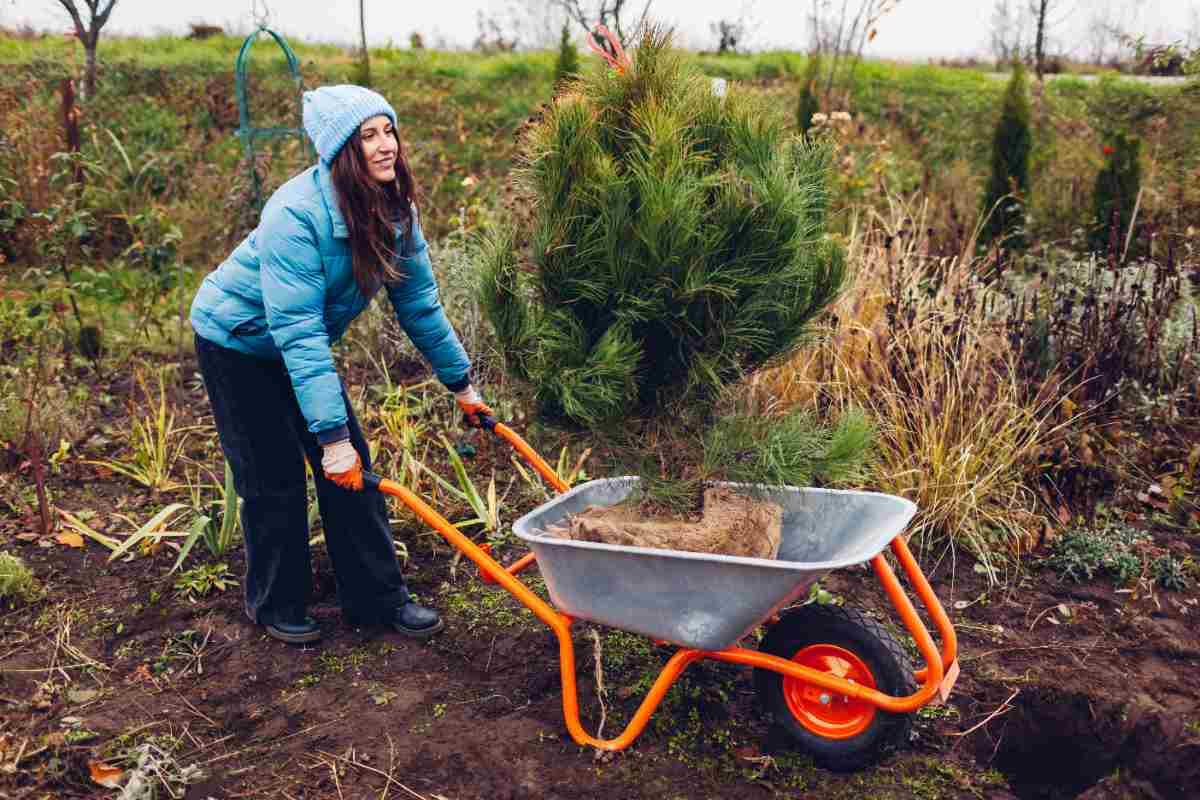
You don’t have to toss your Christmas tree after the holidays. Live trees in containers or balled-and-burlapped can be replanted in your yard, giving you years of enjoyment while helping the environment.
You’ll need to dig the planting hole while the ground is still workable and keep your tree healthy when indoors. The replanting process, whether you do it yourself or hire a tree care specialist, involves careful handling, proper planting depth, and thorough watering to help your tree establish strong roots.
The Key to Replanting Live Christmas Trees
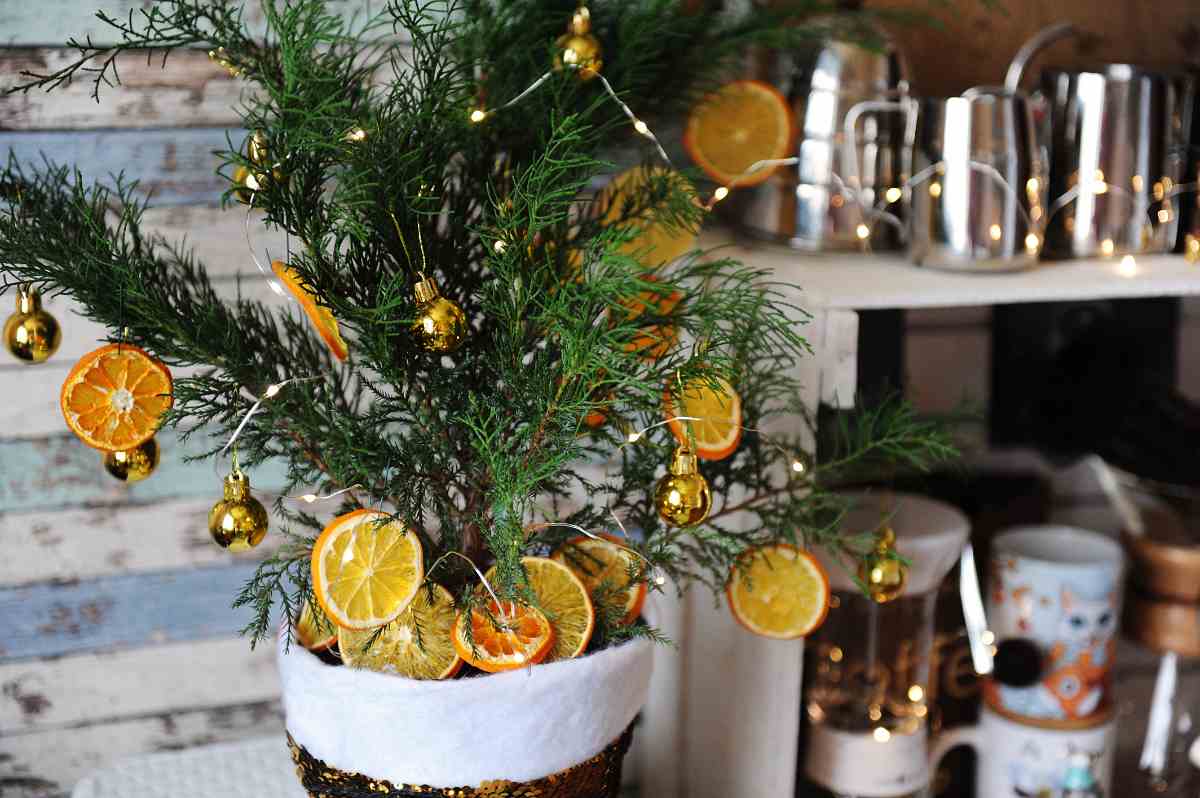
You can plant a live Christmas tree outside just after the holidays, even in frigid winter temperatures, given a couple of key things. Live Christmas trees have already gone dormant for the season when you buy them. For it to survive when planted outside, it must stay dormant indoors.
Pre-Holiday Prep: Dig a Hole Before the Ground Freezes
Where you live will dictate whether you need to dig a hole before Christmas or wait until it’s planting time.
If you live in a cold climate where winter brings freezing temperatures, this step must happen before the ground freezes. In Northern regions, this could be mid-November or early December at the latest.
Dig a hole the same depth as and twice as wide as the root ball. You’ll need to estimate based on the size you plan to purchase. For a 5-6 foot tree, plan for a hole about 2 feet in diameter and 18 inches deep.
| Pro Tip: If you are experiencing freezing temperatures, cover the hole with plywood and store the excavated soil in the garage to keep it workable. |
Choose the Right Live Christmas Tree
Not all live Christmas trees are created equal when it comes to replanting success.
Unfortunately, you can’t replant a cut Christmas tree — not even the perfectly selected tree — because it doesn’t have intact roots. However, you can replant balled-and-burlap and container-grown trees that still have roots.
Look for a hardy native species adapted to your hardiness zone and growing conditions. They have the best chance of surviving.
- Spruces generally handle transplanting well and tolerate indoor stress better than firs.
- White pines are also reliable.
- Fraser firs grow between 4,500 and 6,684 feet, and typically do not do well at lower elevations.
See Related: How to Cut Your Own Christmas Tree (Step-by-Step)
Balled-and-Burlapped Trees
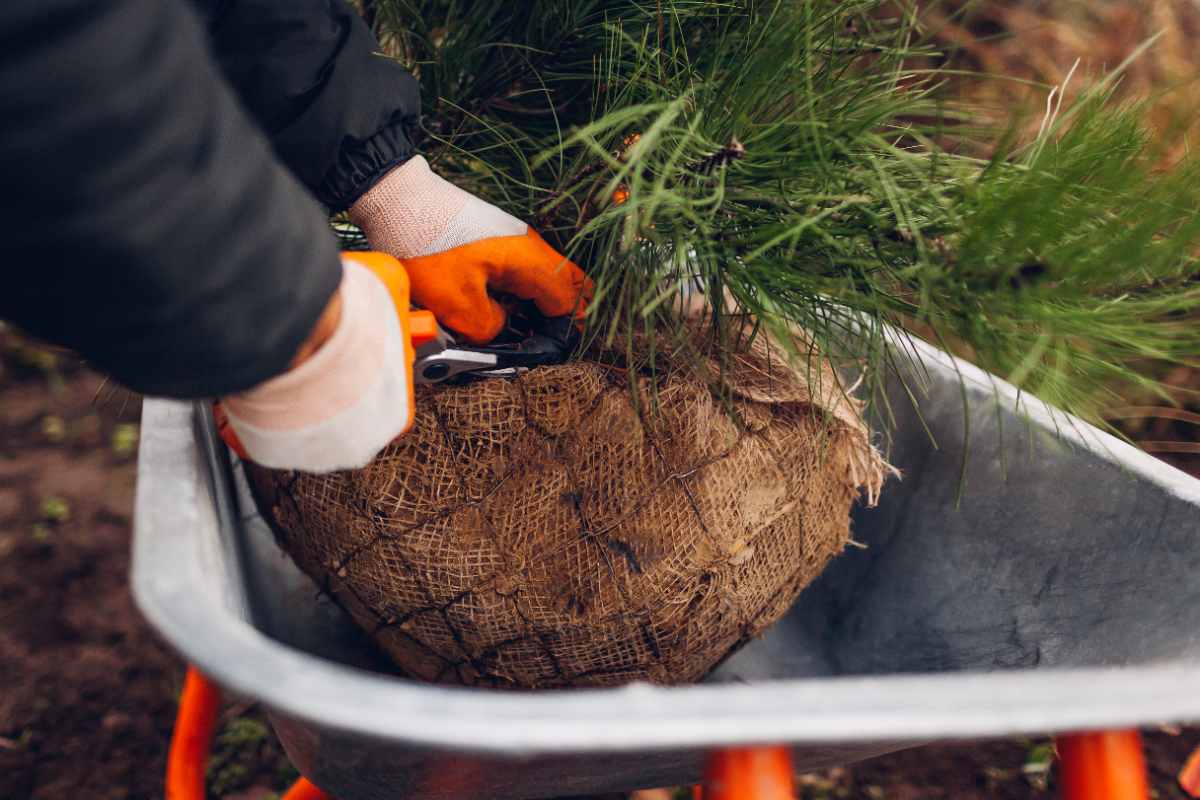
Balled-and-burlapped (B&B) trees are dug from the ground with their root balls intact, then wrapped in burlap and secured with twine or wire. Some roots are severed during harvesting.
Expect to pay $15 to $16 per foot for a 5- to 6-foot common variety such as white pine or Norway spruce. Prices for B&B trees generally increase with size.
Pros:
- Larger trees available (up to 11 feet)
- Most budget-friendly live tree option
- Wide variety of species available
Cons:
- Extremely heavy (250 to 450+ pounds)
- 7- to 10-day indoor display time
- 50% to 70% survival rate
Container-Grown Trees
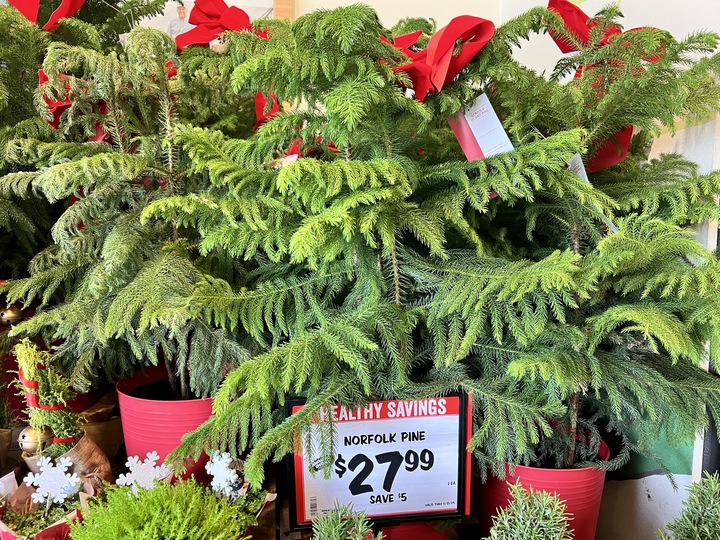
Container-grown trees spend their entire life in pots with fully intact root systems. They are smaller in size and target the “tabletop” Christmas tree market.
These trees typically cost 20% to 40% more than B&B trees but have distinct advantages.
Pros:
- 80% to 90% survival rate
- Lightweight and easier to move
- 2-week indoor display time
Cons:
- More expensive
- Smaller size (2 to 6 feet)
- Likely to be root-bound
Take Proper Care of it Indoors
The key to keeping your tree indoors is to keep it dormant so it can be planted outside right after the holiday.
Keep your live tree in the coolest part of your home, away from heating vents, fireplaces, and direct sunlight. Aim for a room temperature of 65 to 68 degrees F if possible.
Check the soil daily and keep it consistently moist but not waterlogged.
| Pro Tip: Place ice cubes on top of the soil to water your tree. They’ll provide slow, steady hydration while keeping the roots cool. |
If it’s too warm, says Angela French, nursery supervisor at Town and Country Gardens in Idaho Falls, “(the tree) starts pushing new growth because it’s been in a warm location.” Once dormancy breaks, the tree can’t be planted outside until spring.
Transition the Tree Post-Holiday
Never move your live tree directly from your warm home to its permanent spot in your yard. Move it to an unheated garage, covered porch, or shed for about 7 days.
This transition protects the tree from temperature shock, similar to hardening off young seedlings in the spring.
Continue watering the tree while it transitions. Check soil moisture every day or two, and watch for a mild weather day to plant.
Step-By-Step Planting Process
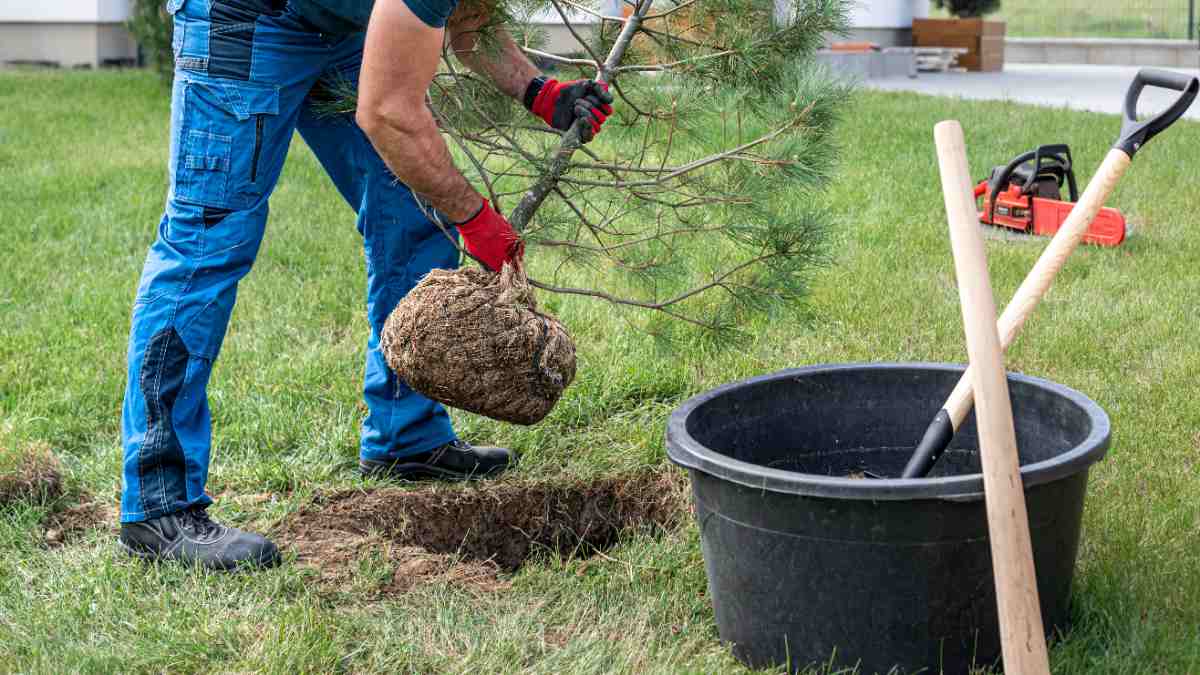
1. Prepare the Root System
For container trees, tap the sides and bottom of the pot to help loosen the root ball. Carefully turn the pot on its side and gently pull the tree out.
Loosen circling roots to prevent the tree from strangling itself. Cut an ‘X’ across the bottom of the root ball with a sharp knife and make 3-4 shallow vertical slices down the sides. Gently spread the roots out as much as possible.
For B&B trees, leave them in their burlap until they are positioned in the planting hole.
2. Position the Tree
| Important: When planting, never lift or move the tree by grabbing hold of its trunk. Always handle it by the root ball. |
Lower the tree carefully into your pre-dug hole. The root flare (where the trunk meets the roots) should sit 1 to 2 inches above ground level.
Rotate the tree so its best side faces your primary viewing angle.
For B&B trees, cut and remove all twine, rope, and as much of the burlap as possible. Remove any nails holding the burlap in place. If the tree has a wire basket, use wire cutters and peel as much away as you can.
3. Backfill the Hole
Fill the hole with the original soil, packing it firmly around the root ball to eliminate any air pockets.
4. Water and Mulch
Create a soil berm 2 to 3 inches high in a circle around the tree’s drip line. Mulch around the tree, keeping it away from the trunk, and then water the tree deeply.
5. Tie and Stake (Optional)
If the tree is in a windy location, stake and tie it to keep it from blowing around. When the tree rocks back and forth, it won’t be able to establish new roots.
Post-Planting Care
When the ground isn’t frozen and temperatures are above 40 degrees F, give your tree 3 to 4 inches of water weekly.
Increase the watering frequency to twice weekly during the spring and summer.
Wait until the following spring to fertilize and then use a balanced formula for evergreen trees.
During the first year, prune only dead or damaged branches to minimize stress.
See Related: Signs of Drought Stress in Trees
FAQs About Replanting a Live Christmas Tree
Some needle drop is normal as your tree adjusts. Plus, evergreens naturally shed older, interior needles.
According to Scott Western of Western’s Tree Farm, pines typically hold their interior needles for only 2 years, “so they have a lot of dead” inside. Firs and spruce trees have much less needle drop, because they “hold upwards of 5 years’ worth of needles.”
Yes, but container trees require extra care and are more susceptible to winter stress. (The soil naturally insulates the root ball from extreme temperatures.)
Protect roots by insulating the container, partially burying the pot, or moving the tree to a sheltered location during extreme cold.
Probably not. As the tree grows, the carefully shaped nursery form will disappear and the tree will develop a natural, asymmetrical growth pattern. However, you can prune it lightly each spring to maintain some shape.
Turn to the Pros for Planting Help
Replanting a live Christmas tree takes careful planning, heavy lifting, and ongoing care. If the process feels overwhelming, tree care specialists have the expertise and equipment to handle everything from proper planting to long-term care.
LawnStarter connects you with qualified local tree care professionals who can plant your Christmas tree correctly and provide the seasonal care it needs to thrive for years to come.
Sources
Angela French. Nursery supervisor, Town & Country Gardens, Idaho Falls, ID. Personal interview.
“Fraser Fir.” National Christmas Tree Association.
Scott and Jill Western, third-generation owners of Western’s Tree Farm, Applegate, MI. Personal interview.
Main Image: A woman pushes a live Christmas tree in a wheelbarrow. Photo Credit: maryviolet / Adobe Stock
