
Nearly 9 in 10 Texas lawns are under drought stress right now – and most homeowners are mowing too short, making it worse.
As of March 31, 2026, 89% of Texas is in drought, according to the National Integrated Drought Information System. Soil moisture is below the 10th percentile statewide, and evaporative demand – the atmosphere’s “thirst” – hit exceptional levels throughout March. That means your lawn is losing moisture faster than it can absorb it, even when you water.
Bermuda, St. Augustine, Zoysia, and buffalograss – the most common Texas lawn grasses – can survive and recover from drought when cared for correctly. The right moves right now are mow high, water deep, skip the fertilizer, and stay off stressed turf.
| Key Takeaways: |
|---|
| • Raise your mower height immediately. Cutting too short during drought is one of the fastest ways to permanently damage your lawn. • Water deeply and infrequently – not daily. • Brown doesn’t mean dead. Texas warm-season grasses go dormant under stress, but they can recover with water and the right care. |
How Bad Is the 2026 Texas Drought?
This is not a typical dry spring. The numbers from Drought.gov tell a stark story:
- 89% of Texas is in drought as of March 31, 2026.
- Soil moisture is below the 10th percentile across most of the state.
- Evaporative Demand Drought Index (EDDI) – a measure of how aggressively the atmosphere pulls moisture from the soil and plants – remained at exceptional levels throughout March, meaning even near-normal rainfall would not be enough to offset moisture loss.
- Lake Corpus Christi and Choke Canyon Reservoirs in South Texas dropped below 9% combined capacity – the lowest level on record.
- South Texas farmers in some areas ceased operations due to drought and low commodity prices.
Some short-term improvement is possible in early April, with about 1-3 inches of rain reported in central Texas and Oklahoma on April 2. However, the underlying drought remains severe.
Signs Your Lawn Is Drought-Stressed
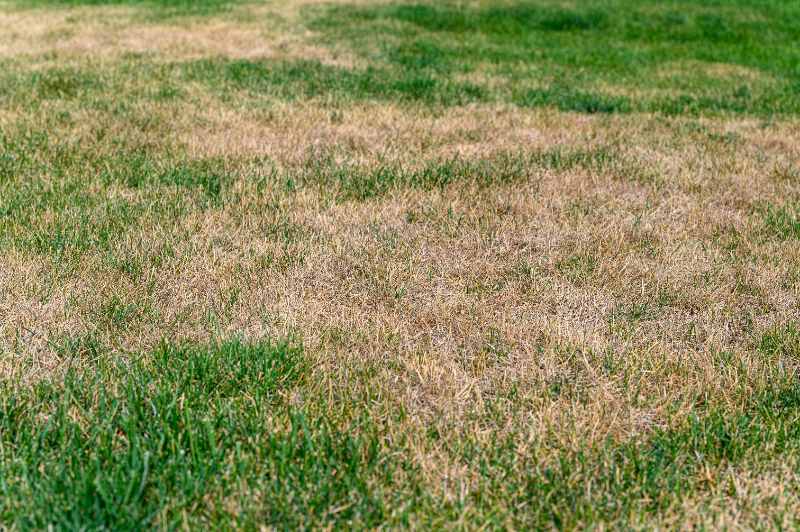
Catch these signs early – the sooner you act, the faster your lawn can recover.
Stage 1 – Early stress (still reversible within 1-2 days of watering):
- Dull, bluish-gray color instead of green
- Footprints remain visible after walking across the lawn
- Grass blades beginning to fold or curl
Stage 2 – Moderate stress:
- Uneven, patchy color
- Noticeably slowed growth
- Blades folded flat to conserve water
Stage 3 – Severe/dormant:
- Greenish-brown to tan color across the whole lawn
- Growth has stopped
- Turf feels brittle underfoot
Important: Properly identify what’s causing your lawn stress. “When we talk about stress and our grass, the problem is most people always assume that it’s heat-stressed,” says Weston Floyd, turfgrass research assistant at Texas A&M University.
“The stress can actually be several things,” Floyd says, including insects, disease, dogs, foot traffic, or mower damage. “There’s not really anything you can just look at and say, ‘OK, this is drought,’ except for maybe some purpling with wilt.
“If it is truly drought stress, then your grass is going to start turning a black or a purple color when you step on it,” he adds.
St. Augustine owners take note: St. Augustinegrass does not do well in dormancy, so when it turns brown, it is very close to the point of no return. Act quickly – it has a far shorter recovery window than Bermuda or Zoysia.
See Related:
Drought Mowing Rules by Grass Type
The single biggest mowing mistake during drought: cutting too short.
Taller blades shade the soil, slow evaporation, and support deeper root growth – all critical when rainfall is scarce. Here are the best mowing heights for Texas’s most common grasses during drought conditions:
Drought Mowing Heights by Grass Type
| Grass Type | Normal Mowing Height | Drought Mowing Height |
| Buffalograss | 2-4 inches | 3-4 inches (or don’t mow) |
| Bermudagrass (common) | 1.5-3 inches | 2.5-3.5 inches |
| St. Augustinegrass | 2.5-4 inches | 3-4 inches |
| Zoysiagrass | 1-2.5 inches | 2-3 inches |
Universal drought mowing rules:
- Never remove more than one-third of the blade in a single mowing – this is critical under stress.
- Sharpen lawn mower blades. Dull blades tear grass rather than cut it, increasing water loss and disease risk.
- Mow less frequently. Let the grass growth rate (not your calendar) determine when to mow.
- Skip mowing during extreme heat (above 95 degrees) if possible – mow during early morning instead.
- Never scalp a stressed lawn.
- Mow 0.5-1 inch higher than normal to protect exposed stolons from drying out.
See Related:
How and When to Water During a Drought
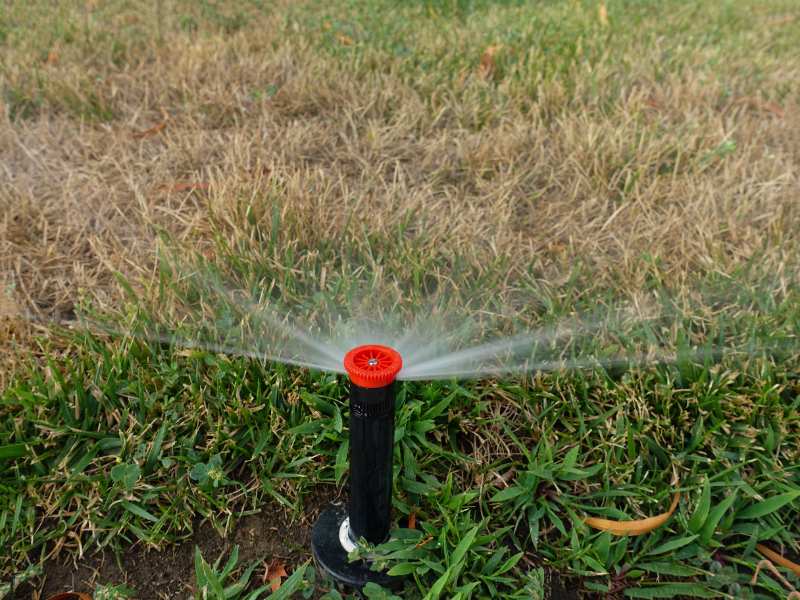
Daily shallow watering trains roots to stay near the surface, exactly where the soil is driest during drought. Instead, water deeply 1-2 times per week to push moisture down 6-8 inches into the root zone.
Target: 1 to 1.5 inches of water per week total (rain + irrigation combined).
Best time to water: Between 5 a.m. and 9 a.m. Watering at midday leads to evaporation before water reaches the roots. Evening watering promotes fungal disease.
Why watering deeply is important: “I always like to use the analogy of ‘don’t feed the bears,’” Floyd says. “If you feed the bears, the bears will forget how to forage, and they won’t go get food.
“We’ve got to think of our roots in our grass plant the same way. If we’re watering those roots and watering the grass every single day … the grass and the roots forget how to forage. They stay shallow, and they stay at the top,” Floyd explains.
“As soon as we get on water restrictions and … into droughty periods, those roots don’t know how to go find water, and they’re too shallow to find water. So then we start losing grass much faster.”
Proper training is the solution, he says. Unlike the weather, that’s something you can control.
“The way we do that is we train our roots to go find water,” Floyd says. “They say, all right, we’re not going to get new water for a while. We’ve got to go find water. And so they start getting longer.”
Watch for Hydrophobic Soil
Deep watering is important, but technique is key. During prolonged drought, Texas soils can become hydrophobic – water beads on the surface and runs off instead of soaking in.
If you see runoff even on dry soil, try the “cycle and soak” technique: Water for 10 minutes, pause 30-60 minutes, then water again. This allows water to penetrate rather than run off.
Watering Restrictions
Many Texas municipalities are under Stage 1-3 drought contingency plans. Check your local water provider before irrigating. Cities currently with restrictions include many in the San Antonio, Corpus Christi, Dallas, Houston, and the West Texas regions.
Pro Tip: An irrigation audit – checking sprinkler heads for coverage gaps and output rates – can maximize every drop of water you’re allowed to use.
Dormancy vs. Death
Without rain or irrigation, most Texas warm-season grasses (Bermuda, Zoysia, buffalo) go brown as a survival mechanism – that’s dormancy, not death. They can stay dormant for several weeks and survive.
Do a simple tug test: If grass pulls out easily with no resistance, it may be dead. If roots hold, it’s dormant.
“We’ve had 20-30 days of drought, and then as soon as the water kicks on, (healthy warm-season grass) greens back up,” Floyd says.
If the lawn turned brown evenly and you’ve had little rain or irrigation, dormancy is most likely.
Unhealthy, thin turfgrass is less likely to survive a drought.
“If it’s weak going into it, it’s not gonna survive,” Floyd says, because “when it goes dormant to protect itself, there’s nothing in there to sustain it. It is kind of like animals again. When they hibernate, they’ve got to be full so that they can make it through the winter.”
How to help your dormant lawn survive: Give dormant grass enough water every 3-4 weeks to moisten the soil at a 5-inch depth. This helps maintain the crown and keep grass alive until rain returns.
St. Augustine is less forgiving – if it has gone fully brown, act quickly to water it. “St. Augustine (lawns) have a tendency to struggle a little bit with that rebound,” Floyd says.
What NOT to Do During a Texas Drought

These are the most common mistakes that turn a stressed lawn into a dead one:
- Don’t fertilize. Applying nitrogen to drought-stressed grass forces growth that the plant can’t sustain without adequate water. It can also burn the lawn. Wait until drought conditions ease and soil moisture returns.
- Don’t mow short. Lawn scalping removes the leaf blade the plant needs for photosynthesis and exposes the crown and stolons to direct heat and sun. “The shorter we mow the grass, the shorter the roots get,” Floyd says.
- Don’t walk on stressed grass. Foot traffic on drought-stressed or dormant turf causes physical damage to fragile blades and compacts already-dry soil.
- Don’t water at midday or evening. Midday water evaporates before reaching roots; evening water sits on blades and promotes fungal disease – already a concern in stressed turf.
- Don’t ignore your irrigation system. Broken sprinkler heads, poor coverage, or a missed zone can create dead patches that look like damage from lawn diseases or lawn pests. Check it now.
- Don’t over-water in response to browning. Saturating dormant grass doesn’t help it revive faster. It can create fungal problems and drown roots.
See Related: How to Take Care of Your Lawn During a Drought
Drought Lawn Care Quick-Reference Chart
| Lawn Care Task | What to Do During Drought | What to Avoid |
| Mowing | Raise height by 0.5-1 inch; mow less often; use sharp blades. | Scalping; mowing in peak heat. |
| Watering | Deep, infrequent (1-2 times per week); early morning only. | Daily shallow watering; midday or evening watering. |
| Fertilizing | Skip entirely until drought eases. | Any nitrogen application on stressed/dormant turf. |
| Foot traffic | Minimize until your lawn recovers. | Playing or working on dormant turf. |
| Aeration | Wait for recovery. | Aerating stressed, dry turf. |
| Weed control | Hand-pull weeds. | Applying herbicide to drought-stressed grass. |
| Irrigation check | Audit now for broken sprinkler heads and coverage gaps. | Assuming your system is fine without checking. |
FAQs
Overseeding or laying down sod is not recommended right now. New seed and sod need consistent moisture to establish, which is nearly impossible to provide during severe drought without excessive water use. Wait until drought conditions ease and you have reliable rainfall or restrictions are lifted.
Yes. Drought-stressed grass is more vulnerable to chinch bugs (especially in St. Augustine), grubs, and fungal disease.
Hire a Texas Lawn Care Pro
Managing your lawn through a severe drought takes local know-how, the right adjustments, and consistent attention you may not have time for. If you’d rather leave it to someone who knows Texas grasses, LawnStarter makes it simple: Get an instant quote, pick a time, and a background-checked local pro will handle the rest. Get a free instant quote for mowing near you.
Read More: What is Drought-Tolerant Landscaping?
Sources:
Weston Floyd, turfgrass research assistant at Texas A&M University, College Station, TX. Personal interview.
Main Image: Dry brown lawn at suburban home. Image Credit: soupstock / Adobe Stock