Spring in Palm Bay is all about enjoying the outdoors, whether it’s a picnic at Turkey Creek Sanctuary or fishing in the Indian River Lagoon. It’s also when your grass wakes up and starts growing fast, making it the best time to set your lawn up for the hot months ahead.
Palm Bay’s sandy soils, coastal winds, and humidity can make lawns prone to stress if not properly maintained. In this article, we’ll walk you through tailored tips for the area, so your grass stays healthy and resilient heading into summer.
You can also leave everything, from the schedule to the actual maintenance, to a local pro. LawnStarter connects you to the best Palm Bay lawn care pros near you.
1. Test and Amend Your Soil
Healthy lawns start with the soil. Much of Palm Bay has sandy, fast-draining soil, which means water and nutrients don’t stay in place for long. Consider topdressing with compost to gradually improve soil structure and support root growth as the season progresses.
Spring is also a good time to test your soil, especially since Palm Bay requires a soil test before applying any fertilizer containing phosphorus. For comprehensive results, take your soil sample to the Brevard County Extension office. They’ll send it to the state lab to identify nutrient deficiencies and pH issues, so you can apply amendments and fertilizer as necessary.
See Related: 9 Reasons Why Soil Testing Is Important for the Lawn
2. Set Mowing Height for the Season Ahead
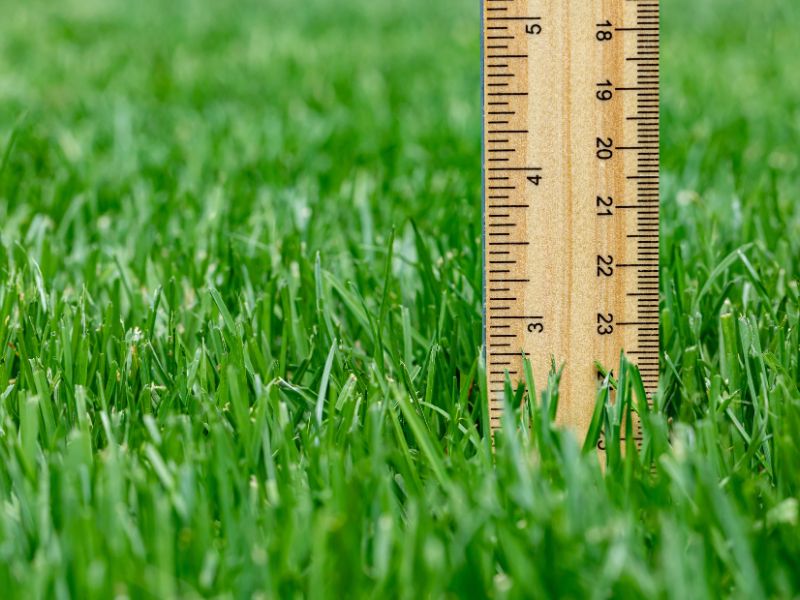
As spring growth picks up, setting the right mowing height helps prevent stress and keeps your lawn healthy through the warmer months. St. Augustinegrass is the most common grass in Brevard County and across Florida, so here are a few mowing tips for this grass type:
- Sharpen your mower blades at the start of the season to reduce the susceptibility to fungal diseases.
- Maintain it at 2 to 4 inches in height for healthy growth and better heat tolerance.
- Mow only when the grass reaches about 3 to 5 inches, so you remove no more than one-third of the blade at a time.
- Avoid mowing too frequently in early spring, when growth is just ramping up.
See Related: What is the One-Third Rule for Mowing Grass?
3. Water Smarter as Rainfall Increases
In Palm Bay, watering on a fixed schedule often does more harm than good. Aim to water only when your lawn shows signs it needs it, not just when irrigation is allowed. Watch for these signs your lawn needs watering:
- Footprints remain visible after walking across the grass
- Grass blades fold or curl in half
- The lawn takes on a blue-green or grayish tint
When it comes to watering:
- Water early in the morning, before 10 a.m. or after 4 p.m., so roots can absorb moisture before daytime heat and to prevent water from sitting on foliage overnight.
- Apply 1/2 to 3/4 inch of water per irrigation, enough to reach the root zone without runoff.
- Don’t water for more than one hour per zone.
- Adjust or skip watering after rainfall.
- Check the days you’re allowed to water based on your address.
See Related:
– 11 Essential Lawn Watering Tips for Florida
– How Long Should I Water My Lawn?
4. Feed Your Lawn at the Right Time and the Right Way
The best time to fertilize your lawn in Palm Bay in spring is April, when warm-season grasses are actively growing and able to absorb nutrients efficiently.
If you’ve completed a soil test, you’ll know exactly which nutrients your lawn needs, but there are a few Palm Bay fertilizer ordinances to keep in mind:
- Don’t fertilize if heavy rain is expected.
- Avoid fertilizers containing phosphorus unless your soil test specifically shows a deficiency.
- Do not apply fertilizer within 10 feet of ponds, lakes, streams, canals, or other water bodies.
- Choose a fertilizer with at least 50% slow-release nitrogen.
- Wait 30 to 60 days before fertilizing new turf.
See Related:
– Guide to Growing Warm-Season Grasses
– When to Fertilize Bahiagrass in Florida
– The Best Lawn Fertilization Schedule and Tips for Florida
5. Watch for Early Signs of Pests
Spring is a key time to watch for lawn pests in Palm Bay, especially chinch bugs and mole crickets.
- Chinch bugs are especially problematic in St. Augustinegrass. They damage lawns by injecting their saliva into grass blades, leaving turf that looks drought-stressed when it isn’t. Watch for yellow or brown patches that don’t improve with watering.
- Mole crickets, more common in bahia and Bermudagrass, tunnel through the soil, severing grass roots and creating raised ridges and thinning turf.
Treatment options depend on the pest. For chinch bugs, use targeted contact insecticides and keep your dethatching schedule up to date. To get rid of mole crickets, apply labeled insecticides or use baits to control them.
See Related:
– How to Get Rid of Florida Lawn Pests
– How to Get Rid of Chinch Bugs on the Lawn
6. Stay Ahead of Weeds Before Summer Heat
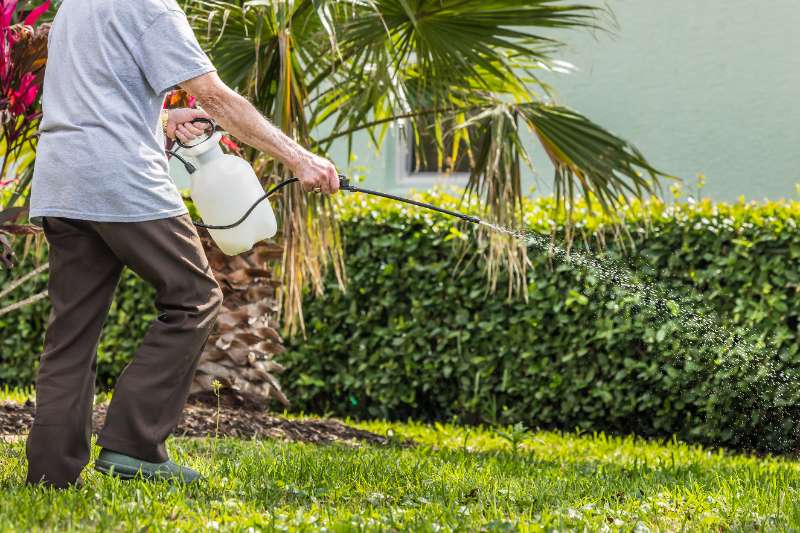
Weed control in spring depends heavily on timing. Pre-emergent herbicides work only before weeds sprout, so once weeds are visible, it’s too late for these products to be effective.
For weeds like crabgrass, germination begins when soil temperatures stay between 50 and 55 degrees for several days. In Palm Bay and surrounding areas, that usually means applying pre-emergent herbicides around February 15.
To get the best results, activate the product with about 1/4 inch of water if rain isn’t expected within 7 days of application. Irrigation helps move the herbicide into the soil’s root zone.
7. Fix Problem Areas Before They Get Worse
Spring is one of the best times to repair thin or damaged areas. In Palm Bay, lawn damage often comes from disease, pests, foot traffic, and winter stress.
Start by addressing surface issues. Dethatch if thatch exceeds about 1/2 inch, since thick thatch can block water, air, and nutrients from reaching the soil and roots. Then, choose the right repair method based on your grass type:
- Overseeding is used for thinned areas and is typically performed on bahiagrass lawns in Palm Bay.
- Though you can find Zoysiagrass seeds in some stores or online, it is more common to find plugs or sprigs.
- Plugs or sprigs are best for St. Augustinegrass, as seeds are not available.
- Replace entire dead sections with sod.
Before repairing, it is also important to correct the underlying cause, whether it’s shade, drainage issues, diseases, or pests, so new grass can take hold.
See Related:
– When to Overseed Bahiagrass in Florida
– What is Dethatching?
Carry Your Lawn From Spring Into Summer
Spring is your window to set your lawn up for success before Palm Bay’s heat and humidity really settle in. But if you’d rather spend your spring hiking local trails or visiting parks, LawnStarter can help.
We can connect you with a Palm Bay lawn care pro who can take care of everything while you enjoy the season. We also have pros in other Space Coast cities, like Cocoa Beach, Cape Canaveral, and Melbourne.
Main Image: Lawn mowed by a LawnStarter pro in Palm Bay, FL. Illustration by Amy Stenglein / LawnStarter
Related Posts: