| Key Takeaways |
|---|
| • Organic mulches enrich soil but need replacement annually; inorganic options last longer with minimal maintenance. • Free options require frequent replacement; premium mulches offer long-term value. |
Staring at rows of mulch bags at the garden center? With dozens of options, from wood chips to rubber and stone to straw, choosing the right mulch feels overwhelming.
The best mulch for your landscape will depend on a few key factors, such as where you plan to put it, its durability, and your aesthetic preferences. This guide walks you through each decision point, along with tips from an expert, to find your perfect match.
Need expert help choosing and installing mulch? Connect with local LawnStarter landscaping professionals who can assess your property and handle everything from selection to application.
Find Your Perfect Mulch: Use Our Calculator
Whether you’re mulching flower beds, vegetable gardens, or creating decorative landscaping, the right choice protects your plants, saves maintenance time, and transforms your yard’s appearance.
Not sure where to start? Answer a few quick questions about your project, and we’ll recommend the best mulch type for your specific needs with this calculator. Let’s simplify the decision:
Find the Perfect Mulch Type for Your Landscape
Your Recommended Mulch Types
Want professional guidance? Get free quotes from LawnStarter landscaping pros in your area who can help you select and install the perfect mulch for your landscape.
Understanding Your Two Main Options
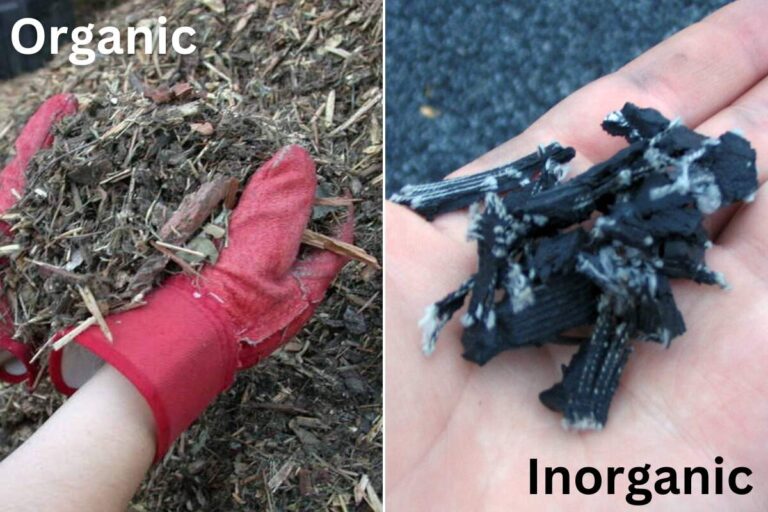
Before diving into specifics, understand the fundamental choice: organic vs. inorganic mulch.
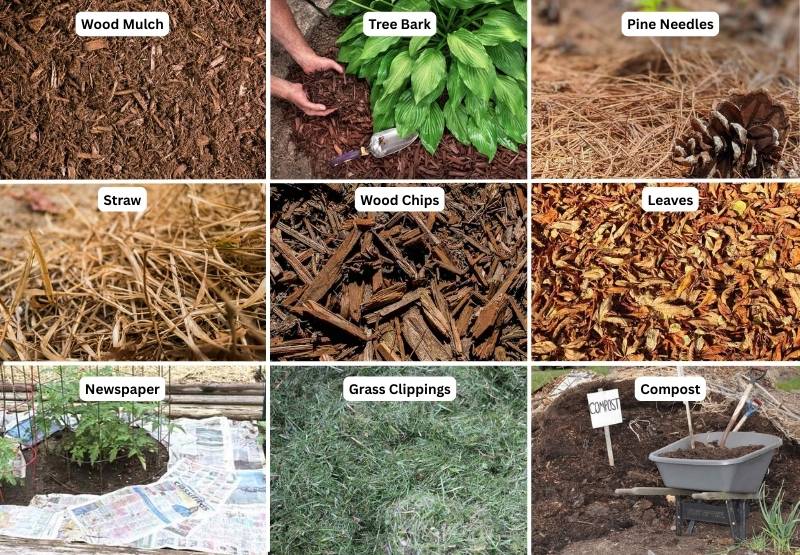
Wood Mulch: Nathanael Asaro / Adobe Stock Free / License
Tree Bark: Jon / Adobe Stock
Pine Needles: Pixabay
Straw: Pxhere
Wood Chips: Shadowmeld Photography / Wikimedia Commons / CC BY-SA 4.0
Leaves: Pxhere
Newspaper: OakleyOriginals / Flickr / CC BY 2.0
Grass Clippings: Darren Lewis / PublicDomainPictures / CC0
Compost: Oregon State University / Flickr / CC BY-SA 2.0
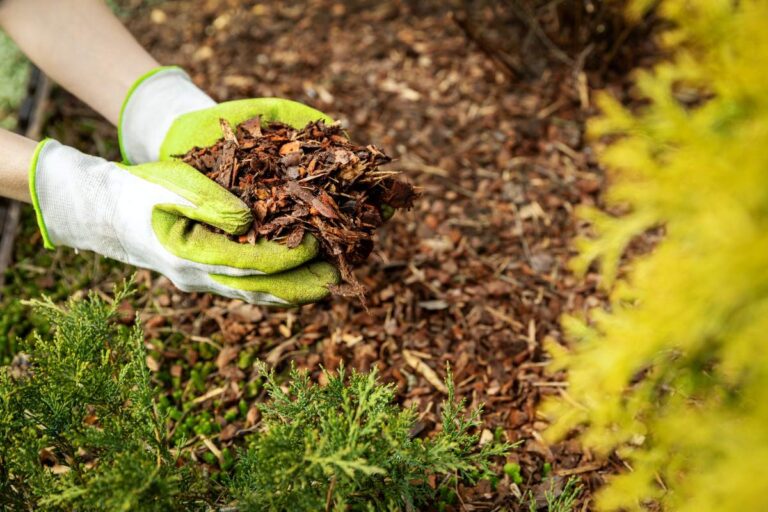
- Organic mulches derive from plant or animal matter (wood chips, bark, straw, leaves, compost). They decompose over time, enriching your soil with nutrients and improving its structure. Think of them as a soil investment that requires periodic replacement.
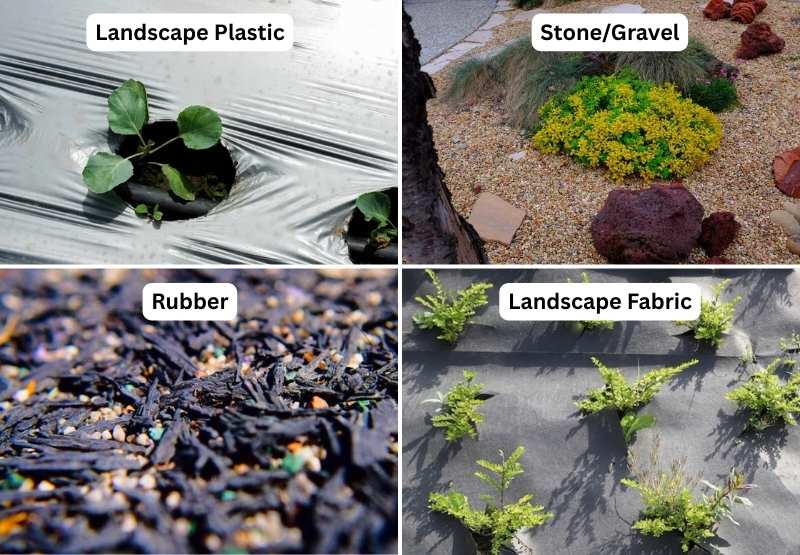
Landscape Plastic: Jack Tamrong / Adobe Stock / License
Stone/Gravel: leighklotz / Flickr / CC BY 2.0
Rubber: Ian D. Keating / PxHere
Landscape Fabric: Pixabay
- Inorganic mulches come from non-living materials (stone, rubber, landscape fabric). They last for years without breaking down, offering permanent solutions for areas where soil enrichment isn’t needed.
Most homeowners use organic mulches for garden beds and around plants, reserving inorganic options for pathways, decorative accents, and high-traffic areas.
For details, see our related guides:
– Organic vs. Inorganic Mulch: Which Should You Choose?
– Types of Organic Mulch for Your Yard and Landscape: How to Choose
– Types of Inorganic Mulch for Your Landscape: How to Choose
7 Key Factors to Guide Your Mulch Decision
With so many options available, it helps to break the decision into a few key considerations. The factors below will help you narrow your choices:
1. Match Mulch to Your Location
Location is your most important consideration because different areas have different needs. Think about where and how the mulch will be used and the type of traffic it will experience.
Here’s what to take into account for each location:
- For areas with drainage concerns: Wood chips will absorb some water, but they won’t fix a drainage problem. As LayLa Burgess, urban horticulture agent at Clemson University Extension, explains, “Assessing water flow/drainage into and off the property, as well as for specific ‘problem areas’ of the landscape, should be an important step before laying any mulch materials.”
- For flower beds and around shrubs: Choose organic options like wood chips, shredded bark, or compost. These break down gradually, improving soil health while providing attractive coverage. Wood chips can deplete nitrogen from the soil, affecting mainly annuals, new transplants, and other shallow-rooted plants, so fertilize before applying them.
- For vegetable gardens: Prioritize nutrient-rich options like compost, straw, or grass clippings. These decompose quickly (providing immediate benefits) and keep produce clean. Avoid treated or dyed mulches in edible gardens.
- For pathways and high-traffic areas: Select durable materials that resist compaction and don’t decompose under heavy foot traffic, like stone, gravel, or rubber. These require minimal maintenance and last for years.
- For sloped landscapes: Use heavier mulches (stone, bark) or materials that interlock (pine needles, wood chips) to prevent them from washing away during rain. Lightweight options like straw or grass clippings will migrate downhill. Burgess says that sometimes “slope may need to be corrected to achieve a gentler grade for “less washing.’”
- Around trees: Wood chips or pine needles work best, decomposing slowly while retaining moisture. Keep mulch 3-6 inches away from tree trunks to prevent rot and pest issues. Never create “mulch volcanoes.”
See Related:
– How to Keep Mulch in Place
– How to Mulch Around Trees
2. Consider Durability and Maintenance
Your choice of mulch will also depend on how much upkeep you’re willing to do:
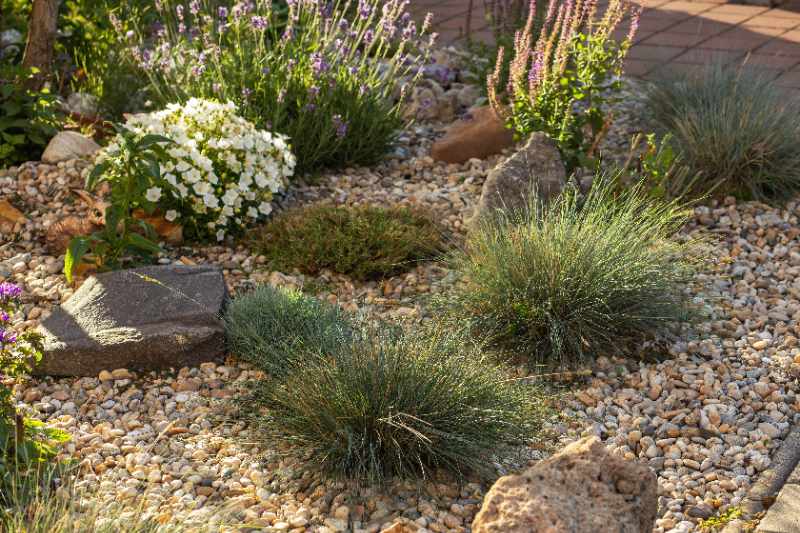
- Low-maintenance preference: If you’d rather not replace mulch often, go with stone, gravel, or recycled glass. These cost more upfront but save money and time in the long term. Perfect for busy homeowners or commercial properties.
- Moderate maintenance tolerance: Wood chips, shredded bark, and hazelnut shells last about 1 year before needing replenishment. They balance durability with soil benefits. Most homeowners find this replacement schedule manageable.
- High-maintenance willingness: Compost, grass clippings, and shredded leaves decompose quickly but deliver maximum soil benefits. Ideal for dedicated gardeners.
See Related: How Often Should You Replace Mulch?
3. Choose Your Aesthetic Style
Mulch ties your landscape design together, so aesthetic matters. For Burgess, “Planning and design should be the first step, then the application.”
Consider if the mulch options you have will go with your current landscape:
- Natural, rustic appeal: Wood chips, bark, cocoa hulls, or pine needles blend seamlessly with gardens. Natural browns and grays complement green foliage well.
- Modern, contemporary style: Stone, colored rubber, or recycled glass provides clean lines and bold statements. Black mulch creates a dramatic contrast.
- Eye-catching color: Red or black dyed mulch makes green plants pop. Ensure dyes are carbon- or iron oxide-based for safety.
- Coastal themes: Crushed shells shimmer in sunlight and suit Mediterranean plants.
Explore more in our article: How to Choose the Right Mulch Color.
4. Set Your Budget Range
Mulch prices vary widely by type, longevity, and availability. Choose based on your budget:
- Free: Grass clippings, fallen leaves, shredded newspaper
- Budget-friendly ($20-$40/cubic yard): Pine bark, pine straw, basic bark mulch
- Mid-range ($40-$80/cubic yard): Shredded hardwood bark, wood chips, glass
- Premium ($80-$150+/cubic yard): Hazelnut shells, stone and gravel, rubber, cedar and cypress mulch
Budget-friendly doesn’t mean ineffective, Burgess says.
“We use a good bit of pine straw here in South Carolina as a lightweight mulch. It breaks down into smaller, unrecognizable pieces from the original pine straw. Then, it generally incorporates into the soil or is removed (and can be composted), after which it is refreshed in the landscape.”
See Related: How Much Does Mulch Cost?
5. Meet Your Plants’ Requirements
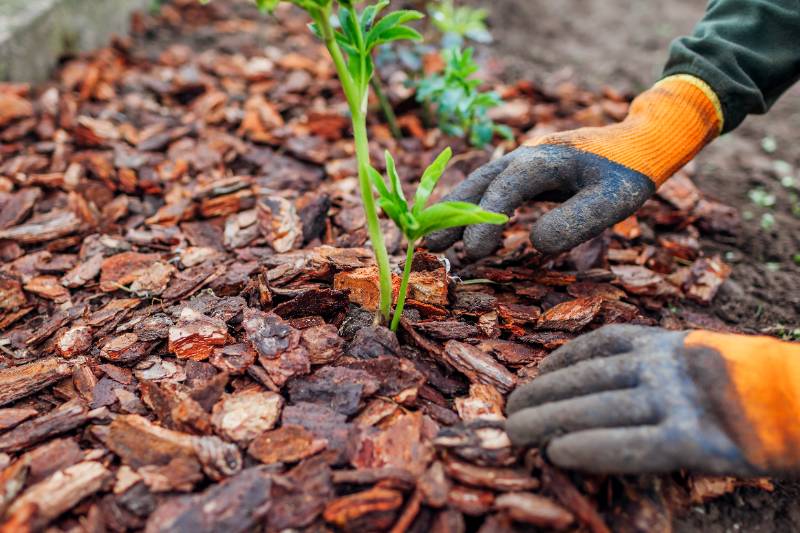
Different plants thrive with different mulch types due to pH and moisture conditions:
- Moisture-loving plants (hostas, ferns, cardinal flowers, hydrangeas): Choose compost, leaf mold, or wood chips. These retain water exceptionally well, reducing watering frequency during dry spells.
- Drought-tolerant plants (succulents, lavender, sedums): Select stone, gravel, or shells. These improve drainage and reflect heat, creating conditions these plants prefer.
- Acid-loving plants (azaleas, rhododendrons, blueberries): Use pine needles, pine bark, or wood chips.
- Vegetables and edibles: Stick with untreated organic options like compost, straw, or grass clippings (from pesticide-free lawns). Avoid dyed or treated mulches that might leach chemicals near food crops.
- Perennials and mixed beds: Shredded bark or wood chips work universally well, providing balanced moisture retention without extreme pH shifts.
6. Set Your Primary Goal
Not all mulches serve the same purpose, so identify your main objective to narrow choices quickly:
- Maximum weed suppression: Landscape fabric and plastic film provide the most effective weed barrier. For organic options, use thick layers (3-4 inches) of wood chips or bark.
- Soil health improvement: Compost, leaf mold, and grass clippings decompose the fastest, adding nutrients and improving soil structure.
- Moisture retention: Wood chips and compost excel at keeping soil consistently moist, reducing watering needs.
- Temperature regulation: Organic mulches insulate soil, keeping it cooler in summer and warmer in winter. This protects roots from temperature extremes and extends the growing season.
- Erosion control: Heavy materials like stone or interlocking options like pine needles prevent soil wash away on slopes and in heavy rain.
- Pest deterrence: Fresh cedar mulch naturally repels some insects, and so does reflective plastic mulch.
7. Factor In Your Climate
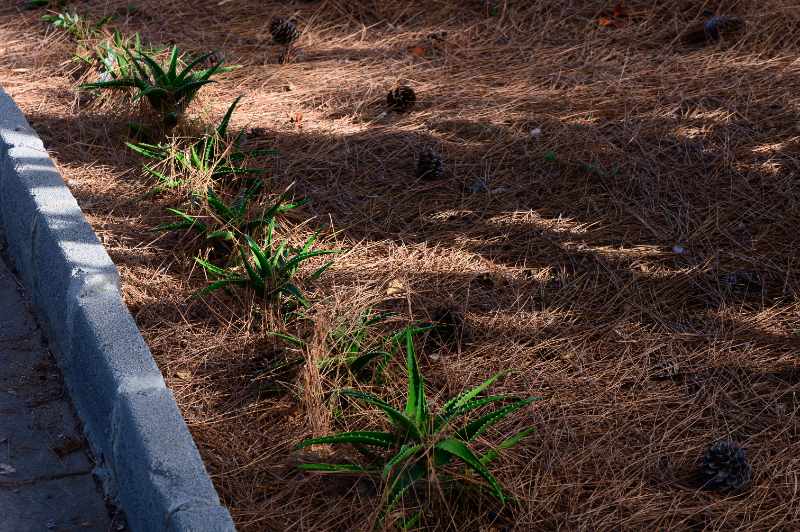
Your local weather patterns should influence your choice, as they will impact how well certain mulches perform. Burgess exemplifies that with the climate in her region: “(Mulch) decomposition occurs quickly in South Carolina due to the overall climate, especially when intensely hot and humid.”
Here are other factors to have in mind:
- Hot, dry climates: Light-colored stone or shells reflect heat and keep soil cooler. Dark mulches absorb heat and increase the soil temperature. Stone works beautifully in xeriscapes and desert landscapes.
- Humid climates: Avoid moisture-trapping organics like straw that promote mold. Choose stone, gravel, or wood chips with good air circulation.
- Cold climates: Insulating organic mulches (bark, wood chips, leaves) protect roots from freeze-thaw cycles.
- Rainy climates: Select materials that don’t wash away. Pine needles interlock naturally and work excellently on slopes.
Quick Decision Flowchart
Still unsure? Follow this simple decision tree:
- Garden beds with flowers/shrubs? → Choose wood chips or shredded bark (1 year lifespan, improves soil)
- Vegetable garden? → Choose compost, straw, or grass clippings (nutrient-rich, decomposes quickly)
- Pathway or high-traffic area? → Choose stone, gravel, or rubber (permanent, resists compaction)
- Around trees? → Choose pine needles or wood chips (slow decomposition, moisture retention)
- Sloped area? → Choose pine needles, bark, or stone (won’t wash away)
- Low-maintenance priority? → Choose stone, gravel, or rubber (rarely needs replacement)
- Budget-conscious? → Choose grass clippings, leaves (free), or pine straw
FAQ
Measure your bed’s length and width in feet, multiply them, then multiply by your desired depth in feet (0.17 for 2 inches or 0.25 for 3 inches). Divide by 27 to get cubic yards needed. Our mulch calculator does this math automatically.
See Related: How Deep Should Mulch Be?
Yes, but strategically. Layering landscape fabric, then stone, creates excellent weed control. Mixing wood chips with compost provides immediate nutrients plus lasting coverage. However, don’t mix materials with vastly different decomposition rates in the same bed, or you’ll create uneven surfaces.
Moreover, pay attention to what you’re adding to the compost. As Burgess says, “Ensure no pesticides have been applied to the materials to be composted to prevent contamination.”
Inorganic mulches, like stone, gravel, and recycled glass, last indefinitely, without decomposition. Among organic options, cypress mulch lasts longest (2-3 years), followed by pine straw and cocoa hulls (1-2 years).
Make Your Mulch Decision Today
Choosing and applying the right mulch transforms your landscape’s appearance and health, but you don’t have to do this alone.
Pros bring expertise in selection, proper application depth, bulk purchasing power, and correct weed barrier installation. They also avoid common mistakes, such as mulch volcanoes that damage trees.
So, connect with a local LawnStarter landscaping pro today to help you choose and install the perfect mulch for your yard.
Read More: How to Mulch Your Yard in 4 Steps
Sources:
LayLa Burgess, urban horticulture agent at Clemson University, Seneca, SC. Personal Interview.
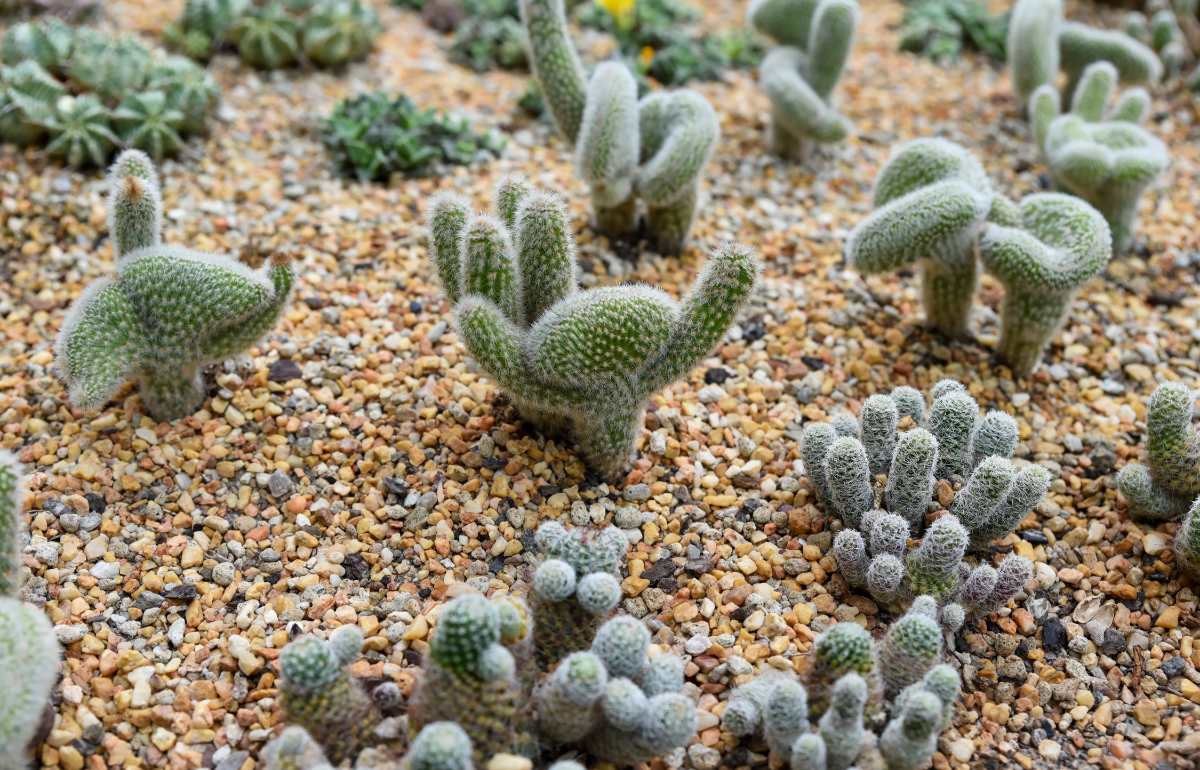
Main Image: Fuzzy cacti in gravel mulch desert bed. Image Credit: Tatiana / Adobe Stock
Related Posts: