Summer lawn care in Phoenix, AZ, can seem like a daunting task. With more than 100 days above 110 degrees, alkaline soil that locks up nutrients, and unpredictable monsoon storms, keeping your grass green takes more than occasional watering.
The good news? A few key adjustments can help your lawn thrive through the heat without running up your water bill.
This guide covers everything Phoenix homeowners need to know about summer lawn care, from watering schedules that work in the monsoon season to fixing the yellowing so many desert lawns deal with.
1. Water Every 3 Days
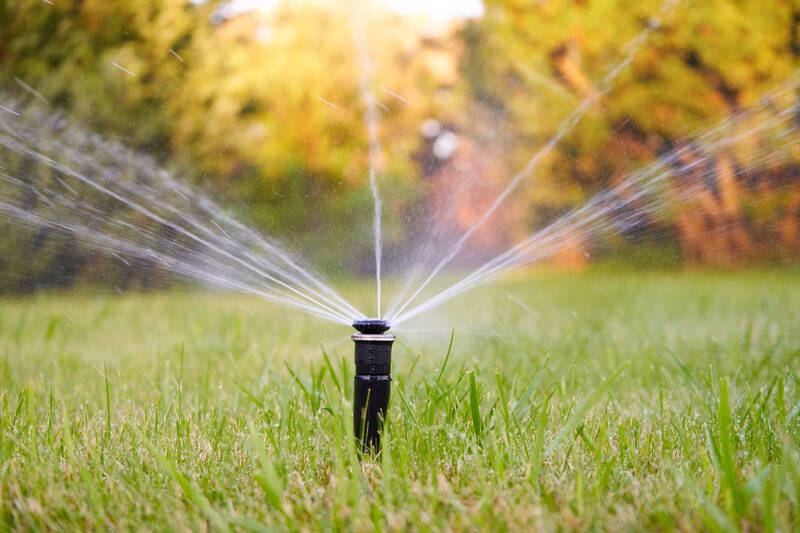
We all know how hot it can get in Phoenix, with summer records sitting at 122 degrees Fahrenheit. The instinct is to water daily, but this actually weakens your lawn by keeping the roots shallow.
Deep, infrequent watering trains roots to go downward into cooler soil, making your grass more resistant to heat. Follow these watering tips:
- Water every 3 days during the peak of summer. Even on the hottest days of July, Phoenix lawns don’t need daily watering.
- Irrigate from 4 a.m. to 7 a.m. During the day, you’re bound to lose most of that vital water through evaporation.
- Apply 3/4 to 1 inch of water per session.
How to test soil moisture: An hour after watering, insert a screwdriver into the ground. If it goes smoothly about 6-10 inches deep, then you’re watering enough. If it doesn’t, you need to raise the amount.
See Related: Signs Your Lawn Needs Watering
2. Adjust for Monsoon Season
Phoenix monsoon season typically runs from mid-June through September, bringing sudden downpours that can temporarily reduce your irrigation needs. However, monsoon storms are unpredictable and localized — your neighbor might get half an inch while your yard stays dry.
After a significant storm (at least 0.5 inch of rainfall), skip your next scheduled irrigation and let the soil absorb the natural moisture. Rain sensors can help your sprinkler system make these adjustments automatically.
3. Choose a Fertilizer with Iron
The common soil in the Phoenix area is Casa Grande soil — fine sandy loam in the top inch, dense clay underneath. This soil is low in nitrogen and organic matter, but rich in salts. Its high alkalinity (high pH) prevents grass roots from properly absorbing iron, so local lawns often suffer from iron chlorosis, a yellowing that you CAN’T fix by adding more nitrogen.
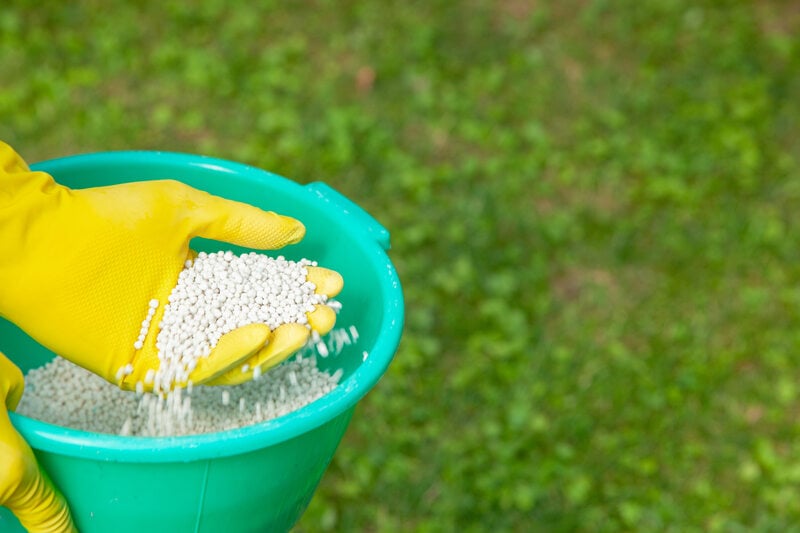
Look for a fertilizer with slow-release nitrogen and added iron. Apply once every 4 to 6 weeks during the growing season (April to September) at 1/2 pound of nitrogen per 1,000 square feet. Avoid fertilizing during extreme heat stress; instead, wait for a cooler stretch.
If iron chlorosis persists, test your soil’s pH (available through the University of Arizona Cooperative Extension) and apply sulfur according to the soil test recommendations to lower it.
See Related:
4. Mow the Grass Taller
Cutting the grass too short exposes the soil to intense sun, causes rapid moisture loss, and weakens the root system. During Phoenix summers, err on the side of mowing higher. Consider raising your mowing height by 1/4 inch in June and then again in July.
Recommended mowing heights (mow at the taller end in the summer):
- Bermudagrass: 1.5-2 inches
- Hybrid Bermuda: 0.5-1.5 inches
- Palmetto St. Augustine: 2.5-3 inches
- Perennial Rye or Annual Rye: 1.5-3.5 inches
The best time to mow is early morning or late afternoon. Mowing during peak hours (11 a.m. – 3 p.m.) stresses both you and your grass.
Leave the clippings. They break down fast in our heat and return nitrogen to the soil. Free fertilizer.
See Related: Best Grass Types for Lawns in Phoenix
5. Dethatch the Lawn
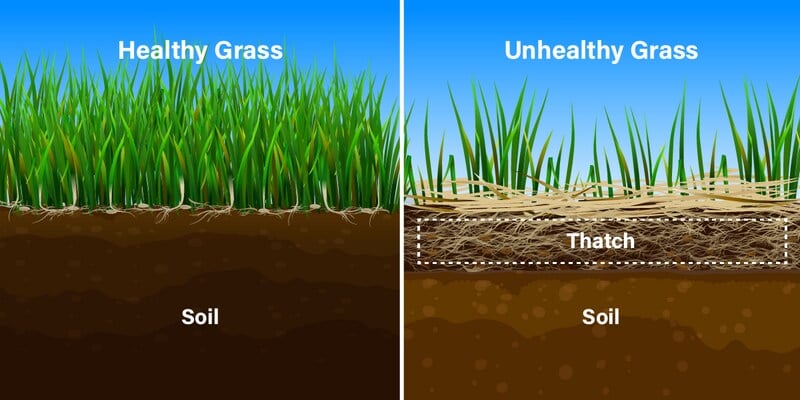
If you overseed with winter ryegrass every fall (which plenty of Phoenix homeowners do), thatch builds up faster because you’ve essentially got two grasses’ worth of dead material layering up over time.
Dethatch in May or early June, when Bermuda is growing fast and can recover quickly.
How to know if you need to dethatch: Push your finger down into the lawn. If there’s a spongy, matted layer before you hit the soil and it’s thicker than your thumbnail, you need to dethatch.
See Related: How to Dethatch Your Lawn (Plus When to Hire a Pro)
6. Deal with Summer Pests
Lawns in the Valley don’t have the same grub problems as in the Midwest, but they’re not pest-free either. When summer comes, watch for:
- Bermuda mites: They’re invisible to the naked eye, but leave obvious damage: tufted, witch’s broom-looking growth.
- Grubs (mostly from June beetles), Phoenix billbug: Look for brown, straw-colored patches that pull up easily like loose carpet.
- Chinch bugs: Check for irregular patches or yellow grass near concrete and walkways (the hottest spots in your yard).
- Fungus during monsoons: When humidity spikes in July and August, fungal diseases can appear even in Phoenix. Brown patches show up as circular dead spots.
If you notice signs of pest damage in your Phoenix lawn, reach out to the Maricopa County Extension office. They’ll help identify pests and recommend an effective treatment approach.
A Note on Heat Safety
Phoenix summers are hard on lawns and harder on people. More than 3,000 Maricopa County residents ended up at the emergency room in 2024 with heat-related illness.
When working in your yard, schedule tasks for early morning or evening. Watch for early signs: Thirst means you’re already dehydrating, and muscle cramps signal you’re losing water and salt.
If you experience heavy sweating, headache, nausea, or dizziness, get inside and cool down immediately.
Lawn Struggling? Call in the Pros
With these tips, your lawn is sure to become a beautiful thing to take pride in. Remember to be patient, as it can take several weeks for your lawn fully to utilize all that you’re giving it. As long as you don’t give up, you’ll have a thriving lawn and a great place to sit in the sun.
Need additional help? Find a lawn care pro in Phoenix with LawnStarter to keep the lawn lush and green through the summer. Aside from Phoenix, we also provide lawn care services in other nearby Arizona cities, including Tempe, Scottsdale, and Chandler.
Read More:
- Fall Lawn Care Tips for Phoenix, AZ
- Spring Lawn Care Tips for Homes in Phoenix, AZ
- The Best Plants for Arizona Heat
- Best Native Trees for Phoenix
Sources:
- “Number of Days of 100 °F in Phoenix by Year.” Extreme Weather Watch
- “Monsoon Resources.” City of Phoenix.
- “Phoenix Lawn Watering Guide.” University of Arizona.
- “A Turfgrass Maintenance Guide for Residential and Commercial Lawns in the Low Elevation
- Arizona Desert.” by Kai Umeda, area extension agent, turfgrass science, and David Kopec, turfgrass extension specialist (retired). University of Arizona.
Main Image: Lawn mowed by a LawnStarter pro in Phoenix, AZ. Illustration by Amy Stenglein / LawnStarter
Related Posts: