
Lawn care is a year-long job in Lansing, Michigan. Fall is all about preparing your yard for winter, while spring is about getting your lawn prepped for summer. But what about summer itself?
Now is the time to enjoy your Lansing yard, but you also need to keep it healthy. Your lawn needs to hold up to whatever summer throws at it, from barbecue foot traffic to scorching heat.
If you’d rather skip the guesswork, LawnStarter’s lawn mowing services can make sure your lawn keeps the ideal height through the season.
| Key Takeaways |
|---|
| • In Lansing, MI, cool-season grasses like fescue and rye need extra protection during summer heat stress. • Raise your mower height in summer and never remove more than one-third of the grass blade at once to protect roots. • Water deeply and infrequently (about 1 inch per week) early in the morning to reduce evaporation and prevent fungal disease. |
How to Care for Your Lansing Lawn in Summer
Summer lawn care comes down to 7 key tasks: mowing at the right height, watering deeply but infrequently, skipping fertilization, controlling weeds with post-emergent herbicides, watching for pests and diseases, managing foot traffic, and repairing patchy spots.
| Task | Frequency | Notes |
| Mowing | Mow as often as you need to avoid cutting more than 1/3 of grass blade. | Raise mowing height to 3-4 inches. |
| Irrigation | Water 2-3 times a week. Ensure about 1 inch weekly. | Reduce to 1/2 inch every 2-3 weeks when grass enters dormancy |
| Fertilization | None until late summer. | Fertilize late August to early September. |
| Weed control | Apply post-emergents per label indications | Use only when temperatures are below 85 degrees. |
| Pest and disease control | Inspect the lawn weekly. | Watch for grubs, chinch bugs, brown patch and dollar spot. |
| Foot Traffic Management | Rotate barbeque and play areas every couple of weeks. | Stay off grass during hot days |
| Lawn repairs | Postpone until late summer | Aerate, dethatch and overseed patchy spots late August to early-September |
Summer in Lansing spans June to August, with July the hottest month. While June is still mild, with warm days and cool nights, July’s highs average in the low to mid-80s and is the most stressful month for your lawn.
You lawn care should follow the Lansing summer weather. That’s roughly 3 phases, each with its own priorities and essential tasks:
| When | Priority Tasks | Notes |
| Early summer (June) | Raise mower height, apply post-emergent for weeds, begin deep-watering routine | Last chance for weed control before peak heat |
| Mid-summer (July–August) | Water consistently, monitor for pests, avoid fertilizing, allow dormancy if needed, limit foot traffic | Most stressful period for cool-season grasses |
| Late summer (August–September) | Repair bare spots, prepare for fall fertilization, resume normal mowing height | Lawn begins recovering as temperatures drop |
Why Your Grass Type Changes Your Summer Lawn Care
If you keep a lawn in Lansing, it’s almost certainly a cool-season grass, most commonly a mix of Kentucky bluegrass, fescues, and ryegrass — sometimes tall fescue. These grasses peak in spring and fall and slow their growth during summer.
Here’s how each common Michigan grass handles summer stress:
| Grass Type | Summer Behavior | Water Needs |
| Kentucky bluegrass | Browns in heat; recovers well | 1 to 1.5 inches/week to stay green |
| Perennial ryegrass | First to brown out; may mthin in harsh summers | Consistent water needed |
| Fine fescue | Handles dry, shaded spots. Can thin in extreme heat. | Lower water needs. |
| Tall fescue | Stays green longest. Needs overseeding if it thins. | Minimal; deep roots |
Cool-season grasses enter dormancy when summer stress (heat and drought) is too much to handle. They’ll wilt and go brown.
Not sure if your grass is dying or just dormant? Dormant grass is uniformly brown but has firm roots and a flexible crown. Dead grass pulls out easily and appears in uneven patches. If you’re unsure, tug a handful: resistance means it’s likely dormant.
See Related: When and How to Treat a Heat-Stressed Lawn
7 Summer Lawn Care Tips for Lansing Lawns
1. How to Mow in Summer Without Stressing Your Lawn
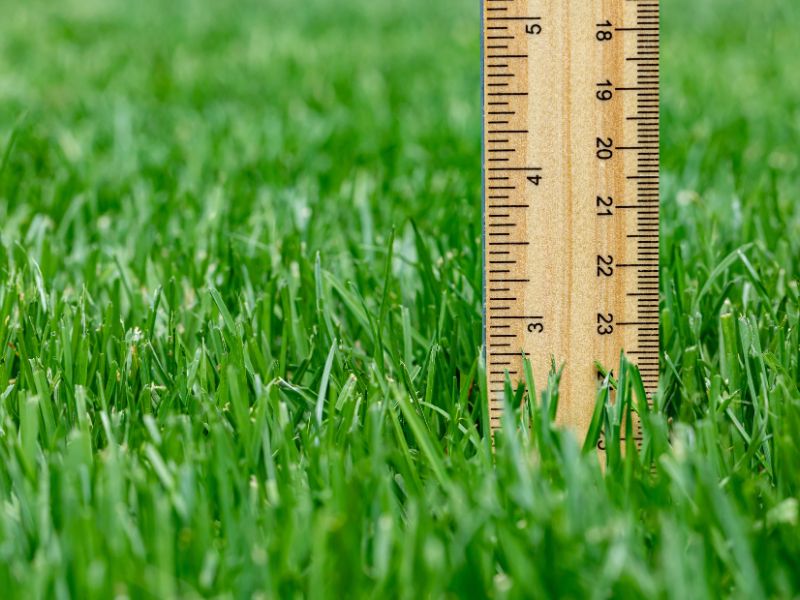
Raise your mower height: Keep your Lansing lawn 3 to 4 inches tall in summer. Taller grass shades the soil, reduces evaporation, and crowds out crabgrass.
While you should mow regularly (around once a week), adjust the mowing schedule so you don’t cut more than one third of the grass blade at once.
Keep your mower blades sharp: Dull blades tear grass rather than cut it cleanly, leaving ragged edges that turn brown and invite disease (especially damaging in summer heat).
Leave clippings on the lawn. They naturally fertilize and retain moisture.
See Related: How to Sharpen Lawn Mower Blades
2. Water Your Lawn Deeply in Summer
Lansing lawns need 1 to 1.5 inches of water per week, split across 2 to 3 deep sessions. The goal is to wet the soil 6 to 8 inches deep, which encourages roots to grow down rather than staying shallow.
Use a rain gauge to track natural precipitation. Overwatering can do more damage than drought.
Your Lansing lawn may go dormant if passing through an extended dry stretch (3 to 4 weeks of mid-80s temperatures). It still needs some water to survive. Michigan State University (MSU) Extension recommends applying about half an inch every 2 to 3 weeks to keep the crowns alive until cooler weather returns.
Water early in the day: Irrigating between sunrise and 10 a.m. lets the grass dry before evening, which reduces fungal disease pressure.
Skip irrigation before rain: Watering ahead of a forecast storm wastes water and contributes to nutrient runoff into Lansing-area waterways like the Grand River.
See Related:
3. Should You Fertilize Your Lawn in Summer?
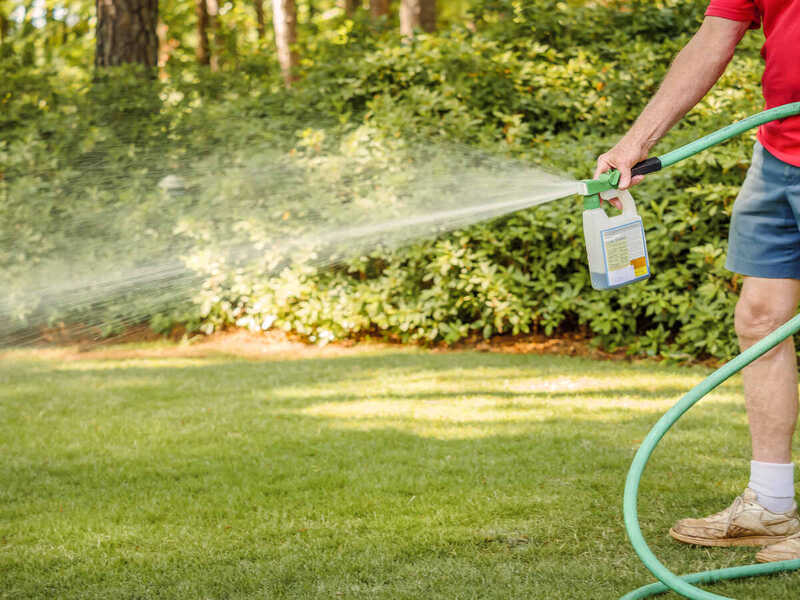
For most Lansing lawns, mid-summer (June through early August) is a time to hold off on fertilizing. Cool-season grasses are already stressed by heat, and pushing new growth they can’t sustain can damage the lawn.
The most important fertilization of the year actually falls in late summer. When you do fertilize (typically late August through early September), look for a slow-release nitrogen to help the lawn recover after summer heat.
Keep in mind that Michigan law restricts phosphorus applications.
Under the Michigan Fertilizer Law, you can’t apply phosphorus-containing fertilizer to your lawn unless a soil test shows a deficiency or you’re establishing new grass from seed or sod. Look for “0” as the middle number on the fertilizer bag.
See Related: What Is Slow-Release Fertilizer For the Lawn?
4. Control Summer Weeds in Your Lansing Lawn
By summer, you’re looking at post-emergent control for the weeds that slipped past your spring pre-emergent. According to MSU Extension, Lansing’s most common summer weeds are crabgrass, yellow nutsedge, white clover, ground ivy, yellow woodsorrel, and prostrate spurge.
Timing matters as much as product choice. Crabgrass and yellow nutsedge grow actively in heat, so summer is the right time to treat them. Herbicides to consider:
Drive (quinclorac) or Tenacity (mesotrione) for crabgrass
Ortho Nutsedge Killer (sulfentrazone) for yellow nutsedge
Three-way products (2,4-D, mecoprop, dicamba) for white clover
Wait until fall for dandelion and ground ivy. MSU research shows summer applications underperform on these perennials because heat slows uptake. Mark the patches now and treat in October.
Only treat when it’s below 85 degrees outside, skip drought-stressed lawns and check the forecast. Most post-emergents need 6 hours rain-free to absorb. Spot-treat scattered weeds; blanket-spray only heavy infestations.
See Related:
5. Summer Lawn Pests and Diseases: What to Watch For
Three pests cause the most damage to Lansing lawns in summer:
European chafer grubs: One of Michigan’s most destructive home-lawn pests, especially in unirrigated yards. Treat preventively in June or July to target young grubs.
Japanese beetle grubs: Common across southern Michigan. Adults feed on roses and lindens in July; grubs damage lawn roots from August onward.
Chinch bugs: Tiny black insects that damage hot, dry, sunny patches in July and early August, especially in lawns with thick thatch.
Watch for brown patch, dollar spot and Pythium blight when hot days combine with warm, humid nights. Avoid evening watering to limit fungal spread.
See Related:
6. Reduce Foot Traffic on a Stressed Lawn
Heat-stressed and dormant grass can’t bounce back from wear the way a healthy spring lawn does. Walking the same paths repeatedly compacts the soil, breaks dormant crowns, and turns thin spots into bare ones. Exactly the patches you’ll be reseeding in late August.
A few low-effort fixes:
Rotate the barbeque zone. If you host weekend barbecues in the same corner of the yard, move the table and chairs every couple of weeks so no single patch takes all the wear.
Shift play areas. Kids’ games, sprinklers, and pet runs concentrate damage. Reposition them when you start to see flattened or yellowing tracks.
Add stepping stones on shortcut paths. If everyone cuts the same line from driveway to back gate, that path is going to die.
Stay off the lawn during deep heat. When the grass is dormant or drought-stressed, even normal walking can crush crowns. Wait until the lawn greens back up before resuming heavy use.
7. Fix Bare Spots in Late Summer
Summer heat, foot traffic, and drought can leave ugly bare patches in your Lansing lawn. But don’t reach for the seed bag in July. Mid-summer soil is too hot for reliable germination, and seedlings rarely survive the heat.
Wait until mid-August to early September, when warm days and cool nights create ideal conditions for cool-season grass establishment, according to MSU Extension.
When the window opens, rake out the dead grass, loosen the top inch of soil, apply a thin layer of compost and reseed with a grass type that matches your lawn. Water lightly every day until sprouts appear, usually within 3 to 30 days.
See Related: How to Fix Patchy Grass
Let LawnStarter Handle Your Summer Lawn Care
Summer lawn care in Michigan takes time and know-how. If you’d rather spend your weekends with your family than worrying about mowing height and fertilizer timing, let us help.
LawnStarter connects you with local, vetted pros who understand Lansing’s climate.
Professional lawn mowing in Michigan averages about $55.39 per visit, based on statewide mowing price data and getting started takes less than 2 minutes online.
Get a free instant quote for lawn mowing services today.
FAQs
Most lawns need only grass clippings, which act as a natural fertilizer. You can spot-treat weeds with a post-emergent herbicide or apply a preventive insecticide for grubs in June or July. Avoid high-nitrogen fertilizers, which can burn already heat-stressed grass.
Yes. Watering after mowing is better than watering before. Mowing wet grass tears the blades, clumps clippings, and spreads disease. Water early in the morning, ideally between sunrise and 10 a.m., so the grass dries before evening. Wet grass overnight invites fungal disease.
Wait until late summer or early fall. According to MSU Extension, cool-season grasses germinate best when soil temperatures sit between 50 and 65 degrees and daytime air temperatures stay between 60 and 75 degrees. In Lansing, that window typically opens in mid-August.
Main Image: Lawn mowed by a LawnStarter Pro in Lansing, MI. Image Credit: LawnStarter