Sharpen your lawn mower blades every 20 to 25 hours of use, which is 1-2 times per season for most homeowners. Dull blades tear grass rather than cutting cleanly, leaving brown, ragged edges that make your lawn more vulnerable to disease.
I handle all the mower maintenance at my house, so I’ll share exactly when I sharpen my blades and the signs that tell me it’s time. The key is checking your grass after each mow. If you see torn, brown tips, your blades need attention immediately.
Don’t have time for DIY lawn care? LawnStarter connects you with local lawn care pros who handle mowing, maintenance, leaf removal, and more for year-round care.
When to Sharpen Mower Blades
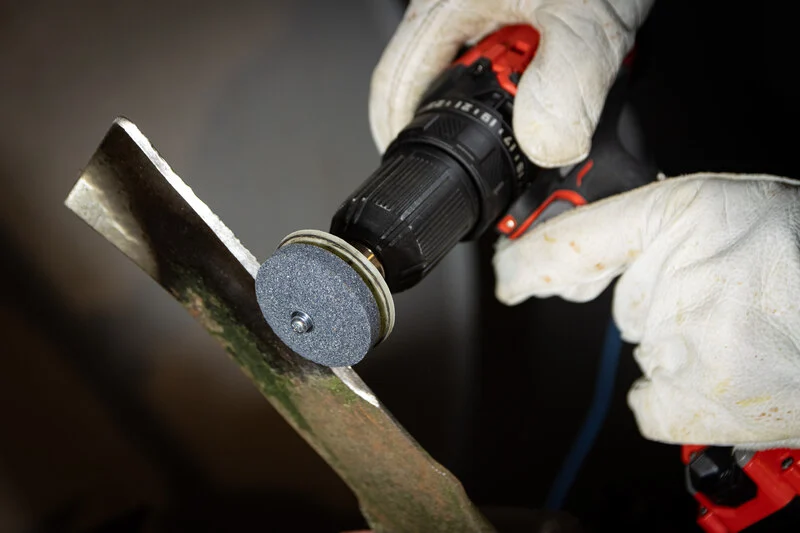
Sharpen your blades every 20 to 25 hours of mowing time. To figure out when that is for your lawn, divide 20-25 hours by your typical mowing time per session.
Sharpening Schedule by Lawn Size
| Mowing Time per Session | Sharpenings Needed (Sessions) |
| 30 minutes | Every 40-50 mows |
| 1 hour | Every 20-25 mows |
| 1.5 hours | Every 14-17 mows |
| 2 hours | Every 10-13 mows |
| 2.5 hours | Every 8-10 mows |
| 3 hours | Every 7-8 mows |
For smaller lawns, 40-50 mowing sessions could span two full years. At a minimum, sharpen your blades at the start of each mowing season.
My Personal Sharpening Schedule
Mowing my lawn takes about an hour, including setup and cleanup. Based on the table above, I should sharpen every 20-25 sessions. Mowing 4-6 times monthly means sharpening every 4-6 months.
Since I mow from April to mid-October, I could theoretically sharpen once at the start of the season. But my cool-season lawn (Kentucky bluegrass and perennial rye) performs better with two sharpenings: once in spring and again mid-summer. This timing matches the grass’s growth spurts in early and late season.
Pro Tip: Keep two sets of blades on hand. I sharpen both sets in January or February (off-season), then swap them around the 4th of July. No waiting for sharpening during peak mowing season, and I always have a backup if a blade gets damaged.
Factors that require more frequent sharpening: Thick, coarse grasses (Zoysia, St. Augustine, Bermuda), sandy soil, thick thatch layers, and wet grass all dull blades faster. These conditions may hasten sharpening to every 10 to 15 hours. If you hit rocks while mowing, you may need to sharpen right away.
See Related:
- How to Mow Your Lawn: A No-Nonsense Guide
- Guide to Growing Cool-Season Grasses
- How to Amend Sandy Soil
- 5 Signs Your Lawn Has Too Much Thatch
5 Signs Your Mower Blades Need Sharpening
Even before hitting 20 hours of use, watch for these signs that blades need immediate sharpening:
1. Torn or Ragged Grass Tips
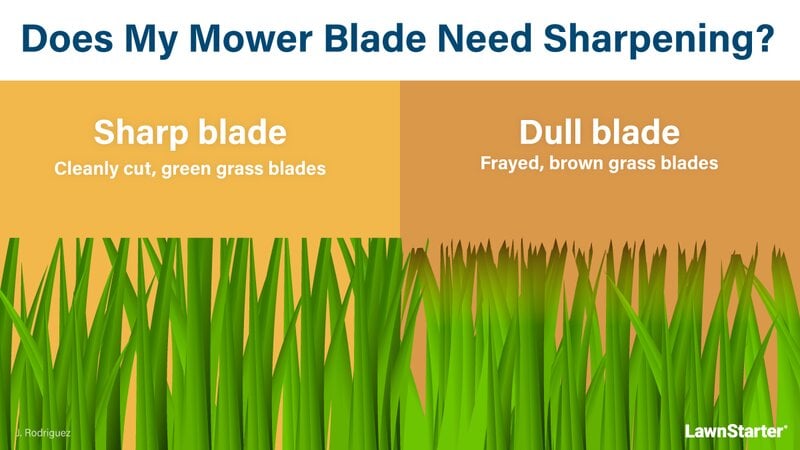
The clearest indicator is how your grass looks after mowing. Sharp blades make clean cuts, while dull blades tear grass, creating ragged edges that turn brown within 1-2 days. Walk your lawn after mowing and inspect the grass tips closely.
2. Uneven or Patchy Grass
When blades are dull, they push grass aside instead of cutting it cleanly. This leaves uncut patches or uneven grass heights across your lawn, forcing you to mow the same area multiple times.
3. Grass Clumping
Dull blades struggle through thick, dense grass, causing it to bunch up under the mower deck instead of dispersing evenly across your lawn.
See Related: How to Prevent Grass Clumping When Mowing
4. Poor Mower Performance
Dull blades force your mower to work harder, leading to:
- Slower operation and engine strain
- More frequent stalling, especially in thick grass
- 22% higher fuel consumption, according to research published in the Agronomy Journal
- Push mowers requiring significantly more physical effort
5. Unusual Vibrations or Noise
Dull blades cause excess vibration and different engine sounds. If your mower is shaking more than usual or making an odd sound, check the blade sharpness immediately.
When to Replace Mower Blades Instead of Sharpening
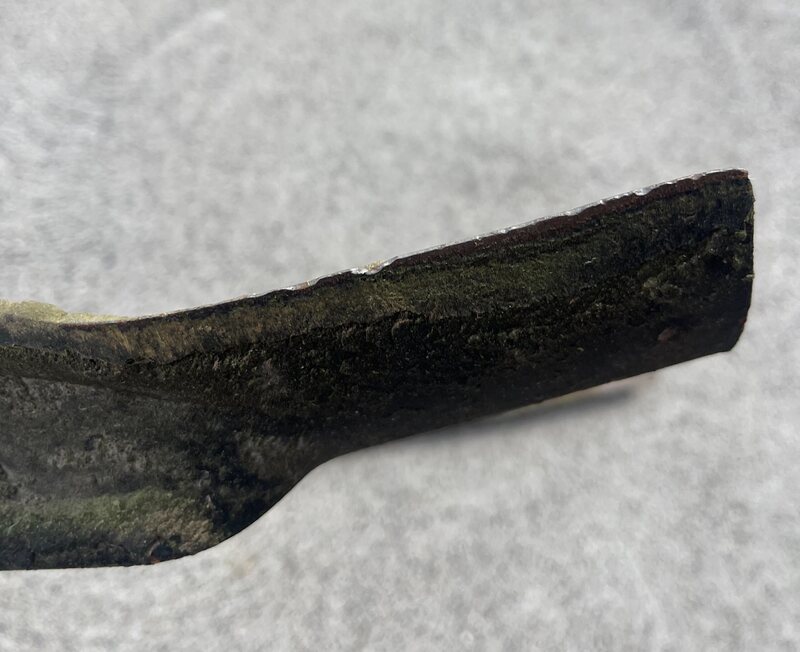
Each sharpening removes metal, gradually thinning the blade. Eventually, replacement becomes necessary for safety and performance.
Replace blades when:
- You’ve sharpened 5-10 times (depending on blade quality)
- Deep nicks, cracks, or severe bends appear
- Blade becomes very thin, especially at the back edge
- Blade cannot be balanced properly
- Performance issues persist after sharpening
Replacement costs: New blades typically cost $30-$40, while professional mower blade sharpening runs $5-$15 per blade. Avoid paying more than $15-$20 per blade for sharpening. At that point, replacement becomes more cost-effective.
Quick maintenance tips to extend blade life: Remove rocks and debris before mowing, only mow dry grass, clean clippings off the deck after each use, dethatch your lawn regularly, and store your mower in a dry area.
See Related: How to Dethatch Your Lawn (Plus When to Hire a Pro)
FAQ About Sharpening Mower Blades
Yes, you can sharpen blades while still attached to the mower, but results won’t be as good due to limited access and difficulty maintaining the proper sharpening angle. For complete instructions on proper sharpening technique, see our guide to sharpening mower blades.
Most homeowners need to sharpen only 1-2 times per season. However, sharpen more frequently if you:
• Mow large lawns (2+ hours per session)
• Have thick warm-season grasses
• Deal with sandy soil
• Often hit debris
• Notice signs of dull blades like torn grass tips
Professional lawn services sharpen daily or every 8-12 hours due to heavy use.
See Related: Guide to Growing Warm-Season Grasses
Let LawnStarter Handle Your Lawn Care
Mower maintenance adding too much to your to-do list? Between blade sharpening, regular mowing, watering, and keeping up with weeds, lawn care quickly becomes overwhelming.
Get matched with a local lawn care pro for services like:
- Regular mowing with properly maintained equipment
- Lawn aeration to reduce soil compaction
- Dethatching to remove excess buildup
- Fertilization for healthier grass
Get your free instant quote and enjoy your weekends while keeping a beautiful, healthy lawn.
Sources:
- Agronomy Journal: Mower Blade Sharpness Effects on Turf
- Briggs & Stratton: Top 5 Mower Troubleshooting Tips
- Greenworks: How to Sharpen Lawn Mower Blades
- University of Maryland Extension: Dull Mower Blade/Mower Injury – Lawns
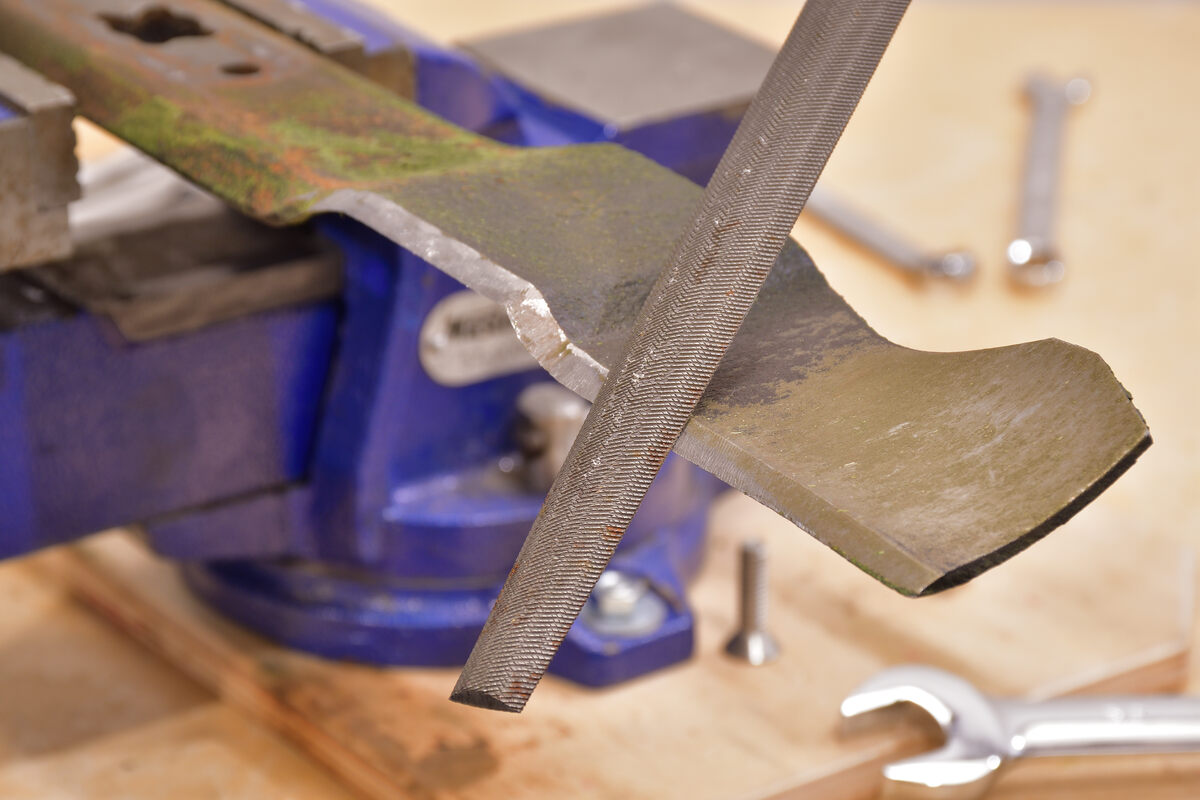
Main Image: Lawn mower blade being sharpened with a file. Image Credit: Do Mi Nic / Adobe Stock
Related Posts: