| Key Takeaways |
|---|
| • Lawn grubs are beetle larvae that feed on grass roots, causing dead patches, spongy turf, and animals digging in your yard. • The best time to treat for grubs is mid-April through mid-June with preventative treatments, or as soon as you spot damage with curative ones. • Finding 10 or more grubs per square foot means you have a serious infestation that needs immediate treatment. |
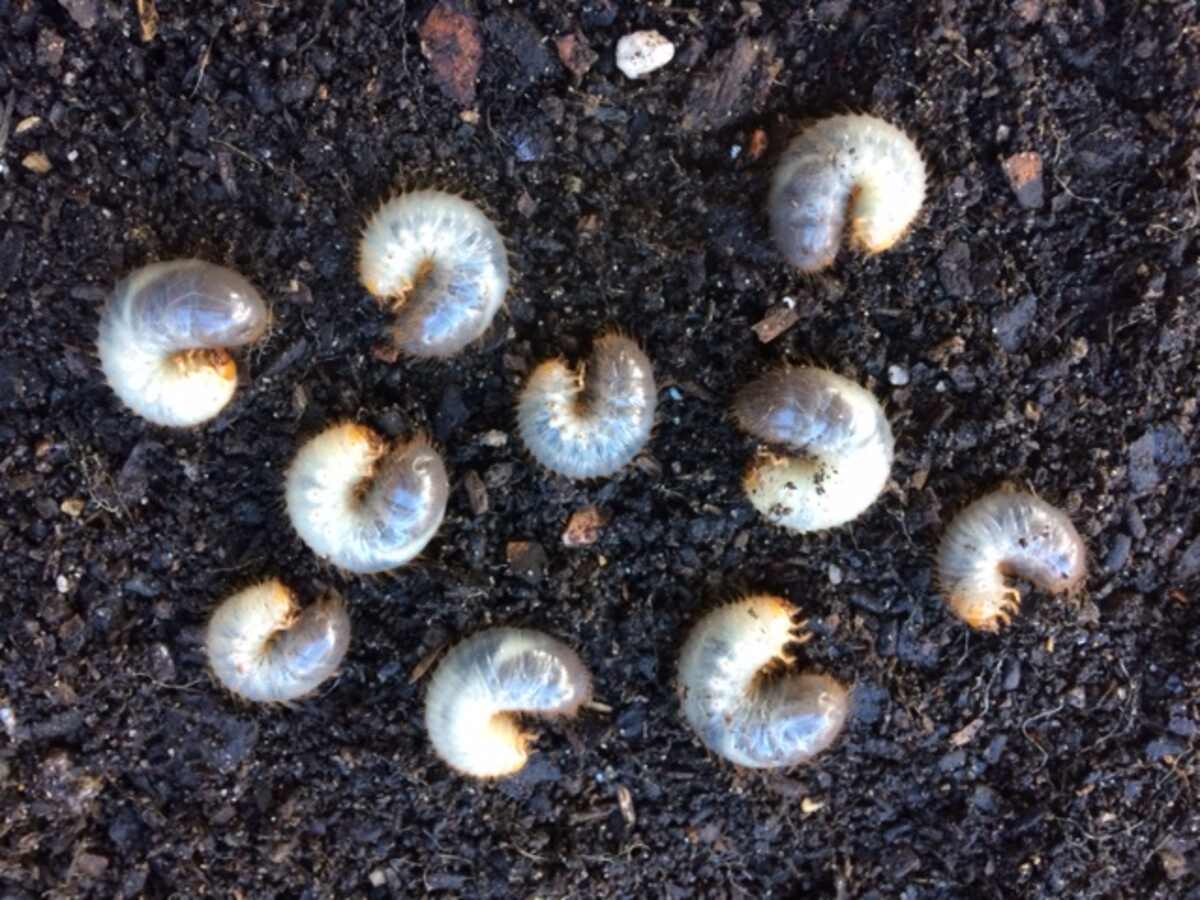
Lawn grubs, the larval stage of certain beetles, are common in yards across the country. In small numbers, they’re harmless. But when populations surge, these root-eating pests can destroy your lawn.
This guide covers how to identify lawn grubs, what attracts them, and the best ways to get rid of grubs.
Timing is everything with grub control: Treating too early or too late wastes time and money. If you’d rather skip the guesswork, LawnStarter’s lawn treatment pros can handle grub control for you.
What Are Lawn Grubs?
Lawn grubs are the larval stage of beetles and chafers. They live just below the soil surface, feeding on grass roots. When enough of them feed at once, the damage shows up fast: dead patches, spongy turf, and wildlife digging up your yard.
“They’re sort of nature’s de-thatchers,” says David Shetlar, professor emeritus with a doctoral degree in entomology at The Ohio State University. “But the problem is, [if] they’re eating that thatch, they do eat the roots and the crowns [of turfgrass], which kills the plant.”
Grubs are also bad for your garden: As larvae, they eat your plant roots, and as grown beetles, they can eat the leaves of any plant they can find.
What Lawn Grubs Look Like
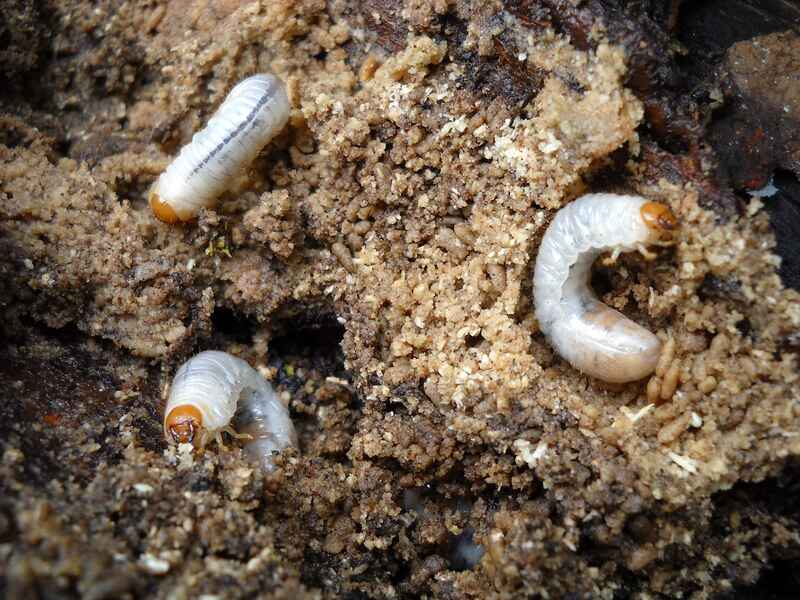
If you’ve never seen grass grubs before, here’s how to identify them at a glance:
| Feature | Description |
| Color | Cream or white body with a brown head |
| Shape | C-shaped, soft-bodied |
| Size | 3/8 inch to 2 inches when fully grown, according to WVU Extension |
| Legs | Three pairs of short legs |
Adult beetles are oval-shaped and can be green, tan, brown, or black, ranging from 3/16 of an inch to 1 inch in length. Most species are active at night and are usually seen only when attracted to outdoor lights.
Types of Lawn Grubs
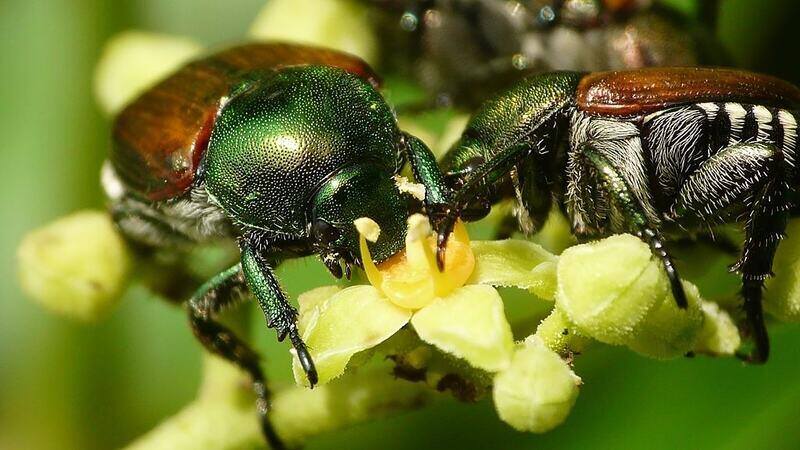
“It’s irrelevant which species it is,” Shetlar says. “They cause the same kind of damage.”
That said, here are the kinds of grubs you’re most likely to find in your yard:
Japanese beetle grubs: Most widespread turf grub; each female can lay 40 to 60 eggs.
Asiatic garden beetles: Damage thresholds run high (18–20 per square foot); often prefer non-grass roots.
Masked chafers: Most damaging native species; feed heavily August through October on cool-season lawns.
European chafers: Largest grubs; feed latest into fall and earliest in spring, even in cold weather.
May/June beetles: Two-to-three-year life cycle means damage can repeat for multiple seasons.
Black turfgrass ataenius: Tiny grubs (1/4 inch); rarely affect home lawns, mostly a golf course problem.
See Related: How to Get Rid of Japanese Beetles
Signs of a Lawn Grub Problem
Most lawns don’t show visible damage until there are at least 6 to 10 grubs per square foot. Grub damage often goes unnoticed until it’s severe. “In many cases, grubs aren’t even discovered until the skunks and raccoons start digging them up,” said Shetlar.
Look for the following signs of grubs on your lawn:
Patches of thinning turf: Dead patches appear and grow larger each week.
Grass pulls out easily: Turf lifts up at the roots like pulling back carpet.
Animal digging: Moles, skunks, crows, and raccoons tear up your lawn looking for grubs to eat.
Adult beetles hovering low: Beetles fly close to the grass in mid-summer while laying eggs.
Spongy, bouncy turf: The lawn feels unusually soft underfoot because grubs have chewed through the anchoring roots.
Drought-like symptoms: Grass looks dry and stressed even with adequate water.
See Related: How to Tell If You Have Grubs in Your Lawn: 6 Warning Signs
How to Scout for Lawn Grubs
The only way to confirm a grub problem is to check yourself. It takes about 5 minutes and a shovel:
Cut a one-foot section of lawn with a shovel in an area where you suspect grub activity.
Peel up the soil. If there is grub damage, the grass will peel up easily.
Sift through the soil, counting the grubs you find.
Tally the count. Finding 10 or more grubs per square foot means you have a serious infestation needing immediate treatment. Finding 6 to 10 grubs per square foot is in a monitoring range where controls may be needed, especially in stressed lawns.
Replace the grass you’ve cut to avoid damaging the lawn.
Repeat in a few spots around the lawn to confirm.
How to Get Rid of Lawn Grubs
There are 3 ways to tackle lawn grubs: preventative practices, curative treatments, and natural options. Here’s a quick comparison:
| Treatment Type | When to Use | Effectiveness |
| Preventative | Before grubs appear (spring and early summer) | Stops most grubs before they hatch |
| Curative | After you see grub damage | Kills active infestations quickly |
| Natural | Anytime (ongoing control) | Varies widely by method and conditions |
Preventative Lawn Grub Treatments
When it comes to grubs, prevention is key. Follow these lawn care tips to stop grubs before they start:
Keep thatch to a minimum: Dethatch when thatch exceeds 1/2 inch. Professional dethatching costs $65 to $165.
Aerate your lawn: Aeration breaks up thatch and encourages deeper root growth, making turf more resilient against grub feeding. Professional aeration costs $107 to $202, or rent a core aerator for roughly $100 per day.
Mow high: Taller grass develops deeper roots that are harder for grubs to damage.
Deny moisture to the grubs: Keep your lawn dry during July and August. This causes beetle eggs to dry and die.
If grubs return year after year:
Use preventative insecticides. Best time to apply is from mid-April to mid-June, depending on the product. Effective products contain imidacloprid, thiamethoxam, clothianidin, or chlorantraniliprole.
Consider a grub-tolerant grass type. “Where Kentucky bluegrass and perennial ryegrass will be damaged with … 8 to 10 grubs per square foot, the tall fescues usually require somewhere around 12 to 14 grubs per square foot” before showing damage, Shetlar says.
Note: Any use of insecticides poses a risk of harm to people and other insects, including lawn-beneficial pollinators. (Mow first to remove weed flowers that attract pollinators.)
See Related:
Curative Lawn Grub Treatments
Chemical Grub Treatments
If grubs are already feeding on your lawn, you’ll need a curative approach to stop the damage now. Products containing carbaryl (Sevin) or trichlorfon (Dylox) are curative treatments. Curative insecticides need about 7 to 10 days before results are visible.
Natural Grub Treatments
Prefer to skip the chemicals? Natural grub control works, but set realistic expectations.
- Milky spore disease is a naturally occurring bacterium that targets only Japanese beetle grubs and has modest results. “Milky spore disease is a weak pathogen that results in 20% to 25% infection at best,” Shetlar says.
- Neem oil is an effective natural pesticide that’s safe for pollinators. Mix with water according to label instructions and apply with a sprayer in late summer or early fall.
- Beneficial nematodes are microscopic roundworms that hunt grubs underground.
“There’s a very steep learning curve to using the insect parasitic nematodes,” Shetlar says. They work best curatively, on small affected areas. “You can typically get 60% to 100% control with the nematodes when they’re used at the right time in the right way.”
Naturally occurring fungi, bacteria, and protozoa already weaken grubs in your soil. Broad-spectrum pesticides kill these helpers, so if you go natural, skip the chemicals altogether.
See Related:
Will My Lawn Recover After Lawn Grub Damage?
Yes, if you act quickly. If roots are only partially damaged, consistent watering and fertilizing can bring the lawn back. If grubs have severed the roots completely, those patches won’t regrow on their own.
To repair severely damaged areas, rake out the dead turf, treat the remaining infestation, work in soil amendments, then reseed or resod the bare spots.
When to Treat Your Lawn for Lawn Grubs
The best time to apply preventive grub control is mid-April to mid-June, but the timing depends on where you live and the type of grub treatment:
Apply chlorantraniliprole products (Scotts GrubEx, Acelepryn) in April or May. It needs more time to reach the root zone and works best if applied before June.
Imidacloprid, thiamethoxam, and clothianidin should be applied in June or July, closer to when grub eggs hatch. Applying these too early can let the chemical degrade before grubs are present.
If you missed the preventive window and damage appears in late summer or fall, switch to a curative product containing trichlorfon or carbaryl, and water it in within 24 hours. The best window for curative applications is mid-August to September.
Life Cycle of Lawn Grubs and When They’re Vulnerable
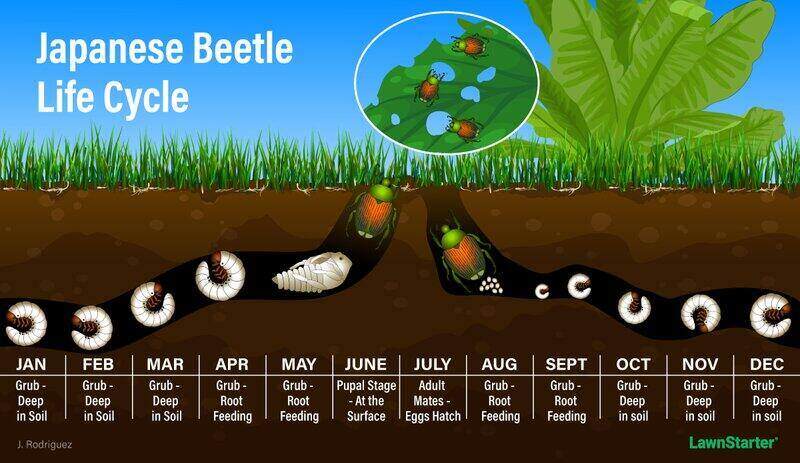
Grub timing is everything. Treat too early or too late and even the best product won’t work. The best time to treat is from late spring through summer, when new larve are hatching: they’re more vulnerable when young.
Here’s what’s happening underground each season, and why it determines your treatment window:
| Season | Grub Activity |
| Spring | Grubs exit dormancy, move up to roots and resume feeding |
| Summer | Beetles lay eggs (European chafers in late June, Japanese beetles in July and August) Eggs hatch in 1 to 2 weeks |
| Fall | Grubs feed heavily, then burrow deep into soil |
| Winter | Grubs stay dormant deep in soil |
This is why putting down preventive insecticides starting mid-April to mid-June matters: They need to be in the soil before eggs start to hatch in July.
When to Call Pest Control Pros for Lawn Grubs
If your tally turns up 6 or more grubs per square foot, start monitoring closely and treating preventatively. At 10 or more per square foot, you have a confirmed infestation needing immediate action.
Skunks and raccoons may dig for grubs even at relatively low populations, so animal digging risk can appear before you reach the usual turf-damage threshold.
Not sure if it’s worth calling a pro? LawnStarter’s grub treatment service takes the guesswork out of product selection and timing. Get your free quote now — most homeowners find professional treatment is competitive with the cost of reseeding dead patches later.
FAQs
No. Dish soap solutions don’t penetrate soil deep enough to reach grubs in the root zone. Stick with proven preventative insecticides or curative treatments like carbaryl for reliable results.
No. Brown spots can come from fungal disease, drought stress, compacted soil, or pests like sod webworms. The grub giveaway is the carpet test: Grab damaged turf and pull. If it lifts with almost no resistance (roots are severed), grubs are the likely culprit.
Beetles look for a good place to lay eggs and your healthy, well-watered lawn is exactly what they want. They’re especially drawn to lawns with consistent moisture in mid-summer, because moist soil helps eggs survive long enough to hatch.
Main Image: White grubs on soil in a lawn. Image Credit: Anna Gregory / Flickr / CC BY 2.0
Related Posts: