Summer in Akron can be tough on your lawn. With temperatures climbing into the 80s and the occasional dry stretch, cool-season grasses can quickly show signs of heat stress. Without the right summer lawn care, your grass may thin out, turn brown, or become vulnerable to pests and disease.
The key is being strategic. Smart watering, proper mowing height, and proactive weed control can help your grass survive Northeast Ohio’s summer conditions.
But if you’d rather spend your weekends cheering on the RubberDucks instead of managing sprinklers and mower blades, we’ve got you covered. Connect with LawnStarter’s Akron lawn care pros who can handle the work for you.
1. Test Your Soil
The best grass types for Akron are cool-season grasses, like Kentucky bluegrass, perennial ryegrass, tall fescue, and fine fescue. While they all thrive in Northeast Ohio’s climate, they don’t have identical nutrient needs, and each homeowner has different soil in their yard.
A soil test tells you exactly which nutrients are present, what’s missing, and whether you truly need to fertilize. So, before adding nitrogen in the heat of summer, test your soil if you haven’t done so in spring.
See Related: Reasons Why Soil Testing Is Important for the Lawn
2. Fertilize if Necessary
In Akron, the most important fertilizer applications happen in fall and again in spring, when cool-season grasses are actively growing. Summer is not the primary feed season, but in some cases, a light application may be appropriate.
If your soil test indicates a need and your lawn is irrigated, you may apply a light feeding 8 to 10 weeks after your spring fertilization, typically in June. After that, avoid fertilizing to prevent heat stress.
Follow these guidelines:
- If you fertilized in spring: Apply up to 1/2 pound of nitrogen per 1,000 square feet, with at least 50% in slow-release form.
- If you did not fertilize in spring: Apply up to 3/4 pound of nitrogen per 1,000 square feet, also with 50% of nitrogen in slow-release form.
3. Raise Your Mowing Height
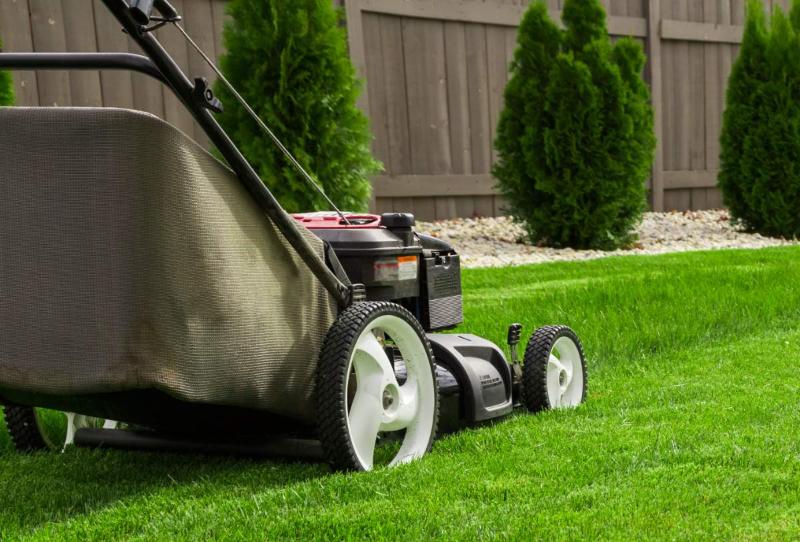
Summer mowing in Akron should focus on protecting cool-season grass from heat stress. Cutting too low in hot weather weakens turf and increases its vulnerability to stress and disease. Follow these tips:
- Make sure your lawn mower has a sharp blade, so you don’t harm the grass by chopping at it without smoothly taking off the top.
- Raise your cutting height by about 1/2 inch in July. Taller grass insulates roots and conserves moisture.
- Never remove more than one-third of the blade at a time.
Expect to mow less frequently as the heat slows growth or pushes grass into partial dormancy.
See Related:
– How to Sharpen Lawn Mower Blades
– What’s the Best Height to Cut Your Grass?
– What is the One-Third Rule for Mowing Grass?
4. Water Deeply, Not Frequently
Most lawns need 1 inch of water each week, and if you aren’t getting enough rain, you’ll need to water the lawn yourself. You can set up a watering schedule with your irrigation controller or water manually, but be sure not to overwater or waste water due to runoff or overspray.
Alternatively, you can let your cool-season grass go dormant and just water it to keep the roots and crowns alive. In that case, lightly water with 1/2 inch of water every 3 to 4 weeks. Water in the early morning so your lawn can absorb it before the sun dries it out.
See Related:
– How Often to Water Grass in Summer
– How Long to Water Your Lawn in Summer
5. Stay Ahead of Summer Weeds
By summer in Akron, it’s usually too late to apply pre-emergent herbicides, because they must be applied in early spring, before weed seeds germinate. At this point, your options shift to control rather than prevention:
- Spot treat with post-emergent herbicides.
- Hand-pull weeds before they flower and go to seed.
Timing still matters, so apply herbicides only when temperatures are below 80 degrees, and the lawn is not under drought stress. That usually limits the application to June, before peak July heat sets in.
See Related:
– Applying Post-Emergent Herbicides to Your Lawn
6. Monitor for Common Akron Pests
Despite Akron’s history as the Rubber Capital of the World, the rubbery, C-shaped grubs in your soil are definitely not something you want multiplying in your lawn.
In June, beetle grubs begin feeding on grass roots. Preventive treatments with products containing halofenozide (Mach 2 and Spectracide Grub Stop) should be applied in early June before young grubs grow large.
Watch for:
- Grass that feels spongy underfoot
- Turf that pulls up easily like loose carpet
- Irregular brown patches
- Increased digging by raccoons or skunks
See Related:
– How to Tell If You Have Grubs in Your Lawn
– Lawn Grubs: How and When to Kill Them
7. Watch for Summer Lawn Diseases

Akron’s hot, humid summers create ideal conditions for lawn diseases like brown patch and fairy ring, especially in cool-season grasses.
- Brown patch typically appears as irregular tan or brown patches, sometimes with darker outer edges. You may notice circular areas 6 inches to 2 feet wide, leaf lesions, or gray fungal growth on humid mornings.
- Fairy ring, on the other hand, forms noticeable circles, either dark green rings that grow faster than the surrounding turf or brown rings where grass dies. Mushrooms are also a common sign.
To manage summer diseases:
- Avoid excessive nitrogen fertilization during hot weather.
- Water deeply but infrequently, and avoid overwatering.
- Improve drainage and air circulation.
- Aerate compacted soil if needed.
See Related:
– How to Treat Brown Patch Disease in Your Lawn
– What is Fairy Ring and How to Get Rid of It
Summer Lawn Care in the Rubber Capital
With the right approach to mowing, fertilizing, and pest control, your Akron lawn can handle the stress of the summer and stay green longer into the season.
But if you’d rather spend your weekends enjoying Cuyahoga Valley trails instead of managing lawn treatments, connect with one of LawnStarter’s Akron lawn care professionals. We also have pros in nearby cities like Barberton and Stow.
Main Image: Lawn mowed by a LawnStarter pro in Akron, OH. Illustration by LawnStarter
Related Posts: