| Key Takeaways |
|---|
| • Adjust lawn care to your grass type. Cool-season and warm-season grasses follow different summer care schedules. • Mow taller in summer. Raising your mowing height reduces heat stress and helps your grass retain moisture. • Water deeply and infrequently to encourage the deep root growth your lawn needs to survive NC's summer heat. |

Summer lawn care in North Carolina (NC) is a challenge. NC sits in a transition zone: too hot for cool-season grasses to thrive in summer, not warm enough year-round for warm-season grasses to dominate.
The result? Every NC lawn faces a different summer challenge: Tall fescue battles brown patch in humid heat. Bermudagrass and Zoysiagrass hit peak growth and need frequent mowing. Centipedegrass and St. Augustinegrass each have their own pest pressures.
Summer survival comes down to matching your care (mowing height, watering schedule, fertilizer timing) to the grass you actually have.
If that sounds like more than you want to manage, let LawnStarter’s local lawn care pros handle your mowing this summer.
- How to Mow Your North Carolina Lawn in Summer
- How to Water Your North Carolina Lawn in Summer
- Should You Fertilize Your North Carolina Lawn in Summer?
- Summer Weed Control in North Carolina
- Summer Lawn Pests in North Carolina
- Summer Lawn Diseases in North Carolina
- Dethatching, Aerating, and Overseeding Your North Carolina Summer Lawn
- FAQ
How to Mow Your North Carolina Lawn in Summer
Proper mowing is the basis of summer lawn care in North Carolina. Raise your mowing height, mow mid-morning after the dew dries, and keep your blades sharp.
Raise Your Summer Mowing Height in North Carolina
Mow about half an inch taller in summer. Taller grass develops deeper roots, handles heat and drought better, and shades out weeds before they germinate.
NC State’s Lake Wheeler trial in Raleigh proved it: Tall fescue mowed at 4 inches ended summer with no crabgrass. Tall fescue mowed at 1 inch ended with 95% crabgrass.
Recommended summer mowing heights by grass type:
| Grass type | Summer Mowing Height |
| Tall fescue | 3.5 to 4 inches |
| Tall fescue + Kentucky bluegrass blend | 3.5 inches |
| Tall fescue + hard (fine) fescue + Kentucky bluegrass blend | 3.5 inches |
| Bermudagrass | 1 to 2.5 inches |
| Zoysiagrass | 1.5 to 2.5 inches |
| Centipedegrass | 1 to 2 inches |
| St. Augustinegrass | 2.5 to 4 inches |
| Carpetgrass | 2 inches |
Sources: NC State Extension
If you have a warm-season grass like Bermudagrass or Zoysiagrass, mow once or twice a week during summer. Cool-season grasses like tall fescue slow down in summer and are often cut every 7 to 10 days.
Summer Mowing Tips for Your North Carolina Lawn
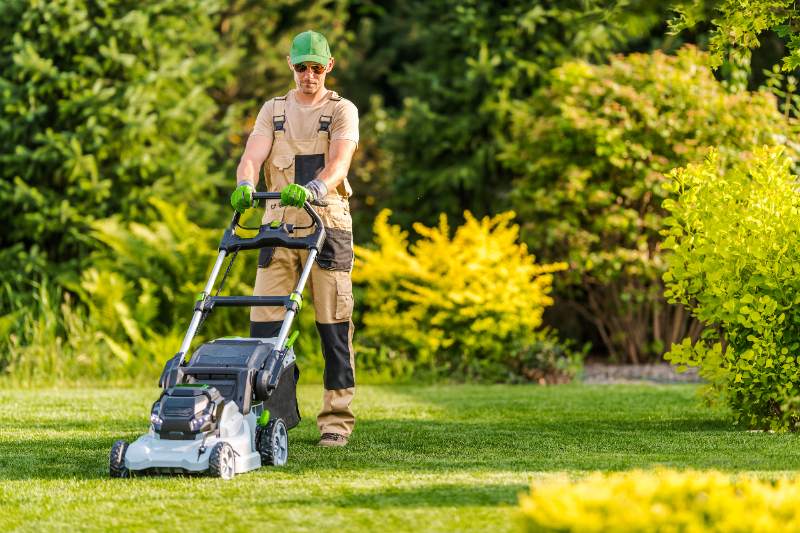
Mow only one-third of the blade at a time, mid-morning after dew dries.
Never mow a wet or drought-stressed lawn. Wet grass tears, and stressed grass can’t recover from a cut.
Sharpen blades every 20–25 hours of use. Dull blades tear instead of cut, browning the tips and inviting disease.
Leave clippings on the lawn; they feed it. Bag only when active disease or weed seedheads are present.
See Related: How to Mow Your Lawn: A No-Nonsense Guide
How to Water Your North Carolina Lawn in Summer
Water your NC lawn early in the morning, between 4 a.m. and 8 a.m., aiming for 1 to 1.5 inches per week split across two sessions. Deep, infrequent watering trains roots to grow downward, making your lawn far more drought-resilient.
As of early May 2026, 59.71% of North Carolina is experiencing extreme drought, so water restrictions are in place. Charlotte Water, Raleigh Water, and many other providers post their current restriction stage on their websites. If you’re on a smaller system, look up your water bill or call your local town hall.
Is Your North Carolina Summer Lawn Dormant or Just Thirsty?
In extreme heat, cool-season grasses like tall fescue turn brown to conserve energy. This is dormancy, a natural survival mode, not death.
Dormant grass feels spongy underfoot; dead grass feels brittle and won’t spring back. Water dormant lawns lightly every 3 weeks to keep the crown alive; they’ll green up in fall.
Watering tips for summer:
Water at dawn (4 a.m. – 8 a.m.): Midday loses moisture to evaporation; evening leaves grass wet overnight and invites fungus.
Active lawns: Ensure 1 to 1.5 inches per week (about 25–30 minutes per session, twice a week).
Dormant lawns: Lightly water every 3 weeks if there’s been no rain.
See Related:
Should You Fertilize Your North Carolina Lawn in Summer?
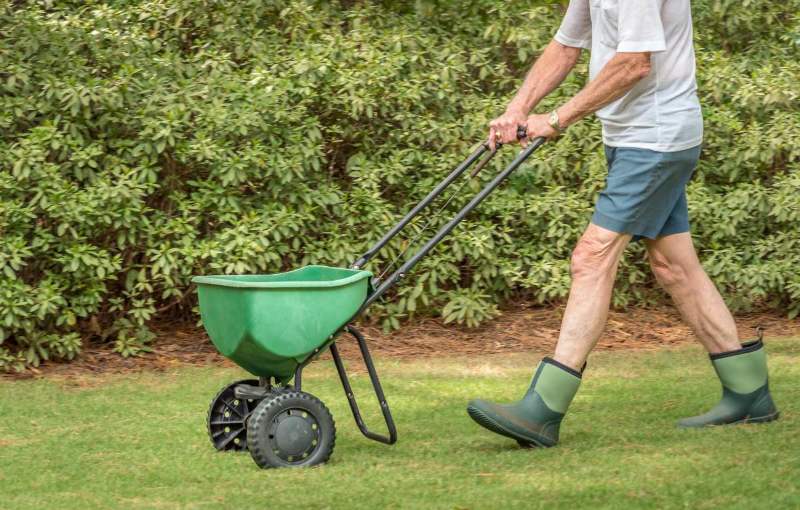
If you grow tall fescue (the most common NC lawn grass, especially in the mountains and Piedmont): Leave it alone in summer.
If you grow a warm-season grass: Summer is your fertilization window, but each grass has its own schedule, and centipedegrass needs almost nothing.
Summer fertilization for warm-season grasses in North Carolina:
| Grass Type | Summer Fertilization schedule |
| Bermudagrass | 1 lb nitrogen per 1,000 sq ft every 4 to 6 weeks |
| Zoysiagrass | 1/2 to 1 lb nitrogen per 1,000 sq ft in late June or early July; repeat in mid-August |
| St. Augustinegrass | 1/2 lb nitrogen in June, 1 lb in July, 1/2 lb in August (per 1,000 sq ft) |
| Centipedegrass | Rarely necessary in summer. Overfertilizing causes “centipede decline” |
| Carpetgrass | 1/2 lb nitrogen per 1,000 sq ft in mid-June; second application in mid-August only if along the coast |
Sources: NC State Extension
Test your soil every 2 to 3 years. The results tell you exactly what your lawn needs. Without a soil test, you’re guessing.
Testing is free for NC residents from April 1 through November 30 through the NC Department of Agriculture’s Agronomic Services Division. A $5 per-sample fee applies during peak season (December 1 through March 31).
See Related: When (and How) to Fertilize Your North Carolina Lawn
Summer Weed Control in North Carolina
Common summer weeds in North Carolina include crabgrass, goosegrass, white clover, spurge, knotweed, and yellow nutsedge. Healthy, dense turf is your first line of defense, but if weeds take hold, how you control them changes by grass type:
If you have tall fescue, avoid using herbicides in the summer. Heat and drought stress make fescue more vulnerable to herbicide damage.
If you have a warm-season grass, post-emergence herbicides (which target weeds that have already sprouted) can work in summer, but only when:
Weeds are actively growing (not under drought stress).
Your lawn is not drought-stressed.
Air temperatures are below 85 degrees.
For crabgrass and goosegrass, expect to make 2 to 3 applications, 7 to 10 days apart.
Two NC-specific cautions:
Centipedegrass and St. Augustinegrass are sensitive to 2,4-D. Read every label.
Carpetgrass tolerates almost no herbicides. Pull weeds by hand and mow consistently instead.
See Related: 10 Common Weeds in North Carolina
Summer Lawn Pests in North Carolina
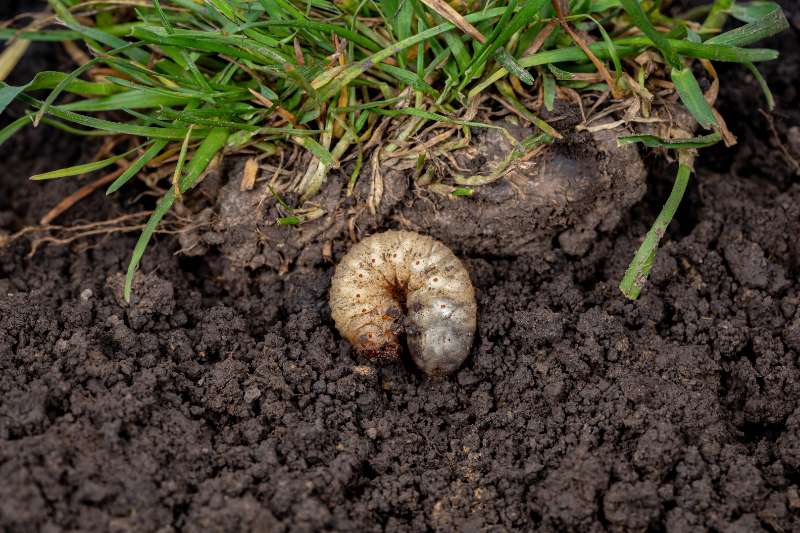
Several turf pests cause most of the summer damage to NC lawns: white grubs, chinch bugs, fall armyworms, sod webworms, and two-lined spittlebugs. Mole crickets are also a concern in southeastern NC.
Identify the pest before you spray:
White grubs: Yellow, thinning patches; turf lifts like loose carpet when you tug on it.
Chinch bugs: Yellow patches in sunny spots. Part the grass to find small black-and-white insects at the soil surface.
Fall armyworms and sod webworms: Brown patches that spread fast. Mix 2 tablespoons of dish soap in a gallon of water and pour over a 2-square-foot section. Insects surface in 2 to 5 minutes.
Two-lined spittlebugs: Frothy, spit-like masses on grass stems.
Mole crickets: Spongy, churned soil with pencil-sized holes.
Time treatments correctly. White grub timing is the trickiest:
Apply preventive treatment in late June to early July, before or around egg hatch.
Plan a curative application August to October. Apply 24 to 72 hours after a significant rainfall, when grubs are feeding near the soil surface.
Protect pollinators: Mow flowering weeds before applying pesticides. Leave a 3-foot buffer between treated turf and flowering ornamentals, and avoid windy conditions.
See Related:
Summer Lawn Diseases in North Carolina
Summer heat and humidity create ideal conditions for several turfgrass diseases, and cool-season lawns carry most of the load. Bermudagrass and Zoysiagrass rarely sustain serious summer damage.
| Disease | What to Look For |
| Brown patch (most common) | Roughly circular brown or tan patches, 6 inches to several feet wide |
| Gray leaf spot | Irregular dead patches; peaks July through October |
| Pythium blight | Small, dark, water-soaked patches; cottony white mycelium at dawn |
| Summer patch | Yellow or straw-brown circular patches with bronze edges, appearing in early to mid-July |
| Dollar spot | Irregular tan patches up to 6 inches; white cottony mycelium at dawn |
Manage leaf wetness, not just water volume: Water as early in the morning as you can, ideally before sunrise. Most fungi need 6 to 12 hours of leaf wetness to infect, and early morning irrigation reduces leaf wetness time to a minimum.
When to use fungicides: For lawns with a history of brown patch, start preventive fungicides in late spring or early summer. Mid-summer treatments are less effective because cool-season grass can’t recover quickly enough in the heat.
See Related: Common Lawn Diseases and How to Identify Them
Dethatching, Aerating, and Overseeding Your North Carolina Summer Lawn
Dethatch and Aerate Your North Carolina Summer Lawn
Timing depends on your grass type:
Warm-season grasses: Dethatch in late May once the lawn fully greens up. Aerate during active growth (late spring through midsummer).
Cool-season grasses (tall fescue, Kentucky bluegrass): Do not dethatch or aerate in summer. Wait until September and pair with fall overseeding.
Measure thatch before acting: If the layer of undecomposed material at the soil surface is thicker than 1/2 inch, it’s time to remove it. A spongy feel underfoot is a quicker check.
See Related: When to Dethatch Your Lawn
Overseed and Fix Bare Spots in Your North Carolina Summer Lawn
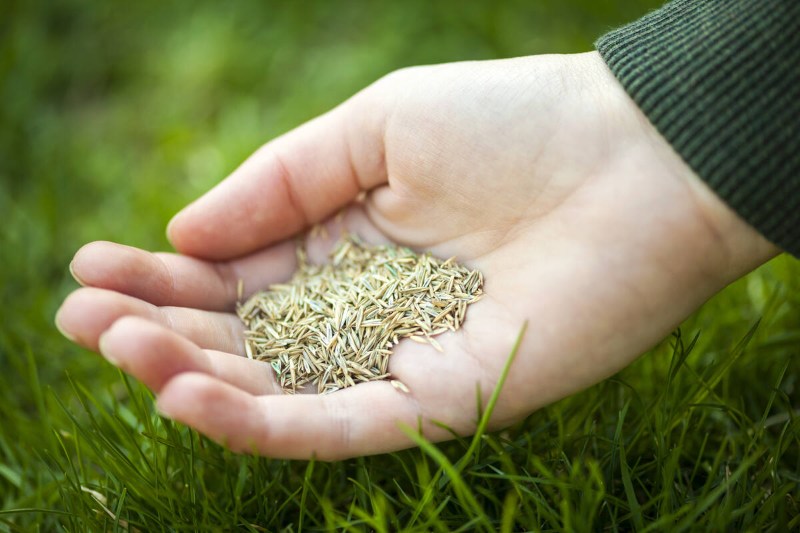
Overseeding adds grass seed to fill in bare spots and improve lawn density.
Warm-season grasses: The best window is late spring to early summer, when soil is warm and the grass is actively growing.
Cool-season grasses: Wait until fall, when cooler temps give new seedlings a fighting chance to establish before winter.
Hire LawnStarter for Summer Lawn Care
Summer lawn care in North Carolina is a season-long commitment: mowing weekly, watering precisely, watching for pests, and timing every treatment to your specific grass type.
Rather spend that time enjoying the summer? Find a local pro with LawnStarter and cut your summer workload.
LawnStarter services are available in Raleigh, Charlotte, Chapel Hill, and other cities in North Carolina. Our pros handle lawn mowing, fertilization, aeration and overseeding, and all you need for a healthy, thriving lawn.
FAQ
It depends on your region:
• Coastal NC favors Bermudagrass and Zoysiagrass.
• In the mountains, tall fescue and Kentucky bluegrass grow best.
• The Piedmont is a transition zone where both can grow, but tall fescue is most common.
For more details check our guide: Best Grass Seed for North Carolina.
Main Image: Lawn mowed by a LawnStarter Pro in North Carolina. Image Credit: LawnStarter