| Key Takeaways |
|---|
| • Armyworms are caterpillars that feed in large groups and can strip a garden or lawn bare within days, so early detection is essential. • Natural treatments like neem oil and Bacillus thuringiensis (Bt) are effective for light infestations, while chemical insecticides are most effective for severe outbreaks. • Treating in the late afternoon targets armyworms when they are most active, improving the effectiveness of any treatment method. |
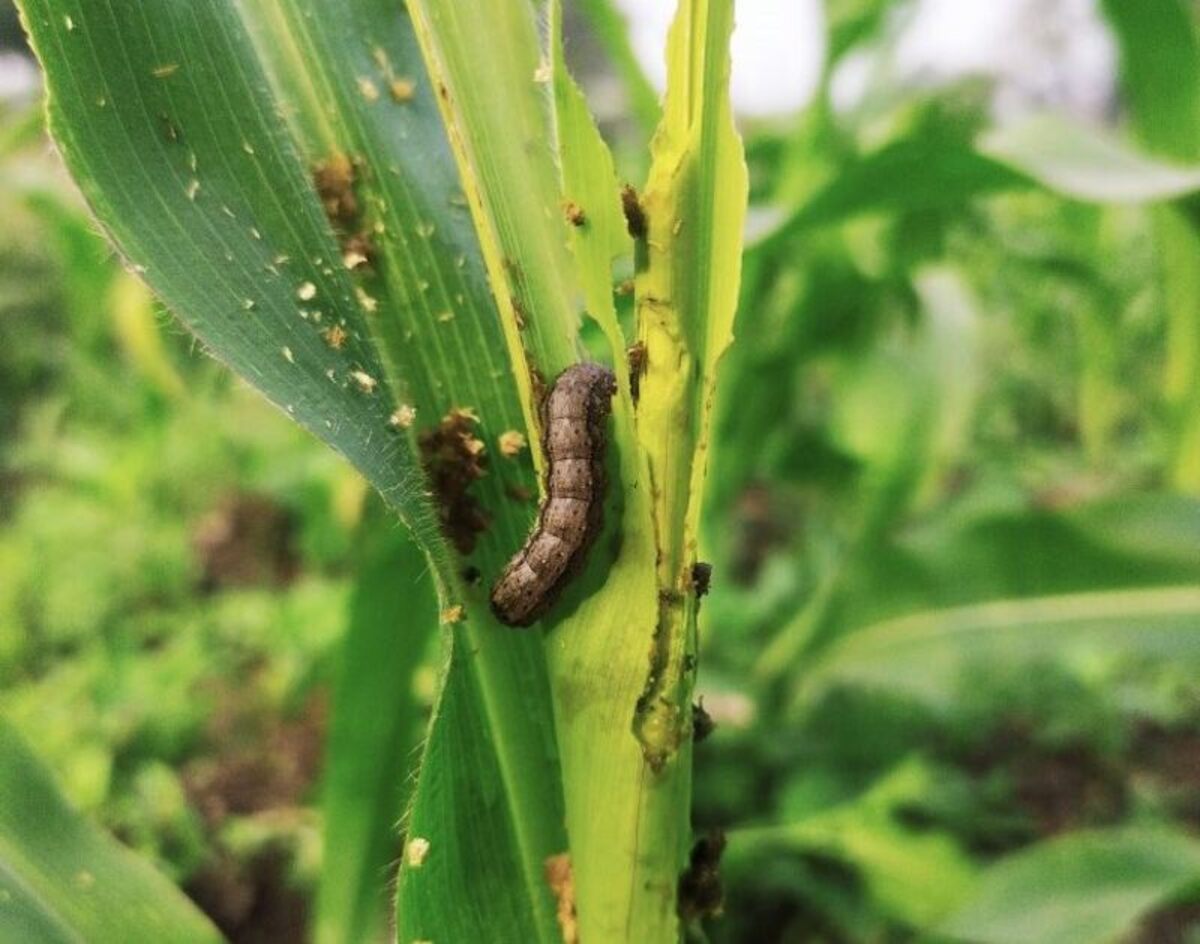
Armyworms are destructive caterpillars that can devastate your garden or lawn in a matter of days. If you’ve spotted holes in your tomatoes, chewed-up leaves, or brown patches in your grass, you need to act fast.
Treat during their larval stage: Hand-pick small infestations of armyworms into soapy water, spray neem oil or Bacillus thuringiensis (Bt) for moderate ones, and save insecticides for severe cases. This guide covers how to get rid of armyworms, recognize the damage they cause, and prevent them from coming back.
Timing your treatment and choosing the right method can be tricky. If armyworm damage has spread to your lawn, LawnStarter’s lawn treatment service can help you reclaim your yard.
What Are Armyworms?
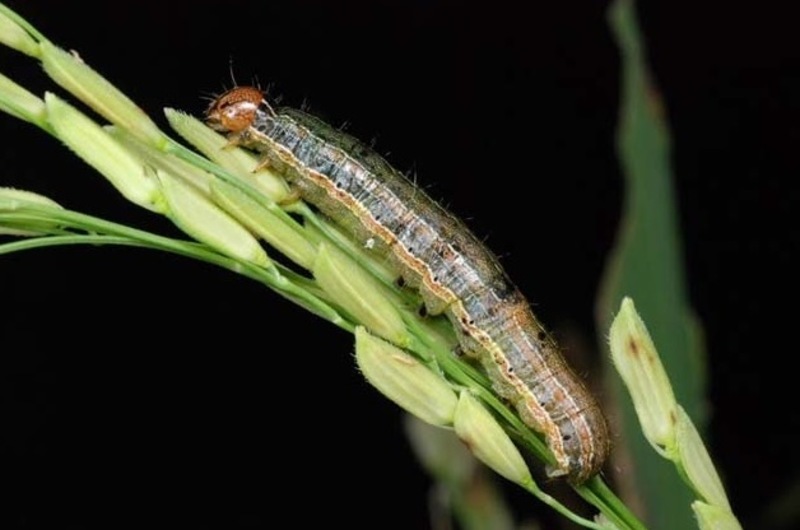
Armyworms are caterpillars (the larval stage of several moth species) that feed in large groups and can destroy a lawn or garden in days. They’re usually green or brown, about 1.5 inches long, with 3 white stripes down their backs and an inverted “Y” marking on their heads.
Common plants armyworms attack:
Beet
Cabbage
Corn
Tomato
Sweet potato
Life Cycle of an Armyworm
| Stage | Duration | What Happens |
| Egg | 2-3 days | Laid in clusters on leaves |
| Larva (caterpillar) | 14-30 days | Active feeding causes all damage |
| Pupa | 8-30 days | Underground, no feeding |
| Adult moth | 7-21 days | Lays eggs, cycle repeats |
Source: University of Florida
The larval stage is your only window to treat them. Pupae and adult moths are not affected by most treatments.
It’s also when they do the most damage. Caterpillars consume approximately 80%-90% of their total food intake in the final 2-3 days of this stage, according to Oklahoma State University.
How to Get Rid of Armyworms
The right treatment depends on how bad the infestation is. Follow an integrated pest management approach and start with the least invasive options first.
For small outbreaks caught early, hand-picking or neem oil is usually enough. For large or spreading infestations, chemical insecticides are the fastest solution, but should be a last resort.
| Treatment Method | Best For |
| Hand-picking into soapy water | Small infestations |
| Neem oil | Early-stage infestations |
| Beneficial insects | Prevention and control; eggs and young larvae in spring or fall, when armyworms are in |
| Beneficial nematodes | Soil-dwelling larvae |
| Bt (Bacillus thuringiensis) | Active feeding larvae |
| Spinosad | Organic gardens |
| Chemical insecticides | Severe infestations |
Pro Tip: Treating in the late afternoon targets armyworms when they are most active, improving the effectiveness of any treatment method.
Hand-Pick Armyworms Into Soapy Water
For small infestations, hand-picking into soapy water is the simplest approach, requiring no chemicals. Here’s how:
Step 1: Find the armyworms. Look for spots where leaves have been chewed and check underneath them. Search for cottony egg masses on the undersides of leaves.
Step 2: Pick up the armyworms. Use your hands for caterpillars and a damp paper towel for eggs. They do not bite, sting, or transmit diseases.
Step 3: Drop them into a bucket of soapy water. Use a teaspoonful of soap per gallon of water.
Apply Neem Oil

Neem oil is a natural insecticide effective against armyworms, achieving 70% to 77% larval mortality within 72 hours in controlled studies. It contains azadirachtin, which disrupts insect hormones and prevents armyworms from completing their larval cycle.
You can safely use neem oil on vegetables, fruit trees, flowers, and shrubs. It generally won’t harm beneficial insects like honey bees or ladybugs when applied during late evening or early morning.
How to apply neem oil:
Step 1: Mix 2 tablespoons of neem oil with a gallon of water in your garden sprayer and shake well.
Step 2: Spray your garden, making sure you reach the undersides of the leaves.
Step 3: Repeat every few weeks until there are no armyworms left.
See Related: Natural Pest Control for Your Lawn That Works
Attract Beneficial Insects
Several beneficial insects act as natural allies against armyworms:
Ladybugs: They eat small armyworms. Attract them with chives, cilantro, dill, or fennel, or live ladybugs.
Lacewings: These tiny green insects target armyworm eggs. and young larvae. Attract them with cosmos, goldenrod, or marguerite daisies.
Minute pirate bugs: They feed on aphids, mites, and armyworm eggs.
Parasitic wasps: Trichogramma wasps lay eggs inside armyworm eggs, killing them from within. They won’t sting humans.
See Related: Beneficial Insects for Your Lawn and Garden, Plus Where to Buy
Release Beneficial Nematodes
Beneficial nematodes are microscopic organisms that move through soil and attack armyworm larvae underground. They won’t harm plants, pets, or people.
How to apply:
Step 1: Buy beneficial nematodes at your local garden store. Apply in spring or fall, when armyworms are in their larval stage.
Step 2: Dissolve in water and use a sprayer to apply to your plants. Keep the soil moist so they can continue hunting the remaining armyworms.
See Related: Beneficial Nematodes: Where to Buy Them and How to Use Them
Apply Bacillus Thuringiensis (Bt)
Bt is a naturally occurring bacterium that creates a toxin lethal to caterpillars when ingested. It is not harmful to humans or other animals.
How to apply Bt:
Step 1: Mix with water and put in a spray bottle or garden sprayer. Follow label instructions for correct amounts.
Step 2: Apply in the early morning or evening since Bt degrades quickly in sunlight. Cover both tops and undersides of leaves.
Step 3: Wait 48 hours to see effects. Reapply weekly if needed.
Common Bt products you can use include Dipel and Monterey Bt.
Apply Spinosad
Spinosad is an organic insecticide made from bacterial fermentation. It’s safe for humans, birds, and moderately toxic to earthworms.
According to the National Pesticide Information Center (NPIC), spinosad doesn’t harm bees once it has dried, but it’s highly toxic to bees when wet. Spray early in the morning or at dusk, when the bees are not active.
That’s also when you’ll get the best results, since sunlight degrades it and shortens its duration of action.
A few of the most popular and easy-to-find spinosad products are Conserve, Ferti-Lome Spinosad Concentrate, and Monterey Garden Insect Spray.
Use Chemical Insecticides
Chemical insecticides such as carbaryl (sold as Sevin) kill armyworms quickly by overstimulating their nervous systems on contact or ingestion.
Use carbaryl only as a last resort because, according to NPIC, it can be slightly to moderately toxic to humans and other mammals and can kill beneficial insects. Follow all label instructions carefully.
Signs of Armyworm Damage and How to Test
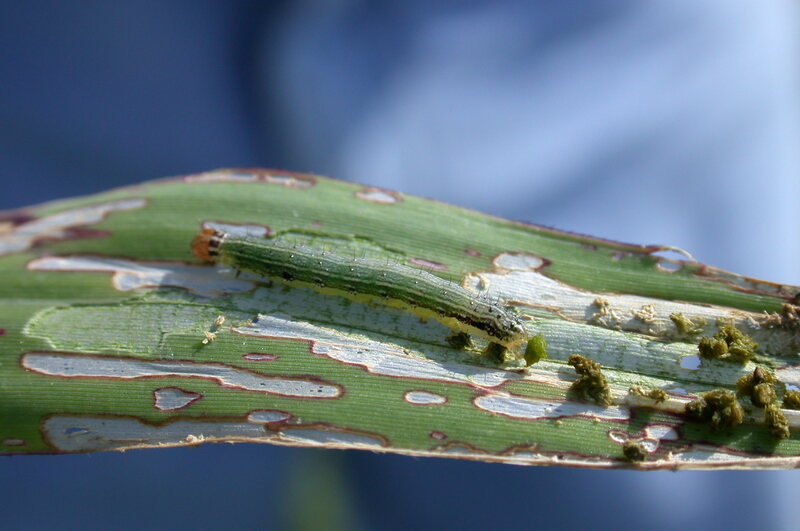
The most obvious sign of armyworm damage is rapid, widespread destruction of foliage. Armyworms can consume an entire lawn in 2 to 3 days under peak feeding conditions, according to Extension experts at Texas A&M University.
If brown patches appear overnight, investigate immediately.
Signs of armyworm damage:
Grass blades that are ragged or chewed up at the tips
Lettuce or cabbage leaves that are “skeletonized” with a transparent windowpane
Oddly shaped holes in your tomatoes
Round holes in your flowers’ leaves
Clusters of eggs on your plant’s leaves
Brown patches of grass with some areas of bare soil
More birds and rodents than usual in your garden
Confirm an armyworm infestation with this simple soap flush test:
Step 1: Mix 1 to 2 tablespoons of liquid dish soap with 1 to 2 gallons of water.
Step 2: Pour the mixture over a 1-square-yard area.
Step 3: Wait up to 10 minutes. The soap forces armyworms to surface.
Step 4: If armyworms appear, treat immediately using the methods in this article.
Step 5: If none appear, test a different area at a different time of day.
See Related: Signs of Armyworm Damage
Is That an Armyworm? How to Tell It Apart from Other Caterpillars
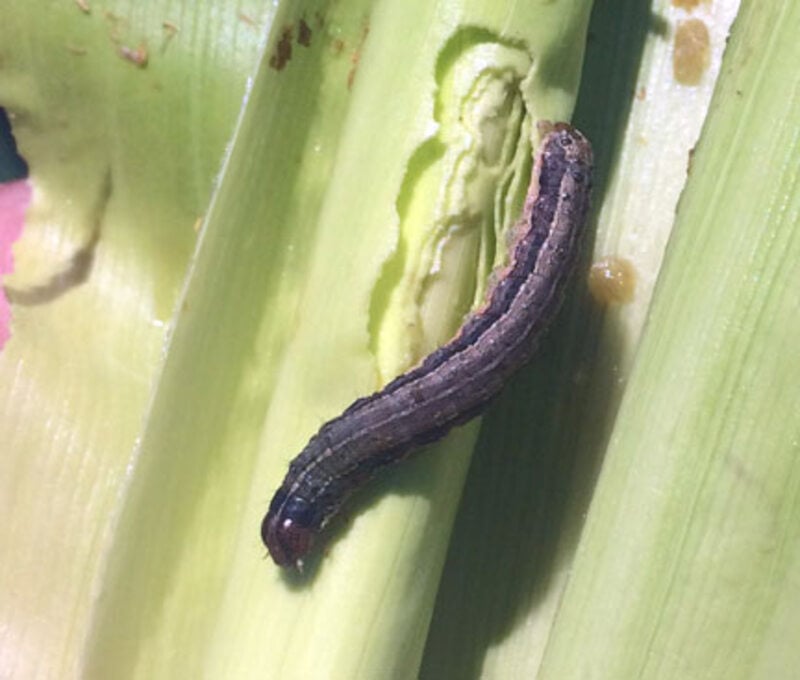
Before you treat, make sure you’re dealing with an armyworm and not a look-alike. Some caterpillars are harmless or even beneficial. Misidentifying them could lead you to treat the wrong pest.
| Pest | Key Identifier | Main Damage |
| Armyworm | Three white stripes, inverted “Y” on head | Leaves, stems, grass blades |
| Cutworm | No inverted “Y” head marking, curls into a C when disturbed | Plant stems at the soil level |
| Sod webworm | Smaller, no stripes or Y shape | Grass tips and blades |
| Monarch butterfly caterpillar | Black, yellow, and white horizontal stripes | Milkweed only |
See Related:
— How to Get Rid of Cutworms
— How to Get Rid of Sod Webworms
— 19 Amazing Facts About the Monarch Butterfly
How to Prevent Armyworms
Once you’ve gotten rid of armyworms, make sure they don’t come back:
| Prevention Method | How It Works | When to Do It |
| Keep the garden clean | Removes hiding spots | Weekly |
| Set pheromone traps | Monitors moth activity | Spring through fall |
| Install bird feeders | Attracts natural predators | Year-round |
| Use row covers | Physical barrier | Install at planting |
| Plant beneficial flowers | Attracts helpful insects | Spring planting |
Keep Your Garden Clean
Keep your garden free of plant debris. This is where armyworms hide between feedings. Clearing debris regularly reduces their chances of establishing an infestation.
Set Pheromone Traps
Pheromone traps detect adult moths, which precede the larval damage.
Get Bird Feeders
Birds are natural predators of armyworms. Bird feeders and bird baths attract birds that will eat armyworms before they can do much damage.
Install Floating Row Covers
Put row covers on at planting, before the moths start flying, and keep crops covered through late summer and early fall, when fall armyworms are most active.
A couple of precautions: Remove the covers from squash, cucumbers, and other insect-pollinated crops during bloom so bees can reach the flowers. Also, avoid sealing a cover over soil that may already harbor larvae, which would trap the pest inside your plants.
Plant Flowers and Herbs That Attract Beneficial Insects
Growing a pollinator garden with nectar- and pollen-producing plants attracts beneficial insects that provide natural pest control.
Recommended plants:
Dill
Coriander
Fennel
Marigolds
Daisies
See Related: How to Build a Pollinator Garden
Get Professional Help for Your Lawn and Garden
Armyworms hit gardens and lawns alike. They chew through tomatoes and vegetable leaves, skeletonize foliage, and leave brown patches in grass, sometimes within just a few days of hatching.
Ignore them, and the damage adds up fast. Caterpillars strip plants faster than they recover, and survivors lay the next generation, restarting the cycle across your beds and turf.
That’s where the pros come in. LawnStarter’s lawn treatment service can clear the infestation and keep your yard safe with professional care and follow-up visits.
FAQs
No. The smell of vinegar can actually attract adult armyworm moths, leading to more eggs. Additionally, vinegar can burn your garden plants if you apply too much.
Yes, on direct contact. A study in Benin, West Africa, found that soapy water solutions killed armyworm larvae on contact, though the soaps tested weren’t standard dish soap. In practice, dish soap is most useful for the soap flush test, and for killing worms you’ve hand-picked into a bucket of soapy water.
Main Image: Fall armyworm caterpillar on a leaf in a lawn. Image Credit: Pixahive