| Key Takeaways |
|---|
| • Columbus's cool-season grasses thrive in spring and fall, so summer is when they need the most careful attention. • Set your mower to 3 inches in summer to help roots hold moisture and shade out weeds naturally. • Water your Columbus lawn deeply 2 or 3 times a week. Aerate and overseed in early fall to fight back against the clay soil that compacts over summer. |

Summer lawn care in Columbus is as unpredictable as Ohio’s weather. This guide covers everything you need to know to keep your lawn alive through Ohio’s toughest stretch.
From mowing and watering to aeration and pest control, every recommendation is tuned to Columbus conditions, including what to start planning for fall.
Getting the timing right on all these tasks can feel like a full-time job. If you’d rather enjoy the summer without lawn care chores, find a LawnStarter lawn care pro in Columbus to take it off your plate.
Columbus Lawn Care Basics
Columbus sits in USDA Hardiness Zone 6a: summer highs typically run in the 80s and 90s, with humid stretches that occasionally tip into triple digits. Some Julys deliver weekly thunderstorms, others go 3 weeks dry.
That’s why summer lawn care here looks different week to week your lawn might need more water one stretch and a fungal disease check the next.
| Columbus Lawn Factor | What You Need to Know |
| Grass types | Tall fescue, Kentucky bluegrass, perennial ryegrass (all cool-season) |
| Soil type | Heavy clay (compacts easily, limits water and nutrient absorption) |
| Peak growing season | Spring and fall (summer is stressful for cool-season grasses) |
Columbus lawns grow cool-season grasses, primarily tall fescue, Kentucky bluegrass, and perennial ryegrass. These grasses thrive in spring and fall but struggle during Ohio’s hot, humid summers.
Local soil is typically a heavy, clay-based soil that compacts easily, making it hard for water and nutrients to reach grass roots.
Clay makes aeration and deep watering more important than they’d be in sandier soil, and cool-season grasses mean your lawn is most vulnerable in July and August.
See Related:
Mow Your Summer Lawn 3 to 4 Inches Tall
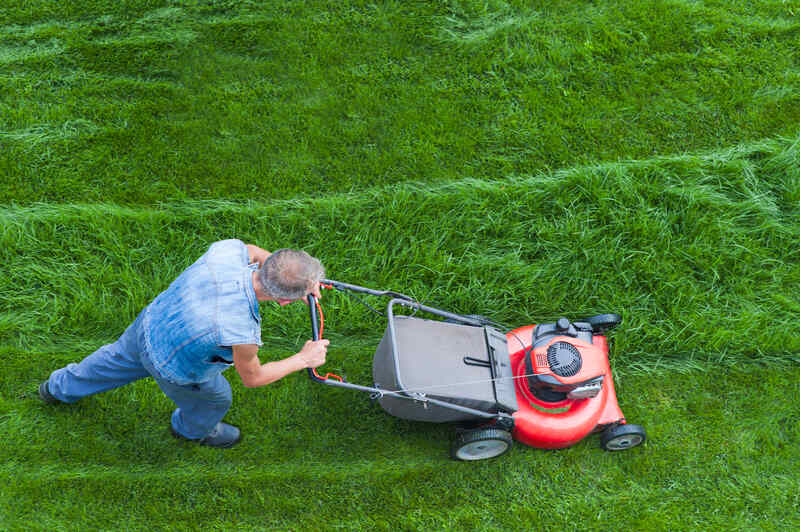
Keep the grass taller in the summer. Longer grass retains soil moisture and sends out deeper roots, helping it find water as the soil dries.
Best practices for mowing Columbus lawns:
Mowing height: Set your mower blades to cut the grass 3-4 inches tall. Mow less often during hot, dry spells when growth slows.
The one-third rule: Never cut more than one-third of the grass blade in a single mowing. Cutting too low causes moisture loss and encourages weeds.
When to mow: Adjust mowing frequency so you can cut 1/3 or less of the grass blade every time. Mow in the morning or evening, not midday heat. Change direction each time to prevent ruts.
Avoid mowing wet grass: Ohio’s summer storms can disrupt your schedule. Avoid mowing wet grass. Jagged cuts invite pests and disease.
Keep blades sharp: Dull mowers tear grass instead of cutting it, leaving frayed edges that brown out fast and lose moisture. Sharpen your mower blades at least once a season.
Leave clippings: Grass clippings add nutrients and preserve soil moisture as they decompose. Mulch them with a mulching mower for faster breakdown.
See Related:
Water Your Lawn Deeply and Less Often
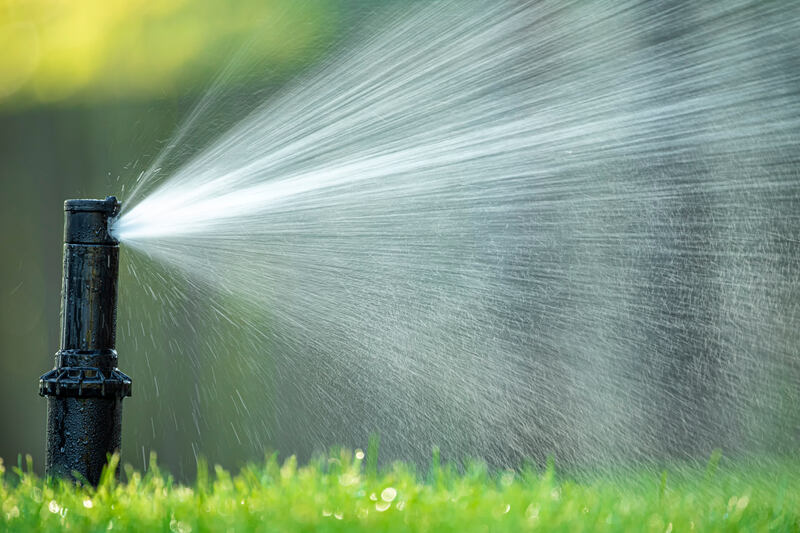
Your Columbus lawn needs about 1 inch of water per week, but how you deliver that inch matters more than the total. Water deeply 2 or 3 times a week rather than a little every day.
| Watering Factor | Columbus Lawn Recommendation |
| Weekly amount | 1 inch of water per week |
| Best time | Morning (6 a.m. to 10 a.m.) |
| Frequency | 2 to 3 times per week (not daily) |
Best time to water: Water in the morning so it sinks into soil before the sun evaporates it. Evening watering encourages disease and fungus.
Water deeply, not often: Keeping your lawn slightly dry encourages deeper root development. Deeper roots help your lawn recover from Columbus’s hot, dry spells.
Water on an irregular schedule and wait until your lawn shows signs of stress.
Signs your lawn needs water: Color loss and footprints that remain in the grass signal it’s time to water.
Avoid Fertilizing Your Lawn in Summer
Skip summer fertilizing. Columbus’s cool-season grasses slow their growth in summer heat. Applying nitrogen during this stress period forces top growth the grass can’t sustain and increases vulnerability to drought and disease.
In summer, leave clippings on the lawn instead. Mulched clippings recycle nutrients and can reduce fertilizer needs by up to 25 percent.
Fertilize in fall. According to Ohio State University (OSU) Extension, cool-season lawns should receive most of their annual nitrogen in the fall. The 2 key applications are early fall (early to mid-September) and late fall (late October to late November).
Mow, Hand-Pull, and Spot-Treat Weeds
Dandelions and crabgrass are among the most widespread and persistent weeds in Columbus lawns. Both spread aggressively in thin or stressed turf and respond well to a combination of timing‑based prevention and targeted treatment.
Dandelions in Columbus
In Columbus, dandelions bloom heaviest in May and June and disperse seeds through early July. The plants you see in July and August are mature rosettes.
What works in terms of weed control in the summer:
Mow before puffballs form. If they’ve already appeared, bag the clippings to keep seeds contained.
Spot-treat with a broadleaf weed killer on a calm, mild day with temperatures under 85 degrees.
Hand pull with a weed knife or a dandelion fork. Moisten the soil first.
Plan the fall treatment. According to OSU Extension, dandelions are most vulnerable to weed killer between September and early November.
See Related: How to Get Rid of Dandelions
Crabgrass in Columbus
Crabgrass peak emergence runs from mid-May through early July. Plants sprouted in Columbus lawns then tiller through summer and produce seed until first frost.
What works in summer:
Spot-treat young plants quickly. OSU Extension’s Licking County office notes that post-emergents can control crabgrass, but effectiveness drops sharply on mature plants.
Mow at 3 inches or higher. Dense, tall turf is the strongest defense. It shades soil and reduces germination, though it won’t stop existing plants from producing seedheads.
Plan for prevention next spring. OSU Extension recommends applying pre-emergent herbicide before soil temperatures reach 55 degrees.
See Related:
Watch for Grubs and Billbugs in Your Summer Lawn
According to OSU Extension, two lawn insects cause the most consistent damage to Ohio turf in summer: white grubs, which feed on grass roots underground, and bluegrass billbugs, which attack grass stems and crowns. Both can mimic drought stress.
Grubs in Columbus
Grubs are larvae of Japanese beetles, masked chafers, and June beetles. They sit just below the soil in a C-shape, severing roots and crowns as they tunnel, with damage peaking in July and August.
Look for irregular dead spots while mowing or watering. In heavily damaged lawns, the sod lifts easily like a throw rug.
If your Columbus lawn has a history of repeated grub infestations, add preventive insecticides to summer lawn care schedule. According to OSU Extension, applications run from late May to mid-August depending on the product’s residual time in the soil.
See Related:
Billbugs in Columbus
Billbug damage shows up in mid- to late June, with a possible second wave from late July through August. Lawns dominated by Kentucky bluegrass are most at risk.
In areas of thinning or mottled grass, grasp the blades and pull upward. If stalks break at ground level and stems are hollowed out or filled with sawdust-like material, billbugs are the cause.
Treat larvae from mid-May into early June. According to OSU, systemic insecticides like neonicotinoids are absorbed into grass stems where larvae are feeding.
See Related:
Aerate and Overseed Starting in Late August
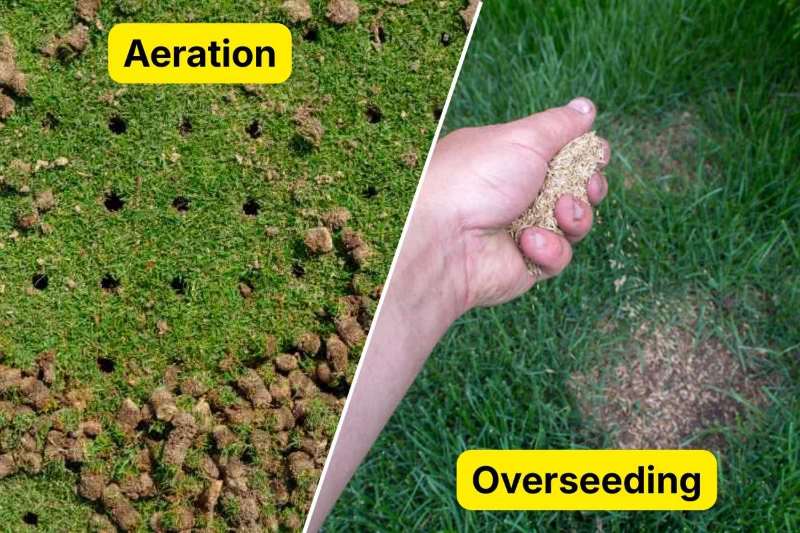
Aeration: Shutterstock
Overseeding: CreativeSuburb / Adobe Stock
Columbus’s heavy clay creates compacted soil over time, suffocating grass roots. Aeration pulls small soil plugs from your lawn to give roots room to breathe and grow.
Most homeowners should aerate once a year. If your lawn shows signs of heavy compaction, such as water pooling after rain, twice a year may be warranted.
Best timing: Aerate Columbus lawns in early fall (late August through October) then overseed your lawn immediately after for best results. Seeding right after aerating maximizes seed-to-soil contact, building a thicker lawn that naturally crowds out weeds the following season.
See Related:
Hire LawnStarter for Columbus Lawn Care
Columbus summers don’t follow a script — and neither does the work your lawn needs. Between mowing, watering, fertilizing, and fighting off grubs and weeds, keeping up can feel like a part-time job.
LawnStarter‘s lawn care pros in Columbus are ready to take it all off your plate. Get an instant price and reclaim your Saturdays.
LawnStarter‘s lawn treatment services can also help with the seasonal tasks this guide covers, like fertilizing and preventing summer heat stress from snowballing into bigger problems.
FAQs
Most Columbus homeowners can keep mowing until growth stops, which often happens after temperatures stay below 50 degrees for about a week. Keep your final cut at about 2.5 inches for winter health.
Professional lawn mowing in Columbus typically falls within the national lawn mowing cost range of $42 to $68 per visit. LawnStarter uses satellite imagery to give you an instant, accurate price for your specific yard.
Cool-season grasses like tall fescue can survive summer dormancy, turning brown but recovering in fall. If you choose dormancy, stop fertilizing and mow less often. Water lightly every 2 to 3 weeks to keep roots alive. Resume regular care when temperatures cool in September.
Main Image: Lawn mowed by a LawnStarter Pro in Columbus, OH. Image Credit: LawnStarter