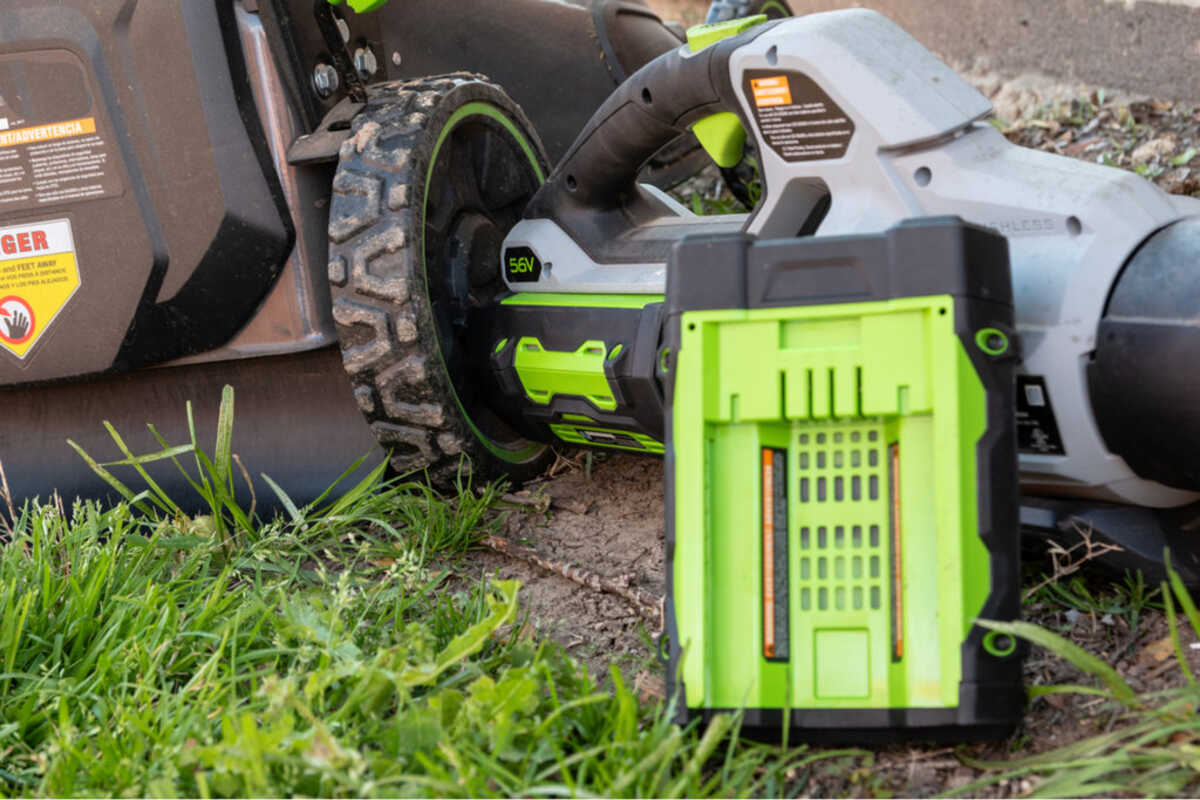
You just bought an eco-friendly battery-powered lawn mower to cut your grass, but how do you keep those batteries charged so you’re ready to mow — or won’t run out of juice before you’ve finished?
Here’s what you need to know:
- Electric lawn mowers need regular battery charging and maintenance to run efficiently.
- Most electric push mower batteries charge in 30 minutes to 4 hours, while riding mower batteries take 3-12 hours, depending on size and model.
- Proper battery care makes your batteries last longer: lithium-ion batteries last up to 5 years and lead-acid batteries last 3-4 years.
Tips: Charge at room temperature, avoid letting the charge drop below 20%, and store batteries in a cool, dry place during winter.
(I’ll need to know all of this myself when I switch from my gas-powered mower to a battery-powered one when my current mower quits working.)
| Don’t want to deal with charging mower batteries? Hire a local LawnStarter pro to mow your lawn. Get a free instant quote. |
How often you need to charge your mower’s batteries, how to care for them, and even how much replacements will cost varies by the type of mower and its batteries.
Electric push mowers (over 58% of the electric lawn mower market in 2022) use one or two removable lithium-ion (Li-ion) batteries. The batteries are removed from the mower for charging.
Electric riding mowers use one of three battery types. Older models typically use multiple lead-acid batteries (similar to car batteries) connected in series. Newer models use lithium-ion or lithium iron phosphate (LiFePO4) battery packs.
Riding mower batteries are not removable and charge like traditional lead-acid batteries or through the mower’s built-in charging ports.
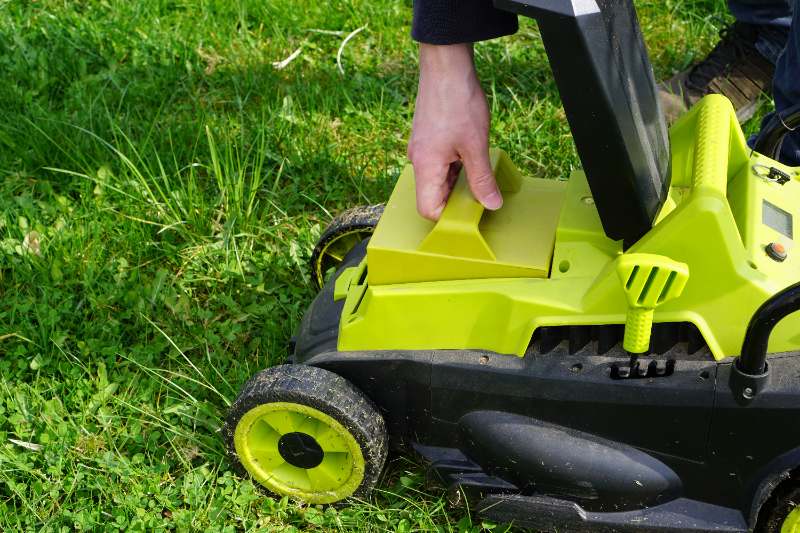
How to Charge a Lawn Mower Battery (Step-by-Step)
For Push Mowers (Li-ion Batteries):
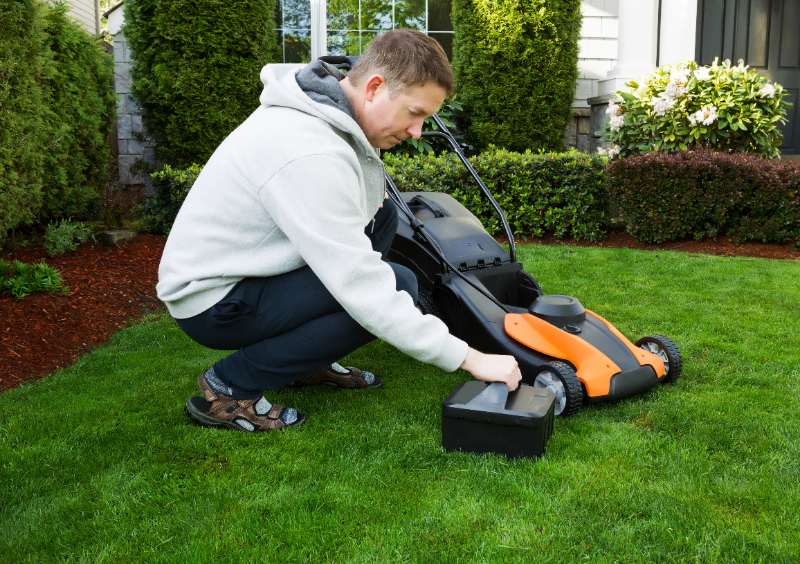
Remove the battery, or battery pack, from the mower and insert it into the manufacturer’s charger. Plug the charger into a standard wall outlet. Disconnect when fully charged.
Safety Note: Some mowers include tabletop charging stations for convenient indoor charging.
For Riding Lawn Mowers (Lead-acid Batteries):
- Wear protective gear. Put on gloves and safety glasses.
- Unplug the charger from the electrical outlet.
- Locate the battery. It is usually under the seat (check the owner’s manual).
- Connect cables in order. Connect the red positive cable first, then the black negative cable to the matching battery terminals. Ensure cables don’t touch metal parts.
- Match voltage settings. Set the charger voltage to match your battery’s amp rating.
- Plug in and charge.
- Disconnect when fully charged.
For Riding Mowers (Li-ion or LiFePO4 Batteries):
Lift the charge port cover, insert the charging cord into the port, and plug the other end into a standard 110-volt wall outlet. Disconnect when fully charged.
How Long Does it Take to Charge a Lawn Mower Battery?
Battery charging time varies by size, voltage, and charger type:
Small Lawn Mowers
| Mower | Battery Type | Charging Time | Cutting Time |
| Snapper push mower | Lithium-ion | 30 minutes | 25-30 minutes |
| Sun Joe light mower | Lithium-ion | 1.5-2 hours | 45 minutes |
| Cub Cadet smaller sit-on mower | Lithium-ion | 4 hours | 1 hour |
Large Lawn Mowers
| Mower | Battery Type | Charging Time | Cutting Time |
| LEO self-propelled commercial mower | Lithium-ion | 2 hours | 50 minutes |
| Cub Cadet big sit-on mower | Lithium-ion | 4 hours | 1.5 hours |
| Weibang big sit-on mower | Lithium-ion | 12 hours | 2.5 hours |
Most electric push mowers charge in 30 minutes to 2 hours. Riding mowers typically take 3-4 hours to charge, though larger models can take up to 12 hours.
Some models use two-stage charging: The first 75% of the charge happens quickly, and the final 25% takes longer to protect the battery.
The charger’s indicator light typically shows red while charging and green when fully charged. Some digital chargers display the exact charge percentage.
Always unplug when charging reaches 100%. Overcharging batteries reduces their overall life.
How to Maintain Your Lawn Mower Battery
Follow these maintenance tips to maximize battery life:
- Avoid deep discharge: Don’t run batteries below 20% charge. “It’s generally better not to discharge it all the way,” says Gary Koenig, associate professor in chemical engineering at the University of Virginia. “Don’t run it very low.” Running batteries very low accelerates fade and shortens lifespan, especially lead-acid batteries.
- Keep the mower deck clean: Clogged decks force the motor to work harder, overheating and draining the battery.
- Avoid mowing wet grass: Wet grass is heavier and harder to cut, straining the motor and draining batteries faster. It also increases the risk of clogging the deck.
- Don’t cut overly tall or thick grass in one pass: Like cutting wet grass, this strains the motor. Raise the deck and make multiple passes instead.
- Avoid mowing in extreme heat: Using your mower in high ambient temperatures can overheat batteries and cause permanent damage.
- Store properly in winter: Disconnect the battery and store it in a cool, dry indoor location, ideally between 50 F and 68 F. Lithium batteries should be stored with a 30%-50% charge; lead-acid batteries should be stored fully charged. Use a battery maintainer or trickle charger for continuous optimal charge.
- Never use the battery to jump-start a car: Lawn mower batteries aren’t designed for this, and warranties don’t cover such damage.
See Related:
— How to Mow Tall Grass In Your Lawn
Lawn Mower Battery Lifespan
With proper maintenance, expect:
- Lead-acid batteries to last 3-4 years
- Lithium-ion batteries to last up to 5 years
Factors affecting lifespan include overcharging, extreme temperatures (hot or cold), and cleanliness.
“When (your battery) starts to wear out, the biggest thing you’ll see is it won’t last as long,” Koenig says. Older batteries develop internal resistance, requiring them to work harder to produce the same output.
Battery Charging and Maintaining Best Practices
Do:
- Use original equipment: Universal chargers may deliver incorrect voltage or amperage, damaging batteries and voiding warranties.
- Charge regularly: Most manufacturers recommend charging the battery after every use (lead-acid if used longer than an hour), even if you don’t drain it. During the off-season, charge batteries every 30 to 60 days.
- Let battery cool before charging: After heavy use or hot conditions, let the battery rest 10-15 minutes before plugging in. Charging a hot battery accelerates degradation.
- Monitor temperature: Stop charging if the battery feels excessively hot or shows damage.
- Remove during storage: Take the battery out of your mower when storing it long-term.
- Store safely: Keep batteries away from metal objects (keys, coins, screws) and liquids that could short-circuit terminals.
- Keep clean and dry: Wipe batteries so they are free of oil, grease, grass clippings, and moisture.
- Protect terminals: Apply terminal protectant spray or dielectric grease to prevent corrosion from moisture and dirt.
Don’t:
- Charge in extreme temperatures: Heat or cold reduces battery lifespan (check manual for temperature limits).
- Charge in wet locations: Moisture and electricity don’t mix.
- Modify safety controls: Don’t bypass devices that regulate charging voltage.
- Place near heat sources: Fire, pilot lights, and high heat increase explosion risk.
FAQ About Lawn Mower Battery Charging
Common causes include: battery age (a typical lifespan is 3-5 years), extreme temperature damage, deep discharge below 20%, or corroded terminals. Try cleaning terminals with a wire brush. If the battery is older than 4 years or won’t charge to more than 20%, replacement is likely needed.
Replacement battery costs vary significantly depending on the type, voltage, and amp hours.
Lithium-ion mower batteries cost $150-$300+. Lithium-iron phosphate batteries (12V) cost $140-$200 each, and lead-acid batteries start around $65-$70 each, but with both types, you typically need 2-7, depending on the mower model. 48V LiFePO4 batteries are available, but cost upward of $600 (bypassing the need to buy multiple).
Let LawnStarter Handle Your Lawn Care
If battery maintenance and mower upkeep feel overwhelming, LawnStarter connects you with local lawn care professionals who bring their own reliable equipment to every job. No charging, no maintenance, no hassle—just a beautiful lawn.
Get your free mowing quote instantly and see why over 1.8 million homeowners trust LawnStarter for their lawn care needs.
Read Next:
— Gas vs. Electric Lawn Mowers
— When is the Best Time to Buy a Lawn Mower?
— How to Dispose of a Lawn Mower
Sources
- “Electric Lawn Mower Market (2023 – 2030).” Grand View Research.
- Gary Koenig, associate professor in chemical engineering at the University of Virginia, Charlottesville, Virginia. Personal interview.
Main Image: Green battery pack beside cordless yard tool. Image Credit: iStockPhoto
