Starting a compost pile feels overwhelming when you’re staring at your kitchen scraps, wondering what’s safe to toss in a compost bin.
You can put grass clippings, fruit and vegetable scraps, coffee grounds, dried leaves, cardboard, and newspaper in a compost bin. Avoid meat, dairy, oils, and pet waste to prevent pests and odors.
This guide outlines what belongs in your bin, what to avoid, and how to maintain the perfect balance for fast, odor-free decomposition.
| Ready to turn your waste into garden gold? Contact LawnStarter to connect with our local landscaping professionals who can help you use your finished compost effectively and maintain a thriving yard year-round. |
| Key Takeaways |
|---|
| • Most yard waste, fruit and vegetable scraps, coffee grounds, cardboard, and paper are compost-safe. • Compost needs two-thirds brown materials (carbon) and one-third green materials (nitrogen) to decompose properly. • Avoid meat, dairy, oily foods, and pet waste to prevent pests, diseases, and bad odors. |
- Quick Reference: Compost Bin Yes/No List
- Brown Materials You Can Put in a Compost Bin
- Green Materials You Can Put in a Compost Bin
- What Brown Materials Can’t Go in a Compost Bin
- What Green Materials Can’t Go in a Compost Bin
- Other Items That Don’t Belong in Your Compost Bin
- Can You Compost These Common Items?
- FAQ About Composting
Quick Reference: Compost Bin Yes/No List
| ✅ COMPOST THIS | ❌ NEVER COMPOST |
| Grass clippings | Meat & fish |
| Coffee grounds & filters | Dairy products |
| Eggshells | Bones |
| Fruit and vegetable scraps | Oily or greasy foods |
| Dried leaves | Pet waste (dogs/cats) |
| Shredded newspaper | Treated lumber |
| Cardboard (non-glossy) | Coal ash |
| Tea bags (remove staples) | Diseased plants |
| Bread & pasta | Plastic or metal |
Brown Materials You Can Put in a Compost Bin
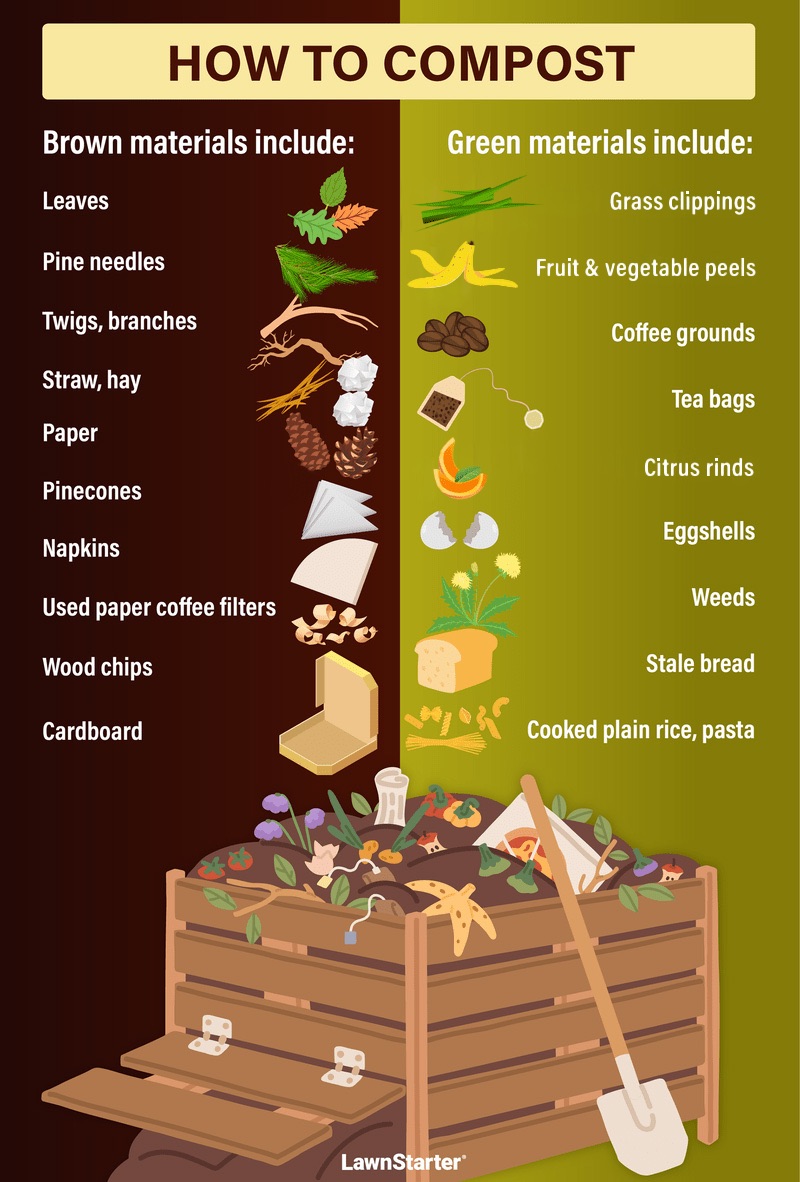
Brown materials add high amounts of carbon to your compost bin. Microbes use this carbon for energy and to build new cells. These items are usually “dry,” hence they are called brown materials. They also add structure to the pile, increase air flow, and absorb moisture.
Think of browns as the backbone of your compost pile. Without enough carbon-rich materials, your bin becomes a soggy, smelly mess.
To keep the process moving — and your bin from smelling — you want to add roughly two-thirds brown material to one-third green by volume. For every bucket of grass clippings or vegetable scraps, add two buckets of dried leaves or shredded cardboard.
Here’s what qualifies as brown materials:
Paper Products:
- Shredded cardboard (corrugated and non-corrugated, non-glossy only)
- Newspapers with black ink
- Printer paper
- Unbleached paper towels, napkins, and tissues (not greasy or oily)
- Cotton swabs with paper stems
- Unbleached paper coffee filters
Yard Waste:
- Dry leaves (shredded leaves are preferable to whole)
- Small twigs and pruned branches from your trees
- Straw and hay
- Sawdust from untreated wood
- Peat moss
- Dried corn husks and cobs
- Pine needles (in moderation; too many can make the bin too acidic)
Household Items:
- Fireplace or wood ashes (from untreated wood only)
- Hair and animal fur
- Natural fibers like wool, silk, leather, and cotton
- Dryer lint (from natural fibers)
- Plant-based bedding from pets that eat a vegetarian diet (hamsters, guinea pigs, rabbits)
- Kitty litter made of plant-based material, free of fragrances and chemical additives (with feces removed)
Pro Tip: Shred or break down larger brown materials before adding them to your bin. Smaller pieces decompose faster and maintain better airflow throughout your pile.
See Related:
| Need help maintaining your yard after applying your finished compost? Professional lawn care services can handle everything from mowing to fertilization while you focus on composting. |
Green Materials You Can Put in a Compost Bin
Along with the “dry” brown materials, you want to add what are classified as “moist” green items to your compost bin. These materials are nitrogen-rich and are used by the microbes as building blocks to grow, reproduce, and break down organic matter.
Nitrogen is a key component in proteins and other compounds necessary for cellular life. Add these items to increase the nitrogen content in your compost bin:
Kitchen Scraps:
- Fruit and vegetable scraps (banana peels, apple cores, etc.)
- Bread
- Cooked pasta and rice
- Freezer-burnt foods
- Gelatin
- Coffee grounds
- Eggshells (rinse them first)
- Tea bags (remove the metal staples that attach the tag)
Fresh Yard Waste:
- Grass clippings from lawn mowing
- Fresh green leaves
- Plant trimmings
- Fresh flowers
- Weeds (without seed heads)
Animal Waste:
- Manure from plant-eating animals (cows, horses, rabbits)
- Poultry manure
Important note: Composting is a great way to manage grass clippings, but if your lawn was recently treated with herbicides, let the clippings cure for several weeks before adding them to your bin. Learn more about a proper monthly lawn care schedule to coordinate your composting efforts.
See Related:
What Brown Materials Can’t Go in a Compost Bin
Not all carbon-rich materials are suitable for your compost bin. Some introduce harmful chemicals that can leach into finished compost, take years to break down, or attract pests.
Avoid These Browns:
- Treated lumber: Contains toxic chemicals like arsenic and copper that leach into your compost
- Fresh black walnut leaves, husks, and shells: Contains juglone, a compound toxic to tomatoes, peppers, and other garden plants
- Glossy or coated paper products: The coating contains plastics and chemicals that don’t break down
- Coal ashes: Unlike wood ash, coal ash contains heavy metals and sulfur compounds harmful to plants
What Green Materials Can’t Go in a Compost Bin
Some nitrogen-rich materials shouldn’t go in your bin, either. Meat, dairy, and oily foods decompose without oxygen, creating foul odors and potentially harmful bacteria.
Others, like diseased plants and pet waste, introduce bacteria, fungi, or parasites that can survive the composting process and spread to your garden.
Never Compost These Food Items:
- Meat scraps and fish
- Dairy products (cheese, milk, yogurt)
- Bones
- Oily or greasy foods
- Heavily seasoned food items
Don’t Compost Problem Plants:
- Diseased grass or plants (spread disease to your garden)
- Pernicious or invasive plants that harm other plants or the environment
- Weeds with seed heads (seeds survive composting and sprout in your garden)
Pet Waste:
- Dog or cat feces (contain harmful bacteria or parasites like E. coli and roundworms)
See Related: Common Lawn Diseases and How to Identify Them
Other Items That Don’t Belong in Your Compost Bin
A few items don’t fit neatly into the brown or green categories but still don’t belong in your bin. These should be avoided because they won’t break down alongside your organic materials, or they won’t break down at all.
Keep These Out:
- Metal items
- Plastic products
- Disposable diapers
- Rubber or synthetic materials
Can You Compost These Common Items?
Let’s address some frequently questioned items:
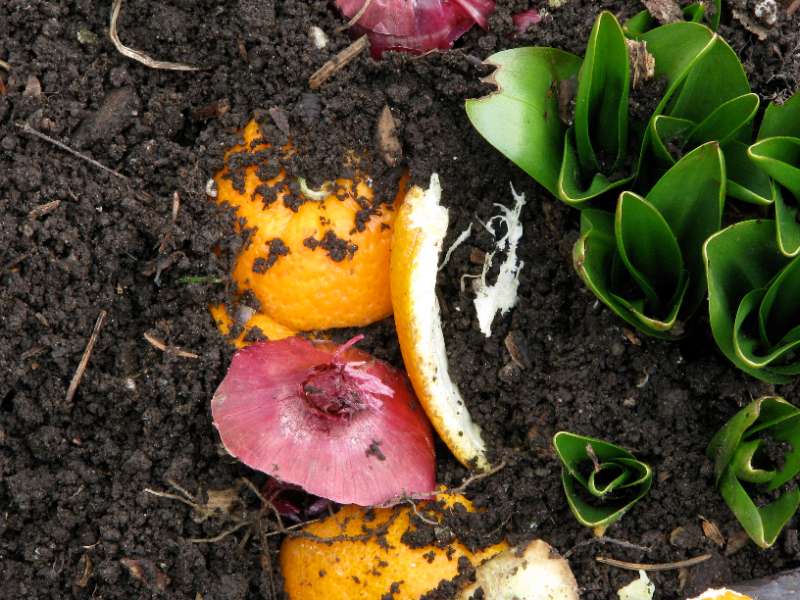
Citrus peels: Yes, but in moderation. Large amounts can make your pile too acidic and slow decomposition.
Onions and garlic: Yes. Despite myths about repelling worms, these break down fine in home compost bins.
Avocado pits: Technically yes, but they take 6+ months to decompose. They’re best left out of home bins unless you’re patient.
Moldy food: Mold is part of the decomposition process. Moldy bread, vegetables, and fruit are perfect for composting.
Dryer lint: Only if it comes from natural fiber clothing (cotton, wool, linen). Synthetic materials like polyester create microplastics. Many clothing items have synthetic fibers, so the only dryer lint I collect is from my bath and kitchen towels.
FAQ About Composting
Turn your pile every 1-2 weeks, maintain moisture like a wrung-out sponge, and use two-thirds brown to one-third green ratio. If your bin smells like ammonia or rotten eggs, add more brown materials and turn the pile to introduce oxygen and reduce compaction.
Chop materials into smaller pieces, turn your pile every 1-2 weeks, and maintain consistent moisture. Layer greens and browns rather than dumping large amounts of one material. Most home bins produce usable compost in 3-6 months with active management versus 6-12 months for passive piles.
See Related: How to Use Compost in Your Yard
Compost Can Help Your Yard, and So Can LawnStarter
Applying the “black gold” you get from composting to your lawn, garden, and flowerbeds is a fantastic way to improve the soil in your yard and keep your grass and plants strong and healthy. Once your compost is ready, learn how to use compost in your yard to get the most out of it.
Remember, compost is only one part of your yard maintenance routine. You still need to keep up with mowing, aeration, weed control, and overseeding if you want landscaping you can be proud of.
Ready to create the yard of your dreams? Contact LawnStarter today to connect with experienced lawn care professionals who can handle everything from routine mowing to specialized services like aeration and overseeding. Let the pros maintain your yard while you focus on composting success.
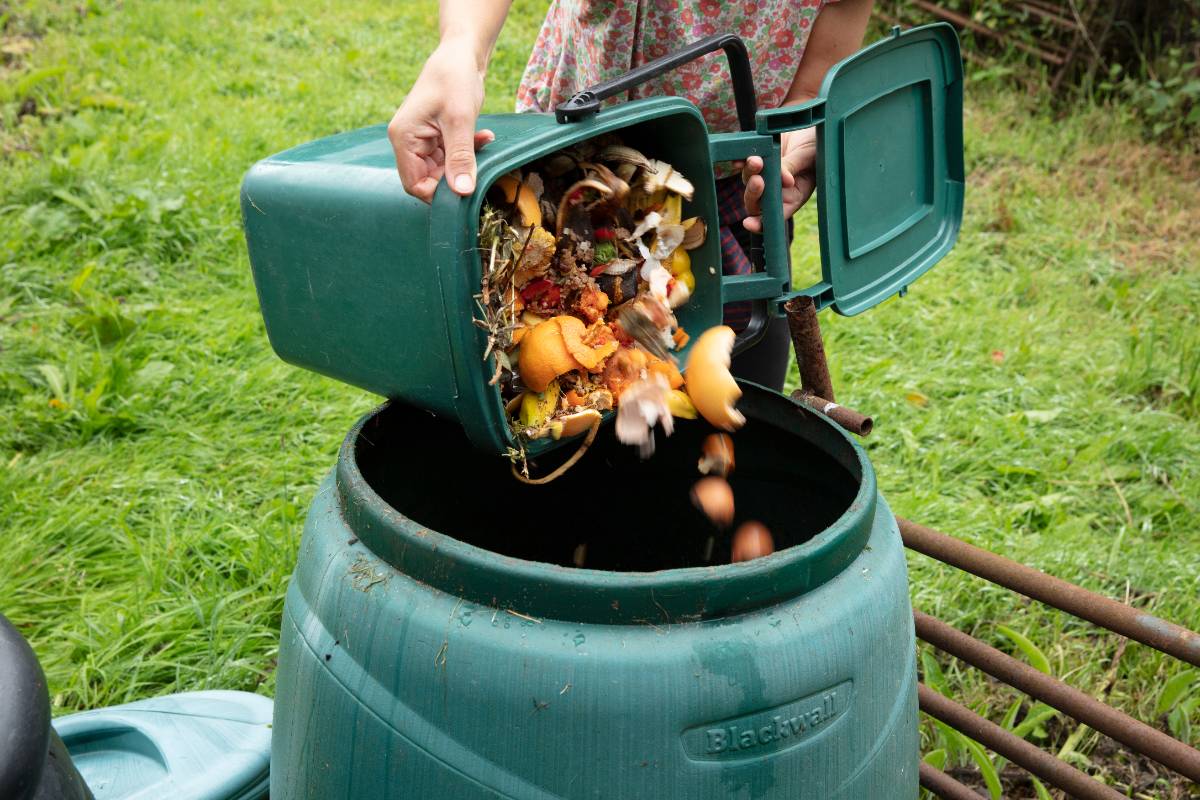
Main Image: Kitchen scraps poured into compost bin. Image Credit: Electric Egg Ltd. / Adobe Stock
