Beyond the Bin:
U.S. Composting
Stats, Policies,
and Roadblocks
By Sav Maive
Beyond the Bin:
U.S. Composting
Stats, Policies,
and Roadblocks
By Sav Maive
Composting is catching on. According to data from ReFED, 11.5 million tons of food waste were composted in 2024, accounting for 19.3% of the total food waste across all sectors.
To get a better picture of the compost revolution, LawnStarter put together a list of recent stats, policies, and roadblocks related to composting and food waste management. Why does LawnStarter care about composting? Organic yard waste, like grass clippings, is compostable, and 26 states have banned yard waste from landfills.
Read below to explore the recent growth and ongoing challenges of organic waste solutions in the U.S.
Curious about which U.S. cities are making strides in composting efforts? Explore the Top Cities for Composting.
In this Report


Photo Credit: KMPZZZ / Adobe Stock
True Costs of Trashing Food
● The average U.S. family of 4 tosses out $2,913 worth of food (or $728 per person) each year, according to a 2025 EPA report. This accounts for about 11% of total annual household food budgets and is almost double the cost of household food waste (previously $1,500) initially introduced by the USDA in 2010.
● Landfills are getting more expensive: In 2024, the average landfill tipping fee increased by 10% compared to fees recorded in 2023, with an average cost of $62.28 per ton.
● The average U.S. resident wastes around 256 pounds of food each year, according to EPA estimates.
Investing in Solutions
● According to ReFED, a food waste solutions nonprofit, $9.96 billion worth of investments have been made toward food waste solutions since 2012.
● The federal government spent $300 million on food waste solutions in 2024, while about $640 million came from private funding, as reported by ReFED.
● The global compost market was valued at $8.15 billion in 2024, with projections estimating it to reach $13.03 billion by 2029, with a 10.3% compound annual growth rate.
● In 2024, the USDA invested around $11.5 million in projects targeting composting and food waste across 23 states.
● Only 4% of global climate funding has gone toward food waste solutions.
● Just 2%, or 1.75 million tons of surplus food was donated through charitable organizations in 2023, like food banks. ReFED claims that this is only 12% of what could be potentially donated from total surplus food.
Expanding the Composting Revolution
The amount of food being composted in the U.S. has drastically increased since the turn of the millennium.
Composted Food in Municipal Solid Waste by Weight
No Data Found
● Access to composting programs grew by nearly 9% between 2020 and 2025, according to the Sustainable Packaging Coalition (SPC).
● About 35.9% of U.S. residents now have access to curbside and/or drop-off composting programs.
● ReFED estimates that 25% of all food in the U.S. became food waste in 2024, totalling around 63 million tons. Almost 4%, or about 9 million tons, of total food generated was recycled through composting, anaerobic digestion, for industrial uses, or as animal feed in 2024.
● As of 2024, only 5% of anaerobic digestion facilities are stand-alone food processors. The majority (47%) operate at wastewater treatment plants.
● 53 surveyed anaerobic digestion facilities cumulatively powered the equivalent of 31,336 homes in 2023.
Landfills Reaching Capacity
● 2.1 billion–2.3 billion tonnes of waste are generated across the globe each year. Projections say this could rise to 3.8 billion tonnes by 2050.
● EPA estimates say food waste accounts for about 24% of municipal waste disposed of in landfills. When including other organic materials like yard trimmings, wood, and paper products, this adds up to 51.4% of the national waste stream.
● Food waste is to blame for an estimated 58% of landfill methane emissions.
● The U.S. has just 18 years of landfill capacity left, a 2020 report found, fueling price increases, and indicating a need for new waste management solutions before 2038.
● Nevada holds a Guinness World Record for the world’s largest landfill: Apex Regional Landfill near Las Vegas. Spanning 2,200 acres, it is over 2.5 times bigger than Central Park in NYC. It was built to withstand 250 years of garbage accumulation.
● According to ReFED, 70% of food waste from the food service sector is from customers who don’t clean their plates.
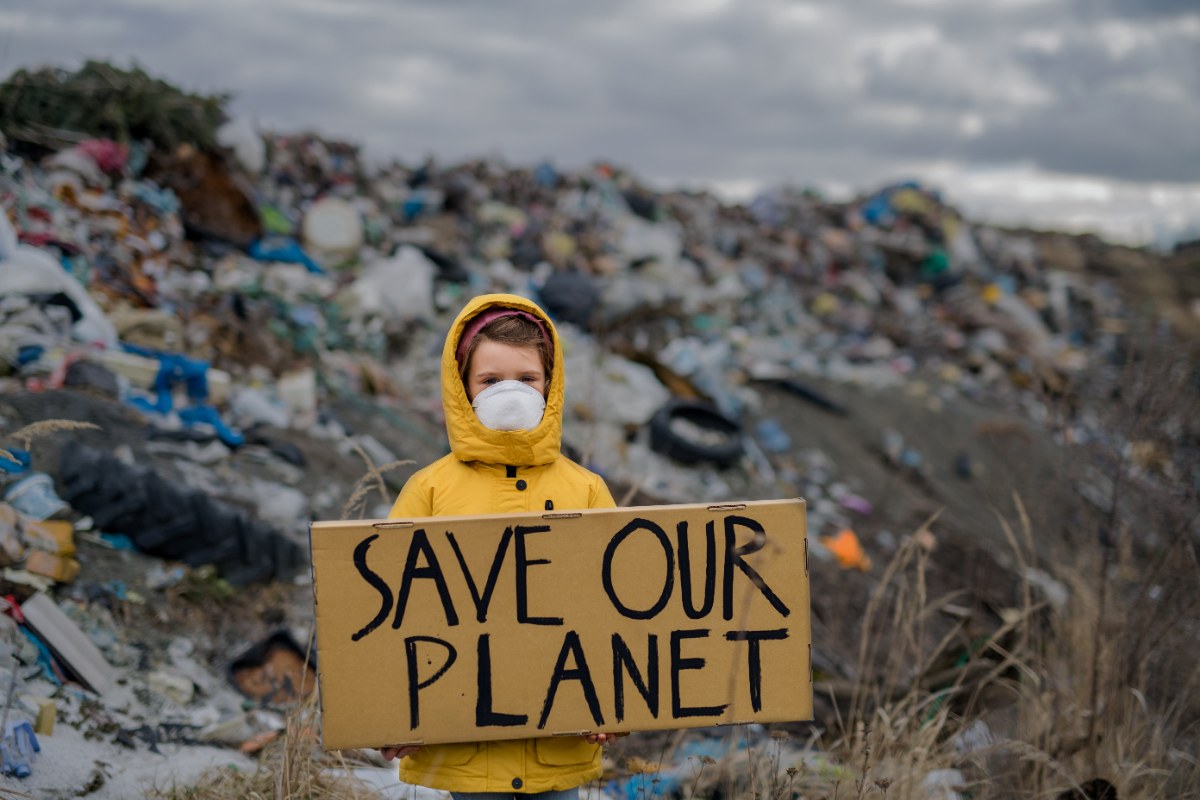
Photo Credit: Halfpoint / Adobe Stock
Reality Check: Composting Challenges and Imperfect Infrastructure
While we ranked the Top Cities for Composting in 2026, some elements of composting — like costs, incentives, and diversion and participation rates — are complex and can not yet be factored into our analysis due to insufficient data for many U.S. cities.
The reality is, even in cities with robust composting systems, composting is not always easy for residents or as effective as the municipality was hoping. From participation to contamination rates, read below about some composting complications.
Missing 2025 Goals
Several municipalities — and the entire state of California — set ambitious waste reduction goals for 2025. And now in 2026, these governments will likely be moving their goal posts.
● California aimed to reduce 75% of organic waste delivered to landfills by the end of 2025, and while it will take some time to analyze its progress, many anticipate this goal being missed. The Golden State is already drafting a new plan for a zero-waste economy, which would adopt a circular framework focusing on waste reduction and reusing materials instead of recycling and composting.
● In 2019, Los Angeles announced its Green New Deal, which aimed for a 90% waste diversion rate and a zero-waste city hall by the end of 2025. Los Angeles County also set a goal to divert 80% of waste. While the county and city have been making progress, reports say they did not seem to be on track to meet these goals by the end of 2025.
○ Fort Collins, Colorado, adopted an ambitious goal in 2013 to divert 90% of waste from landfills by the end 2025. While the city may be behind on meeting this goal, progress has been made.
○ Since 2006, Boulder, Colorado, has been working toward diverting 85% of waste by the end of 2025. The most recent data from 2024 shows a diversion rate of 45%, which fluctuates year-to-year.
Bumpy Program Rollouts
● New York City began mandatory composting in October 2024 and warned residents that fines would begin for non-compliance starting in April 2025. NYC then changed course in April to focus on education and outreach, announcing that most tickets would be delayed until the end of 2025. While researching this story, I reached out to several friends across different NYC boroughs — 6 of whom let me know their apartments have yet to attempt to comply with the composting mandate.
● Los Angeles recently rolled out green bins for residential composting, which sparked concerns among residents and landlords who feel the number of bins is excessive and taking up too much curb space in relation to the anticipated organic waste generated per household.
● San Francisco is hailed as a sustainability leader for the U.S. However, the peak diversion rate of 80% occurred over a decade ago and has yet to be publicly updated. Monthly recovery rate data from small businesses and residential buildings in the city have fluctuated between 37% and 58% since January 2020.
Compost Contamination
From residents being unsure of (or careless about) what can actually go into the bin, to confusion around not-so-biodegradable products, to widespread concerns of PFAS (aka “forever chemicals”), lead, and herbicides from the resulting compost polluting local soil and waterways, contamination is a leading industry issue.
A report on contamination across 10 U.S. composting facilities found that an average of 21% of operating costs are spent on removing contaminants.
● Lead contamination has been a persistent problem for composters and urban gardeners in the Boston region. Local facilities like Black Earth Compost make sure to test their products for heavy metals and PFAS.
● EPA reports found that compost contaminated with PFAS from Cambridge, Massachusetts, was used as a fertilizer for local gardeners and on commercial farmland, posing potential environmental and health risks.
● A planned composting facility project outside of Austin, Texas, was opposed by local residents and officials who were concerned about potential air and groundwater pollution.
● The largest composting plant in Maine is closing due to contamination of nearby wetlands with PFAS.
Other Concerns
● Legal Limitations: In 2022, waste management policies shut down a small business in Palm Beach County, Florida, where composting companies are not permitted. Residents of cities like West Palm Beach are still allowed to practice backyard composting.
● Processing Impacts: Cities without composting facilities end up hauling compost far distances, sometimes across state lines, with some trips taking over 100 miles. This raises a question about the efficacy of these sustainability-driven measures.
● “True Composting”: There has been criticism of municipal composting programs that opt for anaerobic digestion systems, which process organic waste into biosolid sludge and biogas. While there are various benefits and drawbacks to this process, some composting advocates have called this a form of “greenwashing” and not “true composting.”
● Community Competition: While both LA and NYC are investing hundreds of millions of dollars in green jobs, their municipal programs can hurt local composting companies by poaching customers from grassroots organizations in favor of services from larger compost facilities. NYC’s focus on municipal services is also leading to funding cuts for community composting organizations.
● Unbearable odors shut down a private composting facility in Wilmington, Delaware, in 2015. Since 2024, community composting sites have been expanding around the city and state.
Timeline: U.S. Food Waste Policy Highlights
A 2025 report published in Nature Food found that, despite ongoing progress, no state is on track to cut food waste in half by 2030. But some states are making headway to tackle the issue.
● Over 1/2 of the states have some form of a residential organic waste ban.
○ 22 states require residents to separate yard trimmings from the trash.
○ 4 states require residents to sort both yard scraps and food waste: California, Connecticut, Massachusetts, and Vermont.
● 7 states have active or pending extended producer responsibility for packaging laws, making companies responsible for the waste caused by their packaging.
● Maine is on track to mandate organics separation for certain businesses and organizations, starting in July 2030.
● The fine print: Some composting mandates contain a distance clause, meaning compliance is required only if a processing facility is located within a certain distance.
Explore some highlights of U.S. policies supporting food waste solutions below.
Bill Emerson Good Samaritan Food Donation Act passed, protecting food donors and recovery organizations from legal trouble.
Connecticut Organic Waste Ban passed, being the first state to require certain businesses to recycle food waste.
Massachusetts Organic Waste Ban passed, setting commercial composting requirements.
California AB 1826 passed, requiring certain businesses to recycle organic waste.
National Food Loss and Waste Reduction Goal announced, aiming to cut food loss and waste in half by 2030.
Rhode Island Organic Waste Ban passed, impacting businesses and educational institutions.
California SB1383 passed, initiating the rollout of mandatory composting in the Golden State.
Agriculture Improvement Act (aka 2018 Farm Bill) passed, allocating funding toward food waste solutions.
Vermont Food Scrap Ban implemented, as the final phase of the Universal Recycling Law passed in 2012.
EPA National Recycling Goal announced, aiming for a 50% recycling rate (including organics) by 2030.
American Rescue Plan Act passed, supplying over $30 million in local grants expanding composting infrastructure.
Infrastructure Investment and Jobs Act passed, funding upgrades and programs for recycling and composting.
Maryland passed a commercial waste diversion law, requiring some food generators (i.e. supermarkets) to divert food scraps from landfills.
California SB 1383 implemented, mandating composting and requiring grocery stores to donate edible food.
Washington passed HB 1799, initiating the state’s Organics Management Law and mandating composting for large businesses in phases based on the amount of waste generated.
Food Donation Improvement Act passed, expanding liability protections introduced in 1996.
New Hampshire adopted a food waste disposal ban, targeting entities generating a ton or more food waste per week.
National Strategy for Reducing Food Loss and Waste and Recycling Organics announced, outlining federal objectives to reach the 2030 goal.
New York State expanded their Food Donation and Food Scraps Recycling Law, mandating composting for organizations with large volumes of waste. NYC Mandatory Curbside Composting implemented, requiring residents to separate organics from their trash.
In 2025, the following bills were introduced:
Even good intentions can cause ecological harm. Some folks won’t think twice about tossing food scraps like banana peels and apple cores along the side of the road, because they’re “natural.” However, these don’t decompose quickly and can attract animals near roadways, increasing danger for both wildlife and motorists.
Composting is a better option than sending organics to the landfill, but it’s important to consider that composting and anaerobic digestion are toward the end of the EPA Wasted Food Scale. The most preferred pathways are prevention, donation, and upcycling.
For individuals, the best strategy to avoid food waste is to be mindful while shopping. Only purchase what you need, and learn creative strategies for using food scraps or wilting produce.
ABOUT THE AUTHOR

Sav Maive is a writer based in San Antonio, with roots in the Adirondacks and Blue Ridge Mountains. She has also lived in San Diego and Washington, D.C., and has been writing lawn care stories for LawnStarter since 2021.